To start a food truck in Carson City, Nevada, you need to obtain permits like the mobile food establishment permit, a Nevada business license, and meet health standards. Startup costs range from $40,000 to $150,000 depending on your vehicle and equipment. Choose approved locations and set up a compliant commissary. Design a manageable menu focusing on food safety, and use digital marketing and local events to attract customers. Continuously guarantee compliance and efficiency for long-term success. If you keep exploring, you’ll find detailed steps to launch smoothly.
Key Takeaways
- Obtain necessary permits including Carson City health, Nevada business license, and temporary operation approvals before starting.
- Budget $40,000–$150,000 for vehicle, equipment, permits, and initial inventory; plan for ongoing expenses.
- Choose approved commercial or event zones and set up in a licensed commissary meeting health standards.
- Design a manageable, portable menu with food safety in mind, emphasizing local ingredients and customer engagement.
- Use social media, community events, and digital tools to market your food truck and attract a loyal customer base.
Navigating Permits and Licensing Requirements in Carson City
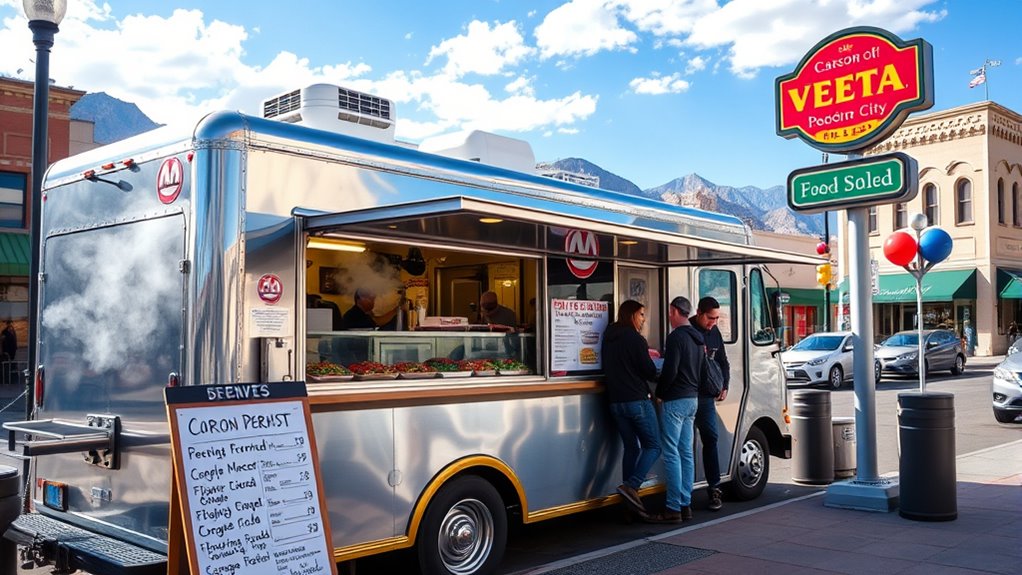
To operate a food truck in Carson City, you need to navigate a series of permits and licensing requirements. First, you must obtain a permit from Carson City Environmental Health as a mobile food establishment. Your application must include detailed plans and specs for your truck, especially if it’s new or remodeled. If you use stationary facilities for storage, preparation, or waste, you need written agreements with those establishments. For temporary operations, specify the dates on your permit application. You also need a Nevada State Business License costing $200, along with a local Carson City business license before starting. All documents, including health and business permits, must be filed, and fees paid beforehand. Mobile units are required to operate out of an approved servicing area to meet health standards. Regular renewals and full compliance with Nevada health and safety laws are mandatory to stay operational. Additionally, understanding permit renewal procedures ensures continuous compliance and avoids potential penalties.
Estimating Startup Expenses for Your Food Truck Venture

Estimating your startup expenses is a vital step in launching a successful food truck in Carson City. To get a clear picture, consider these key costs:
- Vehicle purchase or lease, ranging from $40,000 to $150,000, depending on size and condition.
- Kitchen equipment, typically costing $20,000 to $50,000, including refrigerators, grills, and ventilation.
- Permits and licenses, which can total $1,000 to $3,000, plus inspection fees.
- Initial inventory and supplies, estimated between $1,000 and $3,000 for ingredients, disposables, and packaging.
- Staffing and labor, with monthly wages around $2,000 to $5,000 for one or two employees.
- Considering compliance requirements and safety standards is essential to avoid potential delays or fines during setup.
Choosing Approved Locations and Establishing Your Commissary
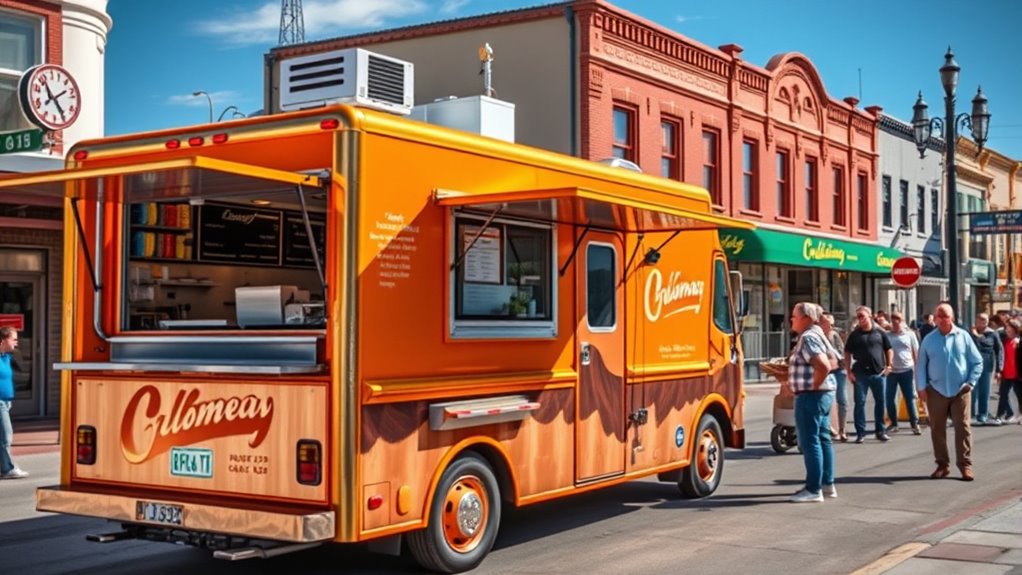
Choosing the right locations and establishing a compliant commissary are crucial steps in running a successful food truck in Carson City. You need to park only in approved commercial or event zones, such as busy downtown streets, parks, or near casinos, to meet city ordinances. Avoid residential zones unless you obtain special permits, as parking there is usually prohibited. For your commissary, select a permitted commercial kitchen approved by the Carson City Health Department. It must provide water, waste disposal, and refrigeration, and you’ll store, prepare, and clean equipment there. Sharing a commissary with other trucks can cut costs. Confirm your location and commissary meet all licensing, health, and safety standards, with regular inspections, to keep your operations compliant and running smoothly. Carson City has specific regulations to ensure food truck operations are safe and legal.
Designing Your Menu and Ensuring Food Safety Compliance
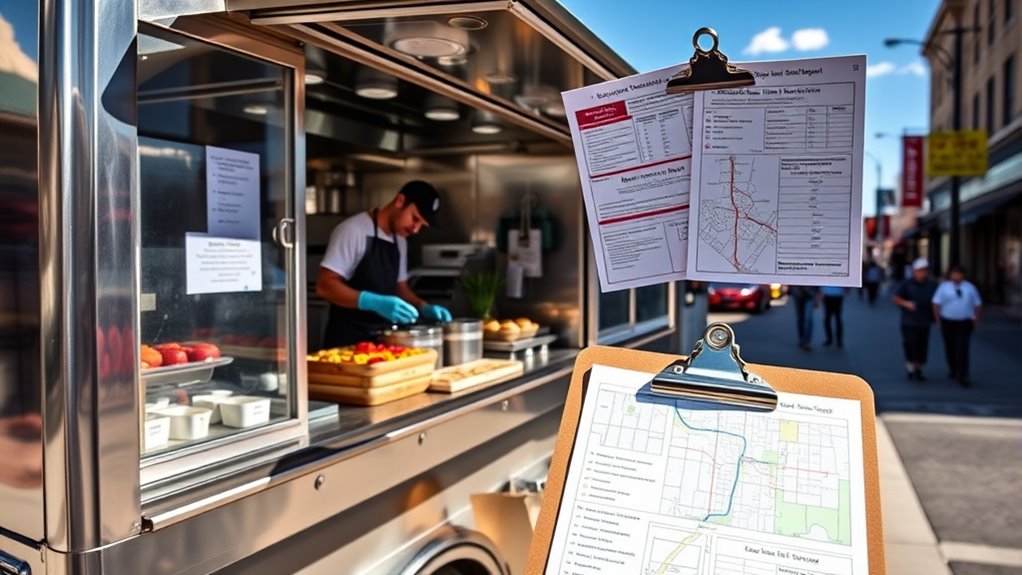
When designing your menu, focus on items that fit your truck’s facilities and meet health safety standards. You need clear recipes and proper storage to prevent foodborne illnesses, especially for hazardous foods. Proper food safety practices are essential to maintain hygiene and compliance. By balancing variety with operational practicality, you can create a menu that’s both appealing and compliant. Supporting proper food handling practices to ensure safety and quality throughout your operations.
Menu Planning Strategies
Designing an effective menu for your food truck starts with defining a clear concept that resonates with your target customers and aligns with your brand. Focus on a manageable selection—about 5 to 15 items—that guarantees quality and efficiency. Prioritize portability and ease of eating to keep customers satisfied on the go. Use seasonal and local ingredients when possible to maintain freshness and adapt to ingredient availability. Consider how your menu layout impacts readability, highlighting best sellers and high-margin items to boost sales. Incorporate combo options for value and quicker decisions. Regularly review sales data to identify underperformers, rotate seasonal items, and introduce dietary options like vegan or gluten-free dishes to meet customer preferences. Menu development should also include adherence to food safety standards and proper labeling to ensure compliance with health regulations. Keeping your menu streamlined and adaptable helps maximize profitability and customer satisfaction.
Food Safety Standards
A well-planned menu must also meet strict food safety standards to protect your customers and keep your operation compliant. In Nevada, at least one Certified Food Manager (CFM) must oversee your food truck, requiring passing an ANSI-accredited exam and coursework covering pathogens, cross-contamination, temperature control, and sanitation. Food handlers preparing potentially hazardous foods need state-approved training and certification. Before launching, you must submit detailed plans and obtain a health permit from local authorities, ensuring your vehicle meets water, waste, ventilation, and equipment standards. You also need a servicing area permit for storage and cleaning, with clear agreements for access. Proper refrigeration, heating, sinks, and temperature controls are essential for maintaining safe food temperatures and preventing contamination during operation. Additionally, all food contact surfaces must be constructed and maintained to prevent bacterial growth and facilitate easy cleaning, as required by health regulations. Regular maintenance of food safety equipment helps ensure ongoing compliance and safety.
Maintaining Sanitary Conditions
Creating a sanitary food truck operation starts with carefully selecting menu items that support safe handling and minimize contamination risks. Focus on foods that are easy to cook to safe temperatures and require minimal manual prep. Opt for ready-to-eat or pre-packaged foods to simplify operations and reduce cross-contamination. Choose ingredients with longer shelf lives that can withstand refrigeration. Avoid complex recipes that involve multi-step processes or heavy assembly, which increase contamination chances. Incorporating beneficial ingredients like collagen and hyaluronic acid can also enhance the nutritional value of your offerings.
Effective Marketing Strategies for Food Truck Success
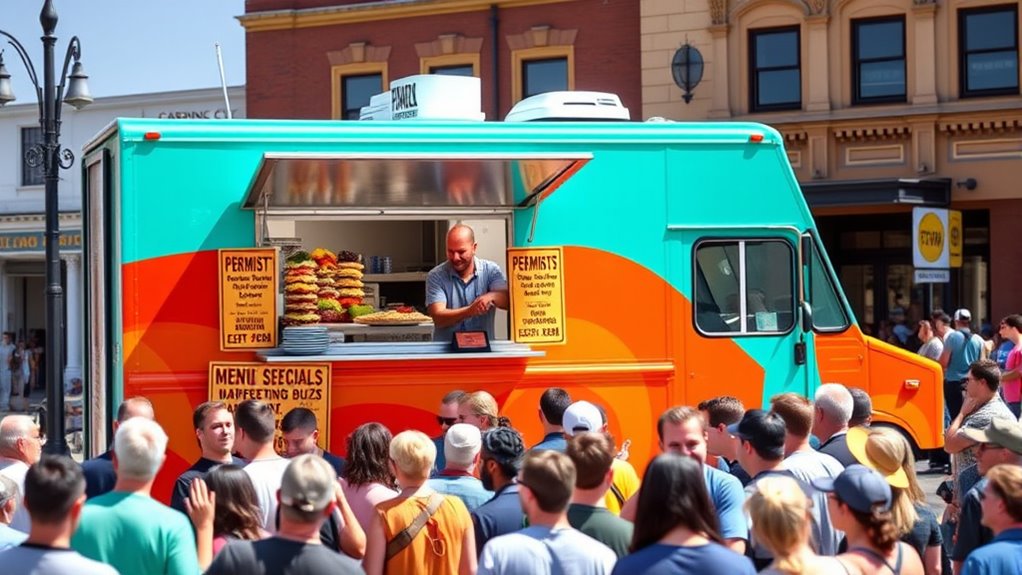
Effective marketing is essential for food truck success, and leveraging multiple strategies can substantially boost your visibility and sales. Social media is a powerful tool; 68% of truck owners promote their business online, with Facebook leading at 75%. Active social media campaigns can boost sales by 20% and increase customer spending by 15%. Platforms like Instagram, TikTok, and Snapchat help target younger audiences by sharing menus, locations, and hours. Participating in local events and festivals—done by 80% of trucks—raises brand awareness and attracts foot traffic. Establishing loyalty programs encourages repeat visits, with over half of trucks seeing a 30% increase in loyal customers. Using data analytics and GPS technology optimizes schedules and enhances customer experience, ensuring your marketing efforts translate into sustained success. Market growth and revenue trends indicate that the industry is expanding rapidly, providing more opportunities to reach new customers and increase revenue. Additionally, understanding industry-specific marketing tactics can give your food truck a competitive edge in this growing market.
Operational Best Practices for a Smooth Food Truck Business
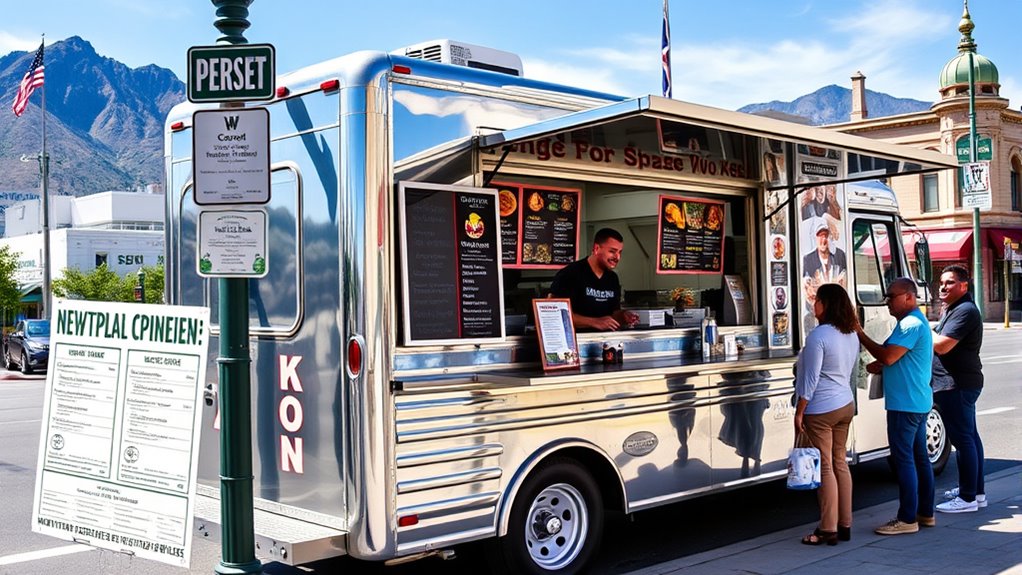
Maximizing efficiency within your limited space is essential for a smooth food truck operation. You need to design your layout for quick movement and fast food prep, placing equipment where it’s easy to reach during busy times. Standardize prep and serving procedures to cut errors and delays. Regular maintenance prevents breakdowns, keeping your truck running smoothly. Use digital tools like POS systems with real-time inventory to streamline orders and reduce wait times. Additionally, incorporating organization strategies can help maintain a clutter-free environment, supporting smoother daily operations.
Frequently Asked Questions
How Long Does It Typically Take to Obtain All Necessary Permits in Carson City?
Getting all your permits in Carson City typically takes around 2 to 4 weeks, but it can be longer if there are delays. You should start early by submitting complete applications, scheduling inspections ahead, and obtaining your business license first. Remember, some permits, like temporary event permits, need at least 5 business days’ notice. Planning ahead helps guarantee a smoother process and quicker approval.
Are There Specific Restrictions on the Types of Foods I Can Serve From a Food Truck?
You need to know that there are specific restrictions on the foods you can serve from your food truck. You must comply with Nevada health regulations, which restrict serving high-risk, perishable, or complex foods that require special handling or equipment. Certain raw or unpasteurized items might be prohibited unless permitted. Additionally, all menu items must meet safety standards, and you’ll likely need approval from health authorities for any menu changes.
Can I Operate My Food Truck at Multiple Locations Without Reapplying for Permits?
You can’t operate your food truck at multiple locations without reapplying for permits. Each location requires its own approved health permit or a formal agreement with a permitted fixed establishment. You need to notify the health authority of any changes or new sites, and you must get approval prior to operating there. Failing to do so risks noncompliance, inspections issues, and possible temporary shutdowns. Always guarantee each site is properly permitted.
What Are the Most Common Reasons for Permit or License Delays in Carson City?
Imagine standing in line at a busy food market, your plans on hold. That’s what permit delays feel like. In Carson City, common issues include incomplete applications, missing documents, and improper payments. Delays also happen when plans aren’t submitted early or if the paperwork is confusing or submitted late. Limited staff and administrative bottlenecks further slow down approval, making patience essential as you navigate the process.
Are There Any Incentives or Support Programs for New Food Truck Businesses in Carson City?
You’ll find some support programs and incentives for new food truck businesses in Carson City. While there aren’t specific city grants, you can access statewide SBA microloans and USDA grants if applicable. Local organizations like the Nevada Small Business Development Center and chambers of commerce offer business counseling, permit assistance, and promotional opportunities. Partnering with nonprofits or participating in community events can also boost your visibility and help grow your business.
Conclusion
Starting your food truck in Carson City means controlling permits, costs, and locations with confidence. Picture your vibrant truck rolling through bustling streets, your delicious aromas drawing crowds under Nevada’s clear blue skies. With careful planning and dedication, your menu becomes a beacon, inviting locals and tourists alike. Keep your vision sharp, stay compliant, and watch your dream come alive amidst the lively, sunlit streets of Carson City—where your food truck can truly thrive.