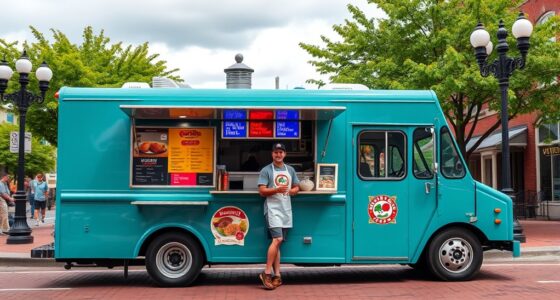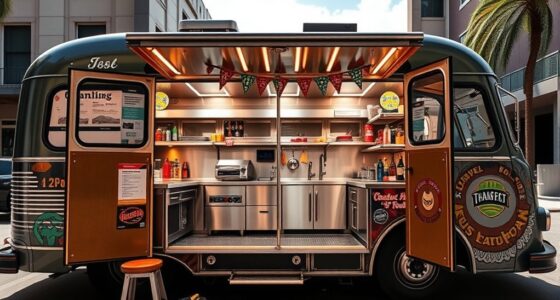
To open a food truck in Columbia, South Carolina, you’ll need permits from the local business license department, health inspections, and compliance with zoning rules, such as operating in commercial zones and maintaining buffer zones from restaurants. Costs vary from around $28,000 for a used truck to over $200,000 for a new setup, plus ongoing expenses. Developing a simple menu, ensuring food safety, and creating a strong marketing plan are essential. Continue to see how you can get started smoothly.

Get kitchen staples and gadgets delivered free with Prime
- Fast, free delivery on millions of items
- Prime Video, Amazon Music and more included
- Member-only deals all year
Key Takeaways
- Obtain necessary permits, including a mobile food vendor permit, health inspections, business registration, and sales tax licenses.
- Operate within designated zoning districts, avoiding residential areas and parking on public streets without approval.
- Budget for startup costs ($28,000–$200,000), monthly expenses, permits, and emergency funds for financial stability.
- Develop a compliant menu using pre-packaged ingredients, operate from a licensed commissary, and prioritize food safety standards.
- Promote your food truck through local events, collaborations, street marketing, and branded merchandise to attract customers.
Navigating Permits and Licensing Requirements in Columbia

Handling permits and licensing in Columbia can seem complex, but understanding the requirements is essential for a smooth startup. First, you need a Mobile Food Vendor Permit from the City of Columbia Business License Department, which requires proof of liability insurance and consent to a background check. You must pass an annual health inspection by DHEC and complete their Food Safety Manager Certification course. All permits and licenses must be displayed visibly on your truck during operation. Additionally, you’ll need to register your business with the South Carolina Secretary of State and obtain an EIN from the IRS. Register for sales and property taxes with the Department of Revenue and secure a Retail Food Establishment Permit from DHEC, paying applicable fees. Following these steps ensures your food truck complies with local, state, and federal regulations. Incorporating wall organization systems and aesthetic decor can also enhance your food truck’s visual appeal and attract customers.
Understanding Zoning Rules and Location Restrictions
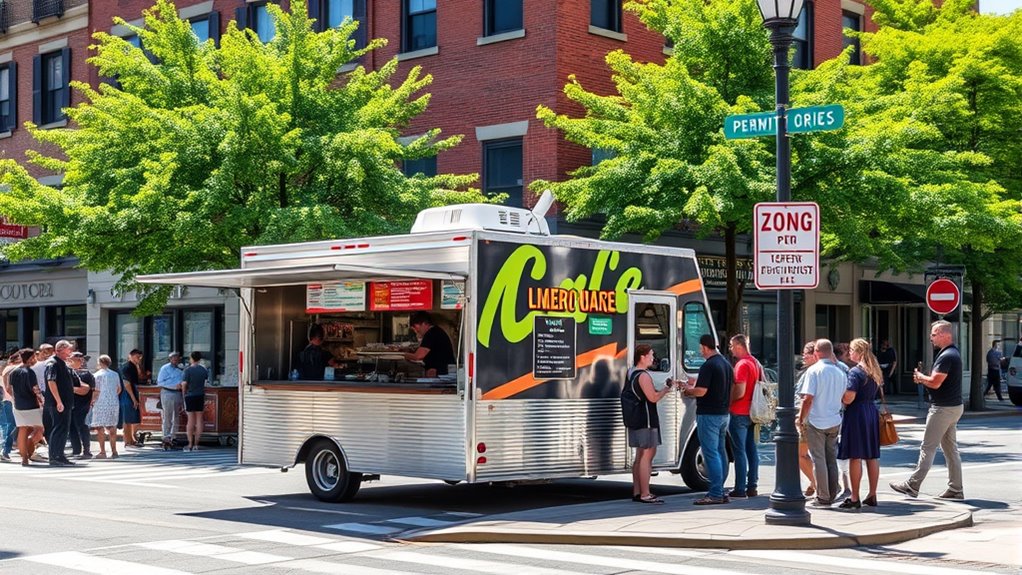
Are you clear on where your food truck can legally operate in Columbia? You need to make certain your location fits within permitted zoning districts, mainly commercial or business zones. Operating in residential areas without special permits is restricted. Remember, you can’t park on public streets or public parking spaces—only on private property with owner approval, which must be documented. A 100-foot buffer zone applies between your truck and any brick-and-mortar restaurant unless you get written consent. You can’t operate on parcels zoned residential between 9 p.m. and 9 a.m. within 400 feet. You’re limited to 10 hours of consecutive daily operation at one location, and you must remove all materials outside permitted hours. Proper documentation and permits are essential to stay compliant with Columbia’s zoning laws. The ordinance’s zoning restrictions also aim to prevent potential conflicts with established businesses and ensure safe operation standards. Additionally, understanding zoning classifications can help you identify suitable locations for your food truck to avoid violations.
Managing Costs and Financial Considerations
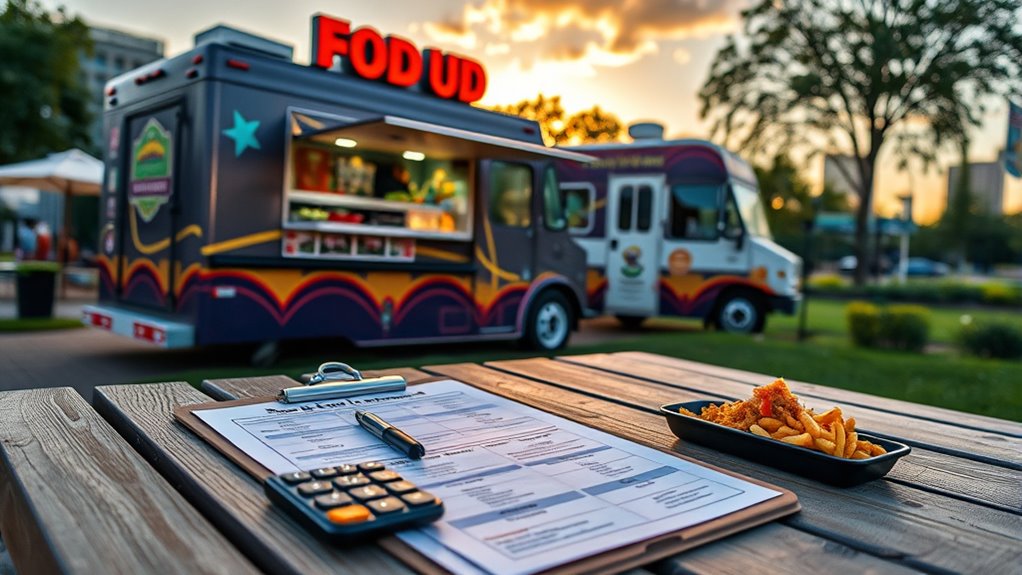
Managing costs effectively is essential for the success of your food truck business in Columbia. You’ll need to budget for startup costs, including the truck, equipment, permits, and initial supplies, which can range from $50,000 to over $200,000. Pre-owned trucks are a more affordable option, costing $28,000 to $75,000. Ongoing expenses like fuel, wages, supplies, and parking fees add up monthly. It’s wise to set aside an emergency fund for repairs or unexpected costs. Here’s a quick overview:
| Cost Category | Range | Notes |
|---|---|---|
| Startup Costs | $28,000 – $200,000+ | Includes truck, equipment, permits |
| Operating Expenses | Variable | Fuel, wages, supplies, parking |
| Permits & Licenses | $50 – $500 annually | Varies by location and sales volume |
| Emergency Fund | 10-15% of budget | For repairs or unexpected costs |
Proper planning keeps your business financially healthy, and understanding cloud service outages can help prepare you for potential disruptions that could impact your operations.
Developing a Compliant Menu and Ensuring Food Safety

Developing a compliant menu and ensuring food safety are essential steps to run a successful food truck in Columbia. You must operate out of a licensed commissary to meet South Carolina’s food safety standards, which includes proper cleaning and waste disposal. Your menu should focus on items that are easy to prepare safely, avoiding complex processes that require extensive refrigeration or pose contamination risks. Using pre-packaged or shelf-stable ingredients simplifies compliance and reduces health inspection issues. Be sure to document recipes and disclose ingredients when necessary. Fire safety is also critical; install onboard suppression systems and secure gas storage. Additionally, implementing proper storage solutions can help maintain food quality and safety standards. Finally, obtain all required permits, operate within zoning laws, and maintain proof of permissions and safety certifications to stay compliant and protect your customers.
Effective Marketing Strategies and Building Your Customer Base
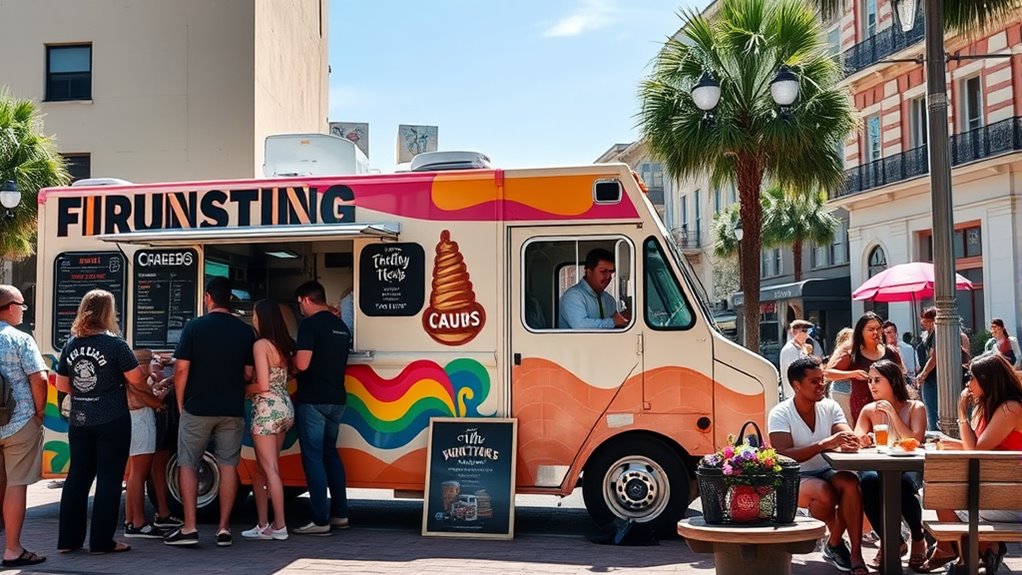
To effectively build your customer base and boost visibility, engaging with your community through local events and strategic partnerships is essential. Participating in food festivals, farmers markets, and community events attracts large crowds and increases brand exposure. Collaborate with nearby businesses like breweries or coffee shops for joint events or cross-promotions to reach new customers. Establish a presence in food truck parks where multiple trucks gather, drawing crowds seeking diverse options. Additionally, utilize street teams in high-traffic areas to distribute samples, flyers, and coupons, creating personal connections. Consider offering branded merchandise like T-shirts, hats, or stickers to turn customers into walking advertisements. Building relationships through these methods helps foster loyalty and steady your customer base in Columbia’s vibrant food scene. Networking with local organizations can also open doors to new opportunities and ongoing support for your food truck business. Furthermore, leveraging AI security technologies can help protect customer data and ensure a trustworthy experience, boosting your reputation in the community.
Frequently Asked Questions
How Long Does the Permit Approval Process Typically Take in Columbia?
You’re wondering how long it takes to get your permits approved in Columbia. The process varies, typically taking from a few days up to several weeks. It depends on scheduling fire department inspections, completing health department reviews, and submitting all required documents. Delays can happen if appointments are unavailable or if additional corrections are needed. Stay proactive, follow up regularly, and guarantee your paperwork and inspections are promptly completed to speed things up.
Are There Any Restrictions on Alcohol Sales From Food Trucks in Columbia?
You need to know that Columbia restricts alcohol sales from food trucks. You must have a valid retail alcoholic beverage license from the South Carolina Department of Revenue, and your sales are limited to licensed locations. Selling outside these areas or serving liquor by the drink isn’t allowed, and inspections occur at your commissary. Keep in mind, only certain beverages are permitted, and strict adherence to licensing rules is essential.
Can I Operate a Food Truck at Multiple Locations Daily?
You might wonder if you can operate a food truck at multiple locations daily, and the answer is yes, but with rules. You need permits for each spot, keep all documents in the truck, and follow time limits and zoning laws. Be sure to remove all materials after hours and pass health and fire inspections. By planning carefully, you can serve your delicious menu across various sites without trouble.
What Are the Specific Requirements for Fire Safety Compliance?
You need to meet specific fire safety requirements before operating your food truck. Make sure you have at least one 2A:10BC fire extinguisher on board, and if you have fryers, include a 1.5-gallon Class K extinguisher. Install fire suppression systems compliant with the latest International Fire Code, maintain all equipment properly, and schedule fire inspections with the Columbia Fire Department. Passing inspection is mandatory for displaying your compliance sticker and staying operational.
Are There Any Special Permits Needed for Seasonal or Special Event Vending?
This question is a mountain of detail, but yes, you need special permits for seasonal or event vending. You must obtain a Temporary Use Permit, and depending on the event, get a Mobile Food Vendor Permit, liability insurance, and possibly a Retail License. You’ll also need to pass health inspections, guarantee zoning compliance, and have property owner permission if vending on private property. Staying compliant ensures your food truck’s success!
Conclusion
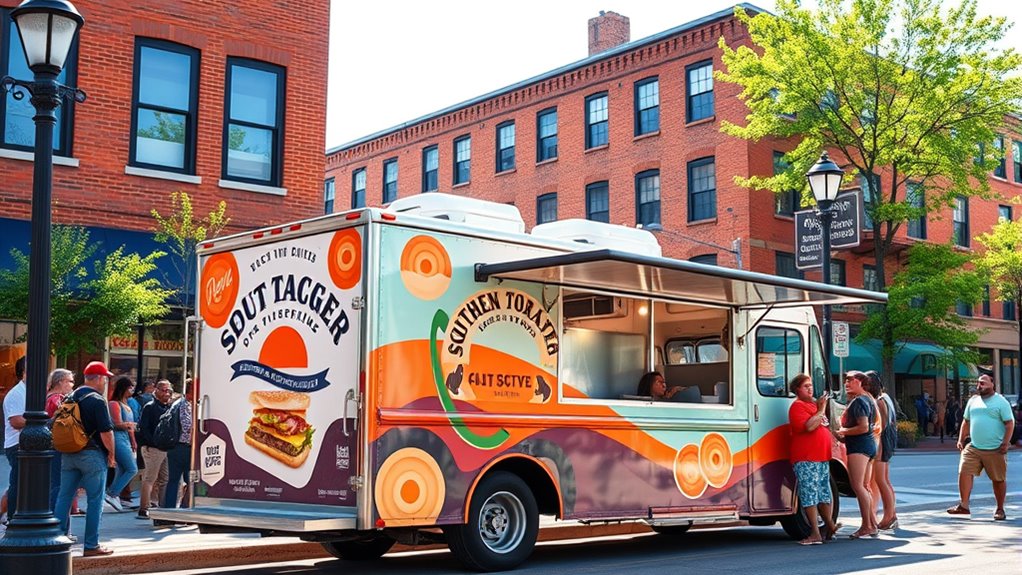
Starting your food truck journey in Columbia means stepping into a bustling street filled with the aroma of fresh, sizzling dishes. With the right permits, a strategic location, and a mouthwatering menu, you’ll turn passersby into loyal customers. Picture your vibrant truck, colorful and inviting, as it becomes a staple in the city’s vibrant food scene. Embrace the process, and watch your dream roll into a thriving, flavorful adventure that leaves everyone craving more.
Halloween Picks
halloween
As an affiliate, we earn on qualifying purchases.