
To open a food truck in Green Bay, you’ll need permits like the Wisconsin Mobile Retail Food Establishment License and city-specific approvals such as a Mobile Food Vendor Permit. Startup costs usually range from $50,000 to $200,000, with ongoing expenses of $5,000 to $10,000 monthly. Prime locations include downtown, Lambeau Field, and festivals. Developing a compliant menu and using social media for marketing can boost your success. Keep exploring to learn how to get started smoothly.
Key Takeaways
- Obtain necessary permits including Wisconsin Mobile Retail Food Establishment License, City Mobile Food Vendor Permit, and health certifications.
- Startup costs range from $50,000 to $200,000, covering vehicle, equipment, inventory, and marketing expenses.
- Prime locations include Downtown Broadway, Titletown District, Lambeau Field, farmers markets, parks, and college or office areas.
- Ensure menu compliance with health regulations, source approved ingredients, and include allergen and safety information.
- Use social media, participate in local events, and implement loyalty programs to boost visibility and customer engagement.
Navigating Licensing and Permit Requirements in Green Bay
To legally operate a food truck in Green Bay, you need to navigate a series of licensing and permit requirements at both the state and city levels. First, obtain the Mobile Retail Food Establishment License from the Wisconsin Department of Agriculture, Trade, and Consumer Protection (DATCP). If your truck’s base is outside Green Bay, secure a Service Base License to ensure compliance at both locations. You’ll also need a Mobile Food Establishment License, which requires returning to your base daily. Additionally, get a Wisconsin Seller’s Permit to handle sales tax collection and a health department certificate confirming food safety standards. On the city level, apply for a Mobile Food Vendor Permit, provide proof of insurance, sign a Hold Harmless Agreement, and meet weights and measures requirements. Applying for multiple licenses ensures comprehensive compliance across jurisdictions. It’s also important to stay updated on local ordinances related to food truck operations to prevent any legal issues. Renew permits annually to stay compliant.
Estimating Startup and Operating Expenses for Your Food Truck
Understanding your startup and ongoing expenses is key to launching and sustaining a successful food truck operation in Green Bay. Startup costs typically range from $50,000 to $200,000, with vehicle purchase being the largest expense—around $40,000 to $150,000 depending on condition and customization. Kitchen equipment costs vary based on menu complexity, while initial inventory usually costs $2,000 to $3,000. Budget a few thousand dollars for branding and marketing materials. Monthly expenses generally fall between $5,000 and $10,000, including food costs (25–35% of revenue), fuel ($500–$1,000), maintenance, and insurance. Equipment, supplies, and registration fees also add to your costs, and it’s wise to set aside funds for emergencies, repairs, and future growth to guarantee long-term success. Proper financial planning can help you manage cash flow effectively and adapt to unforeseen expenses. Additionally, understanding regulatory compliance ensures your business meets local health and safety standards, avoiding costly fines or shutdowns.
Identifying Prime Locations and Event Opportunities in Green Bay
Are you aware of Green Bay’s top spots and events that draw crowds suitable for food truck success? Knowing where foot traffic converges can boost your sales. Downtown Broadway near the End Zone Market attracts shoppers and evening crowds, especially during indoor market events. The Titletown District and Lambeau Field generate steady tourist and game-day traffic, with frequent activations. Farmers markets and community markets provide regular daytime audiences. Parks and greenways host seasonal festivals and food truck rallies from spring to fall. College and office clusters create lunchtime demand during weekdays. Implementing multi-functional furniture can help optimize limited space at your food truck location, ensuring a smooth customer flow during busy times.
Developing a Menu That Meets Local Regulations and Customer Preferences
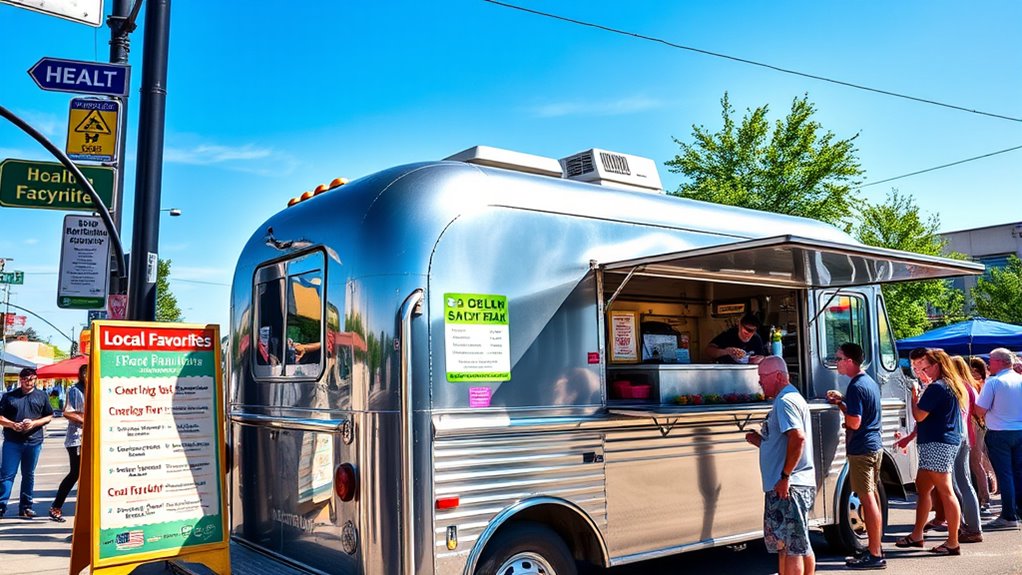
Developing a menu that aligns with local regulations and caters to customer preferences is a key step in launching your food truck. You must list all menu items in your Mobile Food Establishment (MFE) plan submitted to Brown County Public Health. If you serve potentially hazardous foods, include documented cold/hot holding and transport procedures. For prepackaged-only menus, on-board warewashing sinks aren’t required, but otherwise, a three-compartment sink is necessary. Verify menu items requiring specialized ventilation or equipment match Wisconsin standards. Ingredients must be sourced from approved suppliers and documented. Additionally, your menu should clearly identify allergens and hazardous items, include consumer advisories for raw/undercooked foods, and reflect pricing and portion controls. Proper compliance can enhance food safety and customer satisfaction, ensuring your offerings meet all necessary standards.
Effective Strategies for Marketing Your Food Truck Business
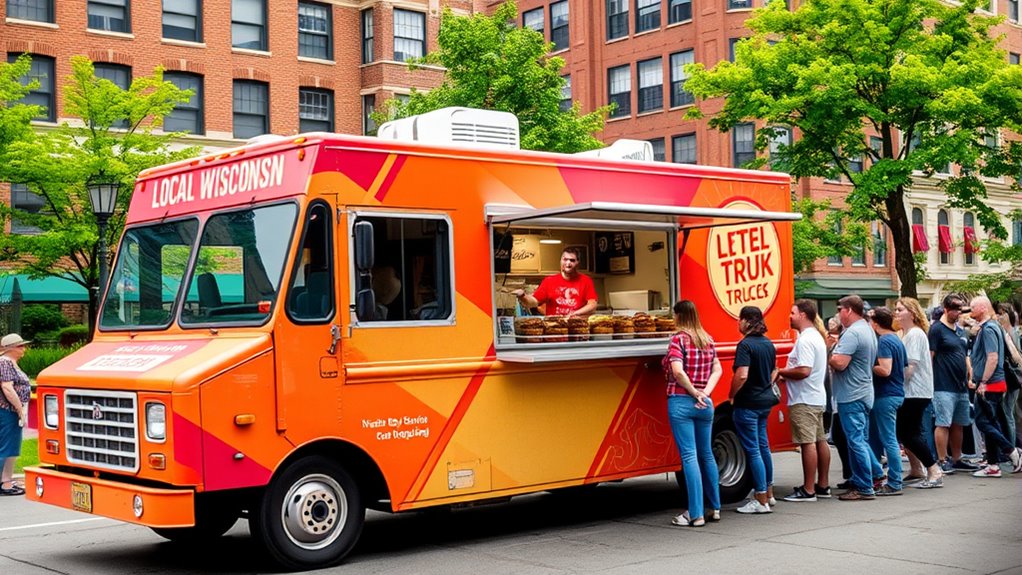
To effectively promote your food truck, leveraging social media platforms is one of the most powerful strategies you can use. Facebook dominates, with 75% of food trucks relying on it to reach customers, leading to a 20% average sales boost. Active engagement on these platforms encourages customers to spend about 15% more per visit. Additionally, 40% of customers discover trucks through social media ads, making targeted campaigns essential. Participating in local events and festivals also increases visibility, attracting diverse crowds and boosting short-term sales. Building loyalty programs results in a 30% rise in repeat visits and fosters brand ambassadors. Using data analytics and mobile tech helps tailor marketing efforts, while email campaigns maintain direct customer communication, keeping your truck top-of-mind in a competitive market. Furthermore, over 50% of food trucks have implemented loyalty programs, resulting in a 30% increase in repeat visits, demonstrating the effectiveness of customer retention strategies. Incorporating local event participation can further enhance your outreach and community presence.
Frequently Asked Questions
How Long Does It Typically Take to Obtain All Necessary Permits in Green Bay?
You’re probably wondering how long it takes to get all your permits in Green Bay. Usually, it takes about 4 to 6 weeks from the moment you submit your applications. This includes preparing your paperwork, scheduling inspections, and waiting for approvals. If you’re prepared and applications are complete, you might speed things up. Temporary permits can be faster, sometimes just a few days, if everything’s in order.
Are There Specific Noise Restrictions for Food Trucks During Evening Hours?
Think of Green Bay’s noise rules like a gentle stream—most noise is fine, but it shouldn’t disturb the peace. During evenings, amplified music or loud generators must stop by 10 p.m., or you’ll need a special permit. Police can revoke permits or fine you if noise becomes unreasonable. So, keep your volume in check after hours, and coordinate with local authorities to stay within the rules.
Can I Operate a Food Truck Without a Physical Commissary or Service Base?
You can’t operate a food truck without a physical commissary or service base in Green Bay. Wisconsin law requires MFEs to have a licensed commissary for facilities like warewashing, storage, and waste disposal. Green Bay strictly enforces these rules, and operating without one risks fines or suspension. Even if you only sell prepackaged foods, you’ll still need a licensed service base, making it essential to secure a compliant commissary before starting your food truck business.
What Insurance Coverage Is Recommended Beyond the City’S Minimum Requirements?
You should consider adding liability coverage beyond the city’s minimum. General liability protects against slips, falls, and claims like libel. Professional liability covers cooking classes or workshops. Food trailer endorsement extends your coverage when parked. Cyber liability shields against data breaches. Bundling policies saves money. Also, upgrade your commercial auto, equipment, and property insurance to safeguard your truck and assets. Regular reviews and safety protocols help reduce risks and keep your coverage effective.
Are There Grants or Financial Assistance Programs Available for New Food Truck Operators?
Did you know that Wisconsin has awarded over $14.5 million in local food grants? You might qualify for programs like the Wisconsin DATCP’s Buy Local grants or RFSI infrastructure funding, which support equipment and marketing. Additionally, federal programs like USDA grants, SBA loans, and local incentives in Green Bay can help cover startup costs. These options can make your food truck venture more affordable and increase your chances of success.
Conclusion
Starting your food truck in Green Bay is like planting a seed—nurture it with the right permits, costs, prime spots, a tempting menu, and clever marketing. Picture your truck as a beacon on the bustling streets, drawing hungry customers like moths to a flame. With your passion and planning, you’ll turn this vibrant city into your culinary garden, blooming with success. So, gear up and watch your food truck dream grow into a flavorful reality.