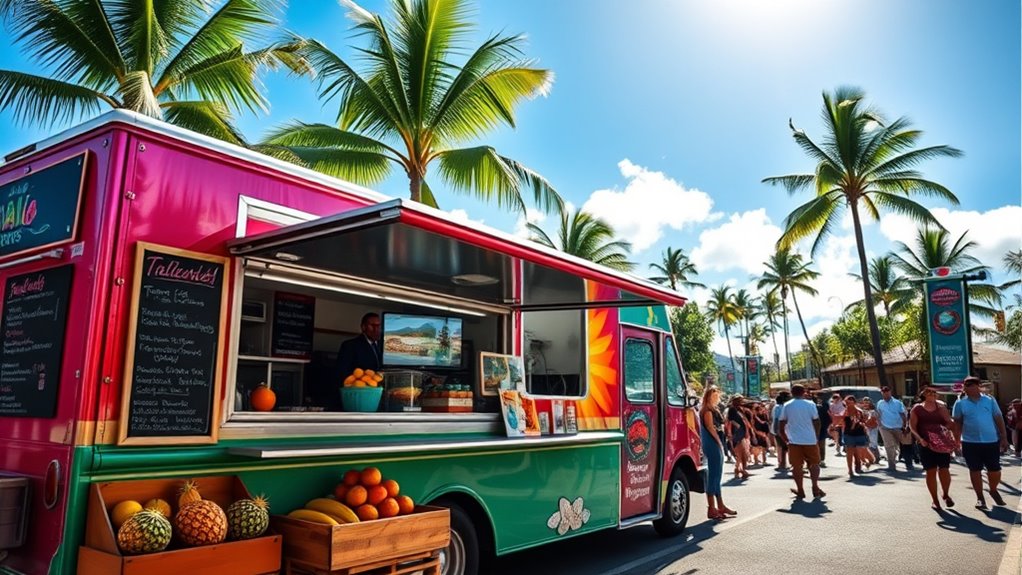
To open a food truck in Maui, you need to secure permits like a Hawaii business license, health, and liquor permits, and guarantee compliance with zoning laws—these can cost from $20 to over $1,200. Costs vary based on vehicle type and build-out, with options from $15,000 to $100,000. Choose locations on Maui’s agricultural lands with proper authorizations, craft a menu featuring local ingredients, and use social media and events for marketing. For detailed steps, continue exploring how to start your Maui food truck business.

Get kitchen staples and gadgets delivered free with Prime
- Fast, free delivery on millions of items
- Prime Video, Amazon Music and more included
- Member-only deals all year
Key Takeaways
- Obtain necessary permits including Hawaii business license, health permits, and location-specific vendor licenses, with costs ranging from $20 to over $1,200.
- Startup costs vary $30,000–$175,000, with mobile food units costing $15,000–$100,000, and require thorough financial planning.
- Operate on Maui’s agricultural lands in districts like Kula and Makawao, ensuring active farm status and compliance with zoning and health regulations.
- Craft menus featuring local, seasonal ingredients with a focus on sustainability and native flavors, adhering to Hawaii health and safety standards.
- Promote your food truck via social media, local events, and digital promotions to attract tourists and residents, building long-term brand visibility.
Navigating Permits and Legal Requirements in Maui
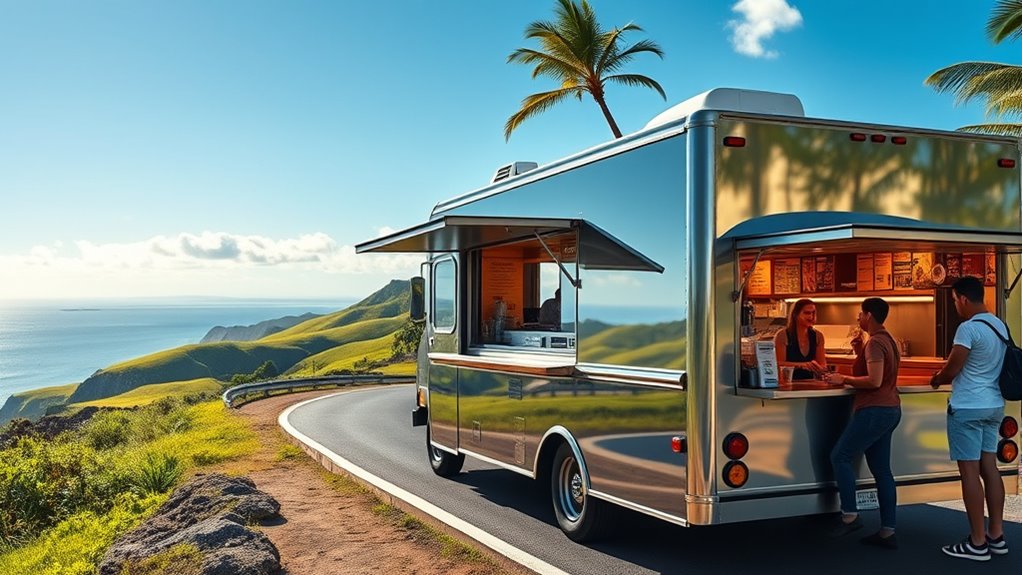
Understanding permits and legal requirements in Maui is essential for operating your food truck legally and smoothly. First, you need a Hawaii state business license, which costs just $20 through Hawaii Business Express. Register with the Department of Taxation for gross income, use, and employee tax withholdings at no charge. You’ll also require a commercial driver’s license or vehicle permit from the Hawaii Department of Transportation, costing between $20 and $40. If you plan to sell alcohol, obtain a license from the County Department of Liquor Control, with fees ranging from $150 to $1,200. Additionally, you must secure a Food Establishment Permit from the Hawaii Department of Health, pass health inspections, and maintain food handler certifications for your staff. Food handler certifications are valid for several years and must be renewed periodically. Compliance with zoning rules and location restrictions is also essential for legal operation. Being aware of health and safety regulations helps ensure your food truck adheres to all legal standards and avoids potential penalties.
Understanding Costs and Financial Considerations for Food Trucks
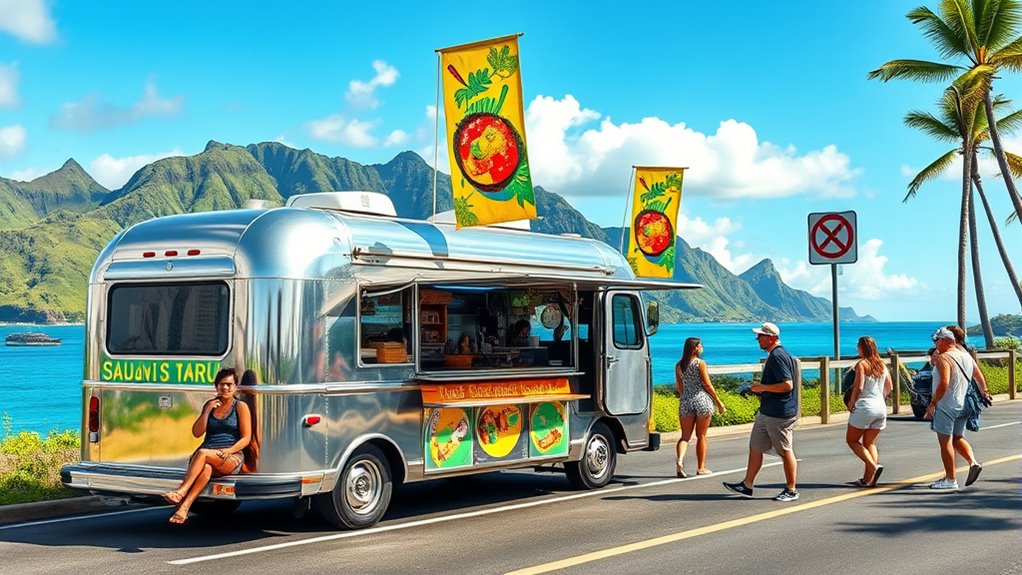
Understanding the costs and financial considerations for operating a food truck in Maui is essential for creating a realistic business plan. Your initial investment can range from $30,000 to $175,000, depending on whether you buy new or used and the equipment included. Coffee trucks or trailers might cost between $15,000 and $100,000, with used options around $35,000–$60,000. Build-out expenses for appliances like grills and fryers add $500–$5,400 each. Startup costs for inventory and supplies generally total $1,300–$3,300. Ongoing expenses include fuel and maintenance ($500–$1,000 monthly), insurance, permits, wages, and marketing. Licensing fees, like health permits and business licenses, are additional, with Maui-specific permits costing several thousand dollars. Location-specific regulations and fees can significantly impact your overall budget, so thorough research is vital. Budget carefully to ensure your business remains financially viable. Additionally, understanding fundraising options can help offset some startup costs and improve your financial stability.
Locating Your Food Truck on Maui’s Agricultural Lands
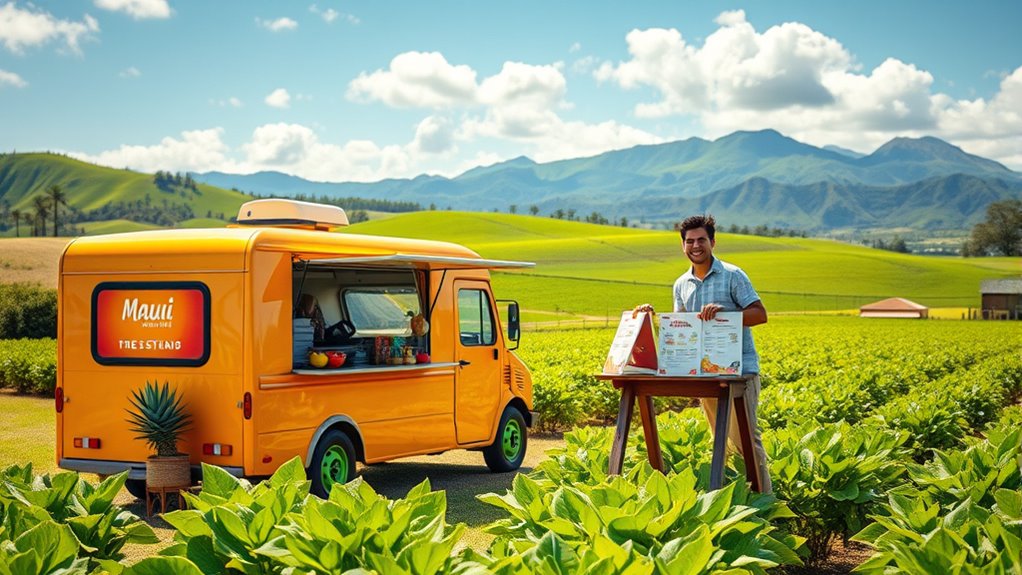
You’ll need to find suitable farm locations within Maui’s agricultural districts that meet zoning rules. Keep in mind, food trucks under 1,000 square feet don’t require special permits, but they must follow county regulations and health standards. In Hana, though, there’s a limit of 25 food trucks on agricultural lands, while other areas have no such cap. Additionally, understanding the permitted types of produce and farming activities can help ensure your food truck aligns with local agricultural regulations.
Suitable Farm Locations
Locating your food truck on Maui’s agricultural lands involves selecting areas zoned specifically for farming and ensuring your business complements existing agricultural activities. Popular zones include Haiku, Huelo, Makawao, Olinda, Kula, and Launiupoko, known for mixed farming and crop or livestock operations. These locations should align with Maui’s agricultural zoning, which allows farm-related activities and single-family dwellings, but requires proof of active farming. Prioritize sites with existing infrastructure, such as near farmers markets or tourist routes, to attract local and visitor traffic. Proximity to farms supports offering fresh, local menu items and enhances authenticity. Remember, your location must support agricultural use, and your Farm Plan should demonstrate active land use for farming or conservation, ensuring compliance and maximizing benefits. Maui’s zoning laws also specify setbacks and building restrictions that must be adhered to when establishing a food truck on agricultural land.
Zoning and Permits
Maui’s updated zoning laws now make it easier for food trucks to operate on farms within agricultural districts. Thanks to the 2025 amendments (Bill 76), mobile food trucks or trailers up to 1,000 sq ft are now permitted as accessory uses without needing a Special Use Permit. This change allows farmers to sell their products directly to the public more easily. You must guarantee your food truck complies with size limits, and larger operations over 1,000 sq ft still need permits. All food preparation must meet Hawaii State Department of Health standards. You’ll need to register your agricultural structures if they’re beyond exempt sizes, and verify your farm’s active status with a farm plan. Proper permits and health compliance are essential for legal, safe operation on Maui’s agricultural lands. These laws also support local economic growth by encouraging farm tourism and direct sales. Additionally, understanding zoning regulations can help streamline your setup process and avoid potential legal issues.
Cap Limits in Hana
In Hana’s agricultural district, the new ordinance limits the number of mobile food trucks and trailers to 25, helping to balance farm use with commercial activity. This cap prevents over-commercialization while supporting local farmers. Outside Hana, there’s no limit on food trucks or trailers on Maui’s farm-producer lots, and neighboring islands Molokai and Lanai aren’t affected.
Consider these key points:
- The cap ensures agricultural land remains dedicated to farming, not excessive commercial traffic.
- Operating on active, registered agricultural land is required.
- Trucks up to 1,000 sq ft qualify as accessory uses, with no special permits needed.
- The rules promote farm-based commerce, facilitating direct sales of farm-grown products while safeguarding the land’s agricultural purpose.
- Understanding IRAs and their investment options can help support financial stability as you explore new business ventures.
Crafting a Menu That Showcases Local Flavors and Meets Regulations
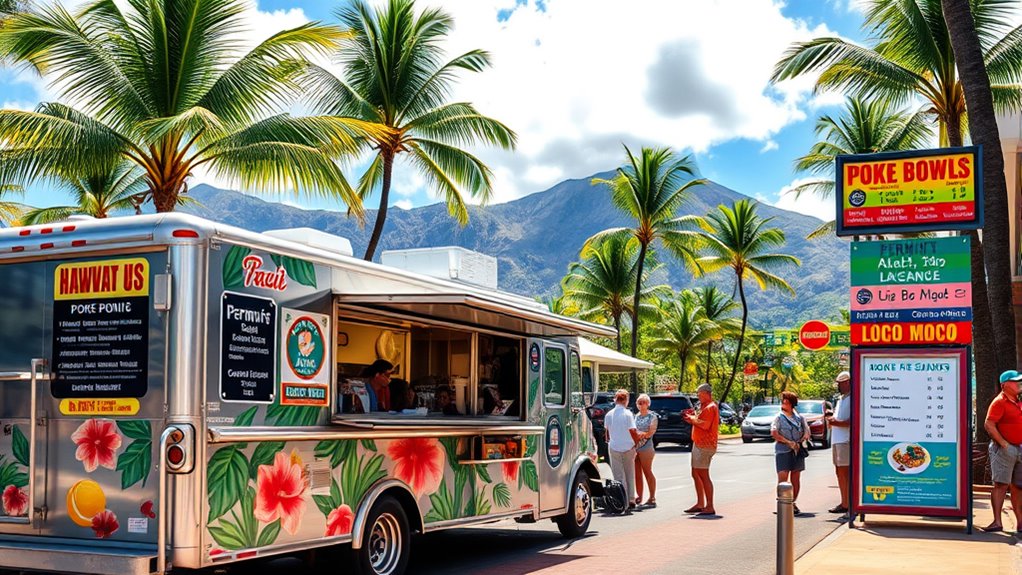
Creating a menu that highlights local flavors while adhering to regulations requires strategic planning and a deep understanding of both authentic ingredients and legal standards. Incorporate traditional Hawaiian ingredients like taro, pineapple, breadfruit, and fresh seafood to reflect island culture and support Maui agriculture. Use seasonal produce to ensure freshness and cost efficiency. Highlight native flavors with fusion options to appeal to residents and tourists alike. Guarantee all dishes meet Hawaii State Department of Health rules, including proper temperature controls and sanitation standards, and support kitchens must hold current permits. Understanding the local food safety laws is crucial for compliance and avoiding penalties. Incorporating sustainable sourcing practices can further enhance your menu’s appeal to eco-conscious consumers. Design a concise, focused menu suitable for mobile prep, emphasizing farm-sourced ingredients and biodegradable packaging due to Maui’s environmental regulations. Balancing local authenticity with compliance helps differentiate your truck in a competitive market.
Effective Marketing Strategies to Grow Your Maui Food Truck Business
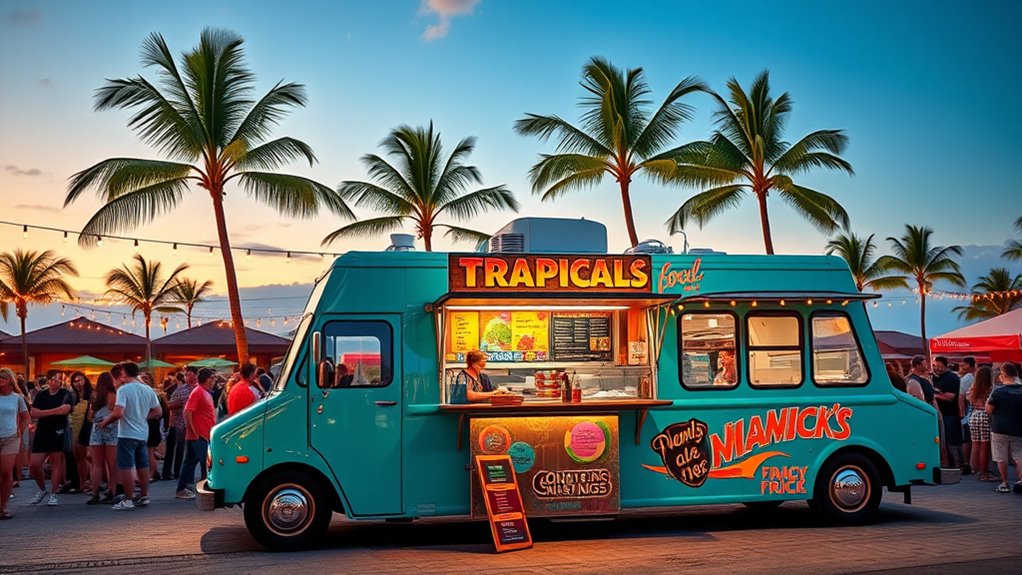
To successfully grow your Maui food truck business, leveraging a mix of social media marketing, community engagement, and location flexibility is essential. Use these strategies to boost visibility and attract loyal customers:
- Share eye-catching photos and short videos on platforms like Facebook to increase engagement and go viral. Visual and social media marketing, including influencer partnerships and videos, drive customer engagement. Utilizing trending hashtags and geotags can further amplify your reach within the local community.
- Collaborate with local influencers to expand your reach and build credibility in the community.
- Participate in food festivals and community events to boost brand visibility and attract new customers.
- Implement loyalty programs and digital promotions to encourage repeat visits and reward social sharing. Over 50% of food trucks have implemented loyalty programs, resulting in a 30% increase in repeat visits. Additionally, integrating online ordering systems can streamline customer service and increase sales volume.
Ensuring Compliance and Smooth Operations for Long-Term Success

Ensuring compliance and smooth operations is essential for the long-term success of your Maui food truck. Start by obtaining all necessary licenses, including a Hawaii business license and a Food Establishment Permit from the Department of Health, which can cost between $100 and $400. Register for tax accounts with no fee, and secure permits like a Mobile Food Establishment and vendor’s license if vending on county rights-of-way. Always pass sanitation inspections and use a permitted support kitchen—private homes aren’t allowed. Follow health and safety regulations, including food safety training for all handlers. Be aware of zoning restrictions—operate only in permitted areas with proper permits, and avoid active parking spaces. Keep documentation current and maintain relationships with local regulators to prevent disruptions. Incorporating data-driven strategies can help you measure the effectiveness of your marketing efforts and optimize your operations over time.
Frequently Asked Questions
How Do I Register My Farm-Producer Lot for Food Truck Operations?
To register your farm-producer lot for food truck operations, you need to submit a registration application to Maui County’s Department of Planning. Include your contact info, tax map key, proof of ownership or lease, and details about your structure. Make sure your food prep complies with Hawaii State Department of Health rules, and arrange for a support kitchen permit if needed. Once approved, you can operate legally on your lot.
Are There Specific Health Standards for Preparing Maui’S Local Ingredients?
You need to follow strict health standards when preparing Maui’s local ingredients. Make sure to wash and properly cook seafood and produce, keep cold ingredients at or below 41°F, and hot foods at or above 135°F. Use utensils or gloves to avoid bare-hand contact, and store ingredients separately to prevent cross-contamination. Always adhere to sanitation rules, ensuring safe handling and storage within your mobile unit to protect both customers and the environment.
Can I Operate Multiple Food Trucks on the Same Farm Property?
You can operate multiple food trucks on the same farm property if each truck is within the 1,000 square foot limit and serves as an accessory use. You won’t need a special permit, but all trucks must have valid health permits and food handler certifications. Keep in mind, trucks must serve food directly from windows, with no tents or tables outside. Compliance with health and county regulations is essential for legal operation.
What Are the Best Ways to Promote Maui-Specific Menu Items?
Think of promoting Maui-specific menu items as planting seeds in a lush garden. You can showcase vibrant local ingredients through vivid social media posts, highlighting their cultural roots. Host events that celebrate Maui’s heritage, partnering with local businesses and artists. Use storytelling to deepen customer connection, emphasizing authenticity. Engage with your community online and offline, turning each promotion into a flourishing expression of Maui’s rich culinary and cultural landscape.
How Do I Stay Updated on Changing Maui Food Truck Regulations?
To stay updated on changing Maui food truck regulations, you should regularly check official sources like the Maui County Council website and the Hawaii State Department of Health. Follow local news outlets and join industry associations or community groups for timely alerts. Attending workshops or public meetings can also keep you informed about new permits or rules. Staying proactive guarantees you remain compliant and avoid potential disruptions to your business operations.
Conclusion
Think of your Maui food truck journey as steering a sailboat through vibrant, ever-changing waters. With permits as your sturdy hull, costs as your navigation tools, and marketing as your guiding stars, you’ll chart a course to success. Stay flexible, adapt to local currents, and keep your focus on the lush islands ahead. With care and precision, your culinary voyage will thrive, turning your passion into a thriving treasure amidst Maui’s beautiful shores.
Halloween Picks
halloween
As an affiliate, we earn on qualifying purchases.