To open a food truck in Olympia, Washington, you need a Business License, a Thurston County Mobile Food Unit permit, and valid Food Handler Cards for staff. Startup costs vary from $30,000 to $150,000 depending on vehicle and equipment choices. Prime spots include downtown, craft districts, and near hospitals or events. Focus on local, seasonal menus with vegetarian and gluten-free options. For targeted marketing, leverage social media and community events to attract steady customers. More details unfold as you continue.
Key Takeaways
- Obtain necessary permits including a Washington State Business License, Thurston County MFU permit, and employee Food Worker Cards.
- Start-up costs range from $30,000 to $150,000, covering vehicle, branding, equipment, permits, and marketing expenses.
- Prime locations include downtown Olympia, Tumwater Craft District, Capitol Blvd, and seasonal event venues for maximum foot traffic.
- Focus on non-TCS menu items, locally sourced ingredients, and accommodate dietary preferences to appeal to community tastes.
- Utilize social media, local event participation, loyalty programs, and GPS review platforms to effectively market and attract customers.
Navigating Permits and Licensing Requirements in Olympia
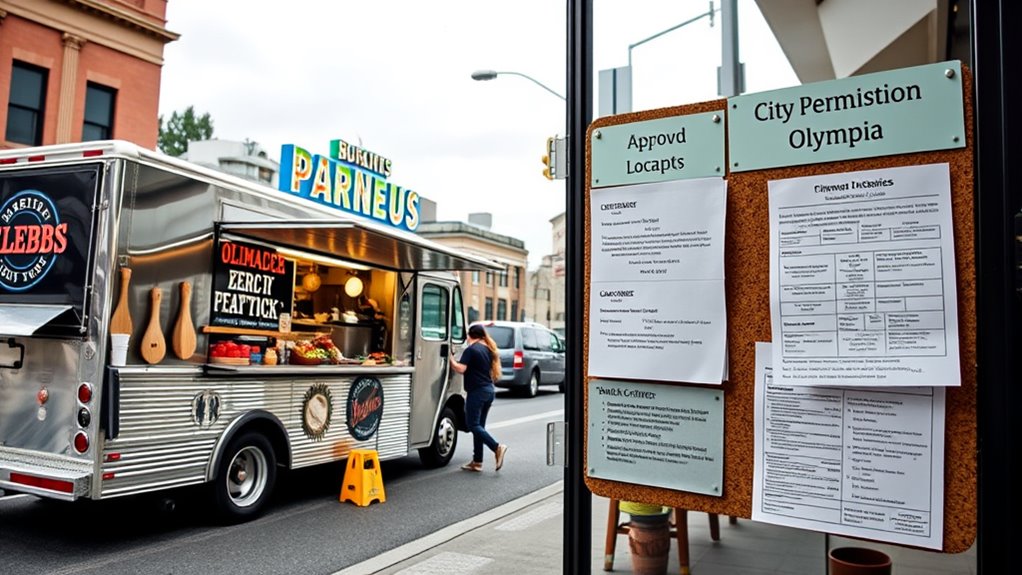
Navigating permits and licensing requirements in Olympia is essential for operating your food truck legally and smoothly. First, you need a valid State of Washington Business License to run any business, including a food truck. If you plan to operate within Olympia city limits, you’ll also require a local city business license, which you can often apply for online through government portals. Additionally, registering with the Washington State Department of Revenue may be necessary for tax purposes. All employees must hold valid Food Handler or Food Worker Cards to meet health standards. You also need a Mobile Food Unit (MFU) permit from Thurston County Public Health. Regular health inspections, water source validation, and wastewater disposal are vital for permit approval. Obtaining health permits and staying compliant ensures your food truck operates without legal hiccups. Understanding local health regulations is crucial for maintaining your permits and ensuring safety standards are met.
Estimating Start-Up Expenses for Your Food Truck Venture
Estimating your start-up expenses is a key step in launching a successful food truck business in Olympia. Vehicle costs vary widely, with new trucks costing between $75,000 and $150,000, and used ones from $30,000 to $80,000. Custom branding wraps add $2,500 to $5,000. Essential kitchen equipment, like grills, fryers, and ovens, can total around $5,200 to $12,500. Refrigeration units and safety gear, such as fire suppression systems and sinks, cost an additional $4,500 to $8,500. Technology investments, including POS systems, tablets, and power supplies, range from $4,400 to $14,300, plus ongoing utility costs. Initial inventory and supplies typically require $2,000 to $3,000, with recurring expenses for replenishment. Budget for permits, insurance, marketing, and branding to cover all startup essentials. Additionally, securing comprehensive food truck insurance is crucial to protect your investment and ensure compliance with state laws. Proper drivetrain maintenance and routine inspections can help extend the lifespan of your vehicle and prevent costly repairs down the line.
Prime Locations for Food Truck Operations in Olympia
Choosing the right locations is essential for food truck success in Olympia, as high-traffic areas and event venues can considerably boost your sales. Downtown Olympia near 4th Ave E and Franklin St SE draws foot traffic and office workers, making it ideal for daily service. The Tumwater Craft District hosts breakfast and brunch crowds, benefiting from a creative community vibe. Capitol Blvd SE and Sexton Dr NW serve residential and commercial customers with regular foot traffic and local events. Lacey’s Martin Way E and Hensley St NE combine suburban neighborhoods with retail spaces, attracting diverse customers. Near the Washington State Capitol campus, you can target government employees and visitors. Festivals, farmers markets, and outdoor events also provide seasonal high-demand spots for your truck’s success. Maintaining your vehicle’s turning vehicles into campers can ensure reliable operation during busy periods.
Crafting a Menu That Appeals to Local Tastes and Regulations
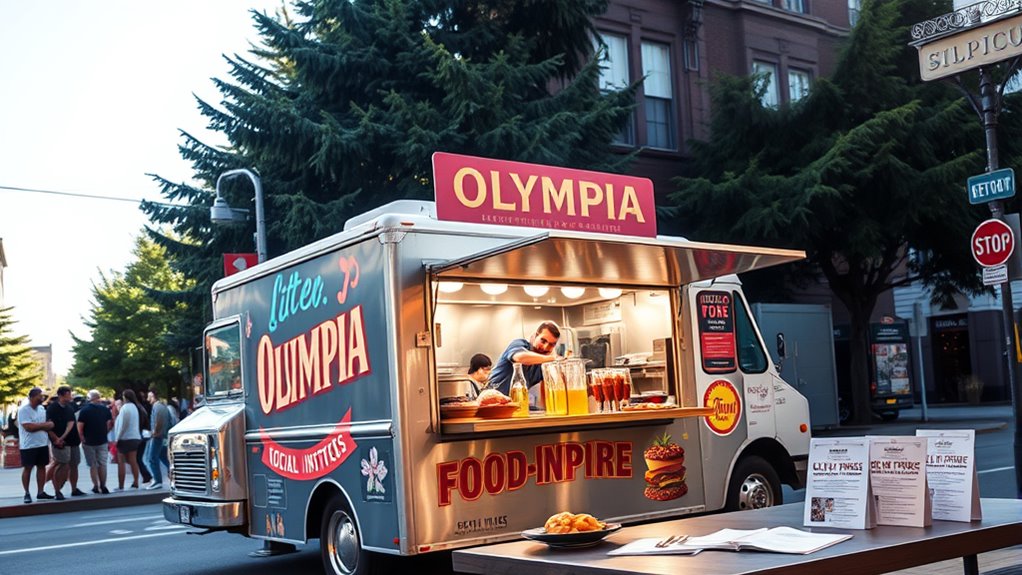
To create a menu that resonates with Olympia’s local tastes and complies with regulations, you need to focus on offering foods that are both appealing and easy to serve within health and safety standards. Prioritize non-TCS items like baked goods and dried herbs to simplify permit processes. Use locally sourced ingredients to meet health standards and appeal to community preferences. Offer vegetarian, vegan, and gluten-free options to accommodate dietary needs. Adjust your menu seasonally to reflect local produce and ensure ingredients are handled safely. All menu items should be prepared using space-efficient methods within your truck’s equipment and plumbing constraints. Incorporating tableware that complements your menu can enhance the dining experience and attract customers.
Effective Marketing Strategies to Grow Your Food Truck Business
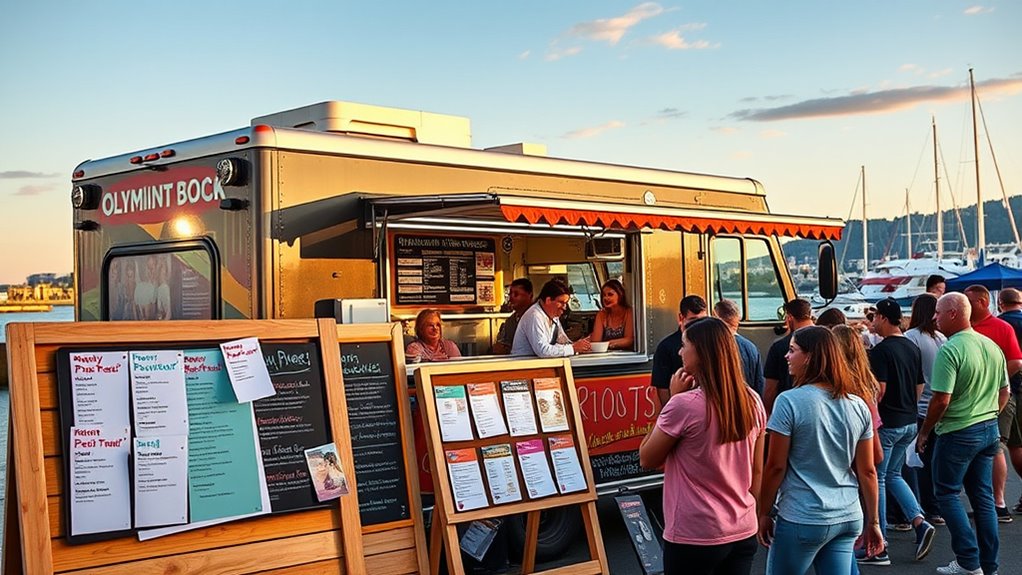
Effective marketing is essential for expanding your food truck’s reach and increasing sales. Social media is a powerful tool—68% of food truck owners use it regularly, with Facebook being the top platform, utilized by 75%. A strong social media presence can boost sales by 20% and encourage customers to spend about 15% more. Mobile apps for locating trucks have grown 35%, making it easier for customers to find you. Participating in at least three local events annually helps build visibility, foster community ties, and showcase new menu items. Loyalty programs and email marketing boost repeat business, increasing customer retention by up to 30%. Digital tools like GPS, analytics, and review platforms enable better customer targeting and feedback management, which helps optimize marketing strategies and improve overall performance. Additionally, understanding your target demographics such as millennials can significantly influence your marketing approach. In conclusion, understanding your target demographics, especially millennials, and balancing digital with grassroots tactics maximizes your marketing impact for sustained growth.
Frequently Asked Questions
Are There Specific Noise Ordinances for Food Trucks Operating in Olympia?
You need to know that Olympia has strict noise ordinances for food trucks, governed by Chapter 8.32. You’re responsible for keeping noise within permissible limits, especially from generators and equipment. The police enforce these rules, and excessive noise can lead to warnings or citations. To avoid issues, position generators properly, minimize noise during operating hours, and consider permits or variances if operating in sensitive areas.
What Are the Insurance Requirements for Food Truck Operators in Olympia?
You need to meet specific insurance requirements to operate a food truck in Olympia. You must have commercial auto liability insurance covering bodily injury and property damage, along with general liability insurance for customer injuries and property issues. If you hire employees, workers’ compensation is mandatory. Additionally, property and cargo insurance may be necessary, especially for equipment and inventory. Always file proof of insurance with the Washington Utilities and Transportation Commission to stay compliant.
Can I Operate My Food Truck Year-Round in Olympia’s Climate?
Yes, you can operate your food truck year-round in Olympia, but you’ll need to prepare for its wet, cold winters. Invest in weatherproofing, insulation, and heating to keep your equipment and staff comfortable. Adjust your menu seasonally, offering warm dishes in winter and lighter options in summer. Monitor weather forecasts closely, and plan routes and hours accordingly to avoid flooding and extreme conditions, ensuring steady business throughout the year.
Are There Restrictions on Serving Alcohol From a Mobile Food Unit in Olympia?
Imagine your food truck as a vessel on a calm yet heavily regulated river. Serving alcohol in Olympia is like steering treacherous waters—restrictions abound. You can’t sell alcohol on the street unless it’s during a sanctioned event by a non-profit. You need specific permits, a liquor addendum, and approval from WSLCB. Without these, your chances of safely sailing into alcohol service are slim, and penalties could be steep.
How Do I Handle Waste Disposal and Water Management Legally in Olympia?
You need to follow Olympia’s waste disposal and water management rules carefully. Discharge wastewater only at approved sites listed in the County Health Plan, avoiding unauthorized areas. Use approved waste service vehicles or Sanidump stations, with proper documentation. Make certain your waste containers are accessible, properly labeled, and comply with local codes. Regular garbage collection is mandatory, and your storage must prioritize recyclables and compostables. Adhering to these regulations keeps your food truck compliant and environmentally responsible.
Conclusion
Starting your food truck in Olympia is just the beginning. With the right permits, a tempting menu, and clever marketing, you’ll attract hungry customers. But the real secret to lasting success lies in how you adapt and innovate as you grow. Will you seize the opportunity to stand out in a competitive market? The path ahead is full of possibilities—are you ready to take the leap and leave your mark on Olympia’s vibrant food scene?