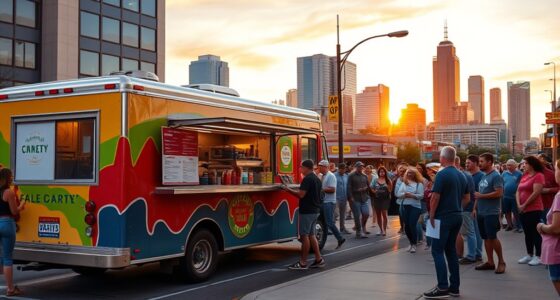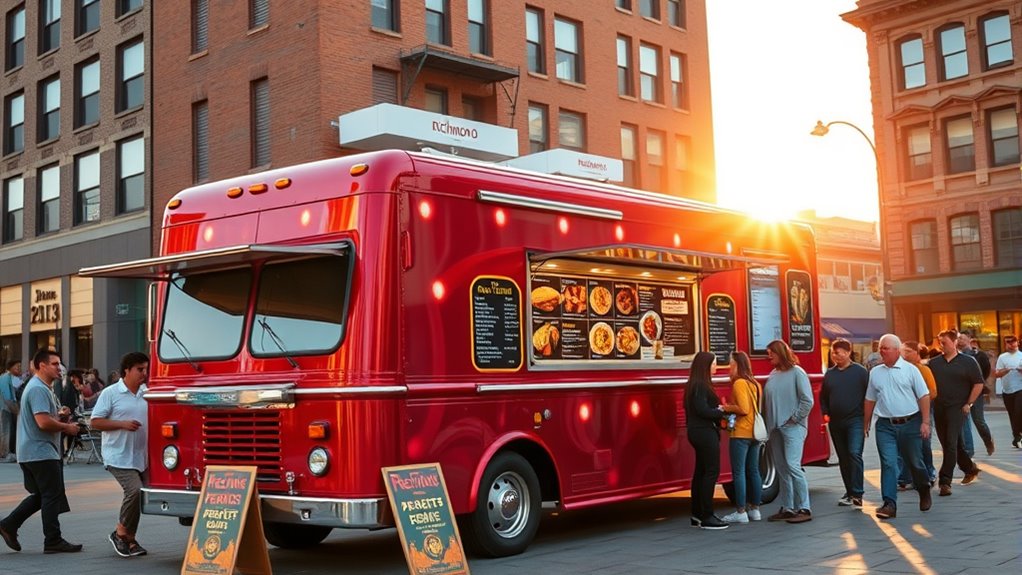

To open a food truck in Richmond, Virginia, you’ll need to secure permits like a health permit and business license, with costs ranging from $1,864 to $28,276. Choose high-traffic zones such as Shockoe Bottom or Carytown while respecting zoning rules. Craft a menu that appeals to locals, focusing on Southern comfort foods or healthy options, and promote your new venture through social media and local events. Exploring these steps further will help you launch successfully.
Key Takeaways
- Obtain necessary health permits and business licenses from Richmond authorities, renewing annually, and secure event or vendor permits as needed.
- Budget approximately $40,000–$150,000 for truck purchase, permits, initial inventory, equipment, and ongoing operational costs.
- Focus on commercial and high-traffic zones like Shockoe Bottom or Carytown, ensuring compliance with zoning and distance regulations.
- Craft a menu featuring local favorites, seasonal ingredients, and dietary options while adhering to safety and labeling standards.
- Leverage social media, mobile apps, and local events for marketing, customer engagement, and building a strong brand presence.
Navigating Permits and Licensing Requirements in Richmond
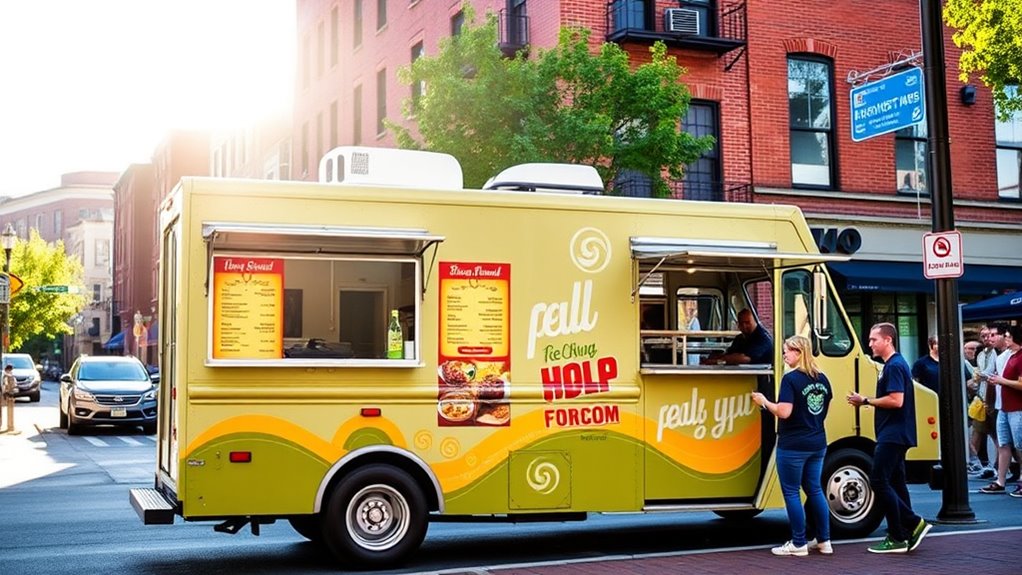
Are you ready to launch your food truck in Richmond? Steering permits and licensing is a crucial step. First, you’ll need to apply for a health permit by submitting a plan review to the local Environmental Health Department. They’ll check that your truck meets sanitation and safety standards, including equipment like a three-compartment sink, handwashing station, and proper refrigeration. An inspection will follow to ensure compliance. Next, you must obtain a business license from the Commissioner of the Revenue, based on your estimated gross receipts, and register with the Virginia State Corporation Commission. Don’t forget to renew your licenses annually. Additionally, you’ll need to secure vendor permits, and if you plan to operate at events, special event permits are necessary. Health permits are required to meet health and safety standards, and a plan review is needed to ensure your truck complies with sanitation requirements. Staying compliant ensures a smooth start for your Richmond food truck. It’s also helpful to familiarize yourself with local regulations to avoid potential penalties and ensure smooth operations.
Estimating Costs and Budgeting for Your Food Truck Venture
Estimating costs and creating a realistic budget are essential steps to launching your food truck business successfully. You should plan for a truck that costs between $40,000 and $150,000, depending on size and features. Licenses and permits can range from $1,864 to $28,276, so budget accordingly. Initial expenses also include $2,000 to $3,000 for inventory, about $300 for serveware, and $500 to $1,000 for fuel and maintenance. Equipment costs vary from $20,000 to $45,000 based on complexity, while ongoing consumables could reach $4,600 annually. Don’t forget to factor in marketing expenses, staffing costs around $6,000 per month, insurance, and regular maintenance. Proper budgeting guarantees you’re prepared for both startup costs and ongoing expenses, setting a solid foundation for your food truck venture. Understanding local permit requirements can help prevent unexpected costs and delays during the launch process. Additionally, considering vegetable juices and other healthy menu options can attract health-conscious customers and diversify your offerings.
Choosing the Right Locations and Understanding Zoning Rules
Choosing the right location for your food truck is essential, but maneuvering Richmond’s zoning rules can be complex. Residential areas are heavily restricted, often requiring special approval, and vending near public monuments or in high-traffic public spaces may be prohibited. Unique districts like Shockoe Bottom, Carytown, and the Arts District have specific regulations that you must follow. Commercial zones generally allow vending, especially in areas with high foot traffic, but permits are often required. Downtown Richmond offers designated vending spots with time restrictions, while event venues and public parks can be promising locations if you obtain the proper permits. Keep in mind the need to maintain at least 100 feet from brick-and-mortar businesses and stay updated on zoning map changes through the city’s planning department. Implementing vertical storage solutions can help maximize your limited space in your food truck and improve organization, which is crucial when navigating these regulations and maintaining compliance.
Crafting a Menu That Meets Local Tastes and Safety Standards
To succeed with your food truck in Richmond, you need a menu that resonates with local tastes while meeting strict safety standards. Richmond’s food scene favors Southern comfort foods, American classics, and healthier options, with gourmet twists gaining popularity. Incorporate seasonal ingredients to keep your menu fresh and cost-effective. Also, consider offering vegetarian and vegan dishes to attract diverse customers. Clear labeling for food allergies is essential for safety and compliance. Finding available trucks can provide insight into popular cuisines and customer preferences in the area. Here are four key tips: 1. Focus on popular items like burgers, barbeque, sandwiches, and desserts. 2. Use seasonal ingredients to enhance appeal and control costs. 3. Include vegetarian, vegan, and allergy-friendly options. 4. Limit menu size for efficiency and easier inventory management. Additionally, understanding cuisine diversity in Richmond can help tailor your offerings to meet various customer preferences.
Effective Marketing Strategies to Grow Your Food Truck Business
Growing your food truck business in Richmond requires more than just delicious food; effective marketing is essential to attract and retain customers. Digital strategies like social media boost visibility and sales. Facebook is key, with 75% of trucks actively engaging, leading to a 20% sales increase for over half. Mobile apps are growing, with downloads up 35%. Hosting events, like festivals, adds to your local presence and builds loyalty. Data analytics improve ROI by 25%, helping you understand customer preferences and market trends. Loyalty programs increase repeat visits by 30%, fostering customer retention. Partnering with local businesses creates authentic connections and joint promotions. The industry’s growth, with a CAGR of 6.4%, underscores the importance of strategic marketing to stay competitive and expand your customer base. In addition, understanding the security concerns related to new token standards can help you make informed decisions about integrating blockchain technology into your marketing or loyalty initiatives. Visualize your marketing efforts:
| Digital Marketing | Events & Community | Data & Loyalty |
|---|---|---|
| Social media posts | Festival booths | Customer insights |
| Facebook ads | Local collaborations | Rewards & discounts |
| Mobile app promos | Networking events | Trend analysis |
| Customer reviews | Community involvement | Operational efficiency |
Frequently Asked Questions
How Long Does the Permit Approval Process Typically Take in Richmond?
You’re probably wondering how long the permit approval takes in Richmond. Usually, for standard vendor permits, expect 2-4 weeks, and for food vendor permits, it’s around 4-6 weeks because of health inspections. During busy seasons, processing might slow down. To get a precise timeline, contact the Richmond Department of Finance. Make sure you submit all necessary documents, insurance, and fees promptly to avoid delays.
Are There Any Specific Health or Safety Regulations Unique to Richmond?
In Richmond, you’ll find that health and safety regulations are thoughtfully tailored to protect both vendors and customers, creating a vibrant, safe food scene. You must obtain a food service permit, guarantee at least one employee is certified, and follow strict sanitation standards. Unique to Richmond, you’ll also need to pass a menu and floor plan review, maintain records, and comply with fire safety permits—each step fostering community trust and safety.
Can I Operate a Food Truck at Private Events Without Additional Permits?
You can’t operate a food truck at private events without some additional permits. Even if you’re already licensed and have health permits, private events often require vendor permits and proof of insurance. You might also need a commissary license if food prep occurs off-site. Always check with event organizers and local regulations to guarantee you’re fully compliant, avoiding fines or shutdowns. Proper permits safeguard your business and ensure smooth operations.
What Are the Insurance Requirements Beyond Liability Coverage?
You need more than liability coverage to fully protect your food truck business. Consider adding products and completed operations coverage for foodborne illnesses, tools and equipment coverage for lost or damaged gear, and cyber liability if you handle customer data. If serving alcohol, liquor liability insurance is essential. Also, think about commercial auto, workers’ compensation, and excess liability policies to guarantee thorough protection and compliance with regulations.
Are There Any Restrictions on Operating Hours for Food Trucks in Richmond?
You might wonder about operating hours restrictions for food trucks in Richmond. While specific time limits aren’t clearly outlined, you should check local zoning laws and city regulations, as some areas may have restrictions on operating late at night or in certain zones. To avoid issues, verify with the Richmond city government or local authorities about any time restrictions, especially if you plan to operate during unusual hours or at special events.
Conclusion
Now that you know the steps to launch your food truck in Richmond, imagine the bustling streets where your truck becomes a local favorite. With the right permits, a well-crafted menu, and smart marketing, you’re on the verge of turning your dream into reality. But the true challenge lies ahead—standing out in a crowded market. Are you ready to take that leap and make your mark in Richmond’s vibrant food scene?