
To open a food truck in Wheeling, WV, you need permits like a street vendor license ($100/year), a retail Class A license for alcohol, and health permits, plus location-specific approvals. Expect costs from truck setup ($19,000–$100,000) to permits ($35–$125). Prime spots include downtown, waterfront, and event venues. Develop a simple menu with safety standards and plan effective marketing via social media. Keep compliance in mind, and you’ll find plenty to explore as you start your journey.
Key Takeaways
- Obtain necessary local, state, and health permits, including a Wheeling street vendor license and health clearance, ensuring compliance and visibility.
- Budget for equipment costs, licensing fees, and inventory, with options ranging from used trucks to essential appliances like fryers and refrigerators.
- Select high-traffic locations such as Downtown Wheeling, Waterfront, or near hospitals and events for maximum visibility and sales.
- Develop a simple, safe menu compatible with limited equipment, emphasizing quality, quick service, and seasonal adjustments.
- Use social media platforms for promotion, track KPIs, and ensure readiness for inspections through cleanliness, documentation, and staff training.
Navigating Permits and Licensing Requirements in Wheeling
Handling permits and licensing requirements in Wheeling can seem complex, but understanding the key steps makes the process manageable. First, you’ll need a local health permit for any food truck operating publicly or at events, along with inspections to ensure compliance. For festivals or markets, apply for temporary-event permits at least three weeks in advance. You must pass a pre-operation inspection and correct any violations to avoid closure. A Wheeling street vendor license is also mandatory, costing $100 annually, and must be displayed conspicuously. If you plan to sell alcohol, you’ll need a Retail Class A License, which involves additional documentation and fees. The Retail Class A License is required to operate a food truck in West Virginia Ultimately, register your business with the West Virginia Secretary of State and handle state and local taxes to stay compliant.
Understanding the Costs Involved in Operating a Food Truck
Understanding the costs involved in operating a food truck starts with knowing your licensing and permit fees, which can vary substantially in Wheeling. You’ll also need to budget for equipment and inventory expenses, from kitchen appliances to initial stock, which can add up quickly. Being aware of these costs helps you plan your budget and avoid surprises as you launch and grow your food truck business. Additionally, understanding the local licensing requirements and how they influence your overall expenses is essential for a successful start. Considering the cost of permits and licenses specific to Wheeling can further ensure you allocate enough funds for legal compliance.
Licensing and Permit Fees
Operating a food truck in Wheeling, WV, involves several licensing and permit fees that you need to budget for upfront. You’ll need a Wheeling city business license costing $15 to operate within city limits. State permits include a food manufacturing plan review fee of $100 and a permit fee of $35, totaling $135 for new operations. County permits vary: mobile food unit permits cost $125 annually, and temporary event permits are about $72 for up to 14 days. Vending machine permits are $72 each, with a maximum of $432 per site. Food service permits are based on seating capacity, ranging from $150 to $600. Also, plan for water well permits ($150) if sourcing water from a well. Permitting and inspection requirements are managed by local health departments, which may require additional fees or documentation. It’s important to stay informed about local health regulations to ensure compliance and avoid potential fines. Budget for renewal fees and possible late fees to stay compliant.
Equipment and Inventory Expenses
Getting your food truck ready to serve customers requires a clear grasp of equipment and inventory expenses, which can substantially impact your startup budget. New trucks typically cost between $50,000 and $100,000, while used trucks in West Virginia range from $19,000 to $160,000, depending on size and features. Retrofit costs for kitchen equipment and modifications average $10,000 to $30,000, especially if you include fire suppression systems and stainless steel interiors. Essential appliances like grills, fryers, and refrigerators vary in price, with commercial-grade gear costing more. Generators and ventilation systems add to expenses. Initial inventory costs depend on your menu but usually fall in the hundreds or thousands. Don’t forget ongoing costs for maintenance, cleaning supplies, fuel, and POS equipment, which also impact your overall budget.
Identifying Prime Locations for Food Truck Business in Wheeling
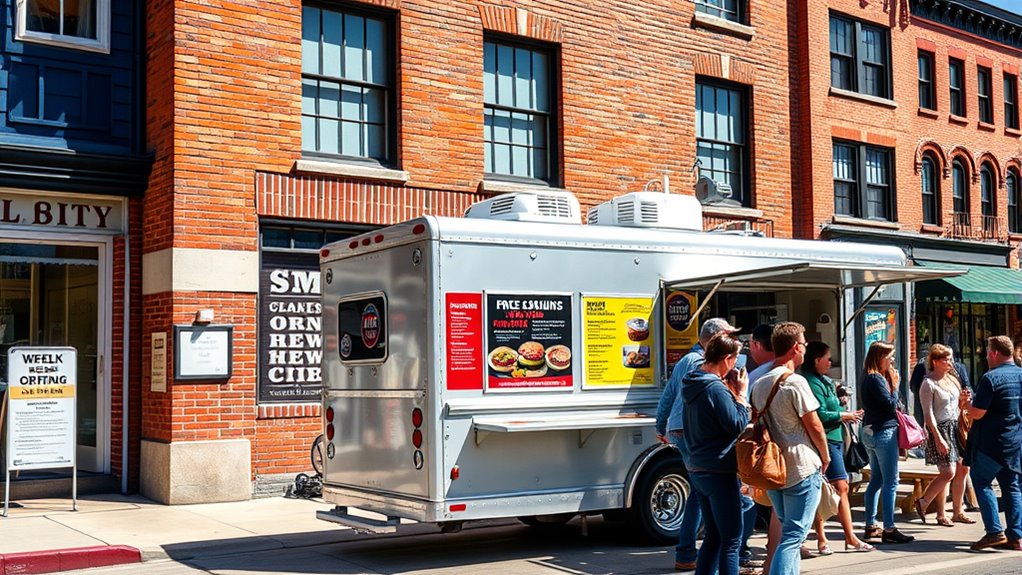
Choosing the right locations is essential for a successful food truck in Wheeling, WV. Downtown Wheeling, especially around Centre Market and Main Street, attracts high foot traffic during lunch hours and weekends, boosted by events and nearby government offices. Visibility from retail stores, bars, and attractions like the historic district and riverfront extends your service hours into evenings and weekends. The Waterfront and Heritage Port area draw leisure visitors, boaters, and festival-goers, creating weekend demand and opportunities for multi-truck clusters. Near hospitals, colleges, and office complexes, you’ll find reliable lunch crowds and potential for recurring stops. Event venues, farmers markets, and seasonal festivals offer short-term volume boosts and brand exposure. Tracking schedules via social media in these locations can help you maximize your presence and adapt to busy periods. In conclusion, retail centers and grocery stores provide drive-by visibility, especially during evenings and weekends, for quick-service foods. Additionally, understanding the permitting process and local regulations ensures compliance and smooth operations as you establish your presence in Wheeling.
Developing a Menu and Meeting Food Preparation Standards
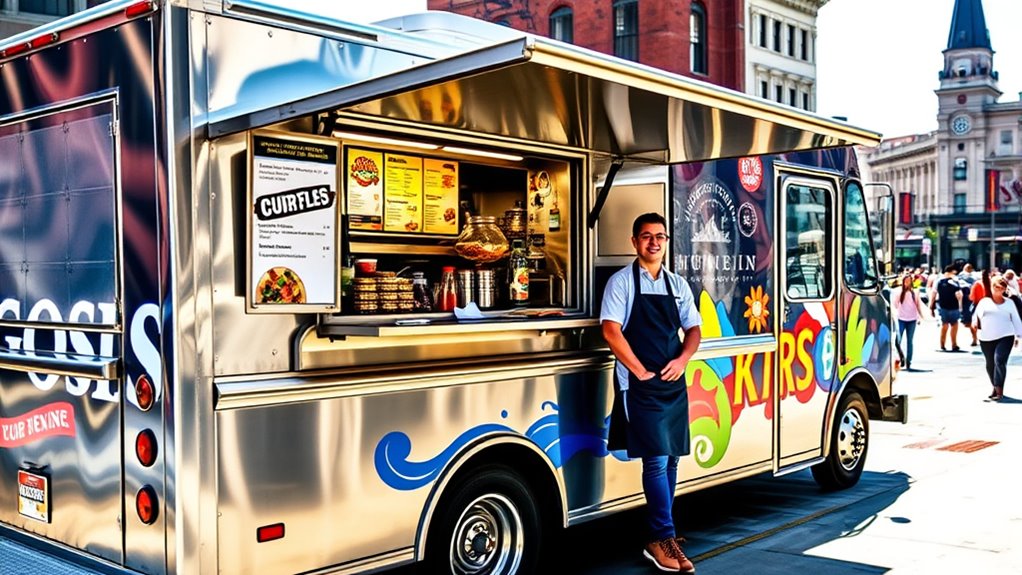
Developing a menu for your food truck in Wheeling requires careful consideration of your equipment limitations and local regulations. You need to choose items compatible with your two-burner hot plate, air fryer, or microwave, guaranteeing they can be prepared efficiently within your space. Focus on menu items that hold their quality during transport and storage, considering your refrigeration capacity. To stay compliant, you must:
Design a simple, efficient menu suited to your equipment and local regulations, focusing on quality, safety, and quick service.
- Maintain at least $500 worth of ready-to-serve food inventory.
- Use only approved plastic or metal utensils and utensils.
- Keep your menu simple and fast to prepare, especially during busy hours.
Also, ensure your menu reflects seasonal ingredient availability and can be prepared safely within your designated kitchen area, adhering to health standards and sanitation protocols. Incorporating diversification strategies in your menu planning can help mitigate risks associated with fluctuating ingredient prices and availability.
Effective Marketing and Promotional Strategies for Food Trucks
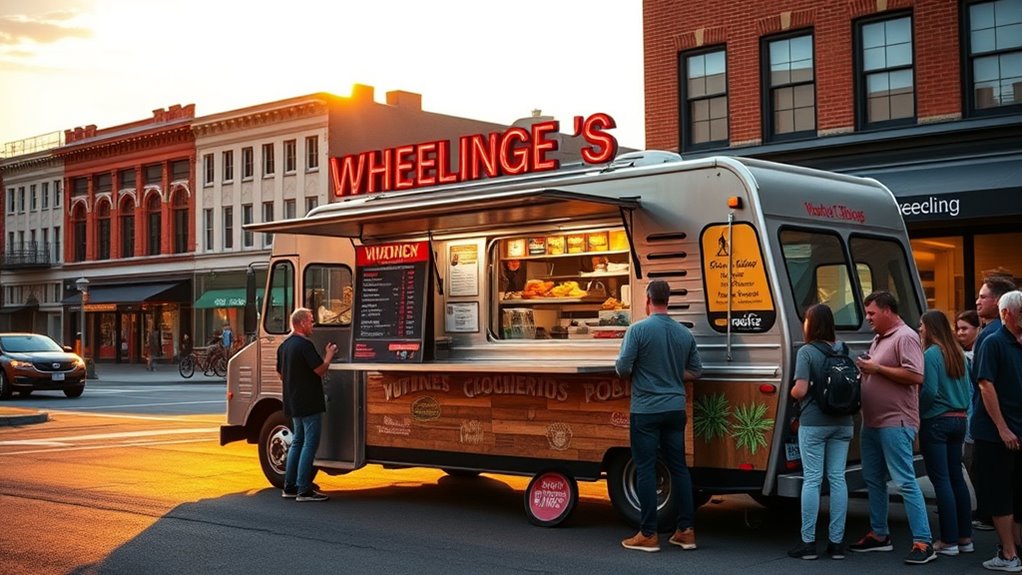
To effectively promote your food truck in Wheeling, leveraging targeted social media strategies is essential. Focus on Facebook and Instagram for visuals, events, and Stories, and TikTok for viral trends—since 75% of trucks use Facebook and 68% use social media regularly. Post daily about locations and menus, with 2–3 weekly behind-the-scenes stories, and share short videos 3–5 times weekly to boost discovery and repeat visits. Use platform-specific features like Facebook Events, Instagram Reels, and TikTok challenges. Track KPIs such as impressions, clicks, followers, engagement, and conversions to refine your approach. Allocate a modest budget for boosted posts or local ads, which can lift sales by around 20%. Incorporating online resources can also provide additional guidance and tools for your marketing efforts.
Ensuring Operational Compliance and Passing Inspections
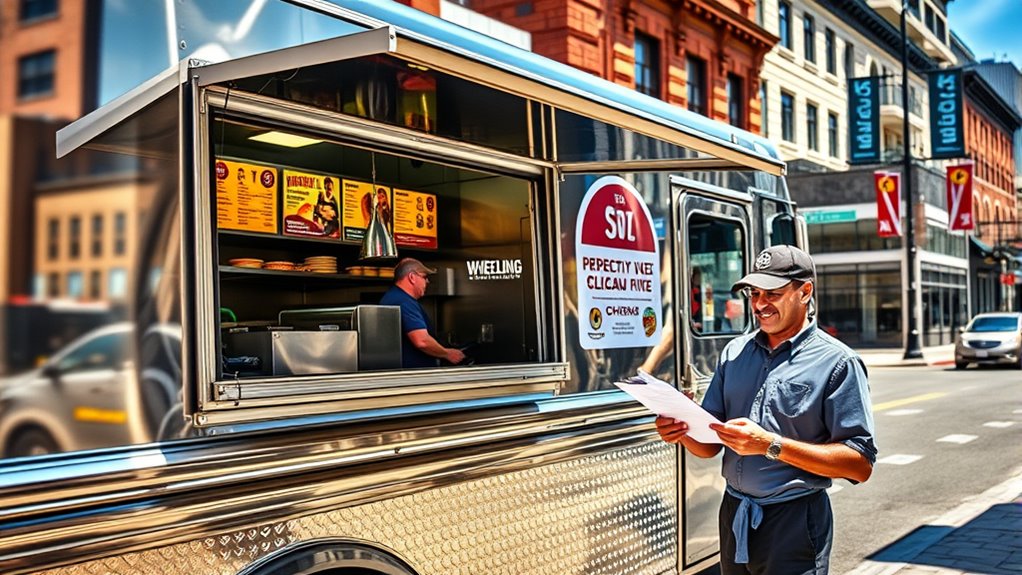
Promoting your food truck effectively starts with making sure you meet all legal and safety requirements. To do this, you need to:
- Obtain all necessary permits from the local County Health Department, including health and fire inspections, before operating. All temporary food service operations must obtain a permit from the health department.
- Maintain food safety standards by adhering to West Virginia’s Food Establishment Rule, ensuring proper temperature control, sanitation, and cross-contamination prevention.
- Pass annual fire inspections, especially if you have cooking equipment, and keep your vehicle in compliance with zoning and site regulations.
Always display permits visibly during operation, keep the surrounding area clean, and be ready for unannounced inspections. Staying proactive helps you avoid closures and keeps your truck operating smoothly.
Frequently Asked Questions
How Long Does the Permit Approval Process Typically Take in Wheeling?
You’re probably wondering how long it takes to get your permit approved. In Wheeling, the process usually takes around 2 weeks, but it can be longer if your application isn’t complete or if scheduling delays occur. To speed things up, submit all required documents early, promptly address any inspection issues, and guarantee your application is thorough. High demand periods might also extend the timeline, so plan accordingly.
Are There Any Specific Zoning Restrictions for Food Trucks in Wheeling?
You should be aware that Wheeling’s zoning restrictions for food trucks focus on location and safety. You can operate only on property zoned for food service, with permission from property owners. You’re restricted from blocking sidewalks or streets, and your setup must stay within designated areas, usually limited to a small footprint. The city favors flexibility and has not imposed many additional restrictions, but compliance with site-specific rules and inspections is essential.
Can Food Trucks Operate During Late-Night Hours in Wheeling?
Think of Wheeling’s rules as a gentle river guiding your boat; it flows quietly, but you must follow its course. You can operate your food truck at night, as there are no strict statewide or city restrictions. However, you need to stay within permitted locations, avoid obstructing pathways, and adhere to health and safety regulations. If you respect these boundaries, late-night operation becomes a smooth voyage.
What Are the Insurance Requirements for Food Truck Operators?
You need to meet West Virginia’s insurance requirements to operate a food truck legally. That means carrying at least auto liability insurance for your vehicle, covering damages and injuries on the road. Also, you should have general liability insurance to protect against customer injuries or property damage, plus product liability coverage for food-related illnesses. If you have employees, workers’ compensation is essential. Additional coverages like cyber liability or trailer endorsements can also be wise.
How Often Are Health and Fire Inspections Conducted in Wheeling?
You’re wondering how often health and fire inspections happen in Wheeling. Health inspections are conducted once per year, with the initial inspection due within 14 days of your license application. Fire inspections are less explicitly scheduled but are performed periodically or as needed to guarantee safety compliance. Violations must be corrected quickly, and multiple violations can threaten your license. Be prepared for inspections during events or routine checks to stay compliant and avoid penalties.
Conclusion
As you gear up to launch your food truck in Wheeling, every permit secured and location chosen brings you closer to success. Imagine the first customer’s smile as they savor your signature dish, the buzz of your truck drawing crowds in prime spots, and your brand becoming a local staple. But the journey isn’t over yet—what’s next could transform your food truck into Wheeling’s next must-visit destination. Are you ready to make it happen?