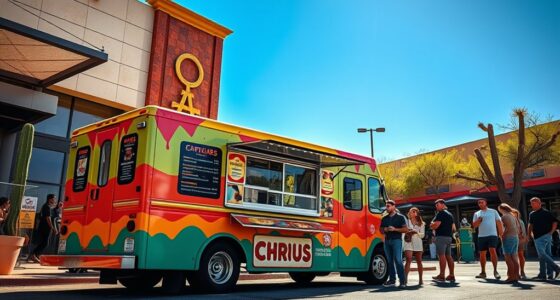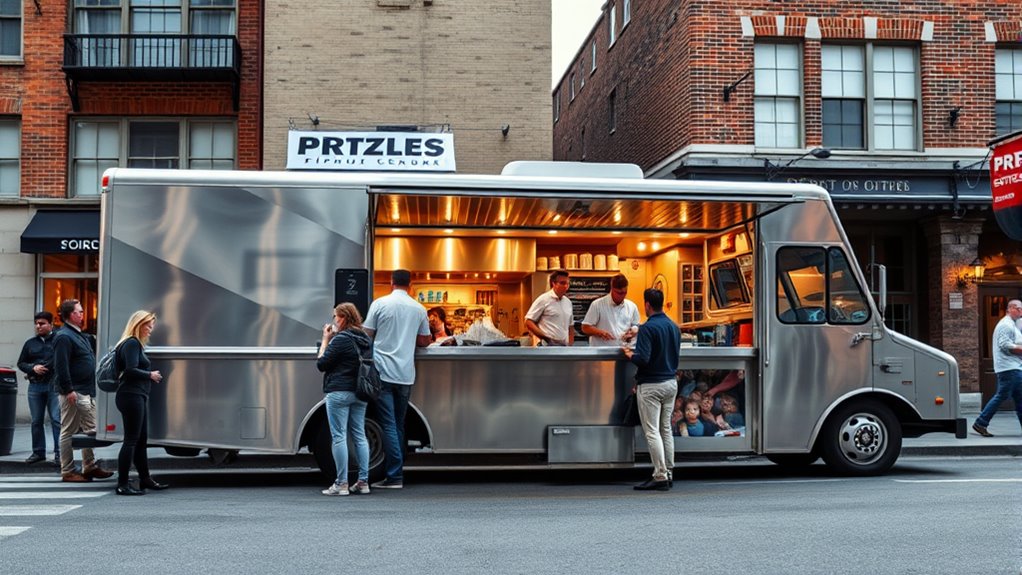

To pivot from a restaurant to a food truck, focus on creating a streamlined, flexible menu that’s quick to prepare and easy to serve. You’ll need to navigate licensing, permits, and health regulations specific to mobile operations, so stay organized and thorough. Adapt your layout and tools for limited space and develop routines for daily setup and customer interactions. As you plan carefully, you’ll open new opportunities—keep exploring how to make this transition successful.
Key Takeaways
- Adapt your menu to focus on quick, portable dishes with customizable options suitable for mobile service.
- Secure necessary permits, licenses, and health approvals specific to food trucks and mobile vending.
- Optimize a compact kitchen setup with efficient appliances to manage limited space and streamline operations.
- Develop routines for daily setup, inventory, and customer service tailored to a mobile environment.
- Embrace flexibility and continuous learning to navigate regulatory challenges and evolving customer preferences.
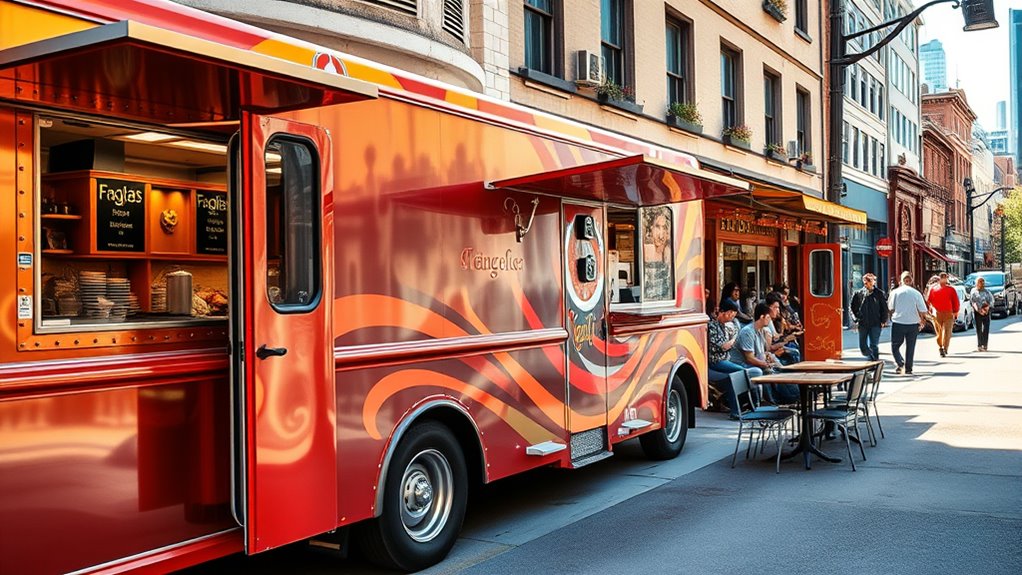
Shifting from running a brick-and-mortar restaurant to operating a food truck can be an exciting yet challenging change. One of the most significant adjustments you’ll face is how you approach menu customization. Unlike a traditional restaurant with a fixed space and equipment, a food truck demands flexibility. You need to design a menu that appeals to a broad audience but also fits within the limited kitchen area. This means streamlining your offerings, focusing on dishes that cook quickly and are easy to serve on the go. It’s essential to balance variety with simplicity to keep your operations smooth and your customers satisfied. Think about which items are best suited for a mobile environment and consider offering customizable options that allow patrons to choose toppings or sides. This flexibility enhances customer experience and helps you stand out in a competitive food truck scene.
Beyond menu adjustments, licensing challenges pose another major hurdle. Operating a food truck requires maneuvering a complex web of regulations that differ from those governing brick-and-mortar restaurants. You’ll need to secure multiple permits, including mobile food vendor licenses, health department approvals, and parking permits for each location. These licensing processes can be time-consuming and sometimes confusing, especially if you’re unfamiliar with local regulations. It’s crucial to thoroughly research the rules in your city and state, and even better, work with local authorities or a legal consultant experienced in food truck regulations. Failing to meet licensing requirements can lead to hefty fines or even shutdowns, so prioritize compliance from the start. Keep meticulous records of all paperwork, inspections, and permits to avoid delays or legal issues down the line. Additionally, understanding Ring security cameras can help you monitor your truck and surroundings, ensuring safety and security during operations.
Transitioning to a food truck also means adapting your mindset and operations. You’ll need to develop new routines for setting up daily, managing inventory in a smaller space, and handling on-the-fly customer service. Your kitchen setup must be efficient, using compact appliances that maximize functionality. Customer engagement becomes more direct, often requiring you to be personable and quick on your feet. As you streamline your menu and maneuver licensing challenges, remember that flexibility and thorough planning are your best tools. This shift allows you to bring your culinary vision directly to your community, offering fresh, customized dishes with the convenience of mobile service. Embrace the learning curve, stay organized, and remain adaptable—your food truck journey will be rewarding if you approach it with focus and resilience.
Frequently Asked Questions
What Permits Are Needed to Operate a Food Truck?
You’ll need to obtain several permits to operate your food truck, including a business license, health department permit, and a vehicle license. Make certain you meet food safety standards and pass inspections. Regular vehicle maintenance is vital for safety and compliance. Check local regulations, as requirements vary by city or state. Staying compliant helps you avoid fines and keeps your customers safe while maintaining a smooth operation.
How Do Food Truck Startup Costs Compare to Restaurants?
Your food truck startup costs are generally lower than opening a restaurant. You’ll save on expensive rent, large staff, and extensive equipment, making your initial expenses more manageable. The cost comparison shows that startup expenses for a food truck focus on purchasing and outfitting the vehicle, licensing, and permits, which are considerably less than building or leasing a full-scale restaurant space. This makes starting a food truck a more affordable entry into the food business.
What Are the Best Locations for Food Trucks?
They say, “location is everything,” and that’s especially true for food trucks. You should target busy street vendors and high-traffic event locations like festivals or markets. Look for areas with foot traffic, such as downtown districts, parks, or near office buildings. These spots attract hungry crowds and increase your chances of success. Remember, the right location can turn your food truck into a local favorite in no time.
How Does Menu Planning Differ Between Restaurants and Food Trucks?
You prioritize menu flexibility in a food truck, offering a smaller, adaptable selection that can change based on location and demand. Ingredient sourcing becomes more critical, focusing on fresh, portable, and shelf-stable ingredients to guarantee quality and efficiency. Unlike a restaurant’s extensive menu, your food truck’s menu needs to be streamlined, quick to prepare, and responsive to customer preferences, making agility essential for success.
What Marketing Strategies Are Most Effective for Food Trucks?
You should focus on social media campaigns to build your brand and engage your audience, posting regularly and highlighting your menu, location, and special offers. Partnering with local events can boost visibility and attract new customers. Attend festivals, markets, and community gatherings to increase exposure. Combining active social media efforts with strategic event participation helps you reach a broader audience, generate buzz, and grow your food truck’s popularity effectively.
Conclusion
Switching from a restaurant to a food truck can be a game-changer, offering fresh opportunities and new adventures. It’s a bold move that requires courage and adaptability, but with passion and determination, you’ll be cooking up success on wheels. Remember, sometimes you have to change gears to reach your true potential. So, embrace the journey ahead—because in the end, fortune favors the brave. Keep your eyes on the prize and go all in!