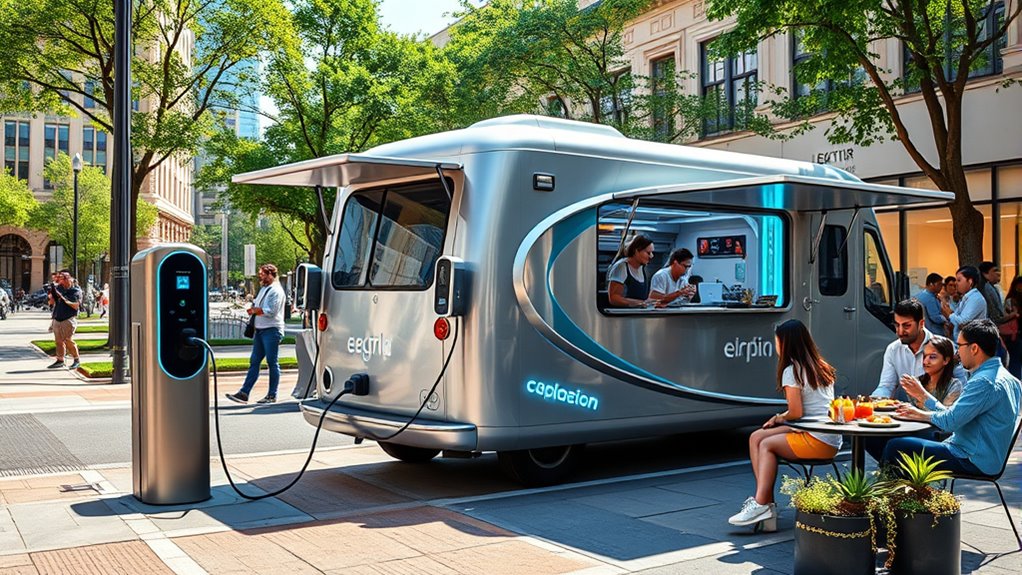

Integrating electric vehicles into your food truck fleet is a smart move that boosts sustainability, cuts operational costs, and enhances your eco-friendly image. You’ll need to evaluate your fleet’s range needs, explore government incentives, and plan charging stations strategically. Choosing the right EV models and using IoT technology help manage maintenance and performance efficiently. Tackling costs and infrastructure challenges is essential for success. Keep exploring to uncover how to optimize your electric fleet for long-term benefits.
Key Takeaways
- Assess operational requirements and select EV models with suitable range and charging compatibility for daily food truck activities.
- Plan and deploy strategic charging infrastructure, including on-the-go options and partnerships with local facilities for seamless access.
- Leverage government incentives and conduct cost-benefit analysis to justify initial investments and maximize ROI.
- Integrate IoT-enabled systems for real-time vehicle monitoring, diagnostics, and energy management to optimize fleet performance.
- Develop maintenance schedules and support networks focused on EV-specific needs to ensure reliability and longevity of the fleet.
Benefits of Transitioning to Electric Food Trucks
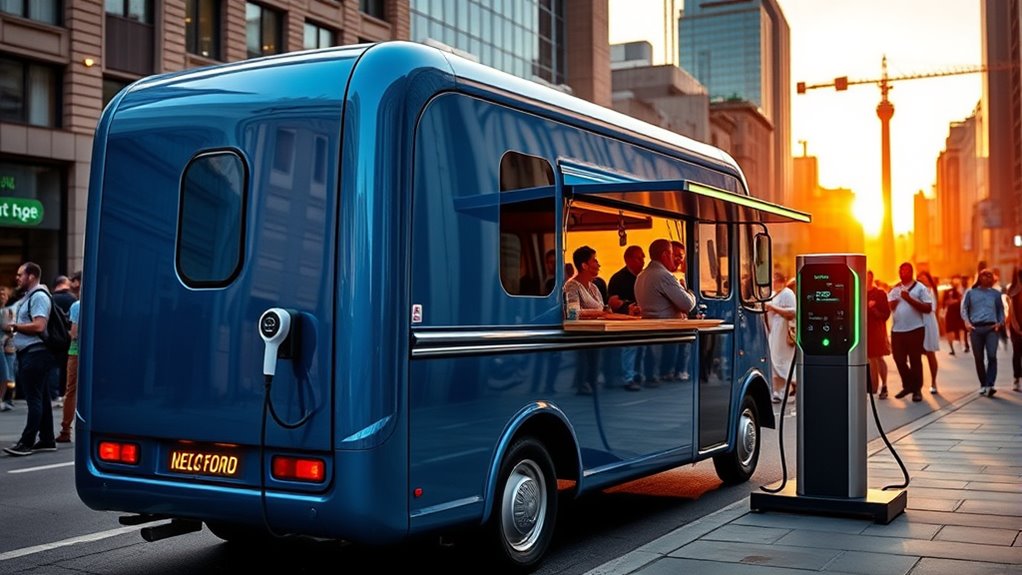
Switching to electric food trucks offers numerous advantages that can boost your business and reduce costs. One key benefit is access to electric vehicle incentives, which can substantially lower upfront expenses and improve your return on investment. Advances in battery technology mean your trucks will have longer ranges and faster charging times, making operations smoother and more efficient. Electric vehicles produce zero emissions, helping you meet eco-friendly standards and appealing to environmentally conscious customers. Additionally, electric trucks typically have lower maintenance costs due to fewer moving parts and less wear and tear. This shift not only enhances your brand’s sustainability but also offers financial savings over time. Incorporating risk management strategies can help mitigate potential regulatory and security challenges associated with adopting new technologies. Staying informed about regulatory compliance requirements ensures your transition remains smooth and legally sound. Moreover, understanding market trends can help you better align your fleet upgrade with evolving consumer preferences and government policies. Embracing these innovations can also improve your company’s reputation among eco-aware consumers and stakeholders. Moreover, leveraging prairie scenery and local cultural themes in your branding can resonate with communities and enhance customer loyalty during your transition.
Assessing the Feasibility for Your Fleet
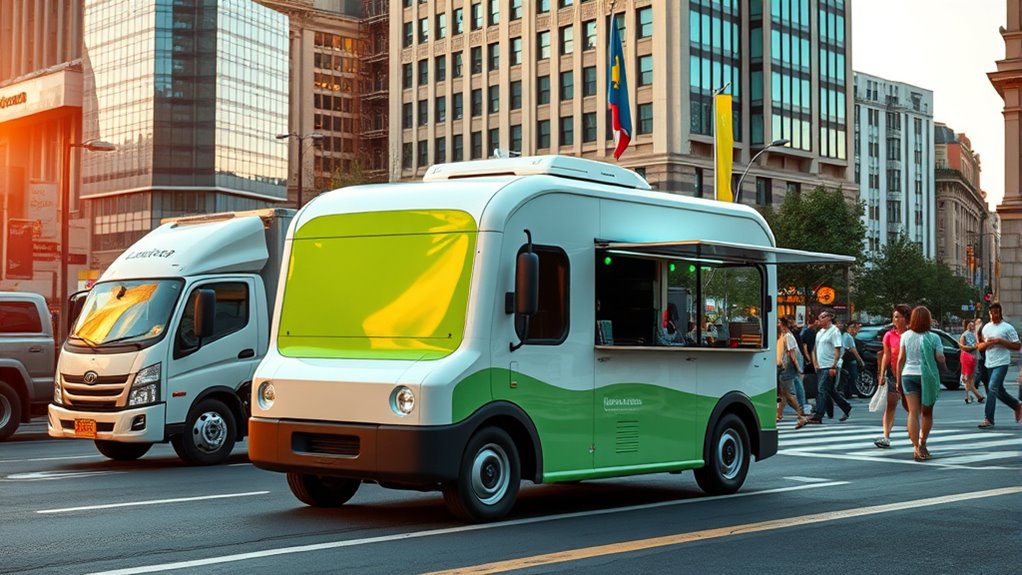
Before shifting to electric vehicles, it’s vital to evaluate whether your current fleet setup aligns with electric technology. Consider factors like battery longevity, which impacts maintenance costs and vehicle uptime. You should also explore available government incentives that can offset initial expenses and improve ROI. To help assess feasibility, review this table:
| Factor | Consideration | Action |
|---|---|---|
| Battery Longevity | Will batteries last through daily use? | Choose models with proven durability. |
| Government Incentives | Are there subsidies or rebates? | Research local and federal programs. |
| Fleet Size & Usage | Can your fleet handle charging needs? | Plan charging infrastructure accordingly. |
Additionally, assessing your fleet’s operational requirements ensures that electric trucks can meet your business demands without interruption. Considering the long-term benefits of electric vehicles can further support your decision-making process. Evaluating these areas ensures that electric trucks will seamlessly integrate into your operations and contribute to sustainability goals. Understanding battery performance is essential to forecast maintenance and replacement schedules effectively.
Selecting the Right Electric Vehicle Models
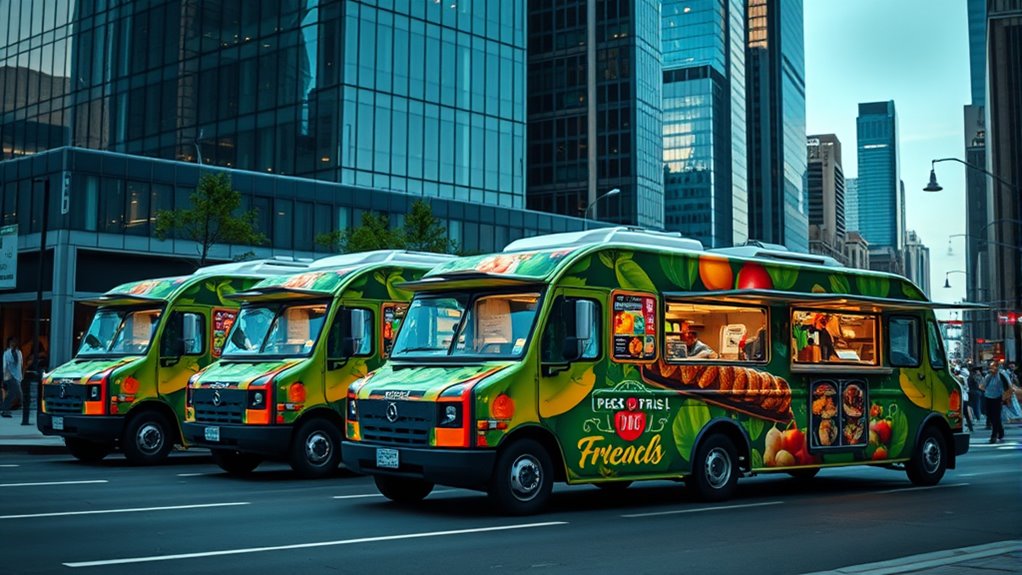
When choosing electric vehicle models for your food truck, you need to consider their range to guarantee they meet your daily needs. Compatibility with available charging infrastructure is also vital to keep your operations running smoothly. By carefully evaluating these factors, you can select the best models to support your fleet’s efficiency and reliability. Additionally, considering the integration of smart home devices can enhance operational convenience and monitor vehicle performance remotely. Modern EVs often incorporate proven energy-saving features, which can further optimize your vehicle’s operational costs. For vehicles like the Hyundai Santa Fe or Sonata, tuning options can optimize performance and efficiency to better suit your operational requirements. Incorporating performance upgrades such as engine tuning and suspension modifications can further improve your vehicle’s handling and energy efficiency, ensuring your fleet operates at peak performance. Exploring sound design techniques can also help create a quieter cabin environment, improving driver comfort during long hours on the road.
Model Range Options
Choosing the right electric vehicle (EV) model for your food truck fleet depends on understanding the available range options. Battery capacity directly influences range estimation, helping you determine how far your truck can travel on a single charge. When selecting, consider these factors:
- Battery size – Larger capacity batteries usually provide a longer range.
- Range estimation – Look at manufacturer estimates, but test in real-world conditions.
- Driving patterns – Shorter routes may need less range, while long days require more.
- Charging needs – Higher range models may reduce charging frequency but could be heavier or more expensive.
Matching your operational needs with the vehicle’s range ensures your fleet stays productive without unexpected stops, streamlining your food truck business.
Charging Infrastructure Compatibility
Selecting the right electric vehicle models for your food truck fleet requires ensuring compatibility with your existing and planned charging infrastructure. You need to consider battery capacity and charging standards to avoid future issues. Different models support various charging speeds and connector types, impacting turnaround times and operational efficiency. Properly matching vehicle specifications with available charging standards can streamline your fleet operations and reduce maintenance costs. Additionally, understanding the wave and wind dynamics at your typical operating locations can help optimize vehicle deployment times and charging schedules. Being aware of the charging infrastructure compatibility also minimizes the risk of needing costly upgrades or modifications. Incorporating technological advancements can further enhance charging efficiency and future-proof your fleet investments.
Planning Charging Infrastructure and Locations
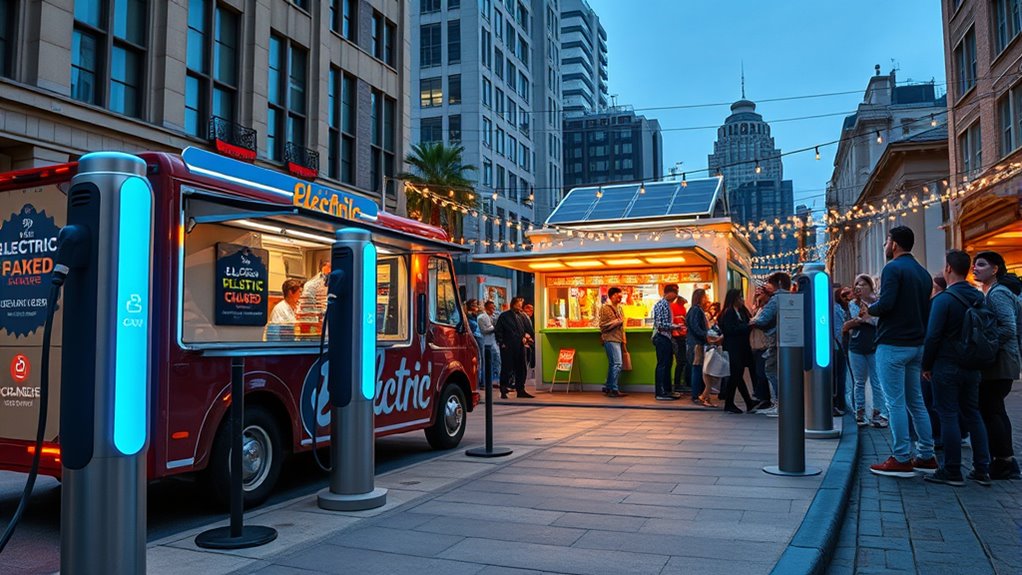
You need to contemplate where to place charging stations for maximum efficiency, focusing on strategic locations that your trucks frequently visit. On-the-go charging options can keep your fleet moving without delays, especially during busy hours. Collaborating with local facilities like restaurants or parking lots can expand your charging network and reduce infrastructure costs. Additionally, assessing the cost and budgeting implications of various locations can help optimize your investments and ensure long-term sustainability. Incorporating availability of charging stations at key points can further enhance operational efficiency and reduce downtime.
Strategic Charging Station Placement
Effective placement of charging stations is essential for seamlessly integrating electric vehicles into a food truck fleet. When planning, consider urban planning principles to optimize accessibility and traffic flow. Focus on areas with high foot traffic and frequent stops. Additionally, incorporate energy storage solutions to manage peak demand and reduce strain on the grid. To guide your placement, consider these factors:
- Locate stations near popular food truck routes and parking areas.
- Use data on city traffic patterns to identify underserved zones.
- Ensure stations are compatible with future fleet expansion.
- Coordinate with local urban planning agencies for seamless integration.
- Incorporate low-light office plants to enhance the urban environment around your stations, making them more inviting and comfortable. Also, understanding energy storage solutions can help optimize station performance and reliability. Additionally, considering the safety features of charging equipment ensures safe operation in busy urban settings. Recognizing the importance of Gold IRA options can also provide insights into diversified investment strategies for supporting infrastructure development. Incorporating renewable energy sources like solar panels can further enhance sustainability and reduce operational costs of your charging stations.
On-the-Go Charging Options
To support the dynamic needs of a food truck fleet, planning on-the-go charging options requires strategic placement of portable and fast-charging infrastructure along key routes. Portable generators offer flexible power sources that can be quickly deployed at various locations, ensuring your trucks stay charged during busy hours. Solar panels, mounted on truck roofs or portable setups, harness renewable energy to extend range and reduce reliance on grid power. Combining these options allows you to adapt to different environments and operational demands. Carefully select high-traffic areas or frequent stops where portable generators and solar-powered chargers can be efficiently used. This approach guarantees continuous operation, minimizes downtime, and maximizes your fleet’s mobility and sustainability on the move.
Collaboration With Local Facilities
Partnering with local facilities such as parking garages, community centers, and businesses can substantially enhance your fleet’s charging strategy. These facility partnerships boost community engagement and provide convenient charging spots for your electric food trucks. To maximize benefits, consider these steps:
- Identify high-traffic locations with existing infrastructure.
- Negotiate access and charging rates with facility owners.
- Coordinate with local authorities for permits and safety standards.
- Promote these partnerships to build community support and visibility.
Managing Costs and Budgeting for an Electric Conversion
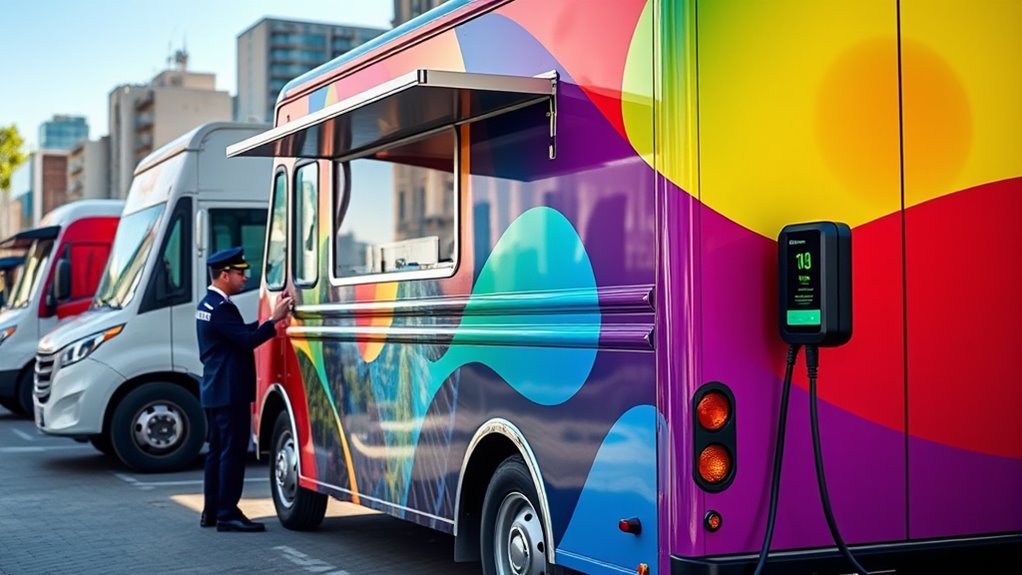
Managing costs and budgeting for an electric conversion requires careful planning from the outset. Start with a thorough cost analysis to identify expenses like batteries, motor upgrades, and installation. This helps you set a realistic budget and avoid surprises. Use effective budget planning to allocate funds wisely, considering both initial investments and ongoing maintenance. Here’s a quick overview:
| Expense Category | Estimated Cost |
|---|---|
| Battery & Charger | $15,000 – $25,000 |
| Electric Motor | $5,000 – $10,000 |
| Installation & Labor | $3,000 – $7,000 |
| Permits & Inspection | $1,000 – $2,000 |
Overcoming Common Challenges and Barriers
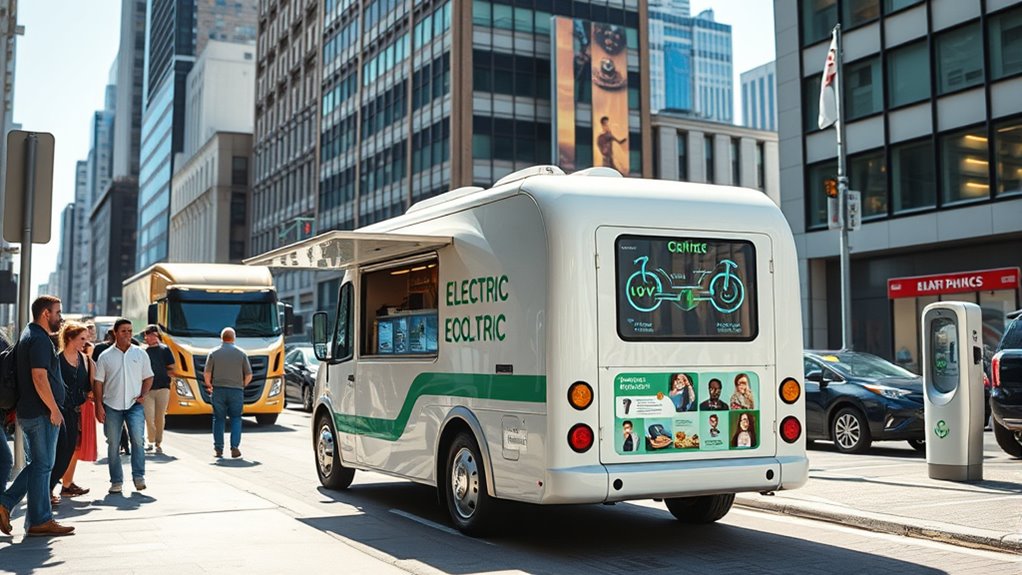
While shifting your food truck fleet to electric vehicles offers many benefits, it also presents several common challenges and barriers that you’ll need to address.
- Charging infrastructure: You may face difficulties finding reliable charging stations or installing enough chargers at your location.
- Battery recycling: Managing battery disposal responsibly is essential to avoid environmental harm and comply with regulations.
- High upfront costs: Despite long-term savings, initial investments can be steep, but government incentives can help offset these expenses.
- Limited vehicle options: The variety of electric food trucks is still growing, which might limit your choices.
Implementing Maintenance and Support Systems
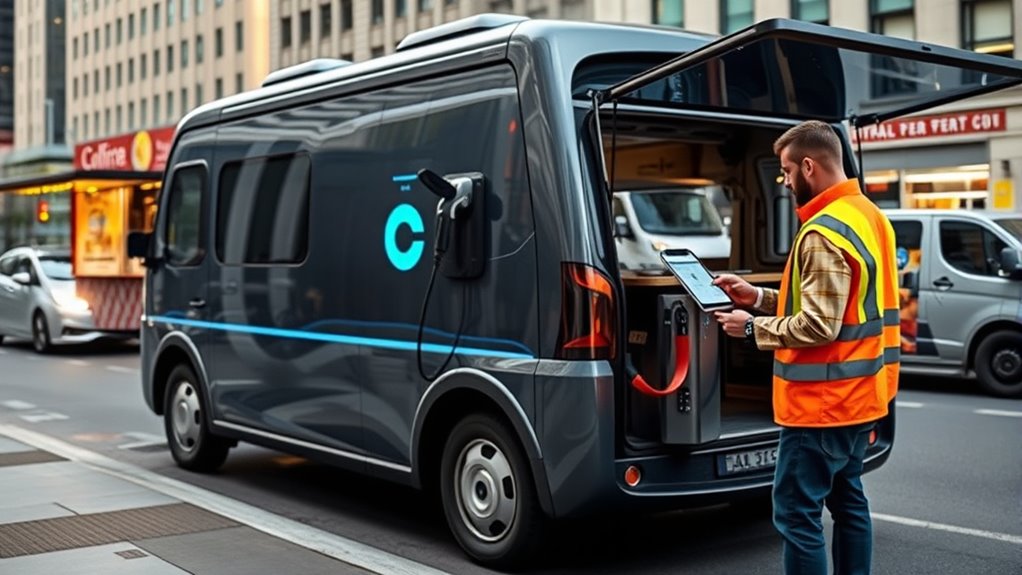
Once you’ve addressed the initial hurdles of infrastructure and costs, setting up effective maintenance and support systems becomes essential to keep your electric food trucks running smoothly. You should develop a clear maintenance scheduling plan that covers routine inspections, battery checks, and software updates to prevent unexpected breakdowns. Building a reliable support network is equally important; establish relationships with qualified technicians and service providers familiar with electric vehicle technology. Keep detailed records of maintenance activities to track performance and identify recurring issues. Implement remote diagnostics where possible to quickly troubleshoot problems. Regular support and proactive maintenance ensure your trucks stay operational, reduce downtime, and extend vehicle lifespan. A well-organized system minimizes disruptions, boosts efficiency, and helps you deliver consistent, eco-friendly service to your customers.
Marketing Your Eco-Friendly Food Truck Fleet
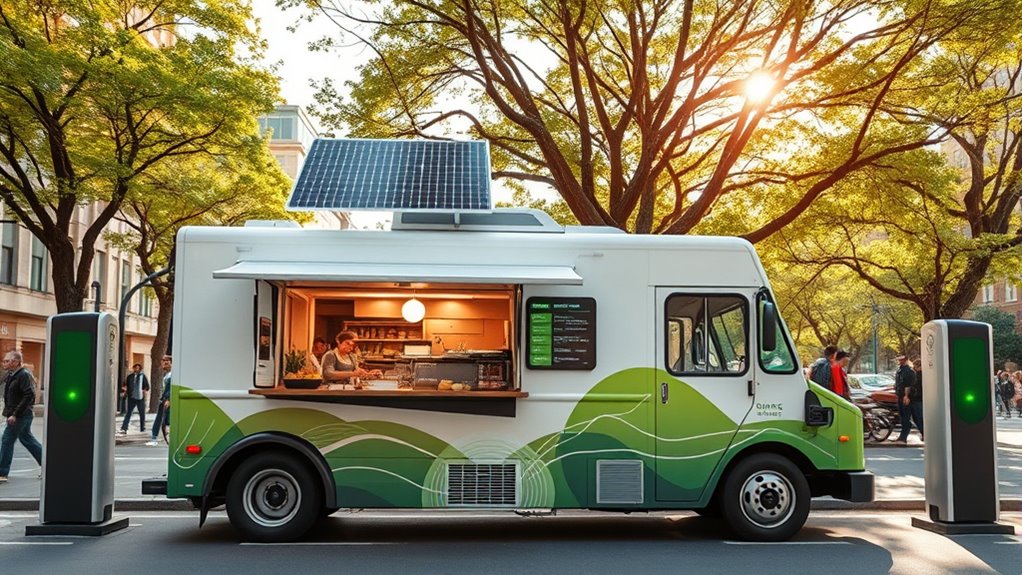
Promoting your eco-friendly food truck fleet begins with highlighting its sustainability benefits to attract environmentally conscious customers. To effectively market your fleet, leverage digital marketing strategies that emphasize your green initiatives. Consider these approaches:
- Share compelling stories about your electric trucks and eco-friendly practices on social media platforms.
- Use targeted ads to reach local communities interested in sustainability.
- Engage customers through interactive content like polls or eco-tips to boost customer engagement.
- Collaborate with local eco-conscious events to build your brand’s reputation.
Future Trends and Innovations in Electric Food Transportation
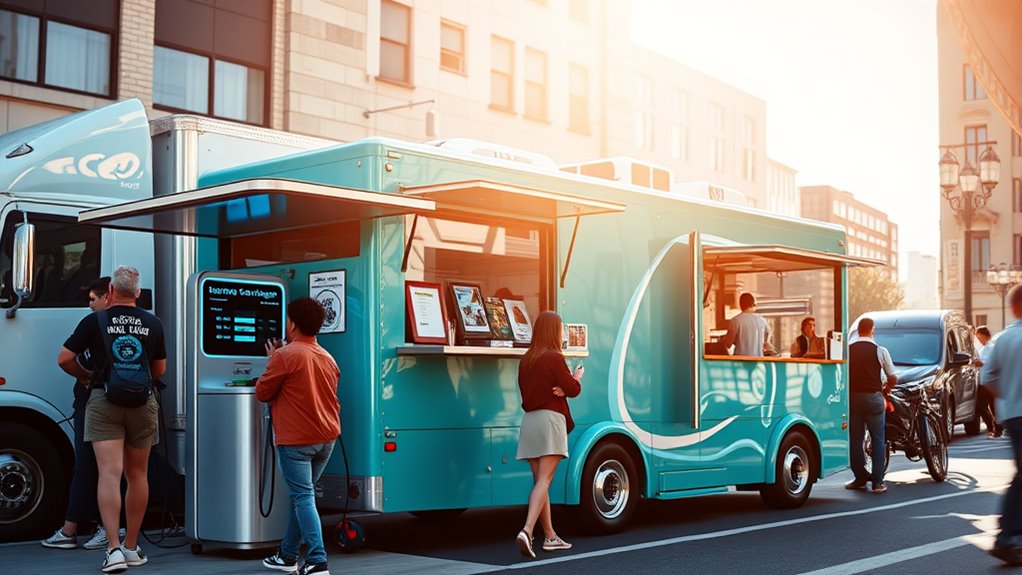
Advancements in electric vehicle technology are rapidly shaping the future of food transportation, offering new opportunities for efficiency and sustainability. Autonomous driving will revolutionize delivery, reducing labor costs and increasing safety. Battery swapping stations will eliminate lengthy charging times, allowing trucks to stay on the road longer. These innovations enable seamless, quick service and improved operational flexibility. The table below highlights key future trends:
| Trend | Benefit | Impact |
|---|---|---|
| Autonomous Driving | Reduces labor costs, enhances safety | Faster, more reliable deliveries |
| Battery Swapping | Minimizes downtime, boosts efficiency | Increased route flexibility |
| Smart Routing | Optimizes delivery paths | Saves time and fuel |
| Renewable Power | Lowers carbon footprint | Eco-friendly operations |
| IoT Integration | Real-time monitoring | Improved vehicle management |
Frequently Asked Questions
How Long Do Electric Food Trucks Typically Last on a Full Charge?
You might wonder how long an electric food truck lasts on a full charge. Typically, battery lifespan and charging frequency influence this. Most electric food trucks can run anywhere from 4 to 8 hours before needing a recharge, depending on usage and battery capacity. Regular charging helps maintain battery health, but aggressive charging can impact lifespan. So, plan for daily charges and monitor your battery’s condition to guarantee consistent performance.
What Are the Safety Considerations for Charging Electric Food Trucks?
Charging an electric food truck is like handling a ticking time bomb if you’re not careful. Always prioritize charging station safety by guaranteeing proper installation and regular inspections. Protect your electrical system integrity by using certified chargers and avoiding makeshift setups. Keep fire extinguishers nearby, and educate staff on safety protocols. These steps help prevent accidents, keep your truck running smoothly, and ensure everyone’s safety during charging.
How Does Weather Impact the Performance of Electric Food Trucks?
Weather considerably impacts your electric food truck’s performance. Cold temperatures can cause battery degradation, reducing range and efficiency, while hot weather may lead to overheating issues. Rain or snow can also affect charging infrastructure, making it harder to find safe, reliable charging spots. To keep your truck running smoothly, you need to monitor weather conditions, plan routes accordingly, and make certain your charging infrastructure is weather-resistant and well-maintained.
Are There Specific Regulations for Electric Food Trucks in Different Cities?
You’ll find that regulations for electric food trucks vary city by city. You need to check zoning restrictions to make certain your truck fits within designated areas. Licensing requirements often include special permits for electric vehicles, emission standards, and safety inspections. Staying compliant means understanding local rules, securing necessary permits, and adhering to specific standards. By staying informed and proactive, you can smoothly navigate the regulatory landscape and keep your food truck business running seamlessly.
What Financing Options Are Available for Transitioning to Electric Fleets?
You can explore various financing options to shift to electric vehicles, including leasing options that reduce upfront costs and offer flexible terms. Additionally, government incentives, such as grants or tax credits, can considerably lower your expenses. Combining leasing options with available incentives makes switching to electric fleets more affordable and manageable, helping you modernize your food trucks while saving money and complying with evolving regulations.
Conclusion
Switching to electric food trucks isn’t just good for the environment—it’s a smart business move. Did you know that electric trucks can reduce operating costs by up to 50%? By embracing this shift, you not only cut emissions but also lower expenses and appeal to eco-conscious customers. The future of food trucks is electric, and now’s the time to lead the charge. Make the switch today and reap the benefits tomorrow.