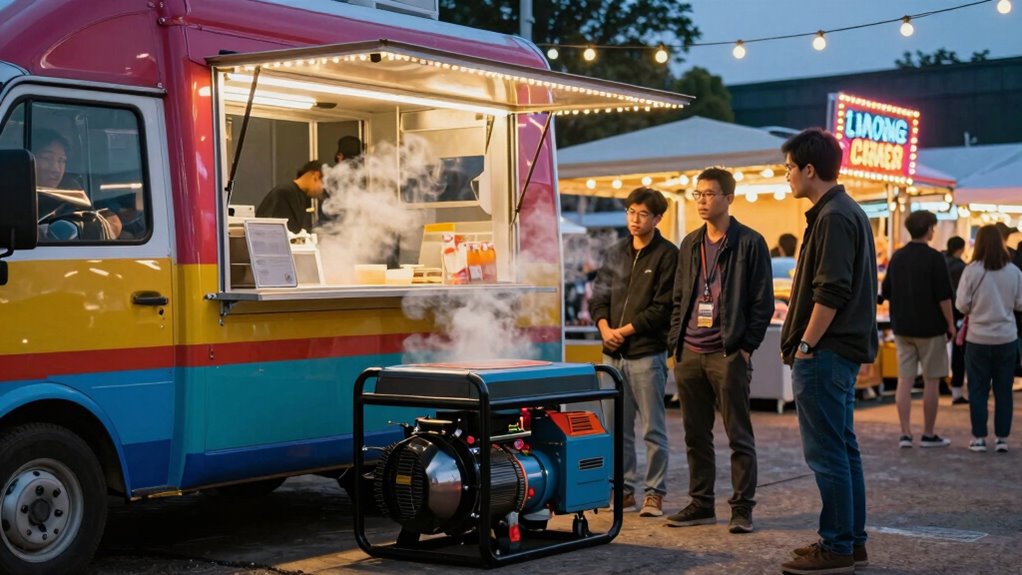
Many food truck owners underestimate their generator size until they start service and equipment struggles or shuts down. It’s common to overlook the total power needs, including startup surges and future upgrades. Over- or under-sizing can lead to outages, damage, or wasted energy. Proper assessment and slight oversizing guarantee reliable operation, smoother service, and room for growth. Keep going to discover how to accurately match your generator to your truck’s demands and avoid costly mistakes.
Key Takeaways
- Food truck owners often overlook total power needs, leading to insufficient generator capacity during peak service.
- Underestimating startup surge requirements causes equipment shutdowns and operational disruptions.
- Many neglect future expansion plans, resulting in generator overloads as the business grows.
- Inaccurate load calculations lead to choosing generators that can’t handle peak demands, affecting service quality.
- Proper load assessment and buffer inclusion prevent generator under-sizing and ensure reliable, uninterrupted operation.
Why Generator Size Matters for Food Truck Success
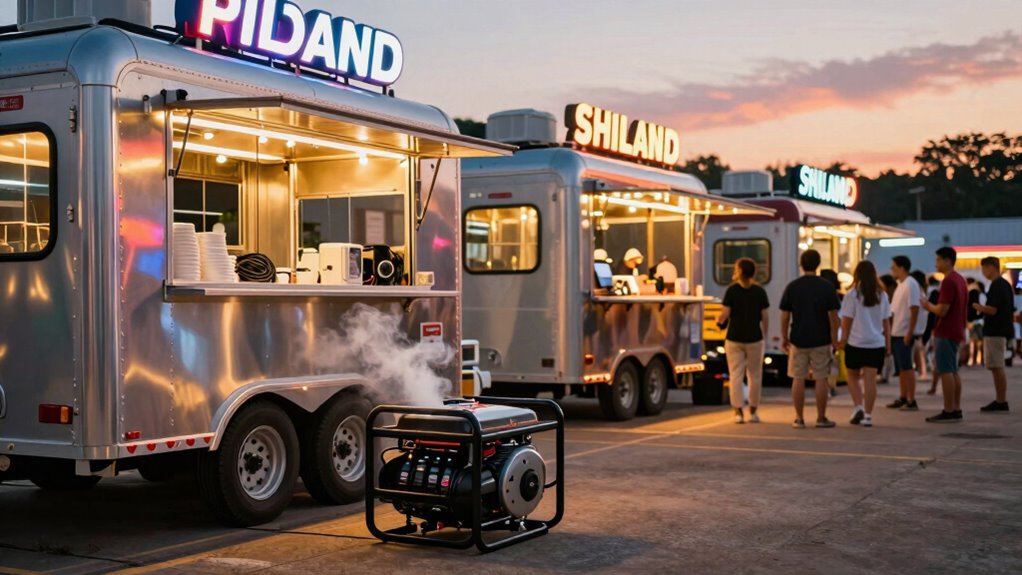
Choosing the right generator size is essential for your food truck’s success because it guarantees all your equipment runs smoothly without interruptions. A properly sized generator ensures your appliances operate efficiently, preventing unexpected shutdowns. When your equipment functions reliably, your food truck maintains a professional appearance, which can positively impact food truck aesthetics. This consistency in power also helps in preventing equipment failure, reducing the likelihood of costly repairs. Reliability in power supply helps in preventing downtime, which is crucial for maintaining customer satisfaction and repeat business. If your generator is too small, you risk frequent outages that can disrupt service and damage your reputation. Conversely, an oversized generator can be noisy and inefficient. Finding the perfect size balances power needs with comfort and aesthetics, ensuring your food truck runs smoothly, looks appealing, and delivers an excellent customer experience at every event. Additionally, understanding the power requirements and contrast ratios of your equipment can help you select a generator that supports all your devices efficiently. Properly assessing your energy consumption can prevent overestimating your needs and promote more efficient operation.
How to Assess Your Food Truck’s Power Needs
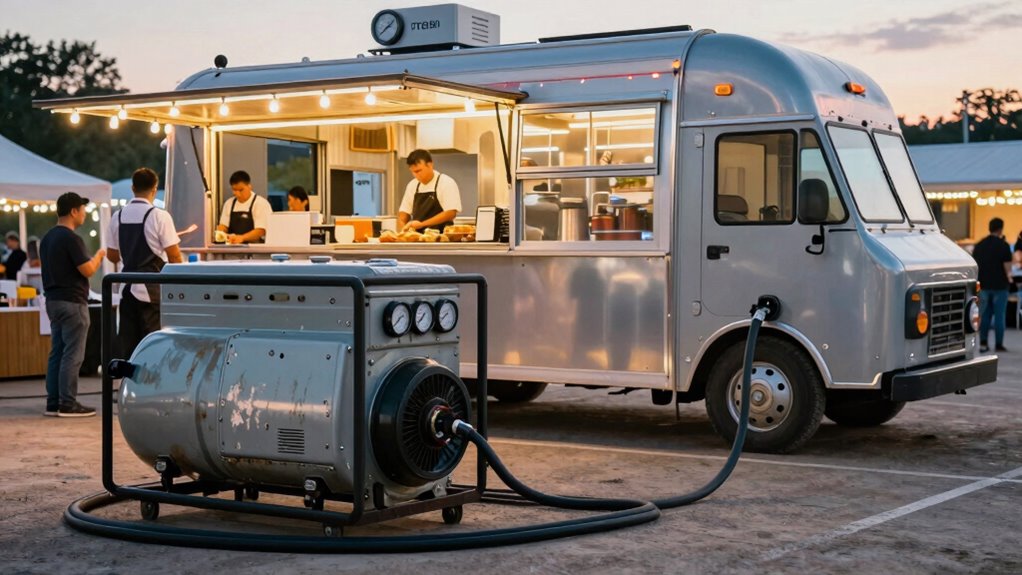
To determine the right generator size for your food truck, start by listing all the electrical devices you plan to use, from cooking equipment to lighting. Consider each item’s power requirements to guarantee your generator can handle the total load. This step is crucial for maintaining food safety, as consistent power prevents equipment failures that could compromise hygiene or food quality. Additionally, a reliable power source helps preserve your branding consistency—keeping your signage, music, and digital displays operational. Don’t forget to include smaller accessories like POS systems and fans. By accurately evaluating your power needs, you avoid under- or over-sizing your generator, ensuring smooth operation, customer safety, and a professional appearance that reflects your brand’s quality. Properly understanding power requirements is fundamental to building trust with your customers and ensuring your operation runs efficiently. Being aware of microplastics in dust and other indoor air quality factors can also help protect your health and that of your team, especially when working in enclosed spaces. Conducting a thorough assessment of your electrical load capacity can further prevent costly mistakes and ensure your equipment functions optimally, especially as electricity standards evolve to improve safety and efficiency. Additionally, understanding indoor air quality can help you create a healthier environment for both staff and customers.
Common Mistakes When Choosing a Food Truck Generator

One common mistake is overestimating your power needs, which can lead to unnecessary expenses and a bulky setup. Ignoring potential future expansion also causes problems if your business grows and your equipment demands increase. To avoid these pitfalls, plan carefully and consider both your current and future energy requirements. Additionally, understanding your battery inverter generator capacity can help you select an appropriately sized unit that balances efficiency with power needs. Proper filter sizing/flow is also crucial to ensure your system operates smoothly without overloading your generator. Being aware of electrical load calculations can help you make more informed decisions about your generator size and setup. Monitoring piercing care and hygiene is essential to prevent infections that could disrupt your business operations, especially if you’re using sensitive or high-end appliances. Taking into account the specific style and finish of your equipment can also impact your generator selection, especially if sensitive or high-end appliances are involved.
Overestimating Power Needs
Many food truck operators make the mistake of overestimating their generator’s size, thinking it will prevent power shortages. While it’s tempting to add extra capacity, oversizing can lead to inefficiencies and higher costs. Overestimating often results in a generator that supplies more power than your kitchen equipment and customer comfort systems need. This excess capacity wastes fuel and increases maintenance expenses without delivering any real benefit. Instead, focus on precisely evaluating your equipment’s power requirements. Choose a generator that meets your kitchen equipment’s needs without overdoing it. A properly sized generator ensures reliable performance, keeps your operating costs manageable, and maintains customer comfort without unnecessary energy consumption. Considering solar-powered solutions can also be a sustainable way to supplement your energy needs and reduce reliance on oversized generators. Being aware of energy efficiency principles can help optimize your overall energy usage and lower operational costs. Additionally, understanding your power requirements early on can prevent costly adjustments later in your setup process. Properly assessing your backyard transformation essentials can also contribute to more efficient energy planning for your food truck setup. Recognizing the importance of philosophical insights on existence can inspire a balanced approach to resource management and operational sustainability.
Ignoring Future Expansion
Ignoring future expansion when selecting your food truck generator can lead to major issues as your business grows. If you don’t plan for future growth, your current generator might struggle to power additional equipment or increased demand. Market trends indicate that food trucks often expand their menu or upgrade appliances over time, making it essential to choose a generator with extra capacity. Failing to account for these changes can result in frequent outages, safety hazards, or costly replacements down the line. To avoid this, consider your long-term goals and potential growth. Investing in a slightly larger generator now guarantees you’re prepared for market trends and future expansion, saving you money and stress later. Proper planning keeps your food truck running smoothly as your business evolves, especially if you incorporate durable survival gear essentials to ensure safety and readiness in various situations. Additionally, understanding essential DIY tools can help you troubleshoot minor electrical or mechanical issues, preventing downtime and ensuring consistent operation. Being aware of your power needs from the start can help you select the right generator size and avoid costly upgrades down the road.
How to Calculate Your Food Truck’s Electrical Load

Calculating your food truck’s electrical load is a crucial step to guarantee your generator can handle all your equipment without issues. Start by listing every appliance and device, including refrigerators, ovens, lights, and POS systems. Check each item’s wattage or amperage, and add a buffer for startup surges. Consider your menu planning and ingredient pairing, which influences the number and type of appliances needed. For example, a menu with cold dishes requires refrigeration, while hot dishes need cooking equipment. Group similar devices to simplify calculations. Once you total the wattage, add about 20% to account for future expansion or unexpected power needs. This precise calculation ensures your generator is appropriately sized, keeping your service smooth and efficient. Incorporating ergonomics tips can also help optimize your workspace for safety and comfort during long hours of operation. Additionally, understanding mental wellbeing can contribute to maintaining focus and reducing stress during busy service hours.
Why Oversizing Your Generator Can Benefit Your Food Truck
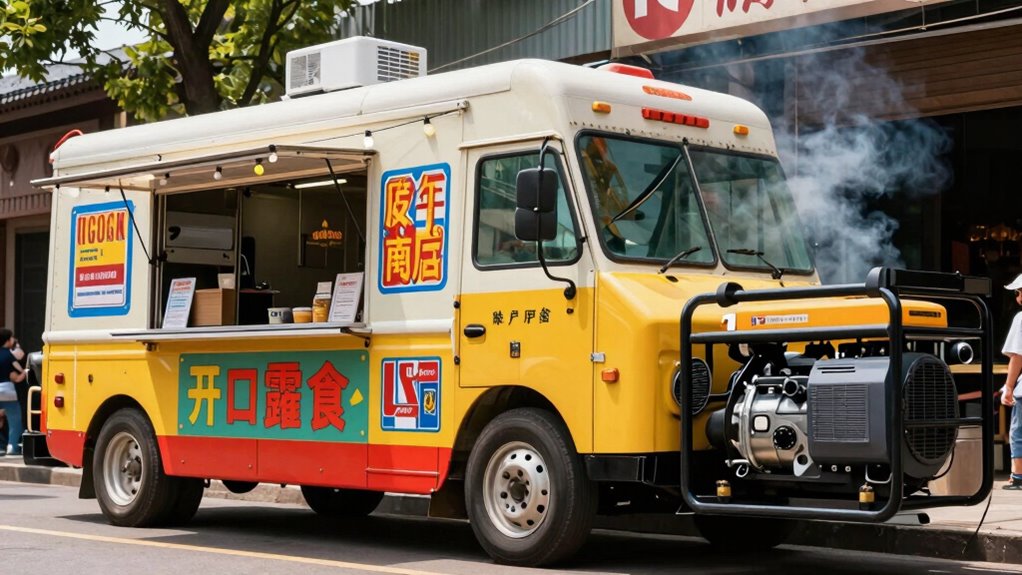
Choosing the right generator size isn’t just about meeting your current power needs; it’s also about anticipating future demands. Oversizing provides extra capacity for enhancements like better food truck aesthetics and increased customer seating, creating a more inviting space. It guarantees your equipment runs smoothly without frequent overloads or outages, especially during busy hours.
| Future Expansion | Power Buffer Needed |
|---|---|
| Additional appliances | Extra lighting and sound |
| Upgraded kitchen equipment | Enhanced customer seating |
Tips for Choosing a Reliable Generator on a Budget
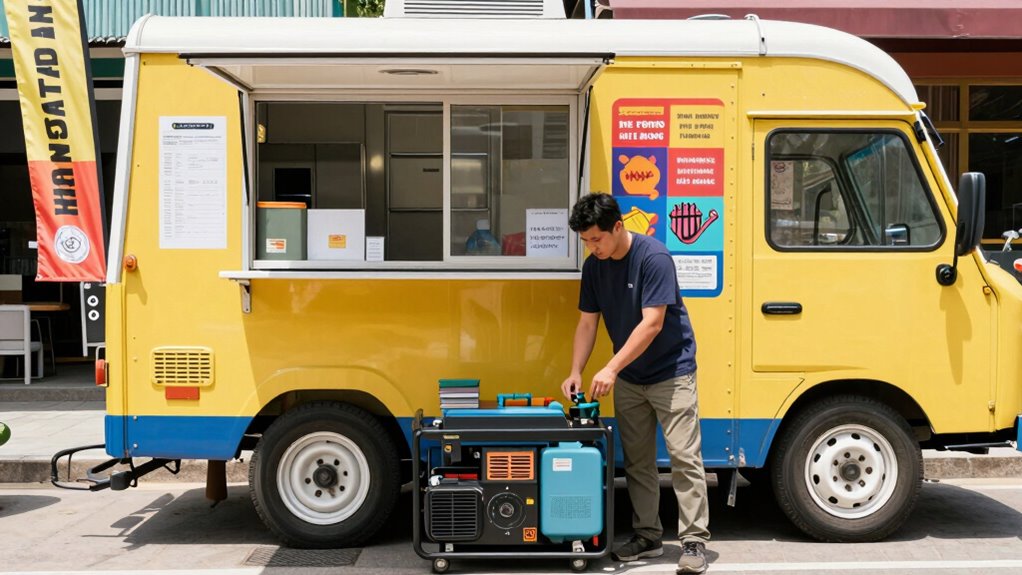
Are you trying to find a reliable generator without breaking the bank? Focus on efficiency and durability to get the best value. When selecting a generator, consider your cooking techniques and menu planning to ensure it can handle your peak demands. Avoid overspending on features you don’t need by sticking to essential specs.
Choose a reliable, fuel-efficient generator that matches your peak power needs for long-lasting performance.
To help, keep these tips in mind:
- Assess your power needs based on your menu and cooking equipment
- Choose a reputable brand with good reviews for reliability
- Opt for models with fuel efficiency to reduce operating costs
- Ensure the generator’s size matches your peak power requirements, not just average use
Balancing cost and capacity ensures you get a dependable generator that supports your food truck’s success without draining your budget.
What Happens When Your Generator Is Too Small or Too Large?
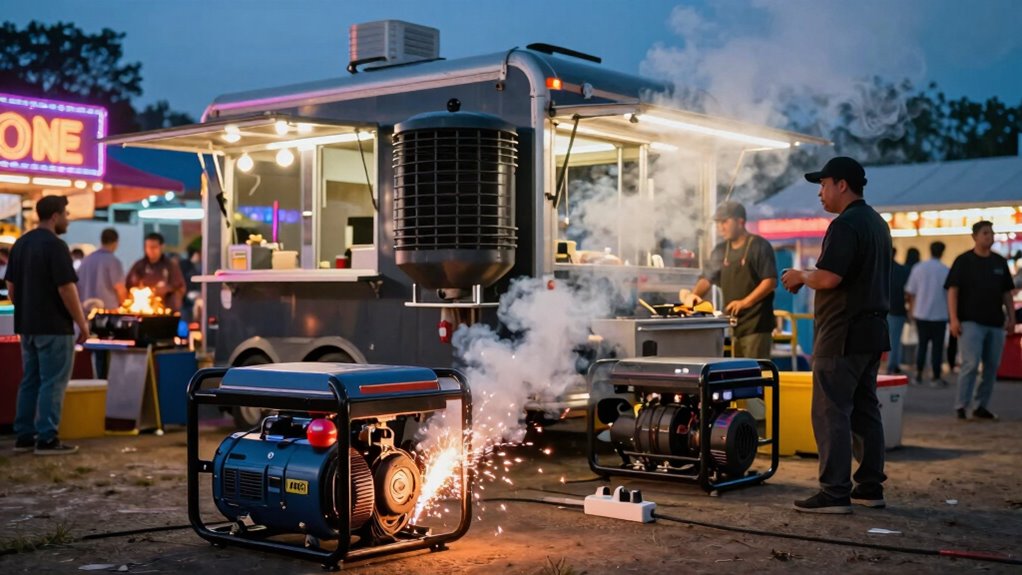
When your generator is too small, it struggles to supply enough power for all your cooking equipment, causing frequent outages and disruptions during busy service times. This leads to increased generator maintenance as it runs continuously at full capacity, risking overheating and damage. A small generator also drains fuel quickly, reducing fuel efficiency and increasing costs. Conversely, if your generator is too large, it wastes energy and runs inefficiently, leading to higher fuel consumption and unnecessary wear. Oversized generators may also be more expensive upfront and harder to maintain properly. To avoid these issues, selecting the right size guarantees reliable power, ideal fuel efficiency, and easier generator maintenance. Proper sizing keeps your food truck running smoothly and cost-effectively.
| Small Generator | Large Generator |
|---|---|
| Frequent outages | Wasted energy |
| Overheating risk | Higher costs |
| Poor fuel efficiency | Complex maintenance |
| Service disruptions | Unnecessary wear |
How to Match Your Generator Size to Your Food Truck’s Needs

To guarantee your food truck has reliable power, you need to match your generator size precisely to your specific equipment and operational demands. Start by listing all kitchen equipment and their wattage requirements to ensure your power management plan is accurate. Consider both essential appliances and surge power needs during startup.
You should also evaluate peak power loads to prevent overloads. When selecting a generator, keep in mind:
- The combined wattage of all kitchen equipment
- Startup surge requirements for appliances
- Future expansion or additional equipment
- Overall efficiency and fuel consumption
Matching your generator size to your needs ensures smooth operation, reduces downtime, and prevents costly repairs. Proper power management allows you to serve efficiently without risking power outages or equipment failure.
Frequently Asked Questions
How Often Should I Service My Food Truck Generator?
You should service your food truck generator every 150-200 hours of operation or at least once a year, whichever comes first. Regular maintenance keeps it running smoothly, improving fuel efficiency and preventing breakdowns. Follow a consistent maintenance schedule that includes checking oil, filters, and spark plugs. Staying on top of servicing guarantees your generator remains reliable during busy service days, minimizing downtime and keeping your food truck efficiently powered.
Are Portable Generators Suitable for Large Food Trucks?
Yes, portable generators can be suitable for large food trucks if you choose one with enough power output. Look for models that prioritize fuel efficiency to keep costs manageable and have low noise levels to avoid disturbing customers or nearby areas. Make certain the generator matches your truck’s power demands, especially during peak operation times, and always check its specifications to guarantee it’s capable of handling your equipment reliably.
What Are the Environmental Impacts of Different Generator Types?
Think of each generator as a tiny planet’s breath—some are cleaner, others pollute the air like smog clouds. Eco-friendly options, like inverter and hybrid generators, emit fewer emissions and meet strict standards, helping you protect the environment. Conventional models often surpass emission standards, releasing more pollutants. Choosing a cleaner generator isn’t just good for you; it’s a refresh of fresh air for our planet, ensuring a healthier future for all.
How Does Temperature Affect Generator Performance?
Temperature greatly influences your generator’s performance due to its temperature sensitivity. In hot weather, your generator may overheat if it lacks proper cooling requirements, leading to reduced efficiency or shutdowns. Conversely, cold temperatures can cause issues like thickened lubricants or fuel gelling, hampering operation. To guarantee reliable performance, monitor ambient temperature, provide adequate cooling, and use suitable fuel and lubricants tailored to the climate.
Can I Connect Multiple Generators for Increased Power?
Yes, you can connect multiple generators for increased power, but you need to guarantee generator compatibility and proper power synchronization. Use a transfer switch or a parallel kit designed for your generators to synchronize their output safely. Failing to do so can cause damage or electrical hazards. Always follow manufacturer instructions and consider consulting an electrician to set up a reliable, synchronized power system for your food truck.
Conclusion
Choosing the right generator size might seem overwhelming, but it’s vital for your food truck’s success. Don’t assume a smaller unit will save you money—oversizing can actually prevent service disruptions and guarantee you’re prepared for busy days. Remember, evaluating your power needs accurately might take a bit of effort, but it pays off in reliability and peace of mind. Invest in the right generator now, and enjoy smooth operations without unexpected downtime.