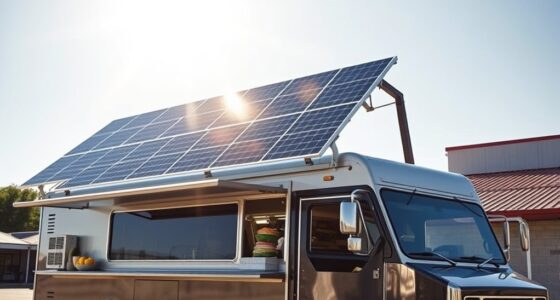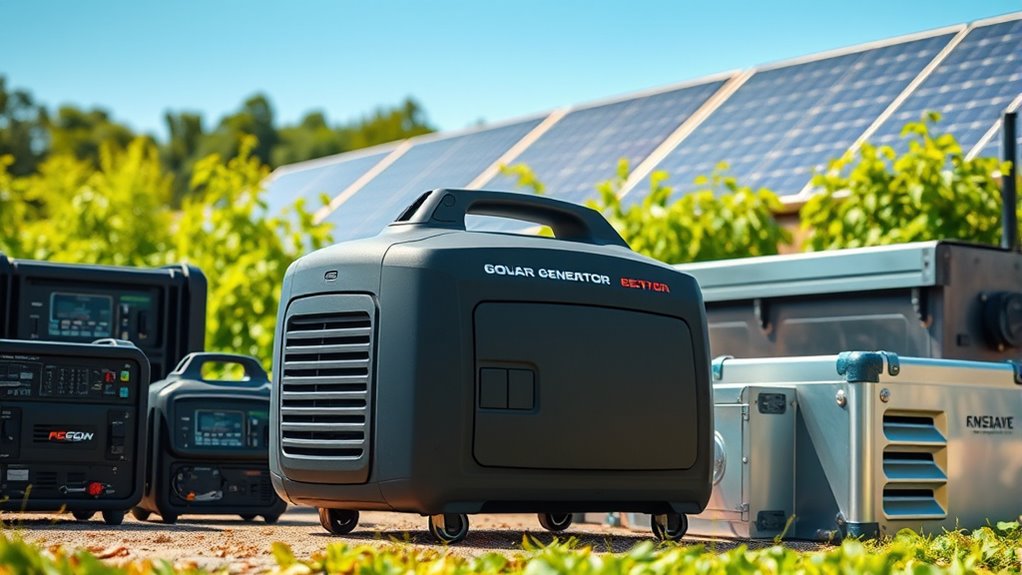

To select the best generator and power solution, consider your specific needs for capacity, fuel efficiency, noise levels, and portability. Look for models with low decibel ratings and advanced inverter technology for quiet, efficient operation. Prioritize generators that balance fuel savings with noise reduction for reliable, eco-friendly power. By choosing the right features, you guarantee dependable, cost-effective electricity in any situation. Keep exploring to discover how to find the perfect fit for your power needs.
Key Takeaways
- Assess your power needs, considering load size, runtime, and portability requirements.
- Prioritize fuel efficiency to reduce long-term costs and environmental impact.
- Choose models with noise reduction features like soundproof housings and mufflers for quiet operation.
- Evaluate decibel levels, aiming for below 60 dB for sensitive environments.
- Balance size, power output, and features to find a reliable, cost-effective, and discreet solution.
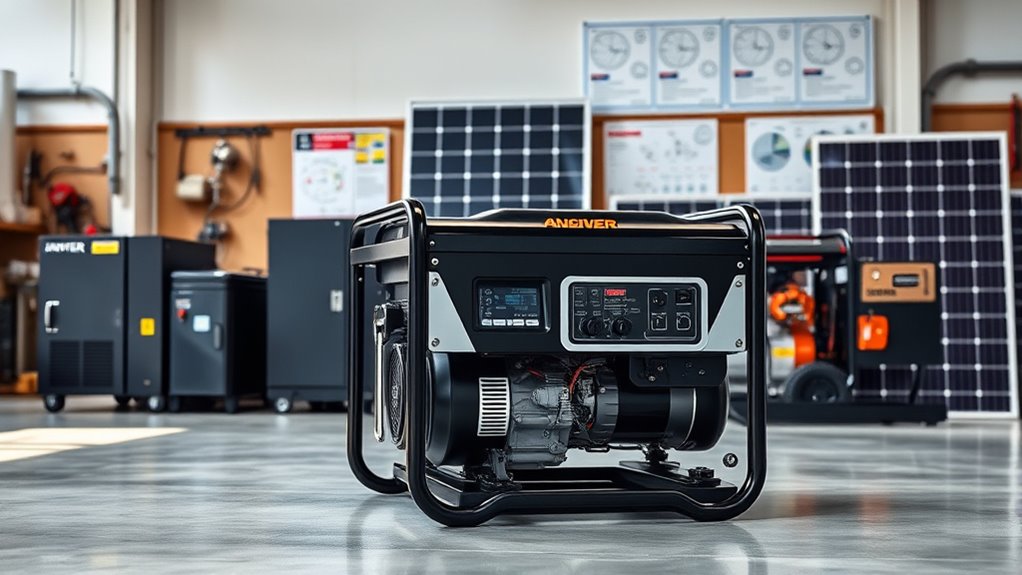
Choosing the right generator and power solutions is essential to guarantee reliable electricity during outages or in remote locations. When selecting a generator, two key factors you should consider are fuel efficiency and noise reduction. Fuel efficiency directly impacts your operating costs and the sustainability of your power source, especially if you’ll be running the generator for extended periods. A generator with high fuel efficiency consumes less fuel to produce the same amount of power, saving you money and reducing the frequency of refueling. This is particularly important in remote areas where fuel supply might be limited or expensive. Additionally, fuel-efficient models tend to generate less emissions, making them more environmentally friendly and compliant with regulations.
Noise reduction is equally critical, especially if you’re using the generator in residential areas, at events, or in environments where noise can be disruptive. Generators produce sound during operation, but some designs incorporate noise dampening features like insulated enclosures, mufflers, or soundproof housings to minimize disturbance. When you choose a quieter generator, you improve comfort and safety for yourself and those around you. This is particularly vital if you’ll be operating the generator overnight or in locations where noise ordinances are strict. Plus, reduced noise levels mean you can run your generator without drawing unwanted attention or causing disturbance to neighbors and wildlife.
Balancing fuel efficiency with noise reduction can sometimes be a challenge, but many modern generators offer a good compromise. Advanced inverter generators, for example, deliver clean power with less noise and are designed to operate efficiently at varying loads. They adjust engine speed based on your power needs, which conserves fuel and markedly cuts down noise. When shopping, look for models that specify their decibel levels at certain loads; ideally, you want a generator that runs quietly, typically below 60 decibels, to ensure minimal disruption.
Furthermore, incorporating refrigeration cycle knowledge can help you understand how certain generator models optimize performance by managing heat dissipation, which can influence efficiency and noise levels.
Beyond fuel efficiency and noise reduction, consider other factors like size, portability, and power output to match your specific needs. Think about how often you’ll use the generator and the type of appliances or equipment you’ll power. A well-chosen generator that maximizes fuel efficiency and minimizes noise will give you peace of mind, reliable performance, and a better experience, whether you’re dealing with power outages, camping trips, or remote work sites. Ultimately, investing in a model that balances these features ensures you have a dependable, cost-effective, and discreet power solution tailored to your needs.
Frequently Asked Questions
How Do I Calculate My Total Power Backup Needs Accurately?
To calculate your total power backup needs, start by evaluating your devices’ power consumption in watts. List all essential appliances and their wattage, then add a safety margin. This total gives you the backup capacity required. Remember, accurate power consumption figures ensure your backup system can handle peak loads, preventing outages. This way, you ensure your generator provides reliable power during outages, matching your actual backup capacity needs effectively.
What Are the Environmental Impacts of Different Generator Types?
Think of generators as two sides of a coin—one’s a cleaner breeze, the other a smoky cloud. Renewable generators cut emissions, keeping your environment healthier, while fossil fuel-powered ones release pollution that harms air quality and contributes to climate change. Choosing greener options helps reduce renewable emissions and minimizes fossil fuel pollution, making your energy use more eco-friendly. Your choice impacts not just your power needs but the planet’s future.
How Often Should a Generator Be Maintained or Serviced?
You should perform regular generator maintenance based on the manufacturer’s servicing schedule, typically every 50 to 100 hours of operation or at least once a year. Consistent servicing guarantees peak performance and prevents breakdowns. Check oil levels, filters, and spark plugs regularly, and schedule professional inspections periodically. Staying on top of your generator maintenance helps extend its lifespan, reduces unexpected failures, and keeps it running efficiently whenever you need it.
Are There Government Incentives for Using Renewable Power Solutions?
Yes, there are government incentives for using renewable power solutions. You can benefit from solar incentives and renewable subsidies that make installing solar panels more affordable. Many programs offer tax credits, rebates, and grants to encourage clean energy adoption. By taking advantage of these incentives, you reduce your overall costs and support sustainable energy efforts. Check with your local or federal agencies to see what specific programs are available in your area.
What Safety Precautions Are Necessary When Operating Large Generators?
Think of generator safety like driving a car—you need to follow the rules to avoid accidents. Always keep a safe distance, guarantee proper ventilation, and use appropriate personal protective equipment. Regularly inspect your equipment. In case of emergency, follow established protocols like shutting off the generator and ventilating the area. Remember, neglecting generator safety can lead to fires, explosions, or carbon monoxide poisoning. Stay vigilant and prepared.
Conclusion
Choosing the right generator and power solution can seem intimidating, but with the right knowledge, you’ll be ahead of the game. Remember, it’s better to be safe than sorry, so invest wisely and consider your needs carefully. Don’t rush the process—take your time to compare options and seek expert advice if needed. When you make an informed decision, you’ll have peace of mind knowing your power needs are covered, come rain or shine.