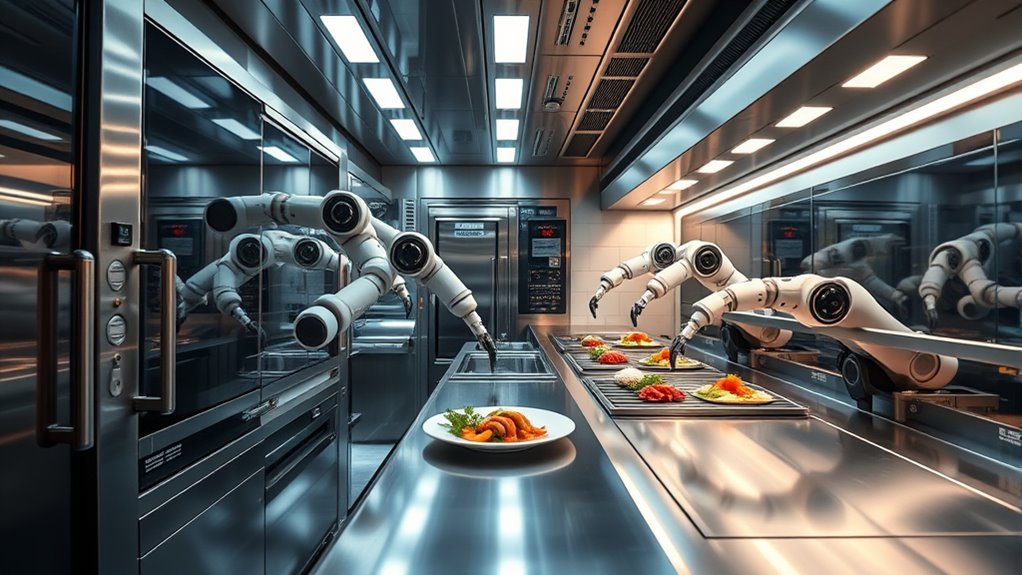

Robotics and automation are transforming mobile kitchens by streamlining food prep, increasing efficiency, and enabling quicker, more consistent service. Advanced AI integration helps these systems adapt to various recipes, optimize cooking times, and maintain quality while reducing the need for constant human oversight. However, regular maintenance is essential to prevent breakdowns and guarantee peak performance. If you keep exploring, you’ll discover how proper management can maximize these innovative technologies’ benefits.
Key Takeaways
- Robotics streamline food prep, increase efficiency, and enable quick menu changes in mobile kitchens.
- AI integration allows robots to adapt recipes, optimize cooking times, and maintain consistent quality.
- Regular maintenance of sensors, motors, and software is essential to prevent downtime and ensure safety.
- Preventative care strategies, including inspections and updates, minimize operational disruptions in mobile kitchen setups.
- Staff training on robotic systems enhances management, reduces reliance on external support, and leverages AI-driven predictive maintenance.

Robotics and automation are transforming mobile kitchens by streamlining food preparation, increasing efficiency, and reducing labor costs. As you explore this evolving landscape, you’ll notice that AI integration plays a vital role in enhancing the capabilities of robotic systems. AI-driven machines can adapt to different recipes, optimize cooking times, and guarantee consistent quality without constant human oversight. This integration makes mobile kitchens more agile, allowing them to serve diverse menus and respond quickly to customer demands. However, incorporating AI isn’t without its hurdles. One of the main challenges you’ll face is maintenance. Advanced robotic systems require regular upkeep to stay operational. Components like sensors, motors, and software need frequent updates and calibration to prevent malfunctions that could disrupt service. The complexity of AI algorithms also means that troubleshooting isn’t always straightforward, often demanding specialized technical knowledge. This can lead to delays if you don’t have access to skilled technicians or spare parts, which might affect your kitchen’s productivity.
Additionally, maintenance challenges extend beyond just fixing broken equipment. You need to think about preventative care, ensuring that systems are regularly inspected and updated to avoid unexpected failures. For example, if a robotic arm used for food plating becomes misaligned, it could lead to inconsistent presentation or even contamination risks. Keeping these systems in top shape requires a proactive approach, which can involve significant planning and expense. You’ll also need to stay updated on new AI software releases and hardware improvements to keep your kitchen competitive. This ongoing need for maintenance and updates can sometimes be labor-intensive and costly, especially if your mobile kitchen operates in remote locations where access to technical support is limited. Moreover, leveraging AI in Business can help you analyze maintenance data to predict equipment failures before they happen, further reducing downtime.
Despite these challenges, the benefits of AI integration in mobile kitchens are compelling. It allows for precision, speed, and consistency that manual processes often can’t match. If you manage maintenance effectively, you can minimize downtime and maximize operational efficiency. Investing in proper training for your staff on AI and robotic maintenance is essential, as it empowers them to handle minor issues swiftly and reduces reliance on external technicians. Ultimately, while maintenance challenges are a significant consideration, they’re manageable with proper planning and resources. The payoff is a highly efficient, adaptable kitchen that can serve customers faster and with greater consistency, giving you a competitive edge in the fast-paced world of mobile food service.
Frequently Asked Questions
What Are the Initial Costs to Implement Robotics in Mobile Kitchens?
The initial costs to implement robotics in mobile kitchens vary, but you should expect a cost estimation between $50,000 and $150,000. Equipment pricing plays a significant role, including robotic arms, control systems, and automation software. You’ll need to weigh additional expenses like installation, training, and maintenance. While investment is substantial upfront, automation can improve efficiency and consistency, ultimately saving you money over time.
How Do Robots Adapt to Different Types of Cuisine?
You know what they say, “The proof of the pudding is in the eating.” Robots adapt to different cuisines through cultural adaptability and menu flexibility by being programmed with diverse recipes and techniques. They can switch between styles quickly, adjusting ingredients or cooking methods as needed. This flexibility allows robots to cater to various culinary traditions, ensuring your mobile kitchen meets diverse customer tastes without missing a beat.
What Safety Measures Are in Place for Robotic Kitchen Staff?
You should know that safety measures for robotic kitchen staff include strict safety protocols and emergency procedures. These protocols ensure robots operate securely around humans, preventing accidents and injuries. Emergency procedures are in place in case of malfunctions, allowing quick shutdowns or manual interventions. Regular maintenance and safety checks are also conducted to keep everything functioning smoothly. This way, you can trust that robotic staff prioritize safety and respond effectively to any issues.
How Do Maintenance Requirements Impact Daily Operations?
Maintenance requirements are the backbone of smooth operations, like a steady heartbeat. When you plan downtime carefully, you minimize disruptions, ensuring your robotic kitchen runs seamlessly. Having spare parts readily available acts as your safety net, ready to catch issues before they become major problems. Regular maintenance keeps equipment in top shape, reducing unexpected breakdowns, so your mobile kitchen stays on track and serves up excellence every day.
Can Robotic Systems Be Customized for Small-Scale Mobile Kitchens?
Yes, robotic systems can be customized for small-scale mobile kitchens. With robotic customization, you can tailor machines to fit your kitchen’s specific needs, enhancing mobile kitchen flexibility. This allows you to optimize space and workflow, ensuring efficient food prep and service. Custom robots can handle tasks like cooking, cleaning, or ingredient delivery, making your mobile kitchen more adaptable and efficient without sacrificing the benefits of automation.
Conclusion
As you explore robotics and automation in mobile kitchens, you’ll see how these innovations boost efficiency and safety. Did you know that automation can reduce food prep time by up to 30%, allowing you to serve more customers faster? Embracing this technology not only streamlines operations but also transforms the dining experience. By adopting these advancements, you’re stepping into a future where mobile kitchens become more innovative, reliable, and ready to meet increasing demand with ease.