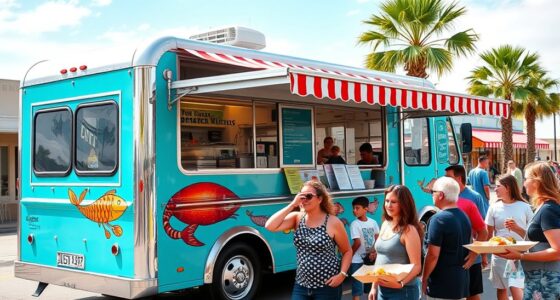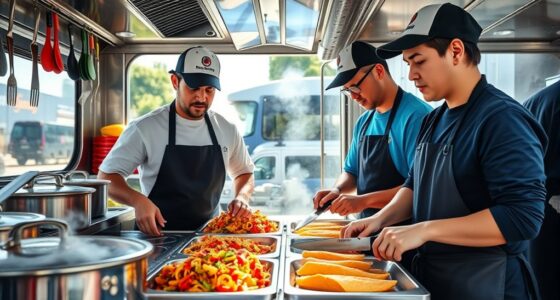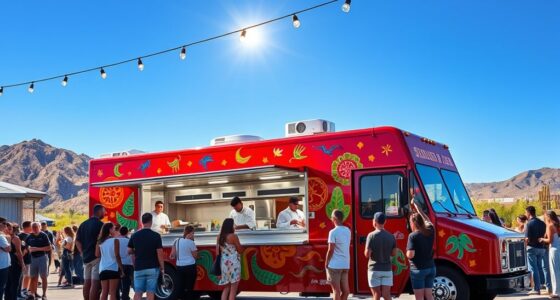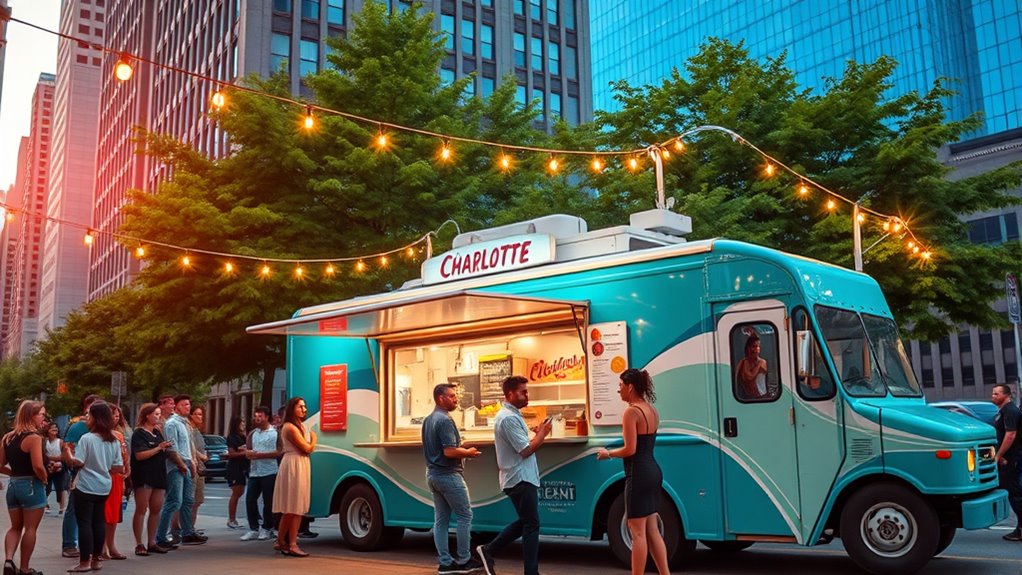
Starting a food truck in Charlotte, NC, involves understanding local permits, health regulations, and parking zones. You’ll need to choose the right vehicle, budget for equipment and licensing, and develop a menu that appeals to diverse crowds. Engage with the community through social media, participate in local festivals, and find popular spots for your truck. To succeed, you’ll want to explore how to navigate Charlotte’s food scene and stay compliant—if you keep exploring, you’ll find everything you need to know.

Get kitchen staples and gadgets delivered free — and shop member deals
- Fast, free delivery on millions of items
- Access to Prime Big Deal Days deals on October 6–7
- Prime Video, Amazon Music and more included
Key Takeaways
- Obtain necessary permits and licenses through Charlotte’s online portals, ensuring compliance with health and zoning regulations.
- Choose a suitable food truck vehicle, considering costs, customization, and ongoing maintenance requirements.
- Develop a diverse menu with cost management strategies, testing new items and leveraging customer feedback.
- Participate in local food festivals and events to build brand visibility and engage with the Charlotte community.
- Use social media marketing and effective branding to promote your schedule, specials, and unique flavors in the competitive scene.
Exploring Charlotte’s Vibrant Food Scene
Charlotte’s food scene is thriving, offering a diverse array of flavors that reflect its growing cultural mosaic. You’ll find that local food festivals showcase the city’s rich culinary diversity, bringing communities together to celebrate regional cuisine trends. These events highlight everything from Southern classics to international dishes, giving you a firsthand look at Charlotte’s evolving palate. As a food truck owner, participating in festivals can boost your visibility and let you tap into current trends. The city’s vibrant food scene encourages innovation and variety, making it an ideal place to introduce new flavors. Embracing regional cuisine trends and engaging with local food festivals will help you connect with customers enthusiastic to explore fresh, exciting tastes. Additionally, understanding food festival participation strategies can significantly enhance your business exposure and growth.
Understanding Local Requirements
To operate your food truck in Charlotte, you need to familiarize yourself with the local requirements. You’ll use online permit application portals, keep a daily temperature log, and park only in designated zones. Understanding these rules helps make certain your truck runs smoothly and stays compliant with city regulations. Additionally, staying informed about copyright and disclosure policies ensures transparency in your business practices.
Online Permit Application Portals
Guiding the permit application process for a food truck in Charlotte is now easier thanks to online portals that streamline the requirements. These digital permits allow you to submit your applications quickly without visiting city offices, saving you time. Through online applications, you can track your permit status, upload necessary documents, and receive notifications directly. Charlotte’s online portals are user-friendly, guiding you step-by-step through local requirements and ensuring you meet all regulations. This digital system simplifies understanding what’s needed for permits, licenses, and health approvals. Using these online tools, you avoid lengthy paperwork and reduce delays. Staying organized and proactive with your online applications helps you get your food truck operational faster and with less hassle.
Daily Temperature Log Requirements
Maintaining a daily temperature log is a crucial part of meeting local health regulations for your food truck. This log guarantees food safety and complies with Charlotte’s food truck maintenance standards. You must record temperatures of perishable items at least twice daily, typically during opening and closing shifts. Accurate records help demonstrate proper temperature control and quick identification of potential issues. Remember, the daily temperature log requirements specify that logs are kept for at least 90 days and must be readily available during inspections. Use the table below to track temperatures effectively:
| Time | Item | Temperature (°F) |
|---|---|---|
| Morning | Refrigerated Meat | 38 |
| Afternoon | Dairy Products | 40 |
| Evening | Cooked Foods | 165 |
Designated Truck Parking Zones
Properly parking your food truck is essential for compliance with Charlotte’s health and safety standards. You must follow specific parking regulations and use designated truck parking zones to avoid violations. Charlotte’s zone mapping system clearly marks areas where food trucks are permitted, guaranteeing smooth operation and safety. Before setting up, review local zone maps to identify approved parking spots, and always adhere to posted signage. Unauthorized parking outside these zones can lead to fines or citations, so it’s vital to stay within permitted areas. Familiarizing yourself with the zone mapping and parking regulations helps you avoid penalties and ensures your truck operates legally and efficiently. Accurate zone adherence also helps maintain good community relations and supports your business’s long-term success.
Setting Up Your Base of Operations

Choosing the right setup for your base of operations is essential, and shared kitchen licensing options can offer a flexible solution. Planning your custom kitchen layout helps maximize efficiency and meets health regulations. Consider what best fits your needs to get your food truck business started smoothly. Additionally, understanding food safety regulations is crucial for ensuring compliance and successful operation.
Shared Kitchen Licensing Options
Setting up your food truck’s base of operations often involves exploring shared kitchen licensing options, which can be a cost-effective and flexible solution. Shared kitchen regulations vary, but they generally allow multiple food vendors to operate in the same space under specific licensing process requirements. By choosing a shared kitchen, you avoid the high costs of building or leasing a dedicated commercial kitchen, while still complying with health and safety standards. To get started, you’ll need to understand the licensing process, which typically involves inspections, permits, and adherence to local health codes. This setup can streamline your launch, making it easier to meet all regulatory requirements without the overhead of maintaining your own facility. It’s an efficient way to establish your food truck operation in Charlotte.
Custom Kitchen Layout Planning
Designing your food truck’s kitchen layout is a key step after selecting a shared or dedicated space. Focus on optimizing layout ergonomics to ensure smooth workflow and safety. Start by mapping out where your essential kitchen equipment will go, such as grills, fryers, refrigerators, and prep stations. Arrange these elements to minimize movement and avoid cross-contamination. Consider storage options for ingredients and supplies, keeping frequently used items within easy reach. Prioritize safety features like fire suppression systems and proper ventilation. A well-planned layout improves efficiency, reduces stress during busy hours, and helps you stay compliant with health codes. Remember, an effective kitchen design balances functionality with practicality, setting a solid foundation for your food truck’s operations.
Budgeting and Financing Your Food Truck
When planning your food truck, you’ll need to consider the costs of buying or leasing your vehicle, which can vary widely. You might also qualify for startup grants or other funding options specific to Charlotte’s small business programs. Don’t forget to budget for liability insurance to protect your investment and meet local requirements. Additionally, understanding professional email etiquette can be beneficial for communicating with vendors and partners during your startup phase.
Initial Vehicle Purchase Costs
Purchasing your food truck is a significant upfront investment that directly impacts your budget and financing options. The initial vehicle costs vary depending on whether you buy new or used, with prices ranging from $20,000 to $100,000 or more. Keep in mind that ongoing expenses like vehicle maintenance are essential for keeping your truck in top shape, which can influence your overall budget. Additionally, securing proper insurance coverage is vital; it protects your investment and helps you comply with local regulations. When planning your purchase, consider the type of truck that fits your menu and operational needs, while also accounting for costs related to customization and equipment. A well-chosen vehicle sets the foundation for your food truck business’s success.
Startup Grants for Food Trucks
Securing funding is a key step in turning your food truck plans into reality, and startup grants can provide valuable financial support. Food truck grants are a great way to access startup funding without taking on debt or giving up equity. To find these grants, research local and federal programs designed for small businesses and food entrepreneurs. Keep in mind that applying for grants often requires a solid business plan and clear goals. Some options include:
- Local government grants for small businesses
- State-sponsored food truck programs
- Nonprofit organization grants for entrepreneurs
- Industry-specific grants for food service startups
These grants can help cover equipment, permits, or marketing costs, easing your financial burden and increasing your chances of success in Charlotte’s competitive food scene.
Liability Insurance Requirements
Have you considered how liability insurance fits into your food truck’s budget and financing plan? Liability coverage is essential to protect your business from potential claims or accidents. When budgeting, include the cost of insurance policies tailored to food trucks in Charlotte. These policies typically cover property damage, bodily injury, and product liability. The right insurance ensures you’re financially protected if someone gets injured or if your truck causes damage. Shop around to compare coverage options and premiums, and factor these costs into your overall startup expenses. Remember, many lenders and vendors may require proof of liability insurance before funding or supplying your truck. Proper liability coverage not only keeps you compliant but also provides peace of mind as you grow your food truck business.
Designing Your Menu and Pricing Strategy
When designing your menu, consider testing innovative items to see what resonates with your customers. Calculating ingredient costs accurately helps you set prices that cover expenses and maximize profit. Balancing creativity with cost management guarantees your menu appeals and stays profitable. Additionally, incorporating nutrient-dense ingredients can enhance the health appeal of your offerings and attract health-conscious customers.
Innovative Menu Item Testing
Ever wonder how to test new menu items effectively without overcommitting? One way is through small-scale trials, gathering customer feedback before full launch. Focus on flavor innovation by creating unique dishes that highlight local, sustainable sourcing. To refine your approach, consider these strategies:
- Offer limited-time specials to gauge interest
- Use social media polls for direct customer input
- Partner with local suppliers to ensure freshness
- Track sales data and customer reviews for insights
This approach helps you balance creativity with practicality, ensuring your menu stays fresh and appealing. Testing new items keeps your menu dynamic, attracts repeat customers, and minimizes waste. Remember, sustainable sourcing not only supports local businesses but also enhances your brand’s reputation, making your food truck stand out in Charlotte’s competitive scene.
Ingredient Cost Calculations
Calculating ingredient costs accurately is essential for designing a menu that’s both profitable and appealing to customers. You need to understand ingredient pricing and manage your supply chain effectively. Break down each dish by its raw ingredients and track their costs carefully. Use this table to help:
| Ingredient | Cost per Unit | Quantity Used | Total Cost |
|---|---|---|---|
| Chicken Breast | $3.00/lb | 0.5 lb | $1.50 |
| Fresh Veggies | $2.00/lb | 0.3 lb | $0.60 |
| Spices | $5.00/oz | 0.2 oz | $1.00 |
| Buns | $0.50 each | 1 | $0.50 |
Tracking these details helps optimize ingredient pricing and guarantees your supply chain management keeps costs predictable, boosting profitability.
Technology and Operations

You’ll want to streamline transactions by integrating wireless payment apps and mobile POS systems, making checkout quick and easy for customers. Keeping track of stock with real-time inventory tools helps you avoid shortages and overstocking. Embracing these technologies can boost efficiency and keep your operations smooth in Charlotte’s busy food truck scene.
Wireless Payment App Integration
How can a food truck in Charlotte streamline transactions and enhance customer satisfaction? By integrating wireless payment apps, you enable quick, secure, and contactless payments. This not only reduces wait times but also makes transactions smoother. App integration allows you to accept various payment methods, including mobile wallets and credit cards, all through your POS system. Here are some benefits:
- Faster checkout process
- Reduced cash handling risks
- Enhanced customer convenience
- Improved operational efficiency
Adding contactless payments through app integration makes your service more attractive, especially for busy or health-conscious customers. It creates a seamless experience that encourages repeat business and positive reviews. Stay competitive and meet modern expectations by leveraging wireless payment app integration in your Charlotte food truck.
Mobile POS and Stock Tracking
Integrating wireless payment apps not only speeds up transactions but also sets the stage for more advanced operational tools like mobile POS systems and stock tracking. A mobile POS allows you to process sales seamlessly on the go, reducing wait times and improving customer experience. Paired with stock tracking, it helps you monitor inventory levels in real-time, preventing shortages and overstocking. Using these tools together streamlines your operations, saves time, and boosts efficiency. You can quickly identify popular items, manage supplies more accurately, and make informed decisions on restocking. Mobile POS and stock tracking are essential for maintaining a smooth workflow, especially for a food truck that needs to adapt rapidly to sales trends and inventory needs while on the move.
Marketing and Growing Your Presence
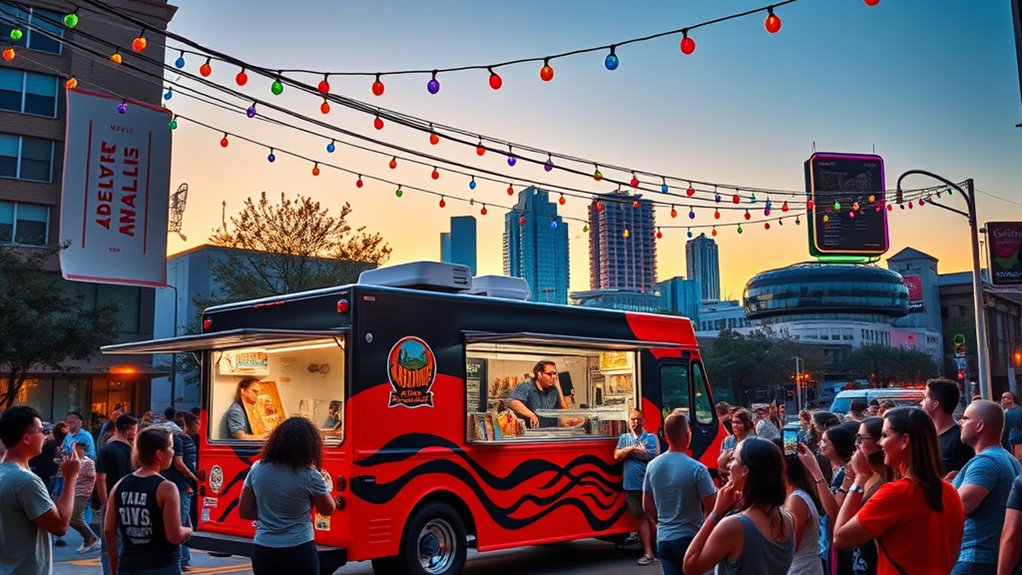
You can boost your visibility by hitting popular food truck event locations around Charlotte to attract new customers. Posting engaging foodie photos on Instagram helps create buzz and keeps your audience excited about your offerings. Combining these strategies will grow your presence and turn casual fans into loyal followers.
Popular Food Truck Event Locations
To effectively grow your food truck’s presence in Charlotte, choosing the right event locations is essential. Focus on popular spots like food truck festivals and local food markets where foot traffic is high. These venues attract diverse crowds enthusiastic to try new cuisines, giving you great exposure. Participating regularly helps build your brand and loyal customer base. Consider these key locations:
- Food truck festivals during weekends or special events
- Weekly local food markets in busy neighborhoods
- Downtown events and city celebrations
- College campus gatherings and sporting events
Attending these locations ensures you’re part of Charlotte’s vibrant food scene, helping you connect with new customers and grow your reputation. Staying consistent at these events can considerably boost your visibility and sales.
Engaging Instagram Foodie Posts
Showcasing your food truck’s offerings through engaging Instagram foodie posts can considerably boost your visibility and attract new customers in Charlotte. Focus on creating eye-catching Instagram visuals that highlight your signature dishes, behind-the-scenes moments, and customer favorites. Use vibrant, high-quality photos to capture the essence of your food and environment. Incorporate hashtag strategies by researching popular local hashtags and niche foodie tags to reach your target audience effectively. Consistent posting and engaging captions encourage followers to interact and share your content. Remember, authenticity resonates—show your personality and passion for food. By combining compelling visuals with smart hashtag use, you’ll grow your online presence, draw more foot traffic, and turn your Instagram followers into loyal customers.
Navigating Charlotte’s Food Truck Scene
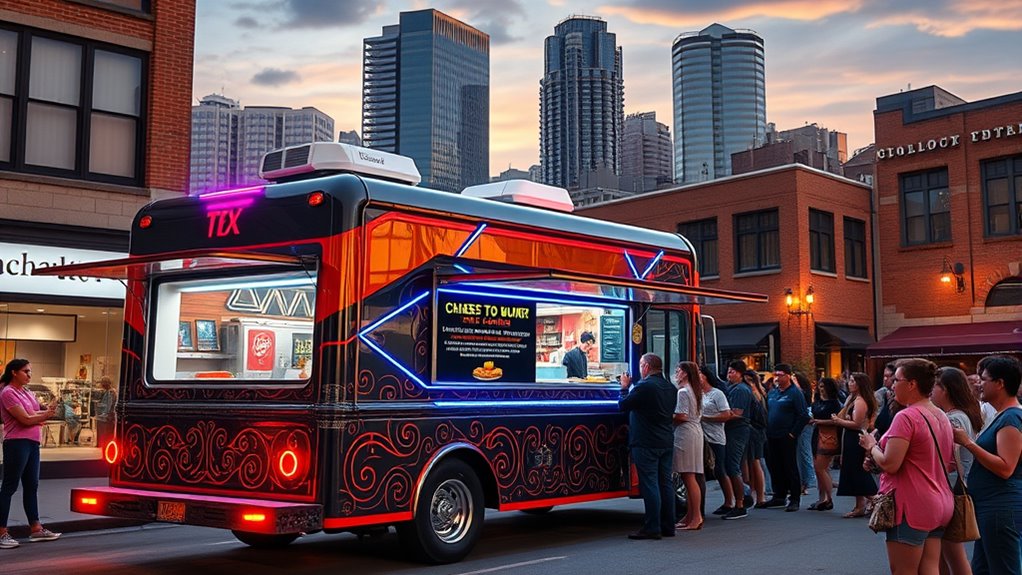
Exploring Charlotte’s food truck scene is an exciting journey that requires a bit of planning and local knowledge. To stand out, focus on effective food truck branding that captures your unique flavor and appeals to diverse crowds. Leverage social media marketing to connect with potential customers and build a loyal following. When maneuvering the scene, keep these tips in mind:
- Research popular locations and events where food trucks thrive
- Network with other vendors to gain insights and opportunities
- Stay updated on local regulations and permits
- Use social media platforms to promote your schedule and specials
Frequently Asked Questions
What Are the Best Locations in Charlotte for Food Truck Parking?
You should target popular areas like uptown Charlotte, near office parks, and at local events for your food truck. Check food truck zoning laws and parking restrictions beforehand, as these vary by location. Look for spots with high foot traffic and avoid areas with strict parking restrictions. Securing permissions or permits guarantees you stay compliant with local regulations, helping you maximize sales and avoid fines.
How Do I Obtain a Food Truck Permit in Charlotte?
To obtain a food truck permit in Charlotte, you need to complete the food truck licensing process through the city’s permitting procedures. First, visit the Charlotte-Mecklenburg government website and submit your application, including proof of insurance and health department approvals. You’ll also pay applicable fees. Make sure to follow all local regulations, and once approved, you’ll receive your permit to operate legally in Charlotte.
Are There Specific Health Regulations for Food Trucks in Charlotte?
Yes, in Charlotte, you must follow specific health regulations for food trucks. You’re required to pass health inspections that assess food safety standards, ensuring proper sanitation, storage, and handling. Regular inspections verify your adherence to these standards. To stay compliant, maintain a clean truck, follow safe food prep practices, and stay updated on local health department guidelines. This helps you operate legally and keep your customers safe.
What Are the Peak Times for Food Truck Events in Charlotte?
You’ll find peak times for food truck events in Charlotte during lively food festivals and bustling community markets, typically happening in the late mornings through early evenings on weekends. While weekdays see steady traffic, weekends transform the city into a vibrant hub of activity. These busy periods provide prime opportunities to serve hungry crowds, but be prepared for the surge of customers during these energetic, community-driven events.
How Can I Connect With Other Local Food Truck Operators?
You can connect with other local food truck operators by joining social media groups dedicated to Charlotte’s food scene. Engage actively in these communities to share tips and opportunities. Attend local food festivals and events where you can network face-to-face with fellow operators. Building relationships through these channels helps you stay informed about collaborations, best practices, and upcoming events, ultimately strengthening your presence in Charlotte’s vibrant food truck community.
Conclusion
Starting your food truck in Charlotte is like planting a seed in a bustling garden—you’ll need care, strategy, and passion to see it flourish. With the city’s vibrant food scene as your backdrop, your journey can bloom into a thriving venture. Stay adaptable, keep your wheels turning, and watch your business grow roots in this dynamic market. Before long, you’ll be harvesting success from the very streets you serve.
Fall Picks
fall essentials
As an affiliate, we earn on qualifying purchases.