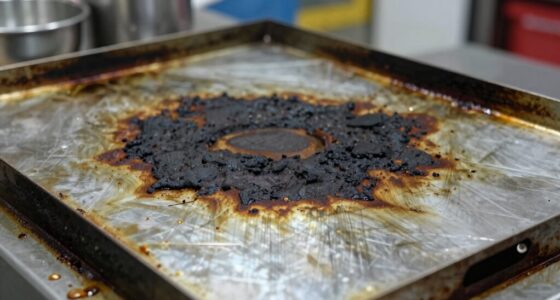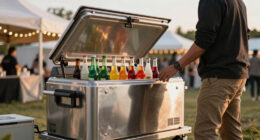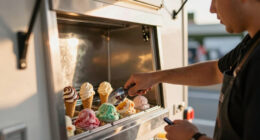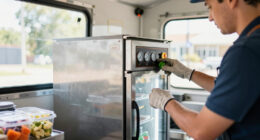
Creating a cleaning schedule for your mobile kitchen helps you keep everything safe, hygienic, and running smoothly. Start by outlining daily, weekly, and monthly tasks, like surface wiping, equipment maintenance, and waste disposal. Use checklists to stay organized and guarantee nothing gets missed. Train your staff on proper protocols, and regularly review and update the schedule based on busy seasons or new needs. Keep going to discover tips for maintaining a spotless, efficient mobile kitchen.

Get kitchen staples and gadgets delivered free with Prime
- Fast, free delivery on millions of items
- Prime Video, Amazon Music and more included
- Member-only deals all year
Key Takeaways
- Identify daily, weekly, and monthly cleaning tasks tailored to mobile kitchen operations.
- Prioritize equipment maintenance and include routine inspections to prevent breakdowns.
- Develop checklists to serve as visual reminders and promote accountability among staff.
- Train staff on proper cleaning protocols, safety procedures, and equipment care.
- Regularly review and update the schedule to adapt to seasonal demands and operational changes.
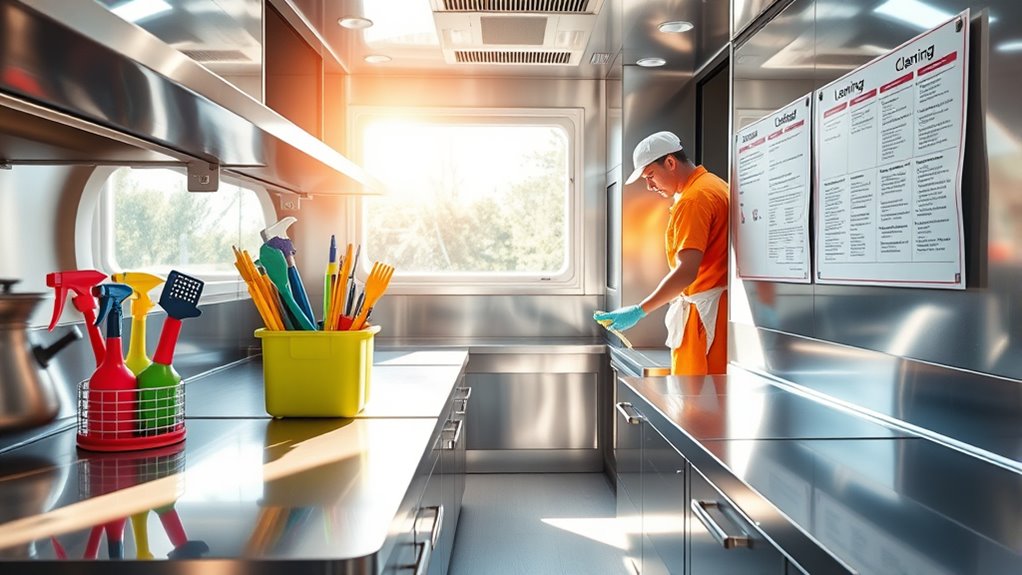
Maintaining a clean mobile kitchen is essential for safety, efficiency, and hygiene. One of the most effective ways to guarantee this is by establishing a well-organized cleaning schedule. This schedule should clearly outline daily, weekly, and monthly tasks, making it easier to stay on top of all cleaning responsibilities. When creating your schedule, prioritize equipment maintenance, as well-maintained equipment not only works better but also reduces the risk of contamination. Regularly inspecting and cleaning appliances, countertops, and storage areas prevents buildup of grime and bacteria, ensuring that your kitchen remains safe for food preparation. To keep everyone on the same page, invest in staff training. Proper training empowers your team to understand cleaning protocols, recognize potential hazards, and follow safety procedures consistently. When staff know exactly what to do and why it matters, your kitchen’s hygiene standards improve considerably.
Consistency is key, so set specific times for cleaning tasks and stick to them. For example, designate particular hours after each shift for wiping down surfaces, sanitizing equipment, and emptying trash. Incorporate checklists into your schedule to guarantee no step gets overlooked. These checklists serve as a visual reminder and help maintain accountability among staff members. Additionally, emphasize the importance of proper equipment maintenance during training sessions. Teach your team how to clean and care for appliances properly, such as ovens, refrigerators, and dishwashers, to extend their lifespan and prevent breakdowns that could disrupt operations or compromise safety. Proper maintenance routines can also prevent cross-contamination and ensure food safety standards are met. Implementing routine cleaning procedures is crucial for consistent hygiene and safety in your mobile kitchen.
Your staff should understand that cleaning isn’t just about appearance; it’s a vital part of food safety. Regularly review and update your cleaning schedule based on the changing needs of your mobile kitchen. For instance, during busy seasons or special events, increase the frequency of certain tasks to keep up with higher usage and potential messes. Make sure your team knows how to handle cleaning products safely, using the right tools and protective gear. Encourage open communication so that staff can report issues like equipment malfunctions or areas that need extra attention. By fostering a culture that values cleanliness and maintenance, you create a safer, more efficient working environment. In the end, a well-structured cleaning schedule, combined with ongoing staff training and diligent equipment maintenance, guarantees your mobile kitchen operates smoothly, stays hygienic, and upholds food safety standards at all times.
commercial kitchen cleaning checklist
As an affiliate, we earn on qualifying purchases.
As an affiliate, we earn on qualifying purchases.
Frequently Asked Questions
How Often Should Deep Cleaning Be Performed in a Mobile Kitchen?
You should perform deep cleaning in your mobile kitchen at least once a month, but more frequently if you handle high volumes or raw foods. Regular cleaning frequency depends on your kitchen’s usage, and adjusting your deep cleaning intervals guarantees hygiene and food safety. Consistent deep cleaning helps prevent buildup of grease, bacteria, and grime, keeping your mobile kitchen safe and compliant with health standards.
What Cleaning Products Are Safest for Mobile Kitchen Surfaces?
Imagine you’re cleaning your mobile kitchen’s countertops after preparing a meal. You should use eco-friendly cleaners and food-safe disinfectants, like vinegar-based solutions or hydrogen peroxide, which are safe for surfaces and food contact areas. These products effectively remove germs without harmful chemicals. Always check labels to verify they’re food-safe, and avoid harsh chemicals that can pose health risks or damage surfaces, ensuring a safe environment for your mobile kitchen.
How to Manage Cleaning Schedules During Busy Event Days?
During busy event days, you should prioritize staff training to guarantee everyone knows their cleaning duties efficiently. Use a clear schedule that assigns specific tasks and times, while monitoring equipment maintenance to prevent breakdowns. Encourage quick, thorough cleaning between shifts, and keep supplies accessible. This approach keeps your mobile kitchen hygienic, reduces downtime, and helps your team stay organized and effective during high-pressure periods.
Are There Specific Sanitation Standards for Mobile Kitchens?
Yes, there are specific sanitation standards for mobile kitchens. You must follow mobile sanitation guidelines to guarantee your space stays clean and safe. Regulatory compliance involves adhering to local health department rules, which often include proper food handling, sanitation practices, and equipment cleanliness. Regularly inspecting and maintaining your mobile kitchen helps you stay compliant, protect your customers, and avoid fines or closures. Always stay updated on current regulations to ensure full compliance.
How to Track and Document Cleaning Activities Effectively?
You should use digital logs and maintenance checklists to track and document cleaning activities effectively. Record each cleaning task with details like date, time, and personnel responsible, guaranteeing nothing gets overlooked. Regularly update these logs after every cleaning session, and review them periodically to identify patterns or issues. This consistent documentation helps maintain sanitation standards, ensures compliance, and makes audits smoother for your mobile kitchen operations.
mobile kitchen equipment maintenance tools
As an affiliate, we earn on qualifying purchases.
As an affiliate, we earn on qualifying purchases.
Conclusion
Creating a cleaning schedule for your mobile kitchen keeps everything running smoothly and safely. Think of it like a well-oiled machine—regular upkeep prevents breakdowns and surprises. Some say a clean kitchen attracts better food and happier customers, and science backs that up; cleanliness reduces bacteria and boosts morale. Stick to your schedule, stay consistent, and you’ll find your mobile kitchen not only more efficient but also a place you genuinely enjoy working in every day.
As an affiliate, we earn on qualifying purchases.
kitchen safety and cleaning training kit
As an affiliate, we earn on qualifying purchases.
As an affiliate, we earn on qualifying purchases.
Halloween Picks
halloween
As an affiliate, we earn on qualifying purchases.