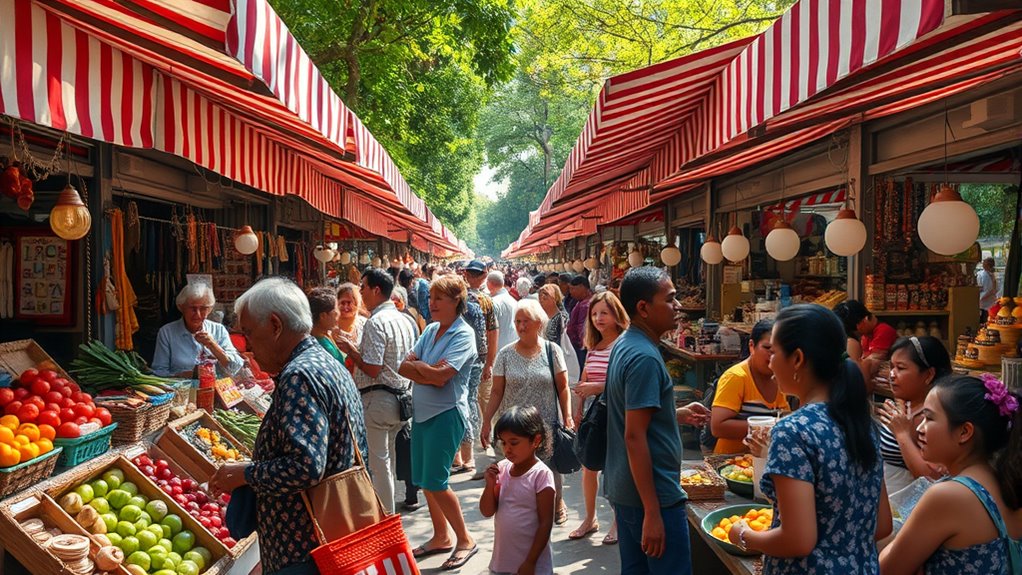

Participating in community markets and fairs is a great way to connect directly with local customers, showcase your products, and build strong relationships. You can receive immediate feedback and better understand community preferences. Setting up effectively, being transparent about your prices, and creating an inviting booth are key to success. Focusing on your pricing strategies and presentation helps build trust and loyalty. Keep exploring, and you’ll discover more tips to maximize your impact in these vibrant markets.
Key Takeaways
- Obtain necessary permits and licenses to ensure legal compliance before participating.
- Create an attractive booth with clear signage, appealing packaging, and organized layout to draw customers.
- Price products competitively by researching market rates and emphasizing quality to build trust.
- Engage with community members directly to gather feedback, showcase products, and foster relationships.
- Plan transportation and setup efficiently, and offer flexible payment options to enhance the customer experience.
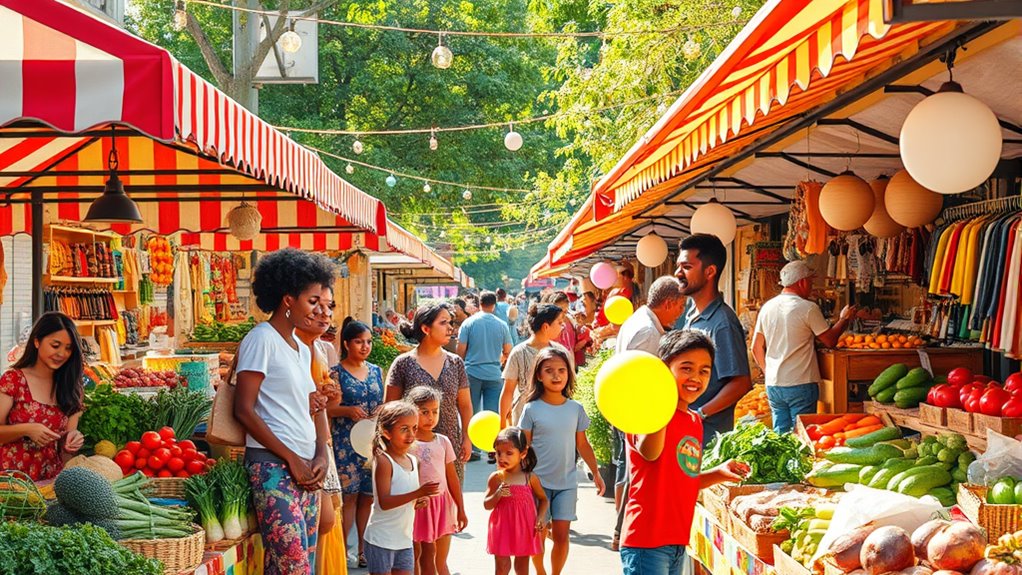
Participating in community markets offers a valuable opportunity to connect directly with local customers and showcase your products. As a vendor, you get to build relationships, receive immediate feedback, and understand what your community values most. To make the most of this experience, you need to develop effective pricing strategies that attract buyers while guaranteeing your sales remain profitable. Consider how your prices compare to nearby vendors offering similar products. Price too high, and you might scare away potential customers; price too low, and you risk undervaluing your work or cutting into profits. Finding the right balance involves researching the market, understanding your costs, and perhaps experimenting with different pricing models to see what works best for your audience. Remember, transparency about your pricing can also foster trust, especially if you’re selling handmade or organic goods where quality is a key selling point.
Getting your vendor setup right is equally vital. First, ensure you have all the necessary permits or licenses required by your local community or market organizers. These often involve health or business permits, so check ahead to avoid last-minute surprises. Next, focus on creating an appealing display that draws attention and makes it easy for customers to browse your products. Use clear signage, attractive packaging, and organize your booth logically. Proper vendor setup also includes having enough inventory, tools, and supplies on hand to handle busy periods smoothly. Keep your payment options flexible with cash, cards, or mobile payments to accommodate different customer preferences. Additionally, think about the logistics—how you’ll transport your goods, set up your booth efficiently, and break down swiftly at the end of the day. Incorporating meaningful pricing strategies can help you stand out and attract loyal customers over time.
As you prepare for each market event, consider how your pricing strategies align with your overall brand and goals. Are you positioning yourself as a premium vendor or offering affordable everyday essentials? Adjust your prices accordingly, but stay consistent to build customer trust over time. When setting up your booth, focus on creating a welcoming environment that encourages browsing and conversation. Good vendor setup isn’t just about aesthetics; it’s about functionality, accessibility, and creating an experience that makes people want to stop, look, and buy. By combining thoughtful pricing strategies with an organized vendor setup, you’ll maximize your sales potential and leave a positive impression on your community. With these fundamentals in place, participating in community markets can become a rewarding and sustainable part of your business growth.
Top picks for "participat community market"
As an affiliate, we earn on qualifying purchases.
Frequently Asked Questions
How Do I Find Local Community Markets and Fairs to Participate In?
To find local community markets and fairs to participate in, start by checking local market directories online, which list upcoming events and vendor opportunities. Additionally, explore event calendars on community websites and social media pages to stay updated on scheduled markets. You can also contact local chambers of commerce or neighborhood associations for information. These resources help you discover the right markets and plan ahead to showcase your products.
Are There Specific Regulations for Selling Products at Community Events?
Hold the phone, like a knight before a quest! You’ll need vendor licensing and proper product labeling to sell at community events. Regulations vary by location, so check with your local health department or city hall. Make certain your products meet safety standards and display clear labels with ingredients or info. Ignoring these rules could turn your market adventure into a medieval mess, so stay informed and compliant!
What Fees or Costs Are Typically Involved in Participating?
When you participate in community markets and fairs, expect to pay fees for booth setup and possibly a commission on sales. Costs may also include promotional materials like flyers or banners to attract customers. Some events charge for electricity or water, while others include it in the overall fee. Be sure to budget for these expenses beforehand, so you can plan your pricing and marketing strategy effectively.
How Can I Attract More Customers to My Booth?
Think of your booth as a lighthouse guiding customers to your brand. Use eye-catching booth design and consistent branding strategies to stand out in the crowd. Incorporate vibrant colors, clear signage, and engaging displays to draw attention. Offer samples or interactive elements to invite curiosity. By creating a memorable visual experience, you’ll attract more visitors and turn them into loyal customers who remember your unique story long after the fair ends.
What Types of Products or Services Are Most Successful at These Events?
You’ll find that seasonal products and handmade crafts tend to be most successful at these events. Customers love unique, locally-made items that reflect the time of year, like holiday decorations or summer accessories. By offering products that stand out as special and personalized, you attract more attention and sales. Focus on quality and originality, and promote your items’ handcrafted or seasonal appeal to draw in curious shoppers.
Conclusion
By participating in community markets and fairs, you plant seeds of connection and support that grow into a vibrant community garden. Each booth you set up is a seedling, nurturing relationships and fostering trust. As your roots deepen, you become part of something larger—an enduring tapestry woven from shared stories and efforts. Remember, every small act is a essential droplet in the well of community, nourishing bonds that bloom far beyond the market day.