
To plan your first year in the food truck business, focus on creating a simple, appealing menu with signature dishes and options for different diets. Scout high-traffic locations, building relationships with event organizers, and test different spots to see what works best. Use social media for promotions and gather customer feedback to refine your offerings. Staying flexible and continuously improving strategies will set you up for long-term success—keep exploring the key tips that follow.

Get kitchen staples and gadgets delivered free with Prime
- Fast, free delivery on millions of items
- Prime Video, Amazon Music and more included
- Member-only deals all year
Key Takeaways
- Develop a focused, appealing menu with signature dishes, catering to diverse dietary preferences and quick service needs.
- Research high-traffic locations and establish relationships with event organizers for consistent, targeted placement.
- Utilize social media to promote schedules, gather customer feedback, and refine menu and location strategies.
- Track sales and customer preferences regularly, adjusting offerings and routes for profitability and growth.
- Be flexible, experiment with new locations, and incorporate ongoing improvements to ensure long-term success.
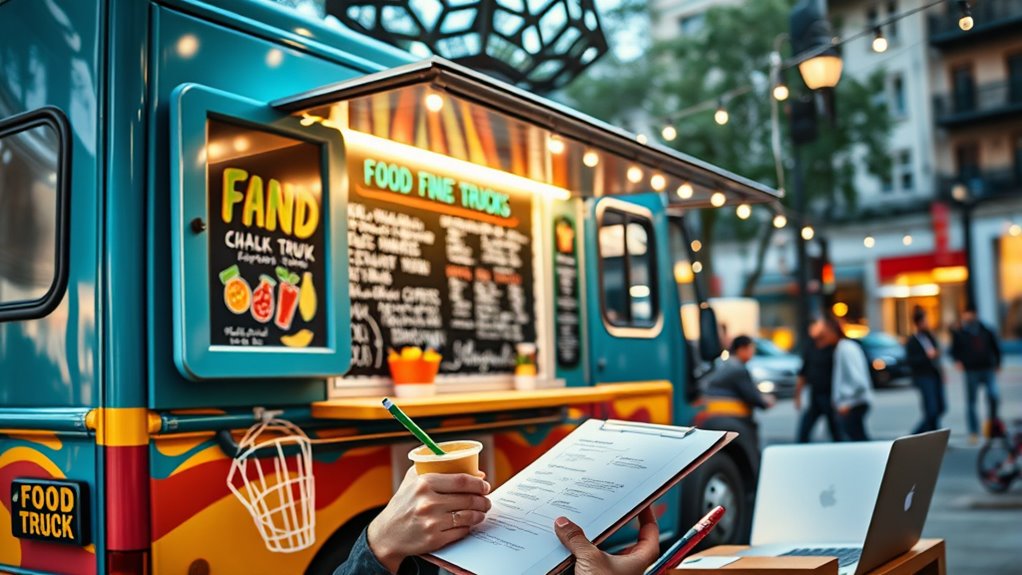
Starting a food truck business can be an exciting venture, but careful planning is essential to set yourself up for success. One of the first steps you need to focus on is developing a menu that not only reflects your culinary vision but also appeals to your target customers. Menu customization is key here; you want to offer items that stand out but are manageable in a mobile setting. Keep your menu concise to ensure quick service and high-quality offerings. Think about signature dishes that can be prepared efficiently on your truck, and consider including versatile options that cater to different dietary preferences. Remember, the goal is to create a menu that is both appealing and practical for a limited space.
Develop a concise, appealing menu with signature dishes and versatile options suitable for a mobile food truck setting.
Once your menu is settled, the next crucial step is location scouting. Your success heavily depends on choosing the right spots to park your truck. Spend time researching high-traffic areas such as busy street corners, office parks, local markets, or event venues. It’s vital to understand the foot traffic flow and identify locations where your target audience is likely to gather. Don’t hesitate to visit potential spots during different times of day to assess how busy they get. Building relationships with event organizers or property managers can also open doors for regular placement at popular events or in strategic locations. Effective location scouting isn’t just about finding a busy spot; it’s about finding a consistent one that aligns with your menu and branding.
As you plan your first year, keep in mind that flexibility is critical. You may find that some locations don’t generate the traffic you expected, or that certain menu items don’t resonate with your audience. Be prepared to tweak your menu based on customer feedback, perhaps adding or removing items to better suit local tastes. Similarly, don’t be afraid to experiment with new locations or event opportunities. Tracking your sales and customer preferences helps guide these decisions, ensuring you focus on the most profitable and enjoyable routes. Incorporating specialized equipment such as water purification systems can also enhance your service quality and operational efficiency.
Additionally, your initial menu and location choices influence your branding and marketing strategies. Use social media to announce your schedule and whereabouts, and consider offering promotions to attract first-time customers. The more you learn about what works and what doesn’t, the better you’ll refine your approach over the year. Starting a food truck business is a dynamic process that requires ongoing adjustments, but with careful planning around menu customization and location scouting, you’ll build a solid foundation for a successful first year.
As an affiliate, we earn on qualifying purchases.
Frequently Asked Questions
How Do I Choose the Best Location for My Food Truck?
You should choose a location with high foot traffic and visibility, aligning your truck design to attract attention. Consider areas near busy offices or events. Develop a menu that appeals to the crowd there, and test spots to see how customers respond. Adjust your truck design to stand out, and refine your menu based on feedback. Consistently evaluate your location’s potential to maximize sales and grow your food truck business.
What Permits and Licenses Are Required to Operate Legally?
Did you know over 80% of food trucks face legal issues due to missing permits? To operate legally, you need food truck permits and licensing requirements specific to your city or state. These often include health department permits, a business license, and a sales tax permit. Make sure to check local regulations and obtain all necessary paperwork before hitting the streets, ensuring your business stays compliant and avoids costly fines.
How Can I Effectively Market My Food Truck Business?
You can effectively market your food truck by leveraging social media to share your location, menu, and daily specials, engaging your audience with photos and updates. Build local partnerships with nearby businesses and events to increase visibility and attract new customers. Attend community gatherings and collaborate with local vendors. Consistent branding and positive customer experiences will turn first-time visitors into loyal fans, boosting your business’s growth.
What Are the Common Challenges Faced During the First Year?
Starting your food truck journey is like steering through choppy waters—challenges come fast. Common hurdles include securing food truck financing, managing unpredictable costs, and building a reliable team through staff training. You’ll also face competition and fluctuating customer demand. Staying adaptable and organized helps. Focus on budgeting wisely, training your staff thoroughly, and marketing consistently to navigate these rough waters and keep your business afloat in that first year.
How Do I Manage Inventory and Supply Chain Issues?
To manage inventory and supply chain issues, focus on effective inventory tracking to monitor stock levels and identify shortages early. Build strong relationships with reliable suppliers and stay updated on their inventory status. Use digital tools for real-time supply chain management, which helps anticipate delays and adjust orders accordingly. Regularly review your inventory data, stay flexible, and plan ahead to keep your food truck running smoothly without disruptions.
portable water purification system for food trucks
As an affiliate, we earn on qualifying purchases.
As an affiliate, we earn on qualifying purchases.
Conclusion
Starting your food truck journey is like steering a ship through uncharted waters. With careful planning and passion, you’ll navigate challenges and discover new opportunities just like a captain discovering hidden islands. Remember, most successful food truck owners started with a single idea and a lot of hustle. Keep your eyes on the horizon, stay adaptable, and soon you’ll be serving up success one tasty meal at a time. Your adventure begins now—bon voyage!
food truck location scouting tools
As an affiliate, we earn on qualifying purchases.
As an affiliate, we earn on qualifying purchases.
food truck promotional social media tools
As an affiliate, we earn on qualifying purchases.
As an affiliate, we earn on qualifying purchases.
Columbus Day / Indigenous Peoples' Day Picks
long weekend sales
As an affiliate, we earn on qualifying purchases.