
To price your menu items for profit, start by carefully controlling costs like ingredients, labor, and overhead. Analyze sales data to identify high-margin dishes and adjust pricing accordingly. Use menu engineering techniques by highlighting profitable items and guiding customer choices through strategic placement. Regularly review costs and sales performance to make informed adjustments, ensuring each dish contributes to your bottom line. Keep optimizing your prices and menu layout to sustain long-term success—there’s more to discover about mastering this balance.

Get kitchen staples and gadgets delivered free with Prime
- Fast, free delivery on millions of items
- Prime Video, Amazon Music and more included
- Member-only deals all year
Key Takeaways
- Calculate food costs accurately and set menu prices that cover expenses while ensuring a profit margin.
- Highlight high-margin items through strategic placement and descriptions to influence customer choices.
- Regularly review sales data and costs to adjust prices and menu offerings for optimal profitability.
- Use menu engineering techniques to encourage the selection of more profitable dishes.
- Balance pricing to maintain customer perceived value and competitiveness while sustaining long-term business health.
Setting the right price for your menu items is essential to guarantee your business stays profitable while remaining attractive to customers. When you get this balance right, you can maximize revenue without turning away potential patrons. One of the key strategies to achieve this is through effective cost control. By closely monitoring the costs associated with each dish—ingredients, labor, overhead—you ensure that every item on your menu contributes to your bottom line. Knowing your food costs allows you to set prices that cover expenses and deliver a healthy profit margin. It’s important to regularly review these costs, especially with fluctuating ingredient prices, so you can adjust your prices accordingly and keep your margins intact.
Effective cost control is key to setting profitable, competitive menu prices.
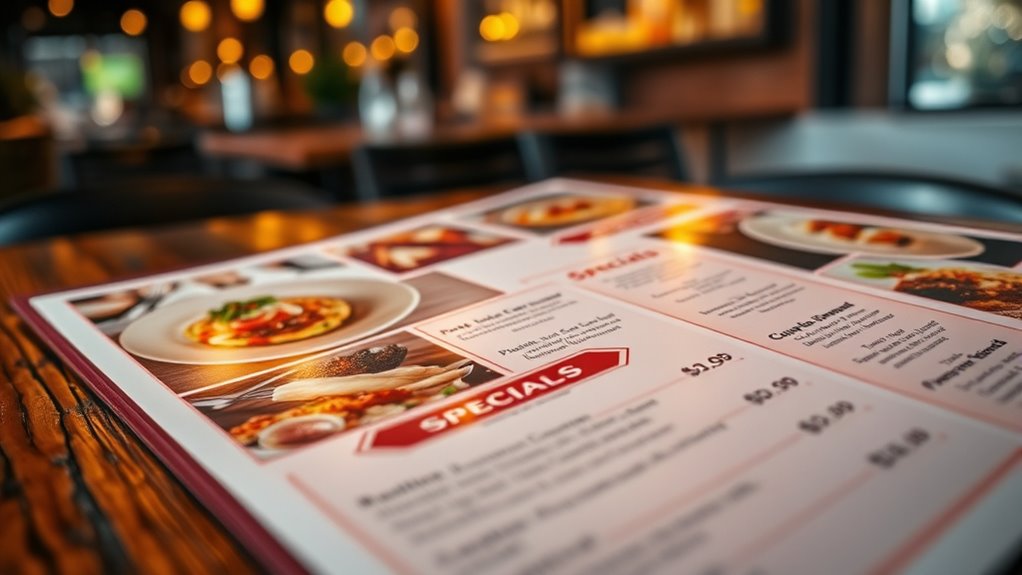
Another crucial component is menu engineering. This technique involves analyzing how each dish performs sales-wise and profitability-wise, then adjusting your menu to highlight high-margin items. You want to position your most profitable dishes prominently, perhaps by placing them in prime menu spots or using appealing descriptions. Conversely, if some items are popular but low in profit, consider tweaking their recipes or pricing to improve their contribution margin. Menu engineering isn’t just about increasing prices; it’s about understanding customer preferences and steering choices toward more profitable options. When you combine cost control with smart menu engineering, you’re not only controlling expenses but also guiding customer behavior to favor higher-margin dishes. Additionally, understanding customer preferences helps in crafting appealing menu descriptions that influence purchasing decisions and boost sales.
Pricing isn’t a set-it-and-forget-it task. You need to stay vigilant and adapt as costs change and customer preferences evolve. Regularly reviewing your cost control data helps you identify which items are dragging down your profitability and which ones are thriving. At the same time, pay attention to how your menu engineering efforts impact sales patterns. If a particular dish isn’t selling well, consider reevaluating its price or presentation rather than removing it outright. Your goal is to strike a balance where customers feel they’re getting value, and you’re maintaining healthy profit margins.
Ultimately, the secret lies in understanding your costs and strategically positioning your menu. Cost control provides the foundation, ensuring you don’t lose money on ingredients or labor. Menu engineering helps you optimize the menu layout and item placement, nudging customers toward choices that benefit your bottom line. When you master both, you create a pricing strategy that sustains your business, keeps customers satisfied, and ensures long-term profitability. Remember, pricing isn’t just about covering costs; it’s about smartly leveraging your menu to maximize profits while delivering value.
menu cost calculator for restaurants
As an affiliate, we earn on qualifying purchases.
As an affiliate, we earn on qualifying purchases.
Frequently Asked Questions
How Often Should I Review My Menu Pricing?
You should review your menu pricing at least every six months, considering changes in ingredient costs and customer preferences. Keep an eye on menu psychology to see how pricing influences choices and use competitor analysis to stay competitive. Regular reviews help you adapt to market trends, optimize profit margins, and guarantee your prices align with customer expectations. This proactive approach keeps your menu fresh and profitable.
Should I Offer Discounts or Specials Regularly?
Offering discounts or specials regularly is like watering a garden—you keep customers engaged and coming back. Dynamic pricing helps you adjust offers based on demand, keeping margins healthy. Use specials to reward customer loyalty, making them feel valued and encouraging repeat visits. Just guarantee these promotions are strategic; too many can devalue your menu. Balance regular offers with consistent quality to boost loyalty and profitability.
How Do Seasonal Ingredients Affect Pricing?
Seasonal ingredients impact your pricing because of seasonal fluctuations and ingredient costs. When ingredients are in season, they’re often more affordable, allowing you to offer better prices or increase profit margins. Conversely, out-of-season ingredients tend to be pricier, so you might need to adjust menu prices accordingly or highlight seasonal dishes to justify higher costs. Staying aware of these fluctuations helps you set competitive, profitable prices throughout the year.
What Pricing Strategies Work Best for High-Demand Items?
Irony strikes—high-demand items often seem like they should be priced higher, yet you might find value-based pricing or dynamic pricing more effective. By adjusting prices based on demand and perceived value, you maximize profit without alienating customers. Dynamic pricing allows you to capitalize during peak times, while value-based pricing ensures customers see the worth. These strategies help you optimize revenue for your most popular dishes, effortlessly turning high demand into high profit.
How Can I Balance Affordability With Profit Margins?
You can balance affordability with profit margins by using cost-based pricing, ensuring each dish covers expenses while remaining competitive. Conduct competitor analysis to see what others charge for similar items, then adjust your prices accordingly. This approach helps you stay appealing to customers without sacrificing profit. Regularly review your costs and competitors’ prices, and be flexible to tweak your pricing to maintain that ideal balance between affordability and profitability.
restaurant menu engineering tools
As an affiliate, we earn on qualifying purchases.
As an affiliate, we earn on qualifying purchases.
Conclusion
Remember, setting the right prices isn’t just about covering costs—it’s about creating a balanced menu that attracts customers and ensures your success. Think of your pricing as a carefully tuned instrument, like a symphony where every note matters. When you price with purpose and precision, you’ll find harmony between customer satisfaction and profit. Keep this in mind, and your menu will sing with both flavor and financial stability, much like a well-conducted orchestra.
As an affiliate, we earn on qualifying purchases.
As an affiliate, we earn on qualifying purchases.
Halloween Picks
halloween
As an affiliate, we earn on qualifying purchases.