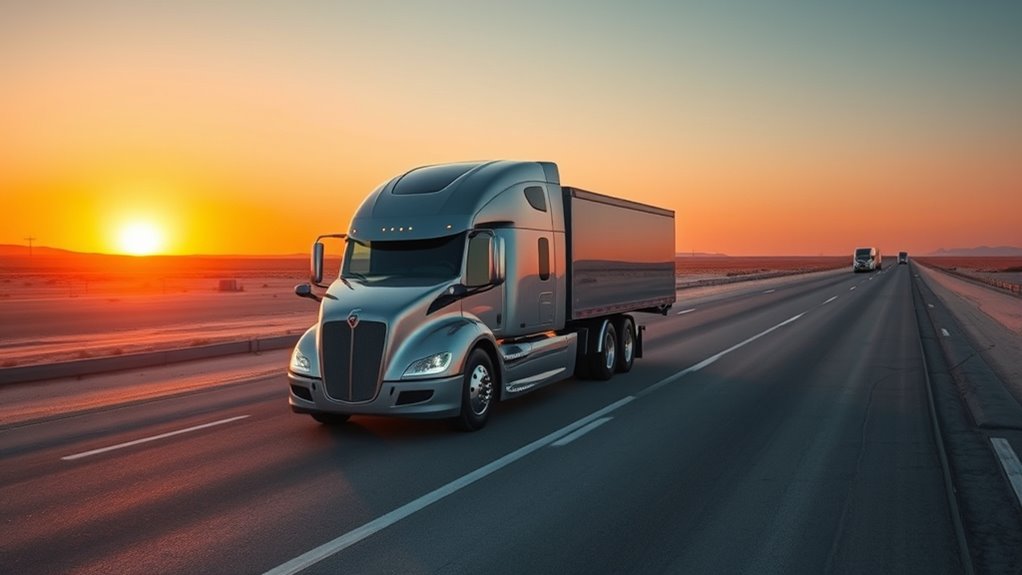

The rise of automated and minimally staffed trucks is transforming the freight industry by boosting safety, lowering environmental impact, and improving efficiency. These trucks operate with fewer human inputs, reacting faster to hazards and maintaining ideal driving patterns that conserve fuel. They also reduce accidents and emissions, making roads safer and greener. As technology advances, industry practices shift toward smarter, safer transportation, and there’s much more to discover about how these innovations will shape the future of freight.
Listen free for 30 days with Audible
Thousands of audiobooks and originals — cancel anytime.
As an affiliate, we earn on qualifying purchases.
Key Takeaways
- Automated trucks reduce human error, enhancing overall road safety and decreasing accidents involving other vehicles, pedestrians, and cyclists.
- They optimize driving patterns for fuel efficiency and lower emissions, contributing to environmental sustainability.
- Advanced safety features and continuous monitoring improve truck reliability and proactive maintenance.
- Automation supports industry transformation by promoting greener routes and reducing the carbon footprint of freight transport.
- The shift towards minimally staffed trucks fosters a safer, more efficient, and sustainable transportation network for all road users.
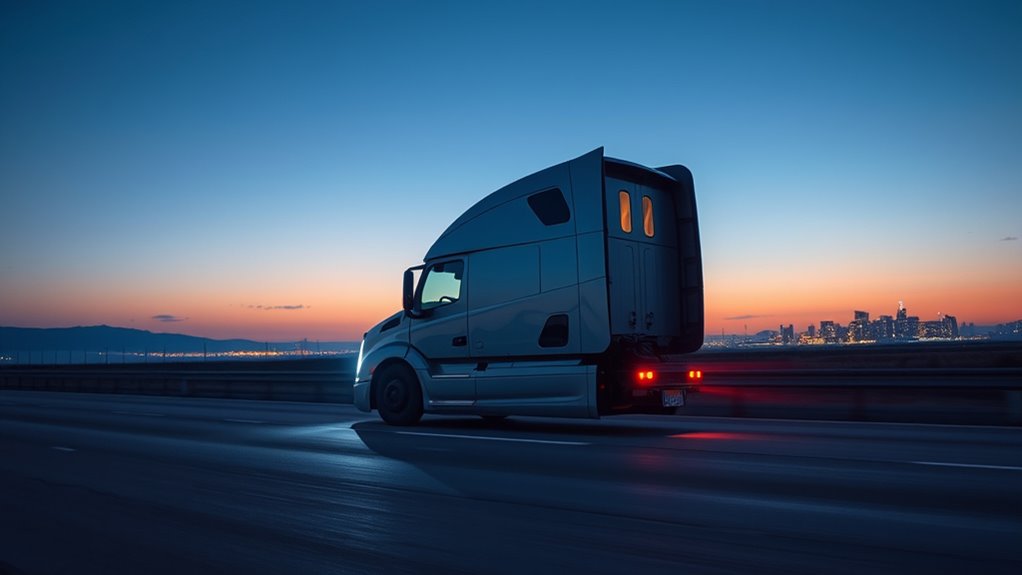
Have you ever wondered how automation is transforming the trucking industry? It’s a game-changer, especially when it comes to driver safety and minimizing environmental impact. Automated trucks are designed to operate with fewer human inputs, reducing the risk of accidents caused by human error. In traditional trucking, fatigue, distracted driving, and errors significantly contribute to road accidents. With self-driving technology, trucks can maintain consistent speeds, follow safe following distances, and react faster to road hazards, making the roads safer for everyone. This shift not only protects drivers but also reduces the chances of crashes involving other vehicles, pedestrians, and cyclists. As these trucks become more common, you’ll notice fewer accidents on highways, which can lead to fewer injuries and fatalities, ultimately making transportation safer for all road users.
On the environmental front, automated trucks are poised to make a substantial impact. They are equipped with advanced sensors and AI systems that optimize driving patterns, such as acceleration, braking, and routing. This efficiency translates to lower fuel consumption and reduced emissions. Unlike human drivers, who might accelerate aggressively or brake suddenly, automated systems operate smoothly, conserving fuel and decreasing greenhouse gases. Plus, these trucks can be programmed to choose the most eco-friendly routes, avoiding congestion and reducing idle time. As a result, the transportation sector’s carbon footprint shrinks, aligning with global efforts to combat climate change. For you, this means cleaner air and a healthier environment, especially as these trucks become more prevalent and replace older, less efficient vehicles.
Furthermore, automation can lead to better maintenance practices. Automated systems continuously monitor their own health, alerting operators to potential issues before they become serious. This proactive approach reduces breakdowns and ensures trucks run at their best, further conserving fuel and lowering emissions. Additionally, automated safety features are improving overall road safety by preventing accidents before they happen. The combination of safety and environmental benefits isn’t just theoretical; it’s already shaping the future of freight transportation. As a driver or someone interested in the industry, you’ll see how these advancements are making trucking smarter, safer, and more sustainable. The shift to automated and minimally staffed trucks isn’t just about cutting costs; it’s about creating a safer, greener, and more efficient transportation network. When you consider the potential improvements in driver safety and the positive environmental impact, it becomes clear that automation is not just a technological upgrade—it’s a fundamental change that benefits everyone on the road and beyond.
Top picks for "rise automat minimally"
As an affiliate, we earn on qualifying purchases.
Frequently Asked Questions
How Will Job Opportunities Change With Automated Trucks?
Job opportunities will shift towards roles that require technological skills and advanced driver training, as automated trucks become more prevalent. You’ll need to adapt by learning about vehicle systems, cybersecurity, and maintenance for these new technologies. While traditional driving jobs may decline, new roles will emerge in overseeing autonomous operations, troubleshooting, and software management. Embracing continuous learning and upgrading your skills is essential to stay relevant in this evolving industry.
What Cybersecurity Risks Are Associated With Minimally Staffed Trucks?
Sure, your minimally staffed trucks might seem like a dream, but they come with cyber vulnerabilities that could turn your fleet into hacker playgrounds. Hacking threats loom large, risking data breaches or even hijacking control of your vehicles. As you rely more on automation, keep in mind that cyber vulnerabilities increase, and a single breach could turn your smooth ride into a chaotic, cyber-induced nightmare. Stay vigilant!
How Do Regulatory Agencies Oversee Autonomous Trucking Operations?
Regulatory agencies oversee autonomous trucking operations by enforcing strict safety standards and guaranteeing compliance with federal and state laws. They require companies to submit detailed safety plans, conduct regular inspections, and implement robust cybersecurity measures. You must stay updated on evolving regulations, maintain detailed records, and demonstrate that your autonomous vehicles meet all safety and cybersecurity requirements. This oversight aims to protect public safety and ensure reliable, secure autonomous trucking operations.
What Infrastructure Improvements Are Needed for Automated Truck Deployment?
You’ll need to upgrade roads with smart roadways and sensor networks, ironically turning highways into high-tech corridors. These improvements enable autonomous trucks to navigate safely and efficiently, sensing their environment in real-time. By investing in these infrastructures, you guarantee seamless communication between vehicles and the road, reducing accidents and congestion. It’s a clever way to prepare for a future where trucks drive themselves, turning old roads into futuristic highways.
How Will Consumer Prices Be Affected by Automation in Trucking?
You’ll likely see lower consumer prices as automation improves fuel efficiency and reduces delivery costs. Automated trucks can operate more efficiently, cutting fuel consumption and environmental impact. These savings may be passed on to you, making products cheaper. However, the initial costs of new technology and infrastructure upgrades could temporarily influence prices. Overall, automation promises long-term benefits for consumers through reduced costs and a smaller environmental footprint.
Conclusion
As you watch the horizon, these automated trucks are like silent giants awakening, transforming the landscape of transportation. With fewer crew members, they become the steady heartbeat of an evolving industry, pulsating with efficiency and innovation. Though the road ahead is uncertain, their rise whispers of a future where technology steers the wheel, carving a new path through the wilderness of tradition. Embrace this dawn—where machines and progress entwine like a symphony in motion.
NFL season / tailgating Picks
team gear
As an affiliate, we earn on qualifying purchases.