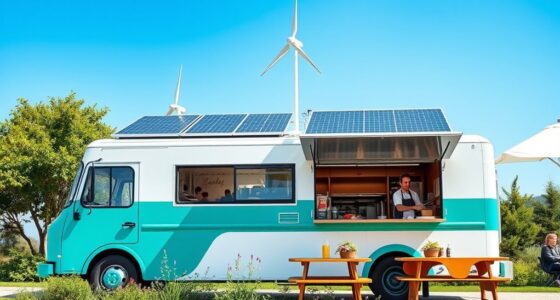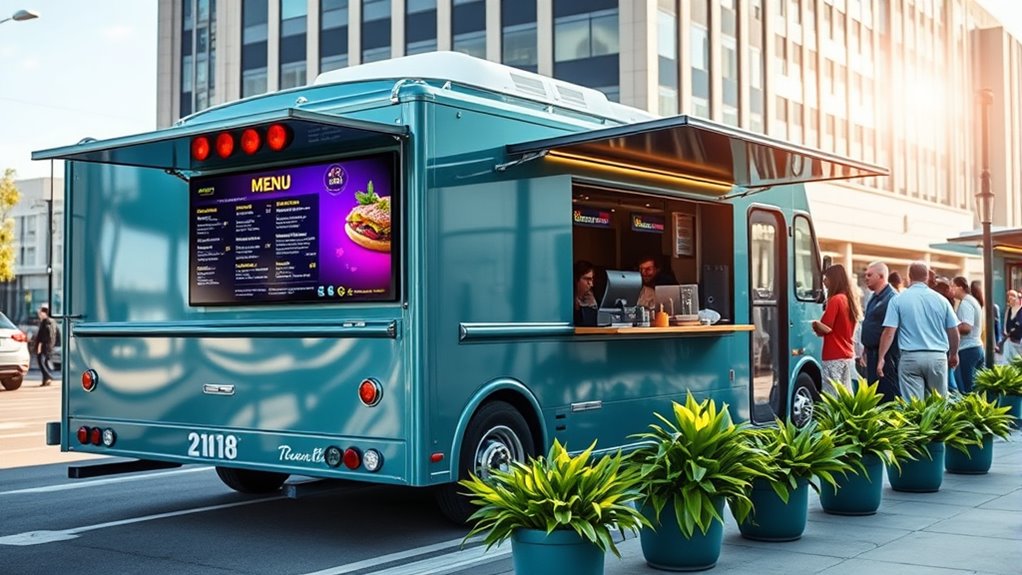

Moving to electric or hybrid food trucks involves planning your charging infrastructure, managing batteries wisely, and staying updated on new technologies. You’ll want reliable charging stations—private or public—and fast chargers to reduce downtime. Proper battery care extends lifespan, while understanding advancements can boost efficiency. Though upfront costs might be higher, savings on fuel, maintenance, and environmental benefits make it worthwhile. Continue exploring to uncover key strategies for a successful switch that maximizes your investment and sustainability goals.
Key Takeaways
- Assess charging infrastructure needs and develop a strategic plan to ensure reliable access during operational hours.
- Choose high-quality batteries and implement proper management to maximize lifespan and performance.
- Stay informed on technological advancements to leverage improved battery efficiency and durability.
- Calculate total cost of ownership, including infrastructure, maintenance, and environmental benefits, to justify transition investments.
- Plan for staff training and maintenance protocols to ensure smooth operation and longevity of electric or hybrid trucks.
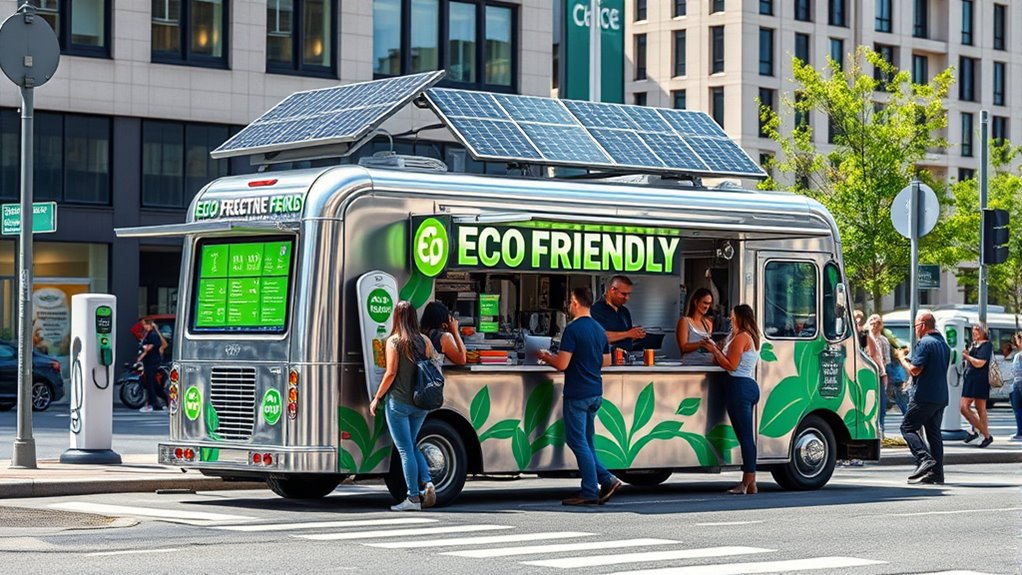
Are you considering upgrading your food truck to be more sustainable? If so, shifting to an electric or hybrid model can be an excellent move, but it comes with its own set of considerations. One of the most critical aspects is understanding the charging infrastructure you’ll need to support your new vehicle. Reliable access to charging stations is essential to keep your truck running smoothly throughout the day. Depending on your location, you might need to install your own charging station or identify convenient public options along your route. Fast chargers can significantly reduce downtime, allowing you to get back to serving customers quickly, but they can also be more expensive to install. Planning your charging strategy ahead of time guarantees you don’t face unexpected interruptions, especially during busy hours.
Battery longevity is another key factor to consider when making the switch. Modern electric food trucks typically use lithium-ion batteries, which can last for several years with proper maintenance. However, their lifespan depends heavily on how you manage charging cycles and overall usage. Overcharging or frequent deep discharges can accelerate battery wear, so it’s essential to follow manufacturer guidelines carefully. Investing in high-quality batteries upfront might seem costly but pays off in the long run, as they tend to have longer lifespans and better performance. Additionally, monitoring your battery’s health regularly can help you spot issues early and prevent costly replacements. Proper battery management and care can also enhance overall efficiency and safety, ensuring your investment remains protected.
Another point to keep in mind is that advancements in battery technology are ongoing, meaning today’s batteries are more durable and efficient than ever before. This evolution can extend your truck’s operational hours and reduce downtime for charging. Properly managing your battery’s temperature—avoiding extreme heat or cold—also plays a crucial role in preserving battery health and ensuring consistent performance. Some newer electric trucks come equipped with thermal management systems that help maintain ideal battery temperatures, which can be a worthwhile investment.
As you plan your shift, consider the total cost of ownership, including charging infrastructure, battery maintenance, and replacement costs. While electric trucks often have higher upfront costs, they usually save money on fuel and maintenance over time. Plus, the environmental benefits and positive brand image can attract more customers who value sustainability. Ultimately, a well-thought-out approach to charging infrastructure and battery management will help you maximize your investment, keep your truck running efficiently, and ensure you’re delivering excellent food with a reduced carbon footprint. Keeping abreast of battery technology advancements can help you stay ahead of the curve and optimize your vehicle’s performance in the long run.

Ninja Professional Plus Food Processor, 1000PW, 9-Cup, Grey, BN601
- Powerful Motor: 1000-peak-watt for tough ingredients
- Auto-IQ Technology: 4 preset programs for easy prep
- Large Capacity: 9-cup bowl for big batches
As an affiliate, we earn on qualifying purchases.
Frequently Asked Questions
What Are the Initial Costs of Electric Food Trucks?
The initial costs of electric food trucks typically range from $100,000 to $300,000, depending on size and features. You’ll need to contemplate the battery lifespan, which impacts long-term durability, and the expense of installing charging stations. While upfront costs are higher than traditional trucks, electric models save you money on fuel and maintenance over time, making them a smart investment for your business’s sustainability and efficiency.
How Long Do Electric Truck Batteries Typically Last?
You might worry about battery lifespan, but most electric truck batteries last 8 to 15 years with proper care. This longevity helps you avoid frequent replacement costs, which can be expensive. While replacement costs can be significant, investing in quality batteries and regular maintenance often extends their lifespan. So, rest assured, your electric truck can serve you reliably for years, saving money and reducing downtime in the long run.
What Maintenance Differences Exist Between Electric and Traditional Trucks?
You’ll find that electric trucks require less maintenance overall. Battery maintenance is simpler, mainly needing regular checks and software updates, unlike traditional engines that require frequent oil changes and engine repairs. With electric trucks, you avoid many engine-related issues, saving time and costs. However, keep an eye on the battery health, and guarantee proper cooling systems are maintained to optimize performance and longevity.
Are There Financial Incentives for Switching to Electric or Hybrid Trucks?
Yes, you can benefit from financial incentives like government grants and tax credits when you switch to electric or hybrid food trucks. These programs are designed to encourage eco-friendly transportation, helping you offset the initial investment. By taking advantage of these incentives, you reduce your overall costs, making the shift more affordable and sustainable for your business. Check local and federal programs to maximize your savings.
How Does Charging Infrastructure Impact Operational Efficiency?
Imagine charging stations as the fuel stations for your food truck’s journey—without enough of them, your route stalls. If the grid capacity isn’t enough, finding a charging spot becomes a challenge, delaying your operation. This impacts your efficiency, as you spend more time waiting than serving. Ensuring ample charging stations and a robust grid capacity keeps your truck rolling smoothly, maximizing uptime and customer satisfaction.

Hamilton Beach 3 Cup Electric Vegetable Chopper & Mini Food Processor
- Easy stack and press operation: Simple assembly with press-to-chop design
- Compact 3-cup capacity: Ideal size for daily chopping needs
- Stainless steel blades: Effortlessly chop, puree, and emulsify
As an affiliate, we earn on qualifying purchases.
Conclusion
Switching to electric or hybrid food trucks isn’t just good for the environment—it can also boost your business. Did you know that electric trucks produce up to 80% fewer emissions than traditional gas-powered models? By making this switch, you not only reduce your carbon footprint but also appeal to eco-conscious customers. Embrace the change today, and you’ll be part of a growing movement toward sustainable, innovative food service. The future of food trucks is electric—and it’s brighter than ever.

Cuisinart Food Processor, Dishwasher Safe 11-Cup Food Processor with Slicing & Shredding Discs, Cuisinart Pro Custom 11 Stainless Steel Electric Chopper & Kitchen Food Processor, Chrome, DLC-8SBCYP1
- Powerful Performance: Chops, slices, and mixes efficiently
- 11-Cup Capacity: Ideal for meal prep and entertaining
- Multi-Functional Use: Slices, purees, and processes vegetables
As an affiliate, we earn on qualifying purchases.
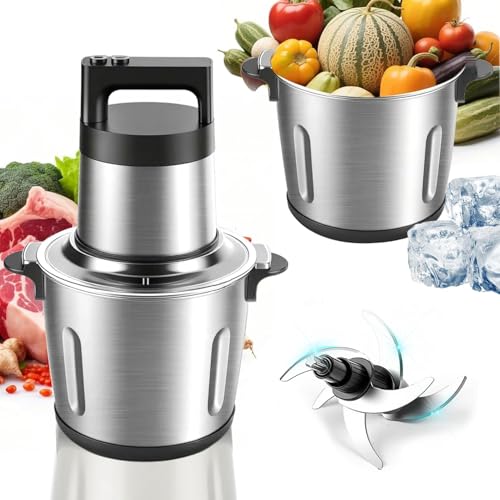
GYQTGO Food Processor 6L Large Capacity,1200W Heavy Duty Electric Meat Grinder for Frozen Meat,Vegetable and Nuts with 3-Layer Blades & Stainless Steel Bowl,Dishwasher Safe,for Family BBQ(6L/25CUP)
- Large Capacity for Family Meals: Grind up to 8 lbs of meat in one batch
- Ideal for Big Events: Perfect for BBQs, camping, and holidays
- Extra-Large Feeding Tube: Fits whole vegetables, reduces prep time
As an affiliate, we earn on qualifying purchases.