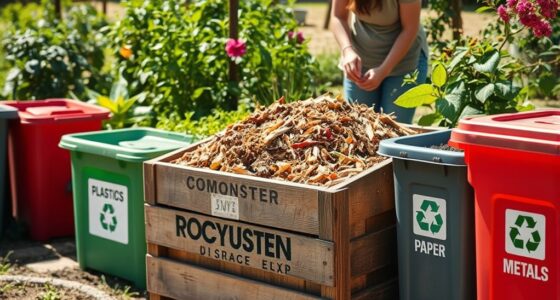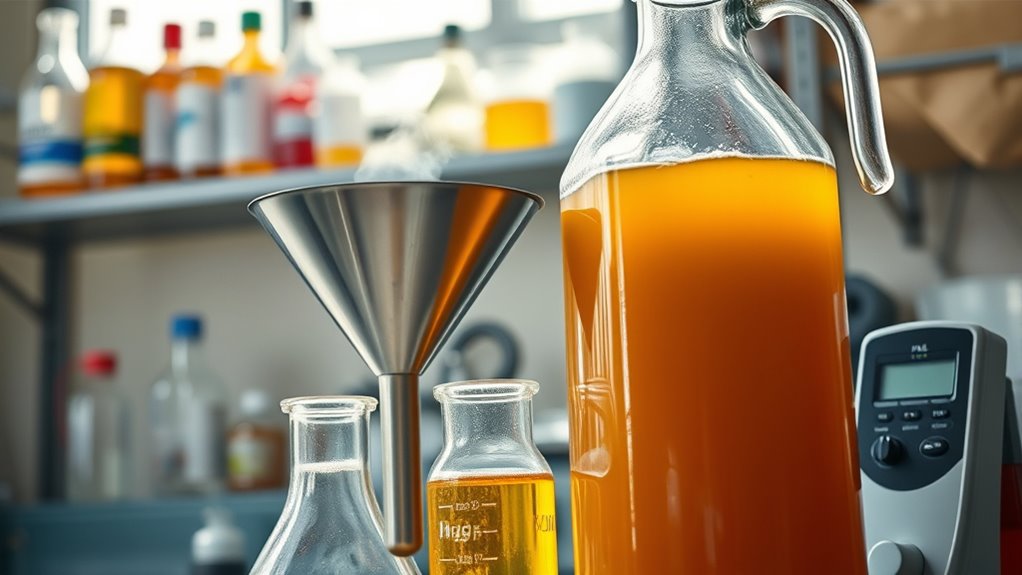

You can turn used cooking oil into biodiesel by filtering out food particles and impurities, then mixing the clean oil with methanol and a catalyst like sodium hydroxide to trigger the transesterification process. This reaction transforms the waste oil into renewable fuel, separating into biodiesel and glycerol. Proper separation, washing, and drying guarantee a high-quality fuel suitable for diesel engines. To discover the full process and benefits, continue exploring how this eco-friendly conversion works.

Get kitchen staples and gadgets delivered free with Prime
- Fast, free delivery on millions of items
- Prime Video, Amazon Music and more included
- Member-only deals all year
Key Takeaways
- Collect and filter used cooking oil to remove food particles and impurities for efficient biodiesel production.
- Mix the filtered oil with methanol and a catalyst to initiate transesterification, converting oil into biodiesel.
- Separate the biodiesel from glycerol after the chemical reaction, then wash and dry it for use.
- Biodiesel produced from recycled oil can power diesel engines, reducing reliance on fossil fuels.
- Upcycling used cooking oil into biodiesel supports waste reduction, environmental health, and sustainable energy practices.

When you finish cooking with oil, instead of discarding it, consider upcycling it to reduce waste and find new uses. Used cooking oil often ends up in landfills or down the drain, which can harm the environment. By repurposing it into biodiesel, you actively participate in waste reduction and promote sustainable practices. This process transforms your leftover oil into a renewable fuel source, helping decrease reliance on fossil fuels. Converting cooking oil into biodiesel involves chemical processing, where specific chemical reactions convert triglycerides into fatty acid methyl esters—biodiesel. This transformation not only reduces waste but also provides a practical way to generate energy from something that would otherwise be disposed of improperly.
Upcycle used cooking oil into biodiesel to reduce waste and promote sustainable energy practices.
The process begins with collecting your used cooking oil, ensuring it’s filtered to remove food particles and impurities. Proper filtration is key because debris can interfere with the chemical process, making the conversion less efficient. Once you have clean oil, the next step involves combining it with methanol and a catalyst, usually sodium or potassium hydroxide. This mixture triggers a chemical reaction called transesterification, which breaks down the triglycerides into biodiesel and glycerol. This step is vital because it converts the waste oil into a usable fuel, reducing environmental pollution caused by improper disposal. While chemical processing might sound complex, it can be managed with the right equipment and safety measures, making the upcycling process accessible for DIY enthusiasts and small-scale producers. Additionally, understanding the water quality involved in the process can help improve the efficiency and safety of biodiesel production.
After the reaction completes, the mixture separates into two layers: biodiesel on top and glycerol at the bottom. You carefully drain the biodiesel, wash it to remove residual impurities, and then dry it. The resulting biodiesel can be used in compatible diesel engines, reducing carbon emissions and promoting cleaner energy sources. Besides benefiting the environment, producing biodiesel from waste oil can also save you money on fuel costs over time. It’s a practical way to make use of something that would otherwise be discarded, turning waste into a valuable resource.
Upcycling used cooking oil into biodiesel exemplifies an intelligent approach to waste management and sustainability. By understanding and engaging with the chemical processing involved, you help minimize waste and contribute to a greener planet. This method not only reduces the environmental impact of discarded oil but also supports renewable energy initiatives. The next time you cook, remember that your leftover oil has potential beyond the kitchen—through careful processing, it can become a clean, sustainable fuel that benefits both your wallet and the environment.
used cooking oil filtration system
As an affiliate, we earn on qualifying purchases.
As an affiliate, we earn on qualifying purchases.
Frequently Asked Questions
What Equipment Is Necessary for Small-Scale Biodiesel Production?
You need some equipment essentials like a reactor or mixing vessel, a heating source, and separating containers to produce biodiesel on a small scale. Safety gear is vital—wear gloves, goggles, and a respirator to protect yourself from chemicals. You’ll also need measuring tools and possibly a pH tester. With these, you can safely and effectively convert used cooking oil into biodiesel, making sure you follow proper procedures for quality and safety.
How Does the Quality of Used Oil Affect Biodiesel Output?
The quality of used oil considerably impacts your biodiesel output. If the oil has high contamination levels or excessive fatty acid content, it can cause poor conversion, soap formation, and engine issues. You need to filter out contaminants and assess the fatty acid profile before processing. Clean, low-contamination oil with balanced fatty acids will produce higher yields, better fuel quality, and smoother engine performance.
Are There Environmental Regulations for Homemade Biodiesel?
Guiding the landscape of homemade biodiesel is like walking a tightrope over an environmental canyon. Yes, you must adhere to environmental regulations to guarantee regulatory compliance. These rules aim to minimize environmental impact, guiding you on proper collection, processing, and disposal. Ignoring them risks penalties and environmental harm. So, stay informed about local laws, obtain necessary permits, and follow best practices to keep your biodiesel project both eco-friendly and legally sound.
What Are the Safety Precautions During the Transesterification Process?
You should handle chemicals with care and always wear personal safety gear, like gloves, goggles, and a respirator, during the transesterification process. Make certain proper ventilation in your workspace to avoid inhaling fumes. Follow safety guidelines for mixing and heating chemicals, and keep a fire extinguisher nearby. Never leave reactions unattended, and store chemicals securely to prevent accidents. These precautions protect you and ensure a safe biodiesel production process.
Can Biodiesel Be Used Directly in Standard Diesel Engines?
Like fitting a key into a lock, you can use biodiesel blends directly in your engine, but it’s not always a perfect match. Standard diesel engines typically handle up to B20 (20% biodiesel) without issues, but pure biodiesel (B100) might cause compatibility problems and engine damage. Always check your vehicle’s specifications and consult manufacturers to verify your engine’s compatibility with biodiesel.
As an affiliate, we earn on qualifying purchases.
Conclusion
By upcycling used cooking oil into biodiesel, you’re not only reducing waste but also helping cut greenhouse gas emissions—research shows that biodiesel can lower emissions by up to 86% compared to traditional diesel. Every gallon you repurpose keeps waste out of landfills and contributes to cleaner air. So, next time you cook, consider saving that oil; your small act can make a big environmental difference, transforming waste into a sustainable fuel source.
biodiesel separation and drying equipment
As an affiliate, we earn on qualifying purchases.
As an affiliate, we earn on qualifying purchases.
safety gear for chemical biodiesel process
As an affiliate, we earn on qualifying purchases.
As an affiliate, we earn on qualifying purchases.
Halloween Picks
halloween
As an affiliate, we earn on qualifying purchases.