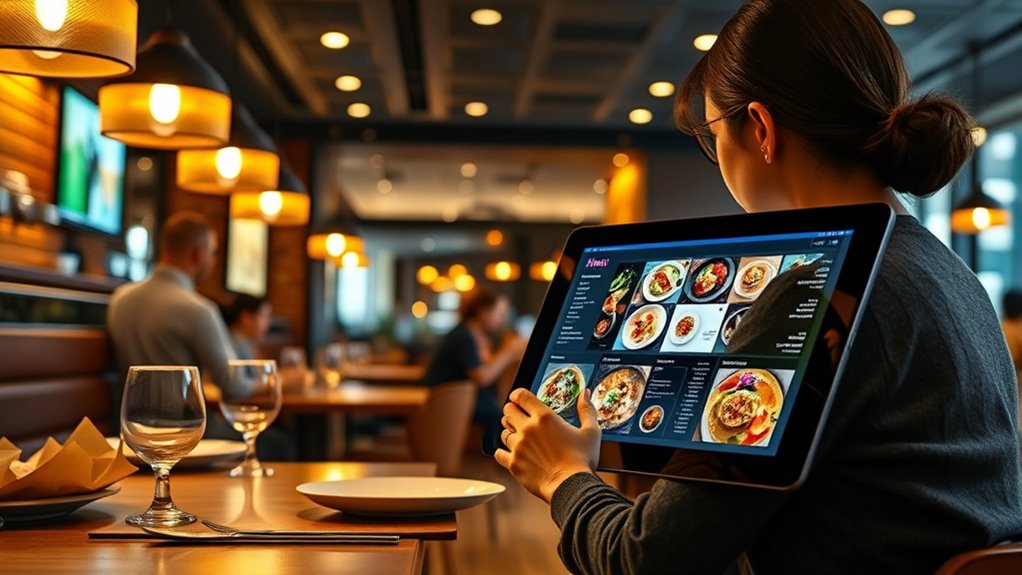

Switching to digital menus helps you cut down on paper waste by eliminating the need for printed menus that quickly become outdated. You can update your menu in real-time, which reduces reprints and minimizes environmental impact. This eco-friendly option also signals your commitment to sustainability, attracting eco-conscious customers. Plus, digital menus boost efficiency and enhance your brand image. Keep exploring to discover how adopting this technology can transform your restaurant’s sustainability efforts even further.

Get kitchen staples and gadgets delivered free with Prime
- Fast, free delivery on millions of items
- Prime Video, Amazon Music and more included
- Member-only deals all year
Key Takeaways
- Digital menus eliminate the need for frequent printing, significantly reducing paper waste.
- Real-time updates prevent unnecessary reprints due to menu changes or seasonal specials.
- They support eco-friendly practices by decreasing overall paper consumption in restaurants.
- Using digital menus minimizes discarded paper from outdated or damaged physical menus.
- They promote sustainability efforts, aligning restaurant operations with environmentally conscious goals.
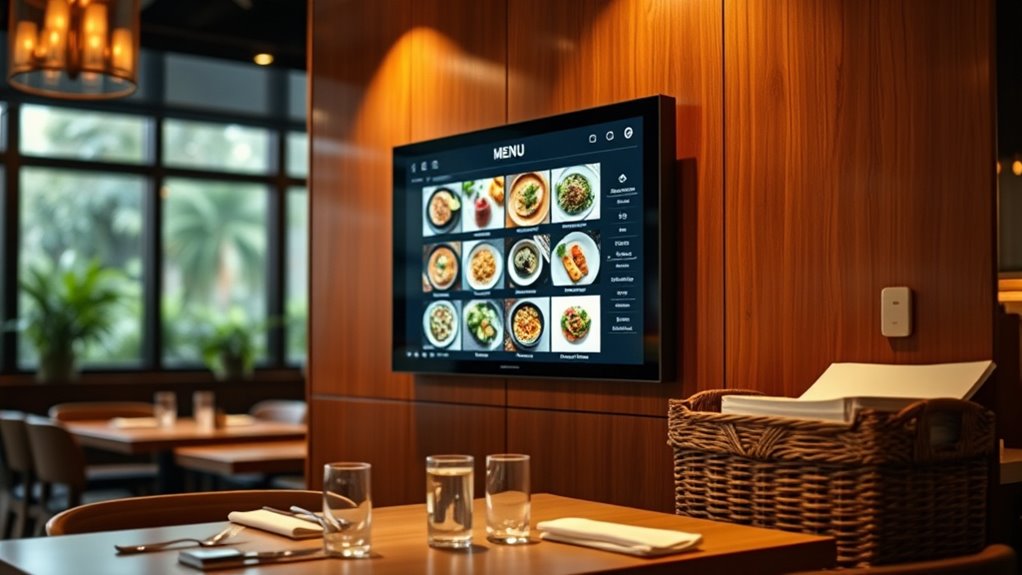
As more restaurants look for sustainable solutions, digital menus are becoming a popular way to cut down on paper waste. Instead of printing new menus each time there’s a change, you can use QR codes that customers scan with their smartphones. This simple step makes it easy to offer up-to-date information without wasting paper. When customers scan the QR code, they’re directed to a digital menu that can be easily updated in real time, guaranteeing they always see the latest offerings, prices, or specials. This approach not only reduces environmental impact but also streamlines your operations, saving you money on printing costs.
Digital customization takes this a step further. With a digital menu, you can tailor the experience for each customer or occasion. For example, you can highlight vegetarian options, suggest wine pairings, or promote daily specials based on time of day or season. This personalized touch enhances customer engagement and makes their experience more memorable. You can also modify the menu quickly to reflect inventory changes, removing items that are sold out or adding new dishes without the hassle of reprinting menus. This flexibility guarantees your menu remains current and relevant, improving customer satisfaction.
Using QR codes also simplifies the process of making adjustments. Instead of reprinting entire menus, you can update the digital version instantly. This means fewer disruptions and less waste. Plus, digital menus often come with features like high-resolution images, detailed descriptions, and allergen information, giving customers all the details they need to make informed choices. This transparency can improve the dining experience and reduce questions for your staff, making service more efficient.
Moreover, digital menus support branding efforts. You can incorporate your restaurant’s logo, theme, or seasonal graphics to reinforce your identity. The ability to customize the digital experience guarantees consistency and professionalism, which can influence customer perception positively. As more diners become accustomed to using their smartphones, offering a QR code-based digital menu aligns with their preferences for contactless and tech-forward dining options.
In essence, digital menus with QR codes and customization options help you reduce paper waste, increase operational flexibility, and enhance the overall customer experience. By embracing this technology, you’re not only making a positive environmental impact but also positioning your restaurant as modern and forward-thinking. It’s a simple, effective way to serve your customers better while supporting sustainability efforts. Transitioning to digital menus might require some initial setup, but the benefits—cost savings, eco-friendliness, and improved service—make it a smart move for your restaurant’s future. Incorporating gelato and other seasonal treats into digital menus can attract more customers and boost sales.
As an affiliate, we earn on qualifying purchases.
Frequently Asked Questions
How Do Digital Menus Impact Customer Privacy?
Digital menus can impact your privacy by raising concerns about data security and customer anonymity. When you use these menus, your interactions might be tracked or stored, which could compromise your personal information if not properly secured. However, many systems prioritize customer privacy, ensuring your anonymity is maintained while still providing personalized experiences. You should look for platforms that emphasize strong data security measures to protect your privacy effectively.
Are Digital Menus Accessible for All Guests?
Digital menus are generally accessible for most guests, but accessibility barriers can exist for those with visual, hearing, or mobility impairments. You can improve inclusivity by offering language support options and ensuring compatibility with screen readers or voice commands. By addressing these barriers, you make your digital menus more welcoming for all guests, helping everyone enjoy the dining experience comfortably and efficiently.
What Is the Initial Investment Cost for Digital Menus?
The initial investment for digital menus typically ranges from $2,000 to $10,000, depending on size and features. You should consider cost estimation for setup expenses like hardware, software, and installation. Imagine replacing hundreds of paper menus annually—your upfront costs can be offset by long-term savings. While the initial expense might seem steep, the reduction in paper waste and printing costs makes digital menus a smart, eco-friendly choice.
How Do Digital Menus Handle Frequent Updates or Menu Changes?
Digital menus handle frequent updates effortlessly with simple menu update procedures that guarantee quick changes. You can modify items, prices, or specials instantly, thanks to the digital menu flexibility. This means you don’t need to reprint menus, saving time and paper. You just access the system, make your adjustments, and publish them across all screens instantly, keeping your offerings current and engaging for your customers.
Can Digital Menus Be Integrated With Existing Restaurant Systems?
Think of your restaurant’s digital menu as a puzzle piece that fits seamlessly into your existing system. You can easily incorporate it through system integration features, allowing smooth communication with your POS or inventory systems. This setup empowers you to customize menus effortlessly, update items instantly, and ensure everything runs like a well-oiled machine. With this integration, you streamline operations and enhance customer experience without missing a beat.
As an affiliate, we earn on qualifying purchases.
Conclusion
By choosing digital menus, you gently steer your restaurant toward a more sustainable future. Every swipe and tap replaces the need for paper, quietly trimming waste and preserving resources. It’s a subtle shift that shows your commitment to the environment without making a big fuss. Embracing digital menus allows you to make a positive impact, all while providing a modern experience that your customers will appreciate. Small changes can lead to meaningful, lasting benefits.
restaurant digital menu software
As an affiliate, we earn on qualifying purchases.
As an affiliate, we earn on qualifying purchases.
eco-friendly digital menu tablets
As an affiliate, we earn on qualifying purchases.
As an affiliate, we earn on qualifying purchases.
NFL season / tailgating Picks
team gear
As an affiliate, we earn on qualifying purchases.