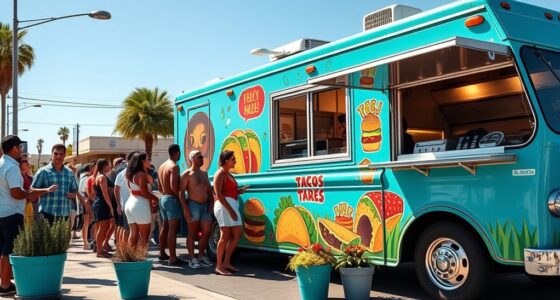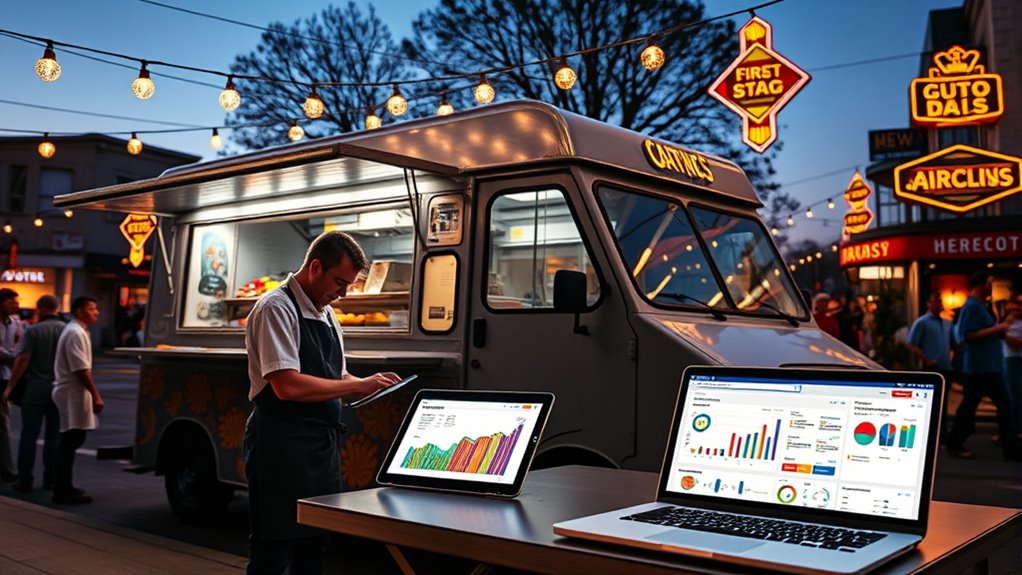

Using analytics helps you understand customer preferences, identify popular dishes, and spot sales trends. This allows you to make smarter menu adjustments, optimize inventory, and plan staff schedules more effectively. By analyzing feedback and sales patterns, you’ll learn what works best and how to attract more customers. This data-driven approach boosts efficiency and profitability. Keep exploring to discover how these insights can take your food truck to the next level.

Get kitchen staples and gadgets delivered free with Prime
- Fast, free delivery on millions of items
- Prime Video, Amazon Music and more included
- Member-only deals all year
Key Takeaways
- Analyze sales data to identify peak hours, popular items, and seasonal trends for targeted marketing and inventory planning.
- Collect and evaluate customer feedback to refine menu offerings and improve service quality.
- Use sales patterns to optimize staff scheduling and reduce operational costs.
- Leverage insights to create engaging visuals and promotional materials that attract more customers.
- Track long-term trends to make informed decisions that boost profitability and build customer loyalty.

Running a food truck can be challenging, but leveraging analytics can give you a significant edge. By paying close attention to customer feedback and sales patterns, you can make smarter decisions that boost your success. Customer feedback offers direct insights into what your patrons enjoy and what they don’t. When you gather and analyze this feedback consistently, you identify recurring themes—whether it’s a favorite dish or a common complaint. This allows you to tweak your menu, improve service, and better meet customer expectations. For example, if multiple customers mention that your tacos are too spicy, you can adjust your recipe or offer a milder option. Conversely, positive feedback highlights what’s working so you can double down on popular items.
Customer feedback reveals key preferences and issues, guiding menu tweaks and service improvements for food truck success.
Sales patterns reveal more than just what sells; they show when, where, and how your customers buy. Tracking sales over time helps you identify peak hours, slow days, and seasonal trends. If you notice a spike in sales on weekends or during certain events, you can schedule staff accordingly or plan special promotions around those times. Recognizing which menu items perform best at specific locations or times allows you to optimize your inventory, reduce waste, and increase profitability. For instance, if your breakfast burritos are popular in the mornings, you can prepare more of them during those hours and cut back during slow periods. Analyzing sales data also helps you experiment with new offerings, seeing quickly if they resonate with customers or fall flat. Additionally, understanding the impact of projector contrast ratio on visual presentation can inspire creative marketing visuals for your truck’s branding and promotions, making your offerings more appealing.
Using analytics means you’re not just guessing but making informed choices. Regularly reviewing customer feedback and sales patterns helps you stay agile and responsive. It gives you the power to adapt your menu, refine your marketing, and schedule your staff more efficiently. This approach also helps you identify trends before they become obvious, giving you a competitive advantage. For example, noticing a growing interest in plant-based options through customer feedback and sales data enables you to introduce healthier or vegan dishes early on.
In essence, leveraging analytics turns your everyday operations into a strategic game. You understand your customers better, align your offerings with their preferences, and operate more efficiently. This proactive approach ensures that your food truck not only survives but thrives, creating a loyal customer base and increasing your revenue. By making data-driven decisions, you set yourself apart in a crowded market and build a stronger foundation for long-term success.
Frequently Asked Questions
How Can I Track Customer Preferences Effectively?
You can track customer preferences effectively by collecting customer feedback through surveys, comment cards, or social media. Pay attention to their menu preferences, noting popular dishes and frequent requests. Use analytics tools to analyze this data, identifying trends and patterns. This way, you’ll understand what customers love most, allowing you to tailor your menu and improve their overall experience, boosting loyalty and sales.
What Are the Best Tools for Real-Time Analytics?
Think of real-time analytics tools as your trusty Bat-Signal for managing your food truck. Platforms like Square for point-of-sale data, or Toast, give instant insights into sales and customer preferences. They help reduce food waste and streamline inventory management. These tools provide live updates, so you can adapt quickly, optimize stock, and serve your customers better—no need to rely on dial-up modems or guesswork anymore.
How Do I Analyze Sales Data Across Multiple Locations?
You analyze sales data across multiple locations by consolidating your data into a centralized system, allowing you to spot trends and compare performance easily. Use analytics tools to track inventory management and staff scheduling efficiency simultaneously. This helps you optimize stock levels and staff hours for each site, improving overall profitability. Regularly review the data to identify high-performing locations and areas needing improvement, enabling smarter decisions for your food truck operations.
What Metrics Indicate a Successful Marketing Campaign?
Oh, nothing screams “success” like skyrocketing social media followers and a perfect pricing strategy, right? To measure your marketing campaign’s success, look at engagement rates, click-throughs, and conversions from social media. Track how your pricing strategies influence sales volume and profit margins. When these metrics improve, you know your campaign hits the mark. If not, maybe it’s time to rethink your social media antics and pricing plans—just saying.
How Can I Forecast Future Sales Trends Using Analytics?
You can forecast future sales trends by leveraging predictive modeling and trend analysis. Start by analyzing past sales data to identify patterns and seasonal fluctuations. Then, use predictive modeling to project future sales based on variables like weather, events, and location. Regularly update your models with new data, allowing you to make informed decisions, optimize inventory, and plan marketing efforts effectively to boost your food truck’s success.
Conclusion
By harnessing analytics, you open the secret sauce to your food truck’s success. Think of your data as a compass guiding you through a bustling crowd, helping you serve what they crave before they even ask. With every insight, you paint a clearer picture of your customers’ tastes and habits. So, embrace these tools, sharpen your strategy, and watch your food truck become the star of the street—an irresistible feast that draws them back time and again.
Halloween Picks
halloween
As an affiliate, we earn on qualifying purchases.