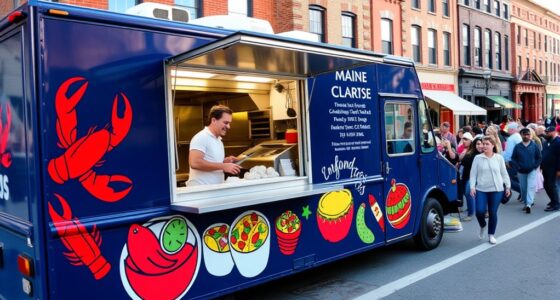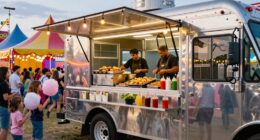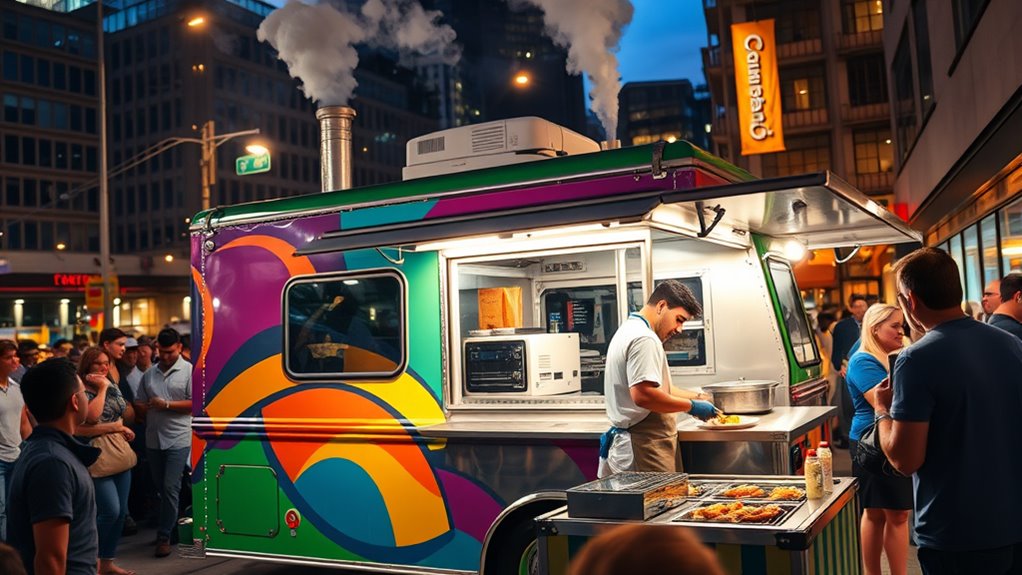

Starting a food truck lets you combine your love for cooking with entrepreneurship, offering flexibility and access to diverse locations. You’ll benefit from mobile marketing tools like social media and location-based ads that attract customers easily. However, you’ll also face challenges such as maintaining food safety standards and obtaining necessary permits. With proper planning, you can turn these hurdles into advantages. Keep going to uncover more tips on making your food truck a successful venture.

Get kitchen staples and gadgets delivered free with Prime
- Fast, free delivery on millions of items
- Prime Video, Amazon Music and more included
- Member-only deals all year
Key Takeaways
- Food trucks offer a flexible, mobile platform to reach diverse audiences and test new markets easily.
- They provide cost-effective startup options compared to traditional brick-and-mortar restaurants.
- Mobile marketing strategies like social media boost visibility and customer engagement.
- Operating a food truck requires adherence to health regulations and safety standards, which build customer trust.
- Challenges include obtaining permits, maintaining hygiene standards, and adapting to different locations and events.
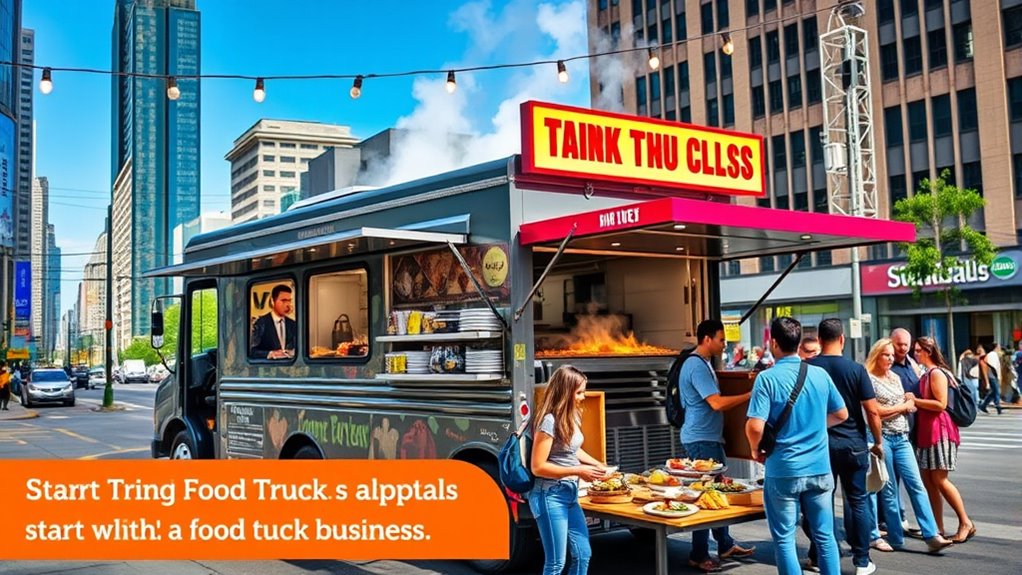
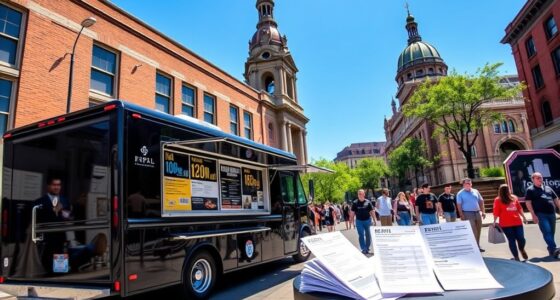
Food trucks have become a popular and versatile option for both entrepreneurs and food lovers, offering a unique blend of convenience and variety. If you’re thinking about starting one, you’ll find that mobile marketing plays a significant role in attracting customers. Unlike traditional brick-and-mortar restaurants, your truck allows you to reach diverse audiences by leveraging social media, location-based advertising, and special promotions that are easy to update and share. You can quickly inform followers about your daily location, menu specials, or upcoming events, creating a direct line of communication that boosts your visibility and sales. The flexibility of mobile marketing means you can adapt your strategies to different neighborhoods, festivals, or business districts, optimizing your reach without hefty advertising costs. Additionally, understanding the vetted standards for food safety and hygiene is essential, as maintaining proper sanitation and adhering to health regulations helps build trust with your customers and ensures compliance with local laws. However, before hitting the road, you need to pay close attention to health regulations. These rules are in place to guarantee the safety of your customers and the integrity of your food. Depending on your location, you’ll have to obtain various permits, health department approvals, and possibly undergo inspections. Compliance with health standards can seem intimidating at first, but it’s essential for building trust and avoiding costly fines or shutdowns. You’ll need to maintain proper food storage, sanitation, and preparation practices, which requires ongoing diligence and training. Staying updated on health regulations ensures you’re operating legally and protecting your reputation, especially as health concerns become more prominent among consumers.
Frequently Asked Questions
How Do Food Trucks Impact Local Communities?
You see food trucks positively impact local communities by fostering community engagement and offering accessible, diverse food options. They often become social hubs, encouraging interactions among residents. Additionally, food trucks boost the local economy by creating jobs and supporting small entrepreneurs. Their presence can attract more visitors and enhance neighborhood vibrancy, making the area more lively and appealing. Overall, food trucks strengthen community ties while contributing to economic growth.
What Are the Most Common Legal Requirements for Starting a Food Truck?
Starting a food truck feels like launching a small business empire! You’ll need permits and licenses, such as health permits, business licenses, and possibly a mobile food vendor license. Ensuring food safety is vital—follow local health department rules, maintain cleanliness, and proper food handling practices. These legal requirements protect you and your customers, and skipping them can lead to hefty fines or shutdowns, so stay compliant from the get-go!
How Do Food Trucks Stay Competitive Against Restaurants?
You stay competitive against restaurants by leveraging mobile branding to attract customers and create a strong, recognizable presence. Efficient fleet management guarantees your trucks operate smoothly, reduce downtime, and reach more events or locations. By offering unique, high-quality food and engaging with your community through social media, you build loyalty. Staying flexible and innovative helps you adapt quickly, keeping your food truck appealing in a crowded market.
What Are Effective Marketing Strategies for Food Trucks?
To market your food truck effectively, leverage social media by sharing daily specials, behind-the-scenes content, and location updates. For example, a food truck increased sales by engaging customers through Instagram stories, prompting them to visit for exclusive offers. Prioritize customer engagement by encouraging reviews and responding promptly. This builds loyalty and spreads positive word-of-mouth, helping you stand out in a competitive street food scene.
How Do Food Trucks Manage Health and Safety Regulations?
You manage health and safety regulations by staying proactive with health inspections and implementing strict safety protocols. Regularly schedule inspections to guarantee compliance and address any issues promptly. Follow proper food handling procedures, maintain cleanliness, and ensure your staff is trained on safety protocols. Keeping detailed records of inspections and safety measures helps you stay prepared for audits, reducing risks and maintaining a trustworthy reputation for your food truck.
Conclusion
Starting a food truck could be the right move, especially when you picture yourself serving up your favorite dishes on a sunny street corner. The benefits, like flexibility and low startup costs, align with your dreams of independence. But remember, the challenges, like busy schedules and limited space, are part of the journey. Just like a perfect meal, balancing these elements creates a rewarding experience. With passion and planning, you’ll turn your food truck vision into a delicious reality.
NFL season / tailgating Picks
team gear
As an affiliate, we earn on qualifying purchases.