
To quietly boost your average ticket size, focus on strategic menu tweaks like placing high-margin dishes at eye level or near seasonal specials to draw attention. Use visual cues such as arrows, icons, and appealing photos to guide customers toward profitable options. Incorporate descriptive labels that create desire and tell a story. Periodically testing and adjusting your layout keeps it engaging and optimized for increased spending—if you want to discover more effective strategies, stay tuned.

Get kitchen staples and gadgets delivered free with Prime
- Fast, free delivery on millions of items
- Prime Video, Amazon Music and more included
- Member-only deals all year
Key Takeaways
- Strategically position high-margin items at eye level or prominent spots to naturally attract customer attention.
- Use visual cues like bold fonts, icons, and arrows to highlight profitable dishes subtly.
- Incorporate appealing images and descriptive language to make high-margin options more enticing.
- Periodically rotate menu layouts and item placements to test and optimize customer response.
- Leverage visual hierarchy and color psychology to guide choices toward higher-value dishes discreetly.
As an affiliate, we earn on qualifying purchases.
Understand How Small Menu Changes Influence Customer Choices

Even small changes on a menu can considerably influence what customers choose. This is where understanding pricing psychology and menu psychology becomes essential. By strategically positioning items or adjusting prices, you guide customer decisions without them realizing it. For example, using charm pricing (like $9.99 instead of $10) taps into pricing psychology, making items seem more affordable. Similarly, menu psychology suggests placing high-margin or popular items at eye level or in prominent spots to attract attention. These subtle shifts can nudge customers toward certain choices, increasing your sales without overtly pushing products. When you understand how small menu tweaks influence decision-making, you can craft a more effective menu that naturally encourages higher spending and improves your overall revenue.
As an affiliate, we earn on qualifying purchases.
Highlight High-Margin Items to Increase Your Revenue
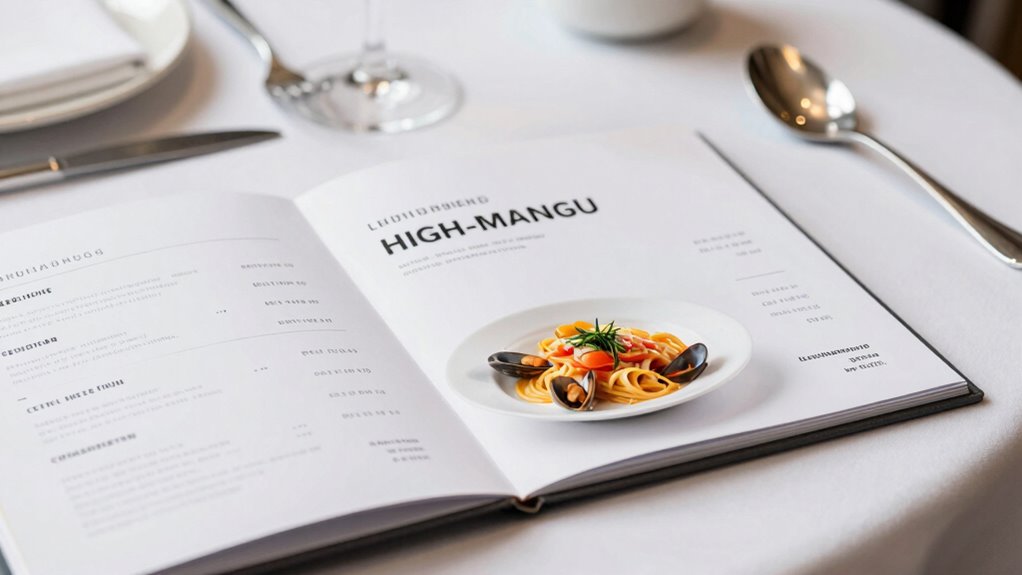
Strategically highlighting high-margin items on your menu can considerably boost your revenue. Use effective pricing strategies to make these dishes stand out, such as positioning them prominently or employing visual cues like bold fonts or borders. Clear presentation draws customer attention directly to profitable options. Additionally, staff training plays an essential role; ensure your team understands which items are high-margin and communicates their value confidently. When staff can confidently recommend these dishes, customers are more likely to choose them, increasing your average ticket size. Incorporating Victorian steampunk aesthetics into your menu design can also create a memorable dining experience that subtly influences customer choices. Understanding digital content and how it impacts consumer decision-making can help you craft more effective visual cues. For example, visual hierarchy techniques can guide customers naturally toward high-margin options. Keep the focus on making high-margin items appealing without overselling or creating pressure. By combining smart menu design with targeted staff training, you can subtly influence customer choices and maximize profitability effortlessly.
As an affiliate, we earn on qualifying purchases.
Place Your Key Dishes Strategically for Maximum Impact
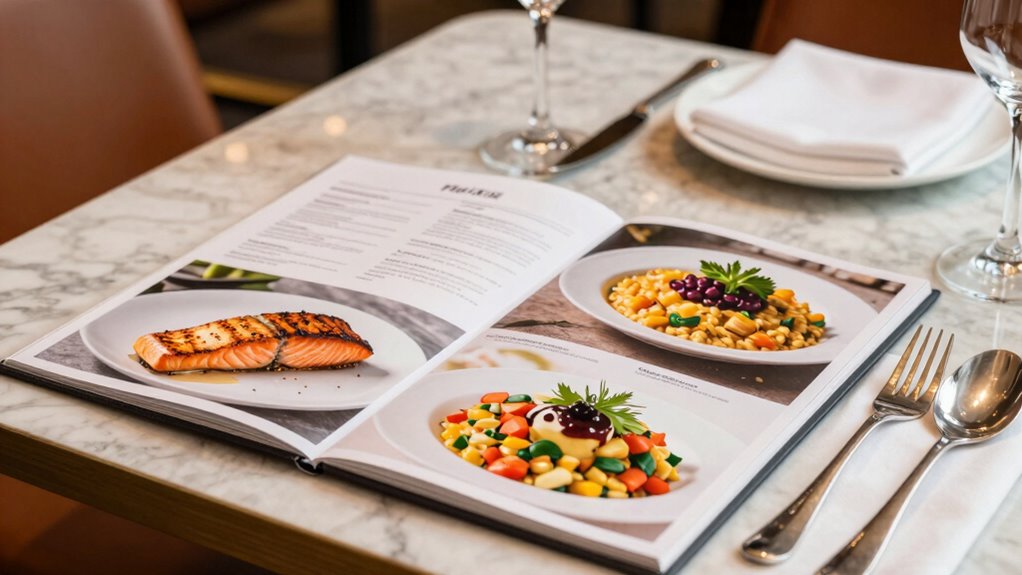
Position your high-margin dishes where they catch the eye first; diners are more likely to order them if they stand out. Use visual cues like boxes or icons to draw attention to these key items, making them impossible to miss. Strategic placement can considerably boost your ticket size and overall revenue. Additionally, highlighting dishes with appealing presentation can further entice customers to choose them, enhancing both satisfaction and profitability.
Highlight High-Profit Items
Have you ever wondered why certain dishes catch your eye more than others? Highlighting high-profit items can guide customer choices subtly. Place these dishes strategically—like the top right corner or near seasonal specials—to boost visibility. Use flavor pairing to make these dishes irresistible, emphasizing unique combinations that stand out. Consider adding a brief description that hints at exclusivity or limited-time appeal. Highlighting seasonal specials alongside high-profit items encourages customers to try something new while increasing your margins. Remember, visual cues like framing or bold fonts draw attention without overwhelming. By carefully positioning and emphasizing these dishes, you influence order sizes naturally, elevating your average ticket size without seeming pushy. This approach leverages psychology and menu design for maximum profitability.
Use Visual Cues
Use Visual cues are powerful tools that can subtly guide customers toward your most profitable dishes. By leveraging color psychology, you can make key items stand out—using warm, inviting colors to attract attention or cool tones to suggest sophistication. Font hierarchy also plays a vital role; bold, larger fonts draw the eye to strategic placements, like the top right or center of the menu, where customers naturally focus. Position your high-profit dishes where they’re most visible, such as near the beginning or middle of the menu, to maximize impact. Incorporating visual contrast can further enhance the visibility of your key dishes. Additionally, understanding menu psychology helps you design your layout to influence customer choices more effectively. Combining strategic placement with visual cues ensures customers notice and consider these dishes first, increasing the likelihood of upselling and boosting your average ticket size effortlessly.
As an affiliate, we earn on qualifying purchases.
Use Visual Cues Like Arrows and Photos to Guide Spending
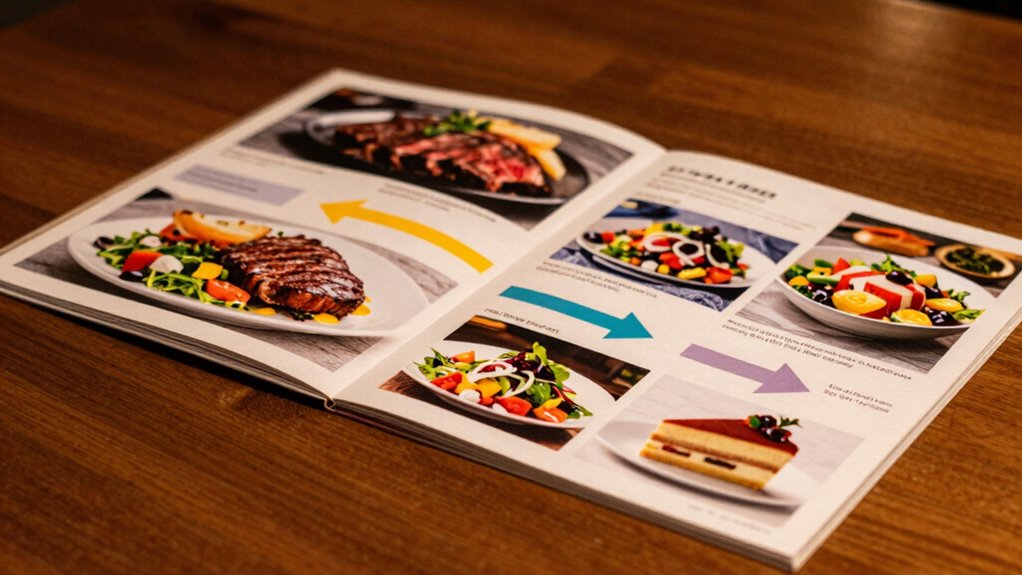
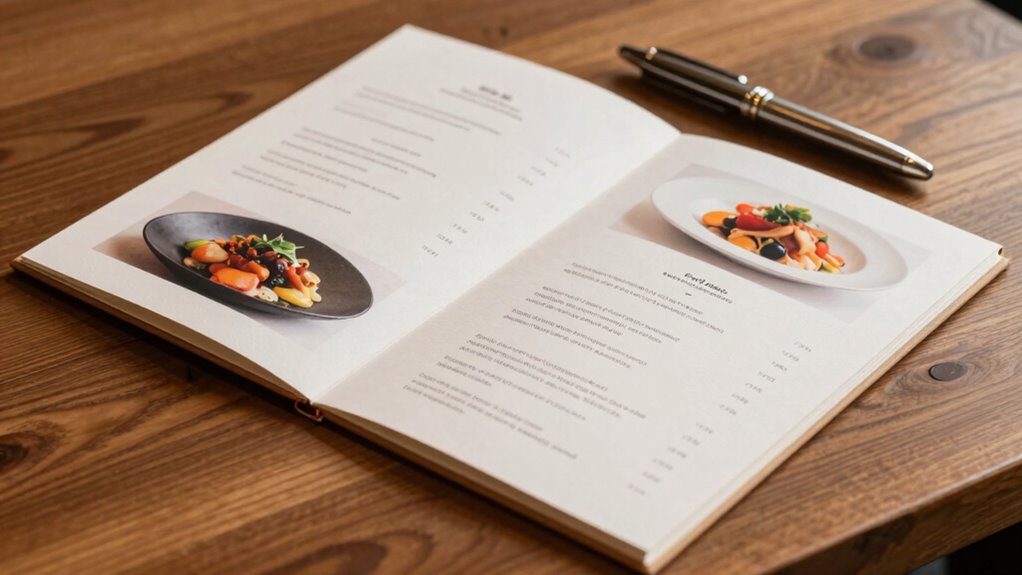
Using visual cues like arrows and appealing photos can naturally draw customers toward higher-priced items and specials. Highlighting premium dishes with eye-catching images or directional signs encourages guests to contemplate pricier options. By strategically incorporating these elements, you can subtly guide spending without overt pressure. Incorporating cultural and historical exploration themes into your visuals can also enhance the overall ambiance and influence customer choices. Additionally, understanding the power of visual psychology can help you design more effective cues that resonate with guests’ subconscious preferences. Employing environmental impact awareness in your design choices can also subtly communicate quality and care, making premium options more appealing. Recognizing how retail environment influences decision-making can further optimize your visual cues for increased sales. Being mindful of consumer behavior insights can help refine these visual strategies for greater effectiveness.
Highlight Premium Items
To effectively guide your customers toward higher-value choices, emphasize premium items with clear visual cues like arrows and attractive photos. Use luxury presentation and exclusive branding to make these options stand out, signaling quality and prestige. Highlighting premium items can subtly influence spending without overwhelming customers. Think about these strategies:
- Place luxury items at eye level for maximum visibility.
- Use high-quality images that evoke exclusivity.
- Incorporate subtle design elements to differentiate premium options.
- Position premium items near the menu’s top or in dedicated sections for prominence.
These cues draw attention naturally, encouraging customers to consider higher-end choices. By visually elevating premium options, you create an aspirational appeal that can boost average ticket size while maintaining an elegant, refined menu aesthetic.
Use Directional Arrows
Directional arrows and visual cues naturally draw the eye toward key menu items, guiding customers toward choices you want to promote. Use arrows strategically to direct attention to high-margin or signature dishes, subtly influencing spending. Incorporate color psychology by choosing vibrant or contrasting colors for arrows to increase visibility and impact. Font hierarchy also plays a pivotal role—bold, larger fonts paired with arrows emphasize premium or recommended options. This combination creates a visual pathway that guides the customer’s gaze smoothly across the menu, making important items stand out effortlessly. By thoughtfully integrating arrows and visual cues, you encourage customers to explore specific sections, increasing the likelihood of upselling without overt pressure. Additionally, applying principles from projector installations and cabling solutions can help ensure visual cues are clearly visible and well-positioned, further enhancing their effectiveness. Understanding auditory processing techniques can also inform how to design menus that are easy to interpret and navigate, further influencing customer choices. It’s a simple yet powerful way to influence choices and boost average ticket size.
Incorporate Appealing Photos
Have you considered how appealing photos can instantly capture your customers’ attention and influence their choices? High-quality images evoke emotion through color psychology and make dishes more tempting. To maximize impact:
- Use vibrant, appetizing photos that stimulate cravings.
- Maintain font readability by pairing clear, bold captions with images.
- Incorporate visual cues like arrows pointing toward specialty or high-margin items.
- Select colors that evoke warmth and comfort, subtly guiding spending.
- Highlight local flavors through imagery to create a connection with regional cultural appeal.
Additionally, understanding how visual cues can influence decision-making allows you to subtly steer customers toward preferred options. Incorporating user experience principles ensures your menu is both appealing and effective in guiding choices.
Write Descriptive Labels That Naturally Encourage Upselling
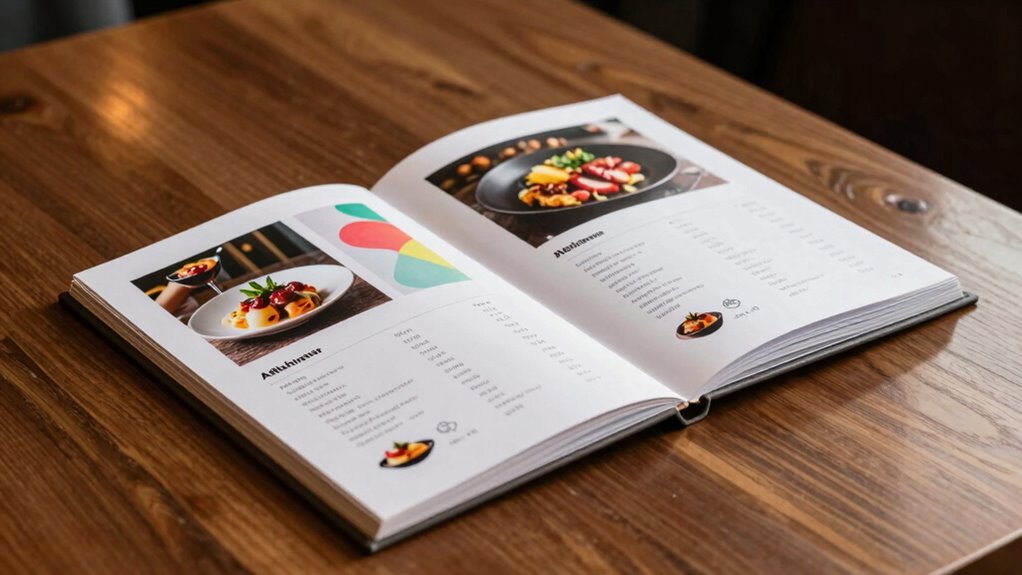
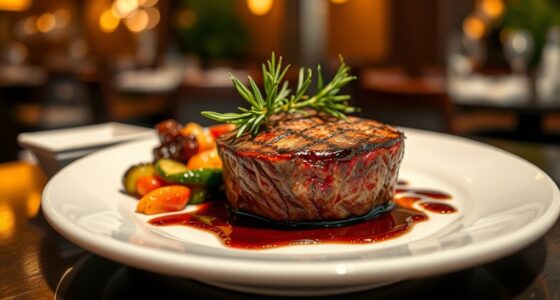
Effective descriptive labels can subtly guide customers toward higher-value options without sounding pushy. Use creative language that highlights the appeal and quality of premium items, making them seem irresistible. Instead of just listing “Steak,” try “Juicy Prime Rib with Herb Butter,” which paints a flavorful picture. Descriptive labels evoke emotions and help customers imagine the experience, increasing the likelihood they’ll choose the higher-priced option. Incorporate sensory details and specific ingredients to make the dish stand out. Clear, enticing descriptions draw attention and create perceived value, encouraging upselling naturally. When your labels tell a story or evoke desire, customers are more inclined to explore and spend more, boosting your ticket size without any pushy sales tactics.
Test and Adjust Your Menu Layout for Better Results
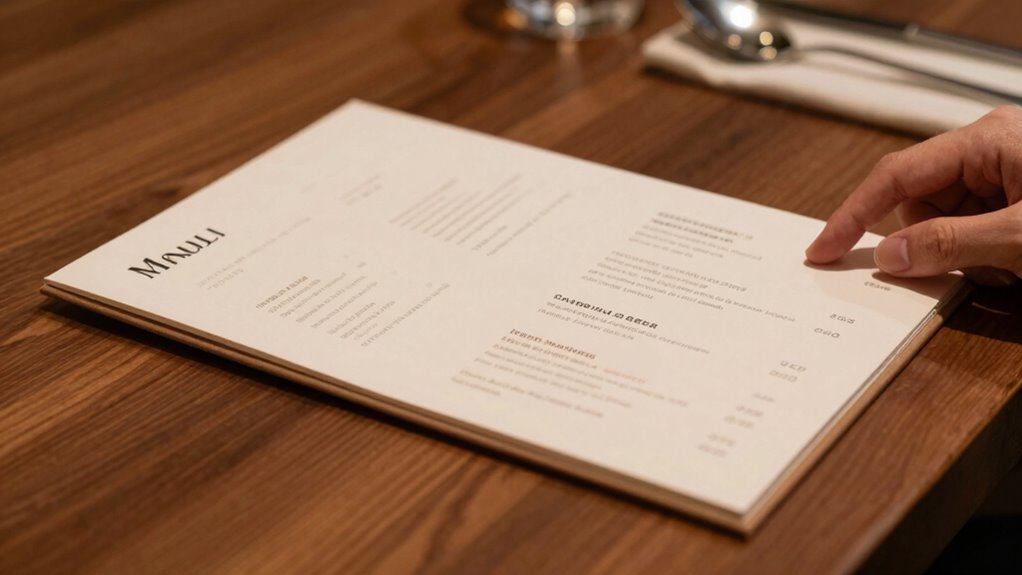
Testing and adjusting your menu layout is essential to maximize sales and guide customers toward higher-value choices. By applying menu psychology principles, you can influence customer decision making more effectively. Consider these steps:
Regularly testing your menu layout boosts sales and guides customers to higher-value choices.
- Position high-margin items strategically—place them where the eye naturally lands first.
- Use visual cues and spacing—highlight premium options without overwhelming the menu.
- Vary item placement periodically—test different arrangements to see what drives more upgrades.
- Analyze sales data—identify which layout prompts customers to spend more and refine accordingly.
- Stay informed about industry trends—keeping up with relevant leadership and management insights can help you adapt your approach for better results. Regularly updating your menu layout based on customer behavior insights ensures it remains effective and engaging. Additionally, understanding the impact of layout design can further enhance your ability to influence purchasing decisions. Incorporating template compatibility strategies can also streamline your menu updates, making it easier to test and implement changes efficiently.
This iterative process sharpens your approach to customer decision making and boosts revenue.
Frequently Asked Questions
How Often Should I Update My Menu Design?
You should update your menu design seasonally, ideally every few months, to reflect changing ingredients, pricing strategies, and customer preferences. Regular updates keep your offerings fresh and relevant, encouraging repeat visits. Incorporate seasonal themes and promotions to boost sales. Stay attentive to customer feedback and sales data, adjusting your menu accordingly. This approach guarantees your menu remains appealing and competitive, ultimately increasing average ticket size subtly but effectively.
What Color Schemes Best Attract Customer Attention?
Bright, warm colors like reds and oranges grab attention because of color psychology, stimulating appetite and excitement. Use contrasting colors to create a strong visual hierarchy, guiding customers effortlessly to high-margin items. Cool colors like blues and greens evoke calmness but can be less attention-grabbing. Balancing vibrant and subtle hues helps guarantee your menu draws eyes where you want them, increasing the chance of upselling and boosting your average ticket size.
How Can I Measure the Success of Menu Changes?
You can measure success by tracking sales data before and after menu changes, noting any increase in average ticket size. Ironically, the best feedback often comes from customer feedback and observing their reactions. Incorporate pricing strategies that encourage higher spends, then analyze how customers respond to these tweaks. This way, you’ll see if your menu design sparks more interest, and if your adjustments truly boost revenue.
Should I Personalize Menus for Different Customer Segments?
Yes, personalizing menus based on customer segmentation can boost sales and satisfaction. Use personalization strategies to tailor offerings to different groups, like highlighting vegetarian options for health-conscious diners or local specialties for tourists. By understanding your customer segments, you can craft menus that resonate more deeply, encouraging higher spending and loyalty. This targeted approach makes your menu more relevant, prompting customers to order more and enhancing their overall experience.
What Are Common Mistakes to Avoid in Menu Layout?
Avoid common menu layout mistakes like clutter and poor font choices; they can turn customers away faster than a bad joke. Focus on clear visual hierarchy, guiding the eye naturally from high-margin to popular items. Use easy-to-read fonts and avoid overwhelming your menu with too many options. Remember, if your menu looks chaotic, customers will feel overwhelmed and less likely to spend. Keep it simple, organized, and visually appealing.
Conclusion
So, next time you tweak your menu, remember it’s all about tiny changes with big effects—who knew that a few strategic words or a clever arrow could boost your sales? Ironically, the simplest tweaks often make the biggest difference, yet many overlook them. Embrace these subtle shifts, and watch your average ticket size climb without breaking a sweat. After all, sometimes all it takes to increase revenue is just a little menu magic—no extra dishes required.
Fall Picks
fall essentials
As an affiliate, we earn on qualifying purchases.