To prevent cross-contamination during high-speed service, prioritize strict organization and clear workflow management. Assign dedicated stations and color-coded tools for raw and cooked foods, and guarantee staff follow proper handwashing, glove-changing, and surface sanitizing routines. Encourage open communication and quick reporting of unsafe practices. Regular training helps reinforce safety habits under pressure. Keep processes consistent and maintain a safety-conscious environment—staying vigilant can make all the difference as you learn more about safeguarding your operation.
Key Takeaways
- Assign dedicated stations and color-coded tools to separate raw and cooked food handling.
- Reinforce strict handwashing, glove changes, and surface sanitation protocols during service.
- Implement clear workflow management to minimize unnecessary movement and cross-contact risks.
- Regularly train staff on contamination prevention and encourage communication about unsafe practices.
- Keep surfaces organized and sanitized to prevent bacteria buildup and accidental cross-contact.
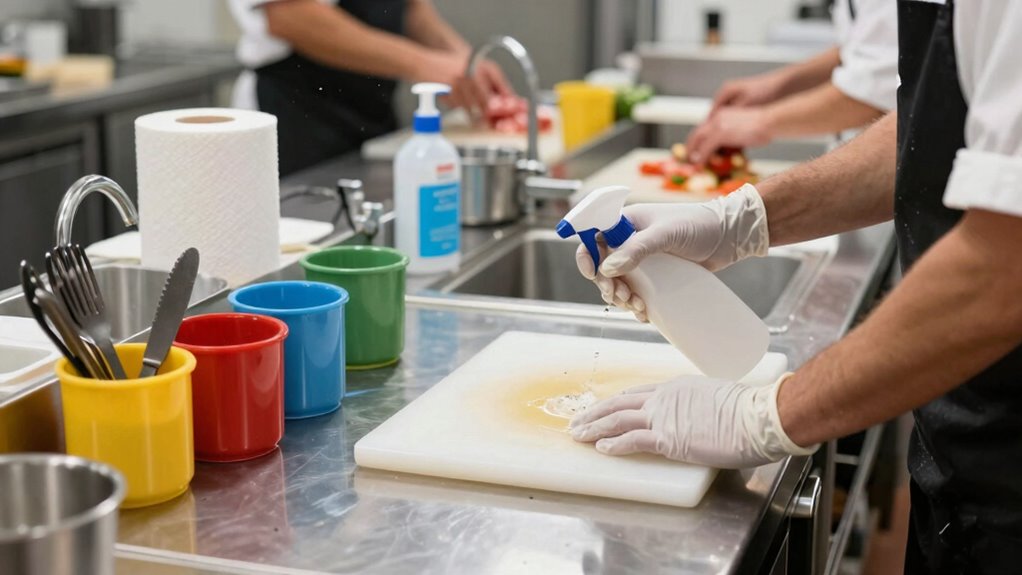
During high-speed service, preventing cross-contamination is essential to maintaining food safety and protecting your customers. When your team is working quickly, the risk of transferring harmful bacteria or allergens increases, so staying vigilant is indispensable. The key to success lies in effective staff training, ensuring everyone understands how to handle food safely even under pressure. By emphasizing proper techniques and consistent habits, you help prevent contamination from occurring and safeguard your reputation.
Your staff needs to be well-versed in the fundamentals of food safety, including the importance of handwashing, using separate utensils, and sanitizing surfaces regularly. Training should highlight that cross-contamination often happens through contact with contaminated surfaces, raw ingredients, or improper storage. When employees know how germs spread, they’re more likely to follow procedures diligently, even in busy moments. Regular refresher courses keep safety practices top of mind and reinforce the importance of careful handling.
Proper handwashing, utensil separation, and surface sanitizing are essential to prevent cross-contamination and ensure food safety.
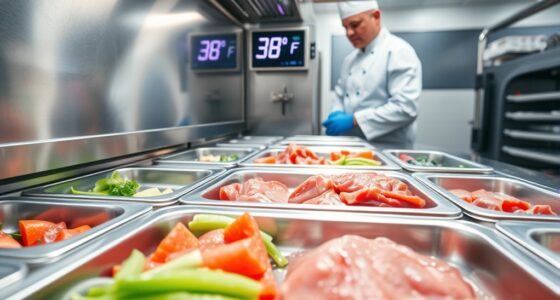
In a fast-paced environment, organization becomes your best tool. Assign clear stations for different food prep tasks—raw meats, vegetables, cooked items—and restrict movement between them without proper cleaning. Make sure your staff understands that using separate cutting boards and utensils for raw and cooked foods isn’t optional; it’s essential. Encourage the use of color-coded tools and dedicated containers, which simplify adherence to safety protocols during rush periods. Incorporating proper sanitation procedures can further reduce the risk of cross-contact and ensure consistent hygiene. Additionally, implementing effective workflow management can help streamline processes and minimize the chances of accidental cross-contact. Incorporating proper storage practices also plays a critical role in preventing cross-contamination by keeping raw and cooked foods separated from the start. Ensuring all team members are aware of contamination prevention techniques can significantly improve overall safety.
Another imperative aspect is maintaining a clean workspace. During service, surfaces can quickly become cluttered, increasing the chance of accidental contact between raw and ready-to-eat foods. Staff training should stress the importance of wiping down surfaces regularly and avoiding cross-contact. Instilling a disciplined cleaning routine helps reduce bacteria buildup and minimizes hazards. Additionally, reinforce proper glove usage—changing gloves frequently and never reusing them across different food types—to prevent bacteria transfer. Incorporating technological tools can also enhance sanitation efficiency and consistency.
Finally, communication among team members plays a key role. When everyone understands their responsibilities and communicates clearly, mistakes are less likely to happen. Encourage your staff to speak up if they notice unsafe practices or potential contamination risks. By fostering a culture of safety and emphasizing ongoing training, you empower your team to uphold food safety standards, even during the busiest moments. In the end, consistent staff training combined with diligent procedures creates a resilient system that protects your customers and maintains the integrity of your food service operation.
As an affiliate, we earn on qualifying purchases.
Frequently Asked Questions
What Are the Most Common Sources of Cross-Contamination?
The most common sources of cross-contamination include unclean utensils, contaminated surfaces, and improper hand hygiene. During high-speed service, you might overlook these risks, but maintaining strict kitchen hygiene and following food safety protocols is essential. Always wash your hands thoroughly, sanitize surfaces regularly, and use separate utensils for raw and cooked foods. Consistently applying these practices helps prevent cross-contamination and guarantees a safe dining experience.
How Often Should Staff Wash Their Hands During Service?
You should wash your hands frequently during service, ideally every 20 minutes or after handling raw ingredients, to maintain proper hand hygiene. Follow glove protocols diligently, changing gloves whenever switching tasks or touching different food items. Regular hand washing combined with proper glove use helps prevent cross-contamination, ensuring a safe dining experience. Stay attentive to these practices, especially during busy periods, to keep food safe and staff healthy.
Are There Specific Tools That Help Prevent Cross-Contamination?
Think of tools as your frontline soldiers against cross-contamination. Reusable gloves and color-coded tools act like a well-organized army, keeping bacteria at bay. Reusable gloves should be changed frequently, especially between tasks, to prevent spread. Color-coded tools help staff easily identify their specific use, reducing cross-contact. By implementing these tools, you turn chaos into harmony, ensuring a safer, smoother high-speed service for everyone involved.
How Should Contaminated Surfaces Be Properly Sanitized?
You should immediately perform proper cleaning by removing visible debris before sanitizing contaminated surfaces. Use appropriate surface disinfectants, ensuring they stay wet on the surface for the recommended contact time. Pay special attention to high-touch areas. After disinfecting, let the surface air dry or wipe with a clean, disposable cloth. Consistent proper cleaning and disinfecting with the right products are essential to prevent cross-contamination during high-speed service.
Can Cross-Contamination Occur With Pre-Packaged Foods?
Absolutely, cross-contamination can happen even with pre-packaged foods if you ignore packaging integrity. You might think they’re foolproof, but a tiny tear or improper handling can turn a safe product into a contamination nightmare. Always guarantee pre-packaged safety by inspecting packages carefully before use. Keep them sealed until needed, and avoid touching the contents directly. Remember, maintaining packaging integrity is your first line of defense against cross-contamination!
As an affiliate, we earn on qualifying purchases.
Conclusion
As you race through busy service, picture your workspace as a well-orchestrated dance floor—each step precise, every move deliberate. By maintaining cleanliness, using separate tools, and staying alert, you create a safe rhythm that keeps cross-contamination at bay. Think of yourself as the conductor, guiding a seamless performance where every ingredient stays pure, and your guests enjoy a worry-free meal. With these habits, you’ll keep the chaos under control and serve with confidence.
dedicated cutting boards for raw and cooked food
As an affiliate, we earn on qualifying purchases.
As an affiliate, we earn on qualifying purchases.
As an affiliate, we earn on qualifying purchases.