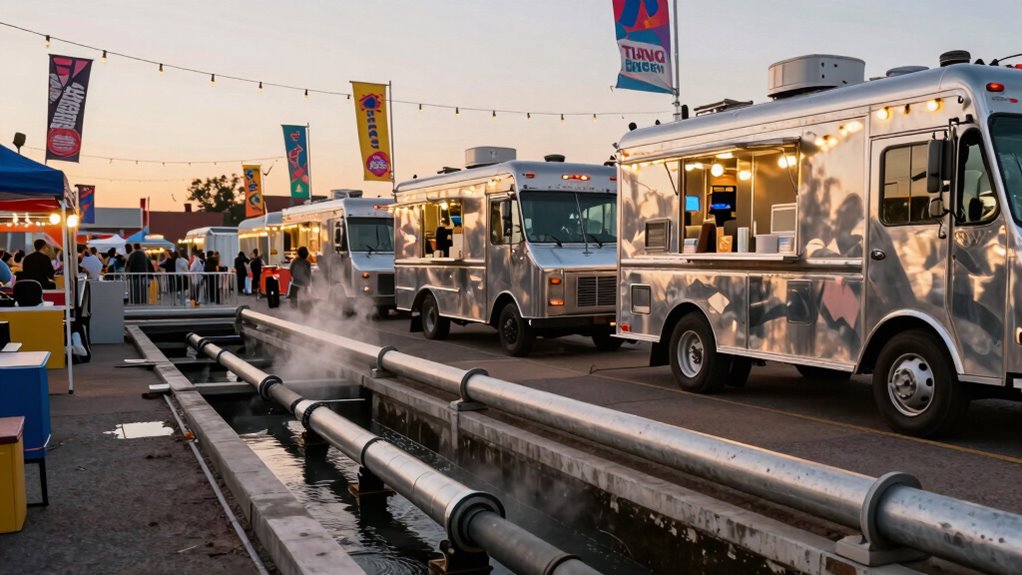

Wastewater planning is a bigger issue for food trucks than it seems because improper handling can lead to legal fines, environmental harm, and damage to your reputation. By not managing wastewater correctly, you risk contaminating water sources and harming ecosystems, which could result in costly penalties. Good planning helps you stay compliant, protect public health, and demonstrate responsible business practices. Keep exploring to learn how proper wastewater strategies can set your food truck apart from the competition.
Key Takeaways
- Improper wastewater management can lead to legal penalties and damage a food truck’s reputation.
- It directly impacts environmental health, preventing water contamination and ecosystem harm.
- Regulatory compliance requires careful planning and use of approved disposal systems, often overlooked.
- Wastewater issues can cause operational disruptions and increase long-term costs if not proactively addressed.
- Strategic wastewater planning demonstrates environmental responsibility, attracting eco-conscious customers and ensuring sustainability.
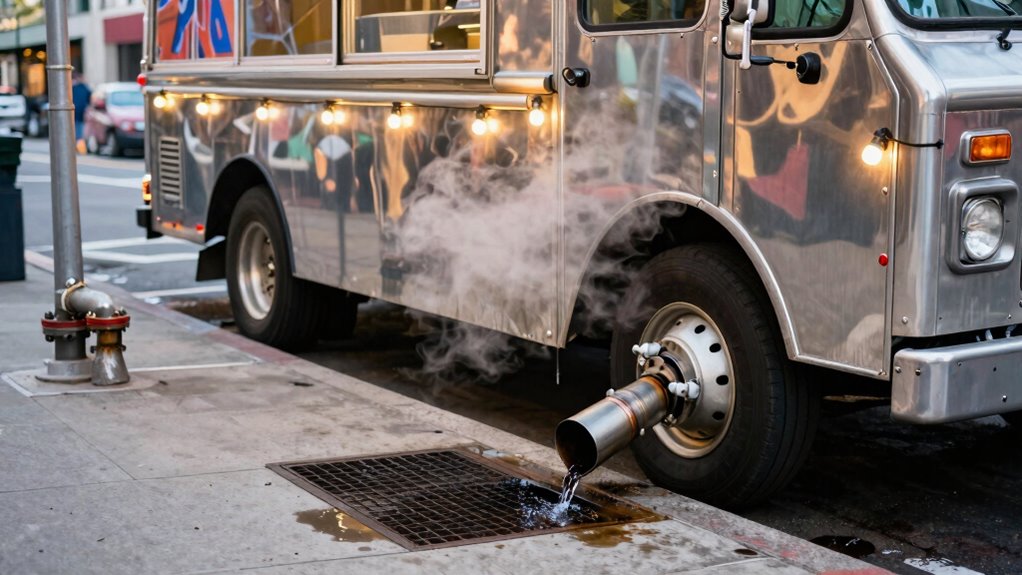
Have you ever wondered how food trucks manage their wastewater? It’s easy to overlook this aspect of mobile food service, but it plays a critical role in maintaining environmental standards and guaranteeing legal operations. Wastewater isn’t just about cleaning dishes or disposing of leftover liquids; it’s a necessary part of the environmental impact your business has on the community. Proper planning helps prevent pollution, protect water sources, and promote sustainability practices. If wastewater isn’t handled correctly, contaminants from grease, food scraps, and cleaning chemicals can seep into the ground or water bodies, harming ecosystems and public health. This emphasizes the importance of implementing environmentally responsible wastewater management strategies for food trucks. Proper planning also helps you stay ahead of regulations, which vary by city and region. Implementing effective systems can also reduce operational costs over time by minimizing waste-related issues.
Proper wastewater management is essential for environmental health and legal compliance in food truck operations.
Regulatory compliance is another key reason wastewater planning is more important than it appears. Local and federal agencies set strict rules for food trucks to follow when it comes to waste disposal. These regulations are in place to prevent illegal dumping and environmental contamination. If you ignore these rules, you could face hefty fines, penalties, or even the suspension of your license. Staying compliant means you need to have a clear, efficient plan for collecting, storing, and disposing of wastewater safely. Many cities require food trucks to use approved holding tanks and to coordinate waste removal through licensed disposal services. Failing to meet these requirements can jeopardize your operation and reputation.
Beyond avoiding fines, proper wastewater management demonstrates your commitment to responsible business practices. Customers increasingly value sustainability and environmental awareness. When you actively manage your wastewater, you show that you care about the community and the environment. This can boost your reputation and even attract more customers who prioritize eco-friendly businesses. Additionally, having a solid wastewater plan can streamline your daily operations. Instead of rushing to find a disposal site last minute or risking accidental spills, you’ll have a system in place that makes waste removal straightforward and compliant. Recognizing wastewater management as an essential part of your business can help you stay ahead of regulatory changes and environmental expectations.
Ultimately, wastewater planning isn’t just an afterthought; it’s a fundamental part of running a responsible and sustainable food truck. It directly affects your environmental impact and assures you stay within legal bounds. By investing time in understanding local regulations and establishing a reliable waste management routine, you protect both the environment and your business’s future. It’s a smart move that benefits everyone—from the community you serve to your bottom line. So, next time you think about your food truck operations, remember that thoughtful wastewater planning is a more significant issue than it looks, shaping the sustainability and legality of your mobile food venture.
food truck wastewater holding tank
As an affiliate, we earn on qualifying purchases.
As an affiliate, we earn on qualifying purchases.
Frequently Asked Questions
How Does Wastewater Planning Impact Food Truck Permit Requirements?
Wastewater planning directly impacts your food truck permit requirements because proper wastewater infrastructure is essential for permit compliance. You need to guarantee your truck has an approved system for handling wastewater safely and legally. If your wastewater infrastructure isn’t up to code, you could face permit delays or fines. Adequate planning helps you meet all wastewater regulations, streamlining your permit process and avoiding potential legal issues.
What Are the Health Risks of Improper Wastewater Disposal?
Improper wastewater disposal can pose serious environmental hazards and threaten public health. When wastewater isn’t managed correctly, it can contaminate water sources, spreading bacteria, viruses, and harmful chemicals. This increases the risk of waterborne illnesses and environmental damage. As a food truck operator, you need to guarantee proper disposal to protect the community and prevent health violations, safeguarding both public health and the environment from preventable hazards.
Are There Specific Regulations for Wastewater in Mobile Food Units?
Yes, there are specific regulations for wastewater in mobile food units. You need to follow mobile sanitation standards and wastewater regulations to guarantee proper disposal. These rules often require you to have approved holding tanks, regular cleanup, and proper disposal methods to prevent contamination. Staying compliant helps protect public health and avoid fines. Always check local health department guidelines to ensure your food truck meets all wastewater requirements.
How Do Cities Monitor Wastewater Management for Food Trucks?
Cities monitor wastewater management for food trucks through regular inspections and reporting requirements, ensuring proper wastewater treatment practices. They use city infrastructure like designated dumping stations and enforce rules to prevent contamination. By tracking wastewater disposal methods, cities can identify violations early, protect public health, and maintain environmental standards. Effective monitoring helps keep food truck operations compliant and highlights the importance of integrating wastewater planning into overall city infrastructure.
What Innovations Are Improving Wastewater Handling for Food Trucks?
Innovative treatment methods and portable systems are revolutionizing wastewater handling for food trucks. You’re seeing compact, easy-to-use portable systems that quickly treat waste on-site, reducing environmental impact. Additionally, innovative treatment technology employs advanced filtration and chemical processes to safely manage wastewater. These innovations make cleanup more efficient, eco-friendly, and compliant with regulations, helping food trucks operate smoothly while protecting public health and the environment.
portable wastewater disposal system for food trucks
As an affiliate, we earn on qualifying purchases.
As an affiliate, we earn on qualifying purchases.
Conclusion
So, don’t overlook wastewater planning when thinking about food trucks. It’s easy to see their delicious offerings and lively atmosphere, but neglecting waste management can lead to serious health and environmental issues. You might think it’s just a minor detail, but proper planning guarantees these trucks can operate safely and sustainably. By giving wastewater concerns the attention they deserve, you help keep your community clean and thriving—making food truck fun both enjoyable and responsible.
As an affiliate, we earn on qualifying purchases.
mobile food truck waste management kit
As an affiliate, we earn on qualifying purchases.
As an affiliate, we earn on qualifying purchases.