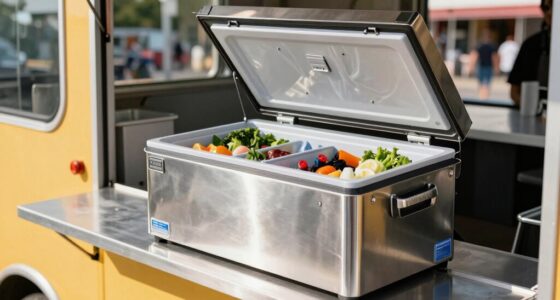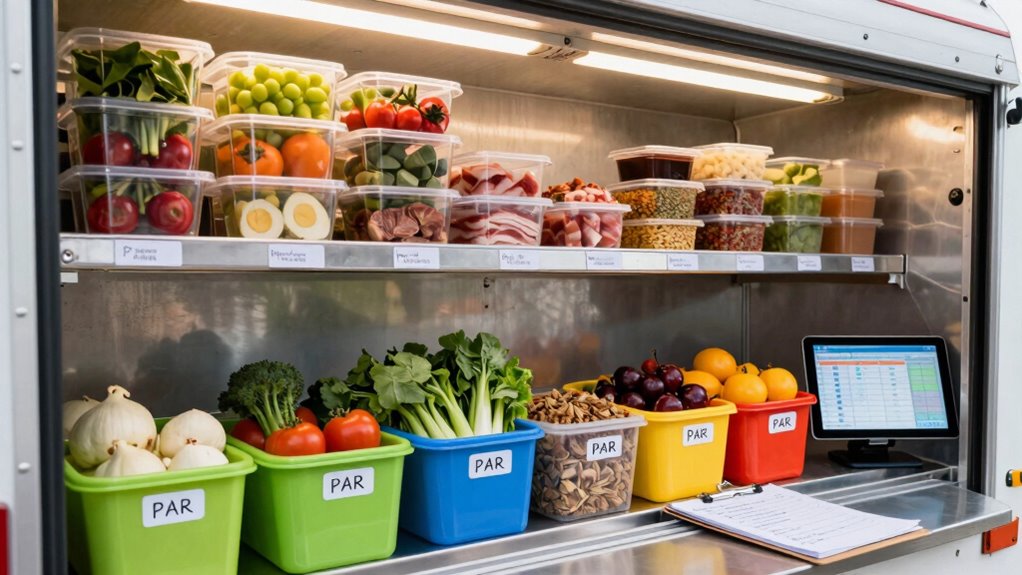

To set better PAR levels for your food truck, analyze your sales data to identify fast- and slow-moving items, then adjust stock accordingly. Increase quantities during busy times and seasonally to match customer flow, while lowering them when things slow down. Communicate with suppliers to guarantee quick restocking, and use inventory technology to stay organized. By fine-tuning your PAR levels regularly, you’ll keep your stock fresh and your service smooth—discover ways to optimize further as you go.

Get kitchen staples and gadgets delivered free — and shop member deals
- Fast, free delivery on millions of items
- Access to Prime Big Deal Days deals on October 6–7
- Prime Video, Amazon Music and more included
Key Takeaways
- Analyze sales data to identify fast-moving and slow-selling items for accurate PAR setting.
- Adjust PAR levels based on demand fluctuations, peak hours, and seasonal customer flow.
- Use inventory turnover rates and maintenance schedules to optimize stock levels and prevent spoilage.
- Maintain close supplier communication and leverage inventory management technology for timely replenishment.
- Regularly review and update PAR levels to reflect changing demand patterns and improve operational efficiency.
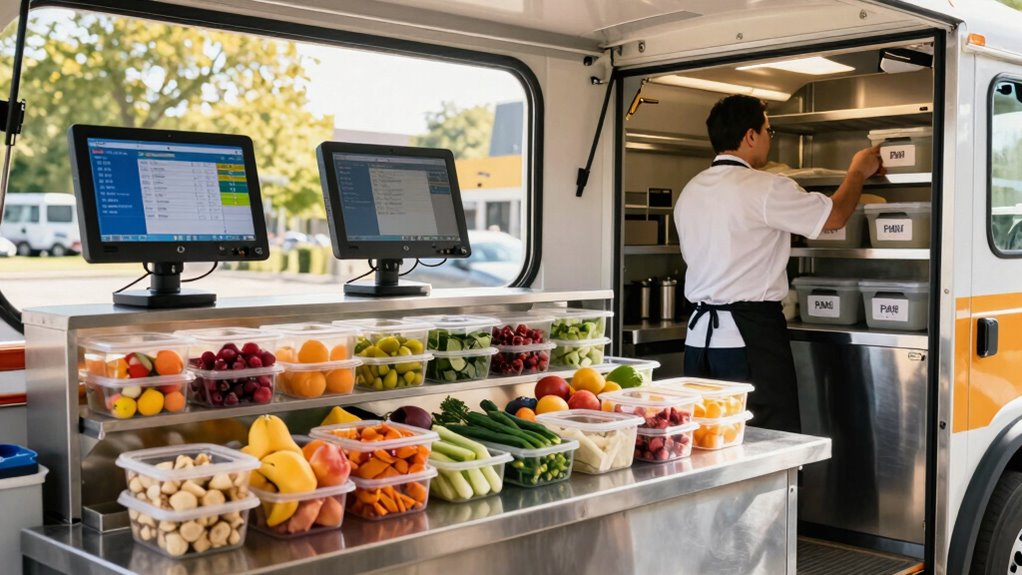
Managing inventory for a food truck can be challenging, but setting proper PAR (Periodic Automatic Replacement) levels makes it much easier. When you establish the right stock levels, you guarantee that you always have enough ingredients and supplies to meet customer demand without overstocking. This balance is vital, especially when it comes to cooking equipment and ingredients, which directly impact your ability to serve high-quality food and deliver excellent customer service. Proper PAR levels help prevent shortages that could delay orders or force you to scramble for last-minute solutions, which can frustrate customers and hurt your reputation.
Effective PAR levels ensure you meet customer demand without overstocking, maintaining quality and smooth service.
To set effective PAR levels, start by analyzing your sales data carefully. Track what sells quickly and what tends to sit on your shelves. For example, if you notice certain ingredients or supplies are used daily, you’ll want a higher PAR level for those items. Conversely, for items that sell less frequently, set lower levels to avoid excess inventory that could spoil or become obsolete. With cooking equipment, consider maintenance and replacement schedules; guarantee you have enough spares or backups for essential appliances to avoid downtime during busy hours. Keeping these equipment items in check guarantees smooth operations and consistent food quality, which directly impacts customer satisfaction. Additionally, understanding your inventory turnover rate helps you fine-tune your PAR levels more accurately and avoid unnecessary waste. Regularly reviewing and adjusting your inventory levels based on changing demand and seasonal fluctuations can also lead to more efficient stock management. Implementing a systematic approach to inventory can help you stay organized and responsive to shifts in demand.
A key part of setting PAR levels is understanding your peak hours and customer flow. During busy periods, you’ll need to have more ingredients and supplies on hand, so your PAR levels should reflect these fluctuations. On slower days, you can lower your levels to prevent waste. Regularly review your inventory and sales patterns to adapt your PAR levels as needed. This ongoing process helps you stay aligned with actual demand, minimizing waste and maximizing profit. Also, staying in close contact with your suppliers so you can quickly replenish stock when your levels reach the minimum is crucial for maintaining a steady supply chain. Reliable delivery ensures you won’t run out of critical items during busy service times. Furthermore, leveraging technology tools for inventory management can automate some of these processes and improve accuracy.
Finally, remember that customer service hinges on your ability to keep the line moving and deliver fresh, tasty food without delays. Well-maintained cooking equipment and accurate PAR levels prevent shortages and equipment breakdowns, keeping your service smooth. When you plan your inventory carefully, you can focus more on engaging with your customers and providing a memorable experience rather than worrying about running out of ingredients or facing equipment issues. Setting the right PAR levels is a proactive step that enhances your efficiency, improves customer satisfaction, and ultimately helps your food truck thrive. Incorporating inventory management best practices into your routine can further streamline your operations and reduce waste.
food truck inventory management software
As an affiliate, we earn on qualifying purchases.
As an affiliate, we earn on qualifying purchases.
Frequently Asked Questions
How Often Should PAR Levels Be Reviewed and Adjusted?
You should review and modify your PAR levels regularly, ideally after each inventory audit. Conduct frequent inventory audits to identify discrepancies and gauge usage rates. Maintain open supplier communication to adjust stock levels based on seasonal demand or supply changes. Adjustments might be necessary monthly or quarterly, depending on sales fluctuations and ingredient shelf life. Consistent review ensures your food truck remains well-stocked without overstocking or shortages.
What Tools Are Best for Tracking Inventory Levels?
Think of tracking tools as your trusty compass. Digital inventory management software is ideal for maintaining inventory accuracy and ensuring stock rotation stays on track. These tools automatically update levels, alert you when supplies run low, and help reduce waste. Using barcode scanners or mobile apps streamlines the process, giving you real-time data. With the right tools, you keep your inventory organized, accurate, and always ready to serve your customers without a hitch.
How Do Seasonal Changes Affect PAR Level Adjustments?
Seasonal changes greatly influence your PAR levels due to demand fluctuations. During peak seasons, you’ll need to increase your inventory to meet higher customer demand, while off-peak times call for reducing stock to prevent waste. Keep an eye on sales trends and adjust your seasonal inventory accordingly. Regularly reviewing and updating your PAR levels guarantees you maintain ideal stock, minimizing shortages or excess, regardless of changing seasonal demands.
Can Technology Automate PAR Level Management?
Imagine never second-guessing your inventory again—technology can truly automate your PAR level management. By integrating advanced systems, you gain real-time inventory accuracy, reducing waste and stockouts. This automation streamlines adjustments, so you stay ahead of fluctuating demand. You’ll feel confident, knowing your food truck’s inventory is precisely managed without constant manual checks. Embrace technology to elevate your efficiency and guarantee your PAR levels are always optimized effortlessly.
How Do I Handle Unexpected Surges in Demand?
When unexpected surges in demand hit, you should rely on menu forecasting to predict future needs and adjust your inventory accordingly. Stay proactive by maintaining open supplier communication, so you can quickly order additional stock if necessary. Track demand patterns closely, and be flexible with your PAR levels to avoid shortages or excess. This approach helps you navigate sudden spikes efficiently, keeping your food truck running smoothly.
PAR level food storage containers
As an affiliate, we earn on qualifying purchases.
As an affiliate, we earn on qualifying purchases.
Conclusion
By balancing your food truck’s inventory with precise, proactive PAR levels, you’ll prevent pesky shortages and pesky excesses. Focus on forecasting, fine-tuning, and tracking to transform your inventory into a well-oiled, worry-free workflow. With careful calibration, you create a consistent, cost-conscious, and customer-cherished operation. Remember, setting smart, strategic stock standards supports smooth service, satisfied guests, and soaring success. Keep calibrating, controlling, and conquering your food truck’s inventory challenges!
food truck inventory tracking system
As an affiliate, we earn on qualifying purchases.
As an affiliate, we earn on qualifying purchases.
restaurant inventory replenishment tools
As an affiliate, we earn on qualifying purchases.
As an affiliate, we earn on qualifying purchases.
NFL season / tailgating Picks
team gear
As an affiliate, we earn on qualifying purchases.