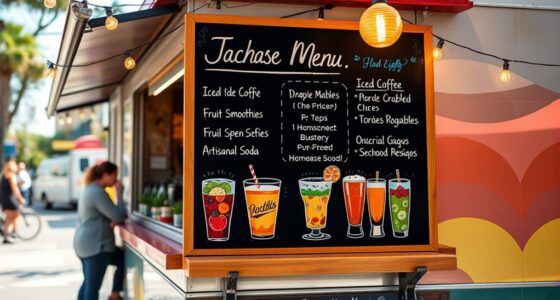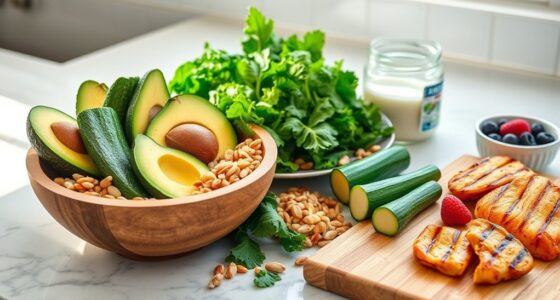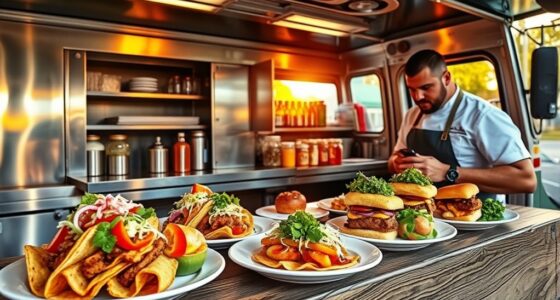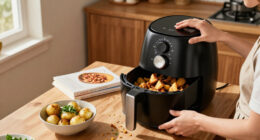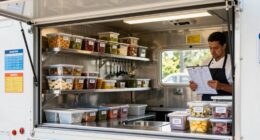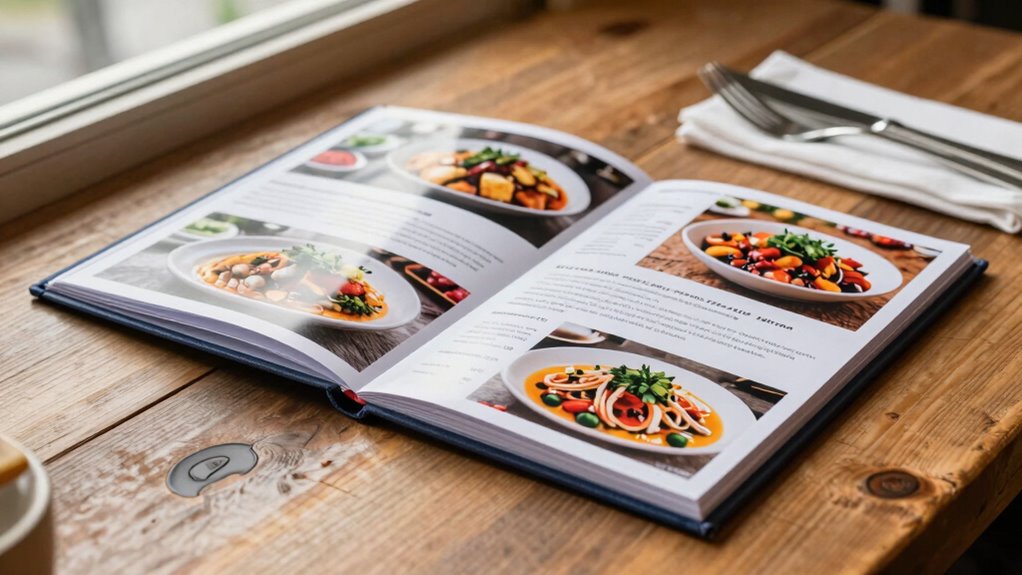
To build a menu that travels well, focus on sturdy, non-messy dishes like roasted vegetables, grilled meats, or baked goods that hold up during transit. Pair these with durable, food-grade packaging that keeps hot or cold items at the right temperature and prevents leaks or sogginess. Use clear labels and thoughtful presentation to enhance appeal. Keep exploring further tips to guarantee your food arrives fresh and perfect every time.

Get kitchen staples and gadgets delivered free with Prime
- Fast, free delivery on millions of items
- Prime Video, Amazon Music and more included
- Member-only deals all year
Key Takeaways
- Select resilient, non-messy dishes like roasted vegetables, grilled meats, or baked goods that hold their texture during transit.
- Use durable, insulated, and compartmentalized packaging to maintain temperature and prevent sogginess or spillage.
- Incorporate clear handling and reheating instructions on packaging to ensure optimal presentation and quality upon delivery.
- Match menu items with appropriate packaging solutions to preserve freshness, temperature, and appearance throughout transit.
- Focus on high-quality, sturdy dishes that are easy to transport, minimizing spoilage and ensuring customer satisfaction.
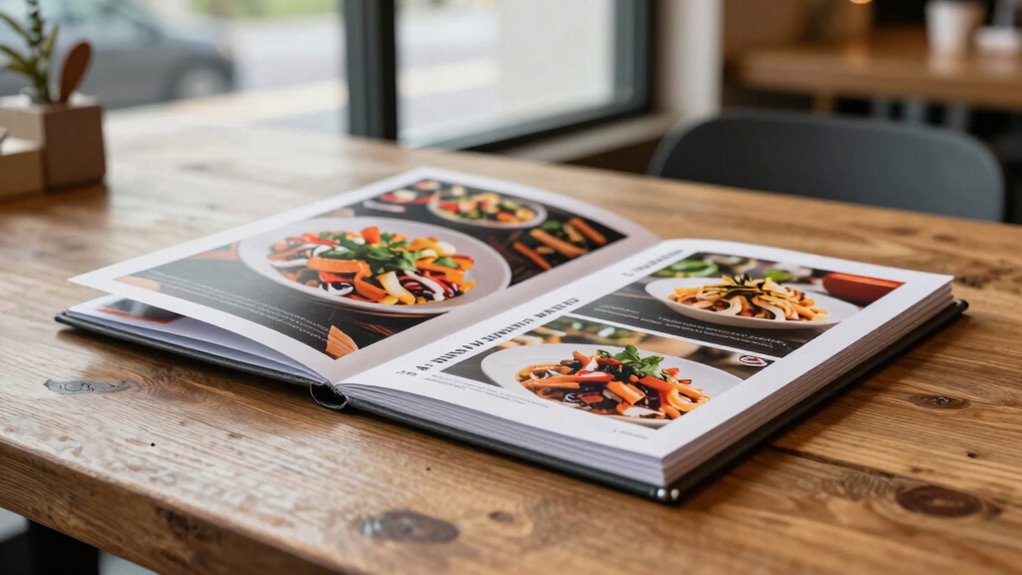
Creating a menu that travels well is essential for ensuring your dishes arrive fresh and appealing, whether you’re catering an event or offering takeout. The key lies in thoughtful menu design that considers the journey from your kitchen to your customer’s hands. When designing your menu, focus on selecting items that hold up during transit—think sturdy, non-messy dishes that don’t lose their texture or flavor. Opt for foods that are less prone to sogginess or spillage, like roasted vegetables, grilled meats, or solid baked goods, rather than delicate salads or dishes with excessive sauces. Your menu design should highlight these resilient options, making it easier for customers to choose items that will stay delicious after they leave your kitchen. Additionally, choosing appropriate packaging materials is crucial to maintain food quality during transit. Packaging materials play a pivotal role in maintaining food quality during transit. You need packaging that’s both durable and suitable for the specific dishes you serve. For instance, use sturdy containers with secure lids for soups or stews, and opt for heat-retaining boxes for hot entrees. When possible, select eco-friendly packaging that’s sturdy enough to withstand movement without collapsing or leaking. Consider compartmentalized containers to keep components separate, preventing sogginess or flavor mingling. For items like sandwiches or baked goods, choose packaging that provides support and ventilation, preventing crushing and moisture buildup. Proper packaging materials help preserve texture, temperature, and presentation, ensuring your food looks and tastes just as good as when it left your kitchen. Incorporating food-grade packaging that complies with safety standards is also vital to protect your customers and your brand reputation. Using temperature-sensitive packaging can further ensure that hot or cold items remain at optimal temperatures during transit, enhancing customer satisfaction. In addition, understanding the importance of shipping conditions can help you select the best packaging solutions for different climates and delivery environments. Proper packaging materials help preserve texture, temperature, and presentation, ensuring your food looks and tastes just as good as when it left your kitchen. Another aspect to weigh is how your packaging interacts with your menu design. If you serve dishes that need to stay hot or cold, incorporate packaging that maintains these temperatures for longer periods. Temperature-controlled packaging such as insulated bags or containers can be game-changers in this regard. Additionally, clear labeling on packaging can assist customers in handling their food correctly—whether that’s reheating instructions or storage tips—further improving the overall experience. Streamlining your menu design and investing in the right packaging materials are indispensable steps in building a menu that travels well. By selecting resilient dishes and pairing them with appropriate, high-quality packaging, you minimize the risk of spoilage, mess, or presentation issues. Your goal is to deliver food that looks appetizing and tastes just as good as it did when it left your kitchen. When you prioritize these elements, you not only boost customer satisfaction but also build a reputation for reliable, high-quality takeout or catering service.
insulated food delivery containers
As an affiliate, we earn on qualifying purchases.
As an affiliate, we earn on qualifying purchases.
Frequently Asked Questions
What Materials Are Best for Durable Menu Printing?
You should choose durable materials like laminated paper, plastic, or waterproof vinyl for menu printing. These materials withstand frequent handling and exposure to moisture, making them ideal for outdoor or window service settings. Use high-quality printing techniques like UV coating or lamination to enhance durability and prevent fading. This guarantees your menu remains attractive and functional, providing a seamless experience for customers and reducing the need for frequent replacements.
How Can I Prevent Menu Damage During Delivery?
You can prevent menu damage during delivery by choosing waterproof, tear-resistant materials and using sturdy protective covers. Regular menu maintenance, like replacing worn or damaged menus promptly, helps keep them in top shape. Don’t forget to gather customer feedback on menu condition—this guides you to improve packaging and materials. By taking these steps, you guarantee your menus arrive intact, enhancing customer satisfaction and making your delivery process more reliable.
Should Menus Be Laminated or Use Waterproof Materials?
Laminating menus is a smart choice, especially if you want durability and easy cleaning, aligning with customer preferences for neat, professional-looking menus. Waterproof materials like plastic or laminated paper also resist spills and tears, ensuring your menu stays intact during delivery. By choosing these options, you enhance your menu’s longevity, meet customer expectations for quality, and maintain a clean presentation that reflects well on your business.
How to Ensure Menu Readability in Different Lighting Conditions?
Ironically, bright lighting can make your menu unreadable if you’re not careful. To guarantee readability in different lighting conditions, you need a font size that’s easy on the eyes and color contrast that stands out. Use larger fonts for key items and choose high-contrast colors like black on white or white on dark backgrounds. Test your menu in various settings to guarantee customers can effortlessly read it, no matter the lighting.
What Design Elements Help Menus Withstand Weather Conditions?
You should use weather-resistant materials like laminated paper, plastic, or metal to help menus withstand weather conditions. Incorporate menu customization features such as sealed edges and waterproof coatings for durability. Maintain branding consistency by using your logo and color scheme on these weatherproof elements, ensuring your menu remains recognizable even in harsh weather. These design choices protect your menu and keep your brand professional and appealing outdoors.
compartmentalized food storage boxes
As an affiliate, we earn on qualifying purchases.
As an affiliate, we earn on qualifying purchases.
Conclusion
Think of your menu as a reliable suitcase—designed to protect and carry your offerings wherever your customers go. When you craft a menu that’s durable, clear, and adaptable, it travels seamlessly from your kitchen to their hands, just like a trusted travel companion. I once watched a vendor’s menu withstand a sudden rainstorm, still readable and intact—reminding me that a well-built menu is your best ambassador, ready to go anywhere, anytime.
As an affiliate, we earn on qualifying purchases.
eco-friendly food packaging for delivery
As an affiliate, we earn on qualifying purchases.
As an affiliate, we earn on qualifying purchases.
NFL season / tailgating Picks
team gear
As an affiliate, we earn on qualifying purchases.