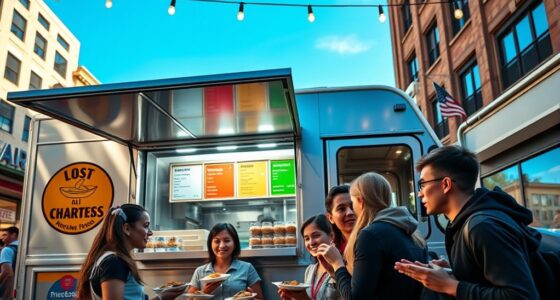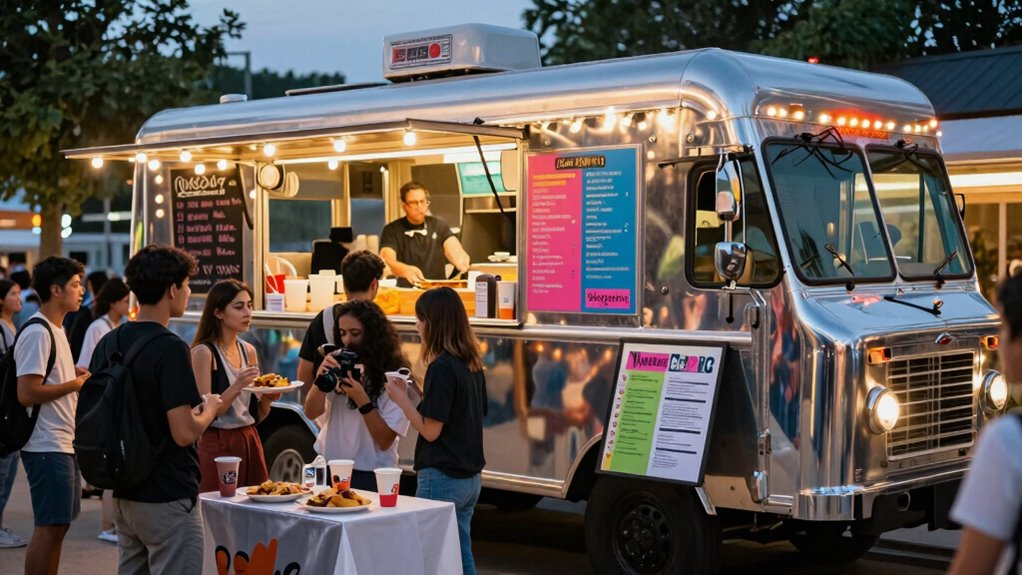
To pressure-test your food truck concept before investing, start by engaging potential customers through surveys, social media polls, or informal chats to gather preferences on food, pricing, and locations. Conduct market research to analyze competitors, local events, and foot traffic. Participate in food festivals or pop-ups to serve real customers and collect feedback. Develop a simple MVP to test in actual settings, allowing you to refine your idea based on real-world responses. Keep exploring these strategies to guarantee your success.

Get kitchen staples and gadgets delivered free — and shop member deals
- Fast, free delivery on millions of items
- Access to Prime Big Deal Days deals on October 6–7
- Prime Video, Amazon Music and more included
Key Takeaways
- Conduct surveys and social media polls to gather early customer preferences and feedback on menu, pricing, and location options.
- Participate in food festivals and pop-ups to test the concept with real customers and collect actionable insights.
- Analyze local competitors’ menus, prices, and customer base to identify market gaps and differentiation opportunities.
- Develop a minimal menu (MVP) and test it at small events to validate appeal and refine offerings based on customer responses.
- Use feedback and sales data from testing to make informed adjustments, reducing risk before large capital investment.
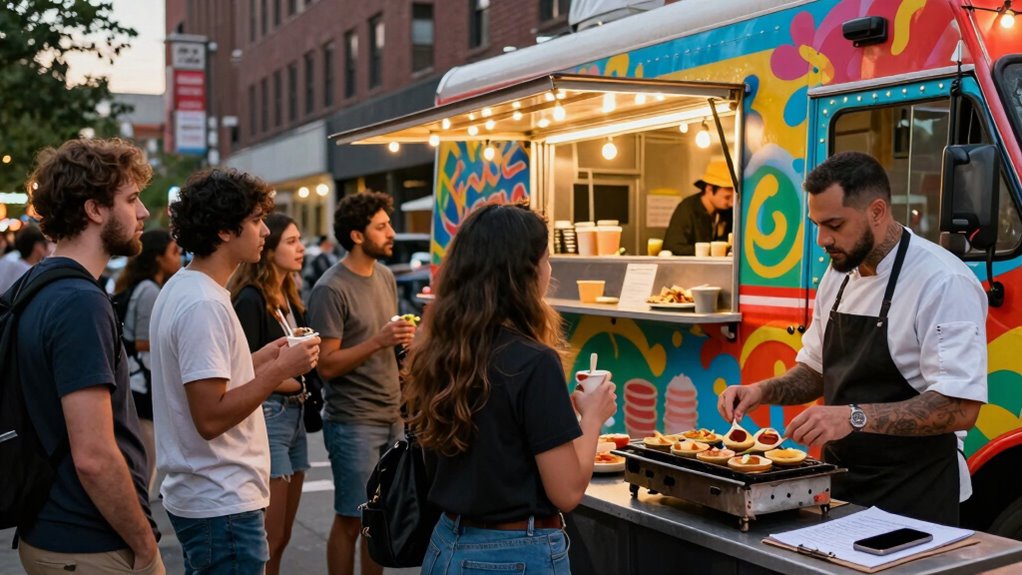
Launching a new food truck concept can feel like a leap of faith, but before you invest too much time and money, it’s essential to pressure-test your idea. The key to doing this effectively is gathering honest customer feedback and conducting thorough market research. These steps help you understand if your concept resonates with your target audience and if the local market can support your venture.
Start by engaging potential customers early. You can do this through surveys, social media polls, or informal conversations at local events. Ask them what types of food they crave, their price expectations, and where they typically eat. Customer feedback provides real insights into preferences and helps you refine your menu, pricing, and branding. Don’t just focus on positive responses—listen carefully to criticism or suggestions, as these often reveal gaps or opportunities you might have overlooked. Additionally, observing local competitors and understanding their strengths and weaknesses can give you a competitive advantage.
Engage potential customers early through surveys, social media, or conversations to gain insights and refine your food truck concept.
Market research is equally vital. Study the local food scene, identify your competitors, and analyze their menus, prices, and customer base. Are there gaps in the market that your food truck can fill? Is there a demand for a specific cuisine or a unique dining experience? Researching local events, foot traffic patterns, and demographic data tells you whether your concept aligns with the community’s needs and preferences. It also helps you find the best locations and times to operate, maximizing your visibility and sales.
One effective way to pressure-test your idea is to participate in food festivals or pop-up events. These platforms give you a chance to serve real customers, gather feedback, and observe how people respond to your offerings. Pay attention to their reactions, note what sells best, and ask for direct feedback on the food and overall experience. If possible, track sales data and customer comments to see if your concept has legs. This real-world testing allows you to make adjustments based on actual customer behavior rather than assumptions.
Another smart move is to create a minimum viable product (MVP). This could be a simple version of your menu served at a local event or through a temporary setup. Use this experience to collect customer feedback on taste, presentation, and service. It’s a low-cost way to validate your idea before committing significant capital. Incorporating market research into your planning ensures you’re making informed decisions based on actual community needs and preferences. If your MVP generates positive responses and consistent sales, it’s a good sign your concept has potential.
In the end, pressuring-testing your food truck idea isn’t about perfection; it’s about reducing risk and making informed decisions. By prioritizing customer feedback and thorough market research, you’re more likely to develop a concept that appeals to your target audience, stands out in your local market, and sets you up for long-term success.
As an affiliate, we earn on qualifying purchases.
Frequently Asked Questions
What Are the Initial Costs Involved in Starting a Food Truck?
Your initial costs for starting a food truck include purchasing or leasing the truck, outfitting it with kitchen equipment, and obtaining permits. You should also budget for menu innovation to attract customers and branding strategies to make your truck stand out. These investments help test your concept’s viability before big commitments. Keep in mind, costs vary based on truck size, location, and your innovative ideas, so plan accordingly to avoid surprises.
How Do I Find the Right Location for My Food Truck?
Picture your food truck nestled in a lively corner, where foot traffic buzzes like a hive. To find that perfect spot, explore areas with vibrant community engagement and high visibility. Use mobile marketing strategies to gauge potential customer interest and gather feedback. Scout locations during peak hours, attend community events, and connect with local businesses. This hands-on approach helps you identify where your food truck will thrive and build a loyal following.
What Permits and Licenses Are Required to Operate?
You need to obtain health permits and licenses from your local health department to operate legally. Make sure your food truck meets health regulations regarding sanitation, storage, and safety standards. Additionally, secure the necessary insurance requirements, including liability and vehicle insurance, to protect yourself and your business. Check with local authorities for specific permits, as requirements vary by location, ensuring you’re fully compliant before hitting the road.
How Can I Gauge Customer Interest Before Launching?
You can gauge customer interest by leveraging social media to create buzz and gather feedback from potential customers. Hosting sampling events at busy locations allows you to directly engage with the community, receive immediate reactions, and refine your offerings. Combining online engagement with in-person sampling helps you assess demand, build anticipation, and verify there’s genuine interest before fully launching your food truck.
What Are Common Challenges Faced by New Food Truck Owners?
Around 60% of new food truck owners face challenges with menu innovation and branding strategies. You might struggle to stand out in a crowded market, making it hard to attract loyal customers. Balancing creativity with operational costs is tricky, and inconsistent branding can confuse your audience. To overcome these issues, focus on refining your menu offerings and developing a strong, memorable brand that resonates with your target customers.
As an affiliate, we earn on qualifying purchases.
Conclusion
By thoroughly testing your food truck concept, you’re fundamentally giving it a trial run before diving in headfirst—like a swimmer testing the waters before a big plunge. This approach helps you identify potential pitfalls and gauge customer interest without risking too much capital. So, take your time, gather honest feedback, and refine your idea. Doing so guarantees you’re not just jumping in blindly but stepping into a well-prepared, promising venture.
As an affiliate, we earn on qualifying purchases.
As an affiliate, we earn on qualifying purchases.
Fall Picks
fall essentials
As an affiliate, we earn on qualifying purchases.