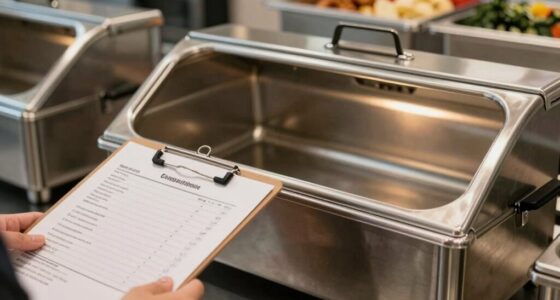
To build a practical event packing checklist your staff will use, start by identifying all event zones and their specific needs, including vendor requirements and attendee essentials. Break down tasks into clear categories, such as equipment, decorations, and supplies, and assign responsibilities to team members. Organize items logically, packing in order of use for setup. Double-check each zone’s needs and include backup items. Keep your checklist accessible and easy to update for smooth coordination; further tips await if you continue.

Get kitchen staples and gadgets delivered free with Prime
- Fast, free delivery on millions of items
- Prime Video, Amazon Music and more included
- Member-only deals all year
Key Takeaways
- Involve staff in creating the checklist to ensure all needs are addressed and increase buy-in.
- Organize items by event zones and responsibilities for clarity and accountability.
- Prioritize essential items like signage, registration supplies, and backup materials for smooth setup.
- Develop a logical packing order aligned with event flow to streamline setup and breakdown.
- Use a digital or physical master checklist accessible to all team members for real-time updates.

Planning an event can be overwhelming, but creating a practical packing checklist can make the process much smoother. When you develop a clear, organized list, you ensure everything is covered, reducing last-minute stress and preventing overlooked essentials. One of the most critical aspects is vendor coordination. You want to confirm that all vendors—caterers, audio-visual teams, decorators—know what they need to bring and when. Including their specific requirements on your checklist helps streamline setup and avoids confusion or delays, which can negatively impact the attendee experience. Make sure to communicate with vendors well in advance and incorporate their needs into your packing plan. This proactive approach keeps the event running smoothly and creates a professional atmosphere.
Effective vendor coordination ensures smooth setup and a professional event experience.
Your packing checklist should prioritize items that directly influence the attendee experience. Think about essentials like signage, name tags, and seating arrangements, as these contribute significantly to guest comfort and engagement. Don’t forget to include supplies for registration or check-in, such as scanners or guest lists, so the process is quick and efficient. When you prepare these items ahead of time, you’re less likely to encounter chaos or long lines that frustrate attendees. A well-organized checklist also covers backup supplies—extra batteries, chargers, or contingency materials—so any unforeseen issues won’t derail the event. Additionally, considering storage and transport can help prevent damage or loss of valuable items during movement. Recognizing the importance of event logistics can further enhance your planning and execution.
As you build your list, keep in mind the different zones or areas of the event space. Break down your packing needs into sections—main event area, breakout rooms, registration desk, outdoor spaces—so you don’t forget anything critical in each zone. This approach guarantees that every part of your event runs seamlessly, from setup to takedown. During your planning, double-check that all equipment, decorations, and supplies are accounted for, and assign responsibilities to team members. Clear task delegation ensures everyone knows what they’re responsible for, making packing and setup more efficient. Furthermore, understanding the importance of layout and flow can help you optimize the event’s operational efficiency and attendee experience. Proper organization of transportation methods can also facilitate faster setup and breakdown times. Moreover, considering the flow of the event day can improve the overall experience and operational efficiency.
Finally, consider the flow of your event day. Pack items in order of their use, so setup is logical and swift. Have a master checklist that everyone can access, whether digitally or physically, to track progress and verify that no essential item gets left behind. When your checklist covers vendor needs, enhances attendee experience, and is organized by event zones, your staff can work confidently and effectively. This level of preparation results in a well-coordinated event that leaves a positive impression on your guests, all while making your job much easier.
Products Worth Considering

Breville Barista Touch Espresso Machine, Brushed Stainless Steel

Weber Lumin Portable Electric Grill, Black

Weber Q 1400 Portable Electric Grill, Gray
As an affiliate, we earn on qualifying purchases.
Frequently Asked Questions
How Do I Prioritize Items for Different Types of Events?
You prioritize items by considering the event theme and guest demographics. For a formal event, focus on elegant decor, tables, and sound systems, while casual gatherings need comfortable seating and entertainment options. Think about your guests’ age, preferences, and needs, then pack accordingly. This approach guarantees your checklist covers essentials for each event type, making your staff’s job smoother and the event more successful.
What Technology Tools Can Assist in Checklist Management?
You can use digital collaboration tools like Google Sheets or Trello to manage your checklist efficiently. These platforms allow real-time updates and easy sharing with your team. For added convenience, explore checklist automation tools such as Zapier or Asana, which automate reminders and task updates. These technologies streamline your packing process, reduce errors, and guarantee everyone stays on the same page, making your event preparations smoother and more organized.
How Often Should the Packing Checklist Be Reviewed and Updated?
Think of your packing checklist as a living document that breathes with your event’s rhythm. Review it at least quarterly to guarantee packing frequency aligns with evolving needs, and update it whenever new equipment or procedures emerge. Regular checks sharpen checklist accuracy, preventing overlooked essentials. By staying proactive, you ensure your staff always has a reliable roadmap, turning chaos into a well-orchestrated symphony of preparedness.
Who Should Be Responsible for Packing and Unpacking?
You should assign a designated team member or lead to handle packing protocols and unpacking procedures. This person guarantees all items are packed correctly and follows the checklist meticulously, reducing errors. They also oversee unpacking to confirm everything is accounted for and stored properly. By assigning responsibility, you streamline the process, improve efficiency, and maintain consistency, making sure staff follow best practices and the event runs smoothly.
How Can I Ensure Staff Consistently Follow the Checklist?
You need to hit the nail on the head by fostering staff accountability and customizing your checklist. Regular training and clear communication make sure everyone understands their roles. Incorporate check-ins or digital reminders to keep staff on track. When staff see the value of the checklist and understand their responsibilities, they’re more likely to follow it consistently, making your event logistics run smoothly without a hitch.
Conclusion
So, now you’re all set with a practical packing checklist—ready to conquer any event with ease. Ironically, the only thing left to worry about might be forgetting to pack your own good humor. But don’t sweat it; with your new system, even last-minute surprises won’t throw you off. After all, the real magic isn’t just in the checklist—it’s in knowing you’re prepared for anything, even the unexpected. Now, go pack like a pro!