
TL;DR

Get kitchen staples and gadgets delivered free — and shop member deals
- Fast, free delivery on millions of items
- Access to Prime Big Deal Days deals on October 6–7
- Prime Video, Amazon Music and more included
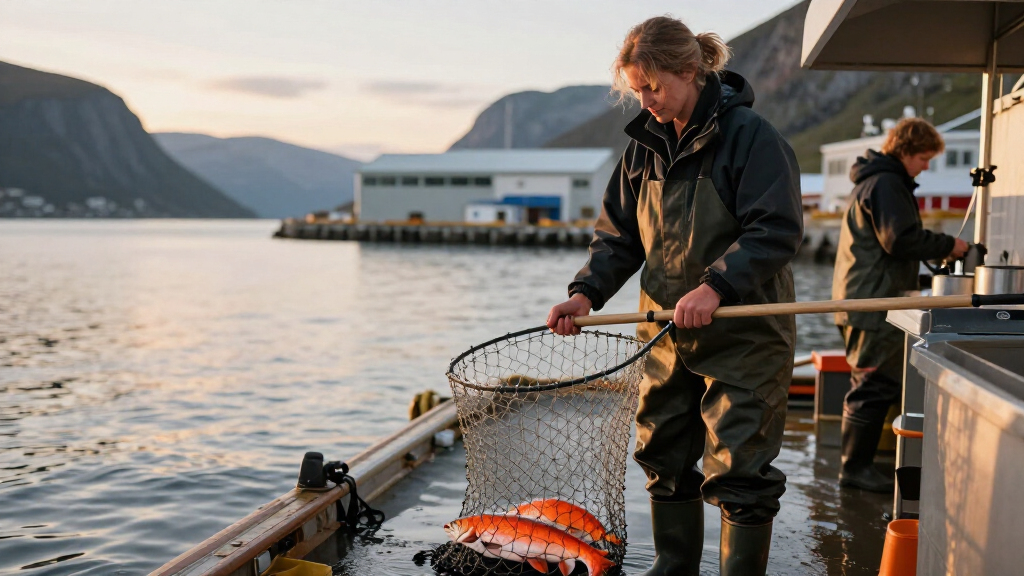
Norway’s dominance in the global salmon market has resulted in environmental and economic issues. Authorities are now implementing measures to address these challenges, but concerns remain about long-term impacts.
Norway, now the world’s largest salmon exporter, is facing mounting environmental and economic challenges as its industry’s rapid expansion begins to reveal significant consequences, prompting government intervention and industry reassessment.
Norway’s salmon industry has grown exponentially over the past decade, making it a key player in global seafood markets. According to the Norwegian Seafood Council, the country exported over 2.8 million tonnes of salmon in 2023, generating billions in revenue. However, this boom has led to environmental concerns, including increased disease outbreaks, pollution, and impacts on local ecosystems, as reported by environmental groups and scientific studies. The Norwegian government has announced new regulations aimed at reducing fish farm densities and improving sustainability standards, but critics argue these measures may not be enough to mitigate long-term damage. Industry representatives emphasize the economic importance of salmon exports for Norway’s economy, which accounts for a significant share of national income and employment. The situation has sparked debate about balancing economic growth with environmental stewardship, with some experts warning of potential long-term risks if current practices continue unchecked.Impacts on Norway’s Economy and Environment
This development is significant because it highlights the complex trade-offs between economic prosperity and environmental sustainability. Norway’s salmon industry is a major contributor to its economy, but the environmental costs threaten long-term industry viability and ecosystem health. The measures being implemented could set a precedent for other countries with similar industries, influencing global seafood sustainability standards. For consumers and investors, the situation underscores the importance of responsible sourcing and the potential risks of over-reliance on a single export sector.
As an affiliate, we earn on qualifying purchases.
Rapid Growth of Norway’s Salmon Industry and Emerging Challenges
Over the past decade, Norway has significantly expanded its salmon farming sector, driven by high global demand and favorable policies. This growth has made Norway the world’s top salmon exporter, with exports increasing by over 50% since 2015. The industry’s success has been supported by technological advances, government subsidies, and international trade agreements. However, the rapid expansion has also led to environmental issues, such as increased parasite infestations, water pollution, and escape of farmed fish into wild populations. Scientific studies have documented rising disease outbreaks, which threaten both farmed and wild stocks. These challenges have prompted calls for stricter regulation and sustainable practices, but industry stakeholders warn that overly restrictive policies could hurt economic gains and employment. The Norwegian government is now under pressure to find a sustainable balance amid these conflicting interests.
“We recognize the environmental concerns linked to our industry and are committed to implementing stricter regulations to ensure sustainability for future generations.”
— Norwegian Minister of Fisheries and Ocean Policy
salmon fish farm monitoring equipment
As an affiliate, we earn on qualifying purchases.
As an affiliate, we earn on qualifying purchases.
Uncertain Long-Term Environmental and Economic Outcomes
It is still unclear whether the new regulations will sufficiently address environmental issues without harming economic growth. The effectiveness of recent measures remains to be seen, and there is ongoing debate about whether industry practices will change sustainably. Long-term ecological impacts, such as effects on wild salmon populations and water quality, are still being studied, and assessments of economic resilience amid regulatory shifts are ongoing.
As an affiliate, we earn on qualifying purchases.
Next Steps in Norway’s Salmon Industry Regulation
Norwegian authorities are expected to monitor the impact of new regulations over the coming months, with potential adjustments based on environmental and industry feedback. Industry stakeholders are also likely to invest in new technologies aimed at reducing environmental impact. International pressure and consumer demand for sustainable seafood may influence future policy directions. Additionally, ongoing scientific research will inform whether current measures are sufficient or need strengthening.
sustainable seafood storage containers
As an affiliate, we earn on qualifying purchases.
As an affiliate, we earn on qualifying purchases.
Key Questions
What environmental issues are caused by Norway’s salmon industry?
Major issues include increased disease outbreaks, water pollution, parasite infestations, and impacts on wild salmon populations due to farm escapes and habitat disruption.
How is the Norwegian government responding to these challenges?
The government has announced new regulations aimed at reducing fish farm densities, improving waste management, and enforcing stricter sustainability standards, with ongoing evaluation of their effectiveness.
Will these measures be enough to protect the environment?
It remains uncertain whether current regulations will fully mitigate environmental damage; scientific assessments and industry compliance will determine their success.
What economic impacts could result from stricter regulations?
Stricter rules could increase operational costs for salmon farms and potentially reduce exports, but they may also ensure the industry’s sustainability and prevent long-term economic losses due to environmental degradation.
What is the global significance of Norway’s salmon industry?
Norway supplies a large share of global salmon, influencing international seafood markets and setting standards for sustainable aquaculture practices worldwide.
Source: hn
Fall Picks
fall essentials
As an affiliate, we earn on qualifying purchases.