🔍 Read the full analysis: Torta Della Nonna: The Custard-and-Pine-Nut Tart Every Trattoria Serves on Mad Tasting

Get kitchen staples and gadgets delivered free with Prime
- Fast, free delivery on millions of items
- Prime Video, Amazon Music and more included
- Member-only deals all year
TL;DR
Torta della Nonna is a traditional Italian dessert with a crisp pastry shell, lemon custard filling, and toasted pine nuts, widely served in Tuscan trattorias. Its exact origins are uncertain, but it remains a regional icon. This article examines its history, variations, and significance.
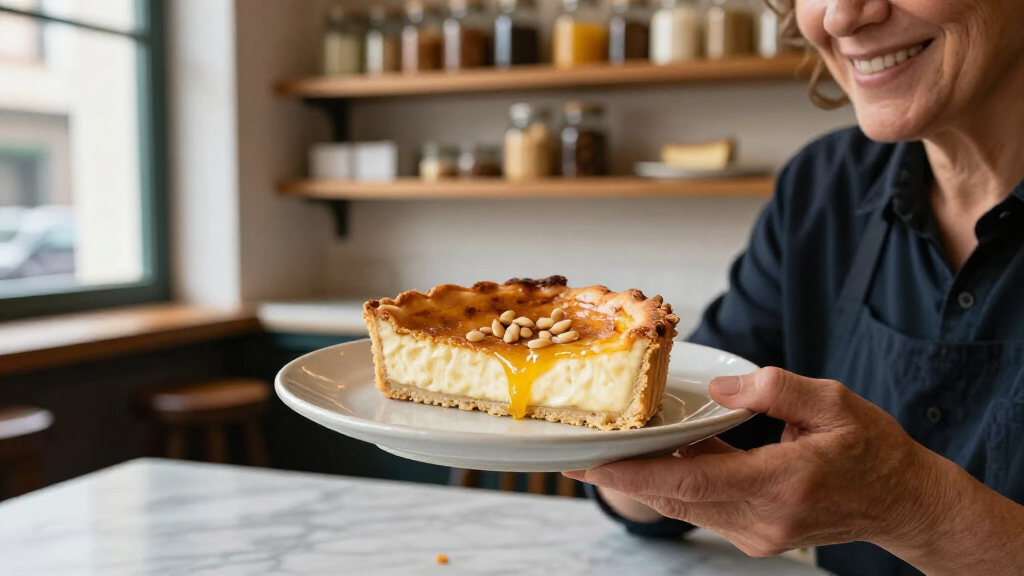
Torta della Nonna remains a staple dessert in Tuscan trattorias, featuring a crisp pasta frolla shell filled with lemon-scented crema pasticcera and topped with toasted pine nuts and powdered sugar. Despite its widespread popularity, its exact origins are disputed, with no definitive historical record. For a detailed history, see the original analysis. This classic tart’s enduring presence highlights its cultural significance in Tuscany and Italy at large.
The tart consists of three key components: a tender pasta frolla shell, a smooth lemon-flavored pastry cream (crema pasticcera), and a crunchy topping of toasted pine nuts. The shell is made with flour, butter, sugar, and eggs, similar to French pâte sablée, providing a rich, crumbly texture. The custard is prepared with milk, egg yolks, sugar, and often lemon zest, offering a bright, citrusy contrast to the pastry. The toasted pine nuts add a resinous, nutty flavor and a textural crunch. The dessert is finished with a dusting of powdered sugar, applied after cooling, giving it a distinctive appearance and a touch of sweetness.
This combination of elements creates a balance of flavors and textures: the buttery shell, the silky custard, and the nutty crunch. For more on traditional Italian desserts, see this detailed overview. Its structure allows it to be served at room temperature and keeps well for several days, making it a practical choice for both restaurants and home cooks. The tart is not very sweet, aligning with modern preferences for balanced desserts, and can be enjoyed as a finish to a meal or even breakfast the next day.
Cultural and Culinary Significance of Torta della Nonna
Torta della Nonna exemplifies Italian culinary principles of balance and simplicity. Its enduring popularity underscores its role as a regional icon, especially in Tuscany, where it is almost universally found on restaurant menus. The dessert’s name evokes familial warmth and nostalgia, reinforcing its identity as a rustic, home-style treat. Its versatility and straightforward ingredients have helped it maintain relevance amid changing dessert trends, making it a symbol of Italian comfort food that bridges tradition and modern tastes.
Italian tart pan for Torta della Nonna
As an affiliate, we earn on qualifying purchases.
As an affiliate, we earn on qualifying purchases.
Historical Origins and Regional Variations
The origin of Torta della Nonna remains uncertain. The most common story credits Florentine chef Guido Samorini, who is said to have created the tart in the 20th century in response to customer demand. Other accounts suggest it was a traditional family recipe that gained popularity through restaurants, with the name serving as a branding device to evoke rustic, grandmotherly cooking. The name itself—’grandmother’s cake’—embodies the idea of home, family, and hospitality, which are central to Italian culinary culture.
While it is a fixture in Tuscan eateries, the tart is less common outside the region. In Tuscany, especially Florence and Arezzo, it is a near-constant on menus, often alongside other regional desserts like torta del nonno, a chocolate variation. Elsewhere in Italy, variations exist, such as in Sicily, where similar custard tarts are called cassata or cannoli, and in northern regions, where panna cotta and regional cakes are more prevalent.
“I created the tart in the 20th century to satisfy customer cravings for a simple, comforting dessert.”
— Chef Guido Samorini
As an affiliate, we earn on qualifying purchases.
Unresolved Questions About Its True Origins
Despite widespread recognition, the precise origins of Torta della Nonna are still debated. There is no definitive historical record linking it to a specific date or individual, and it likely evolved from traditional family recipes. The story of Guido Samorini’s creation is based on local lore rather than documented evidence. Additionally, regional variations and similar desserts across Italy complicate efforts to pinpoint its exact lineage.
As an affiliate, we earn on qualifying purchases.
Future Trends and Potential Variations
As interest in traditional Italian desserts persists, chefs and home bakers continue to experiment with variations of Torta della Nonna. New interpretations may incorporate different nuts, citrus flavors, or alternative pastry bases. Its popularity suggests it will remain a mainstay in Tuscan trattorias, with ongoing discussions about its history and regional adaptations. Culinary historians may also seek to uncover more definitive origins through archival research.
As an affiliate, we earn on qualifying purchases.
Key Questions
What are the main ingredients of Torta della Nonna?
The main ingredients include pasta frolla (shortcrust pastry), lemon-scented crema pasticcera (custard), toasted pine nuts, and powdered sugar.
Is Torta della Nonna served hot or cold?
It is traditionally served at room temperature or slightly chilled, allowing the custard to set and the flavors to meld.
Can I make Torta della Nonna at home?
Yes, with careful attention to pastry baking, custard consistency, and pine nut toasting, it is possible to recreate an authentic version at home.
Why is it called ‘Grandmother’s Cake’?
The name evokes familial warmth, tradition, and the rustic, comforting qualities associated with home-cooked desserts in Italy.
Are there regional variations of Torta della Nonna?
Yes, variations exist, especially in nearby regions like Arezzo, where a darker, chocolate version called torta del nonno is popular.
Source: Mad Tasting
Halloween Picks
halloween
As an affiliate, we earn on qualifying purchases.