
TL;DR

Get kitchen staples and gadgets delivered free — and shop member deals
- Fast, free delivery on millions of items
- Access to Prime Big Deal Days deals on October 6–7
- Prime Video, Amazon Music and more included
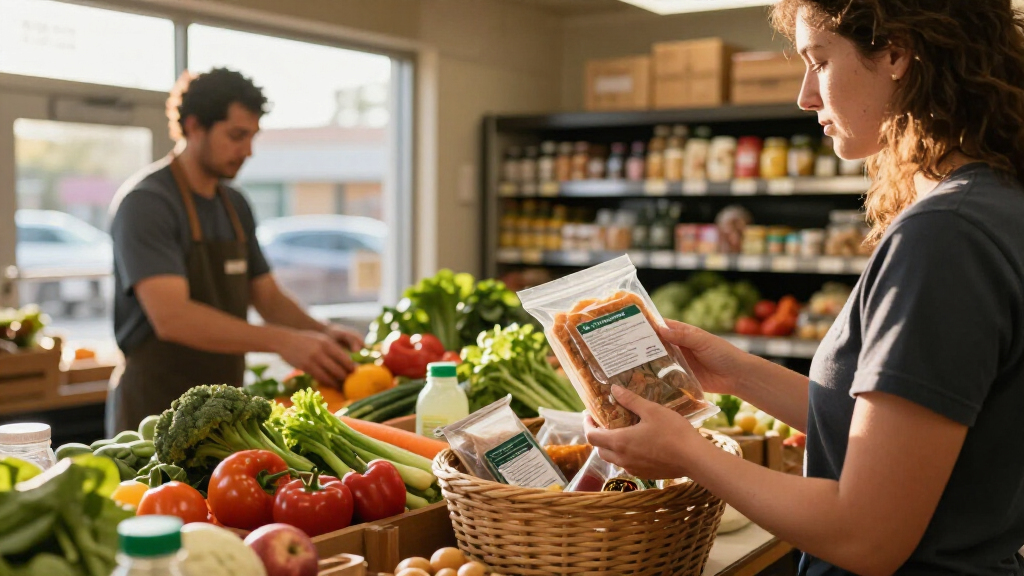
California Gov. Gavin Newsom has signed a law creating a voluntary state label for foods that do not meet California’s definition of ultraprocessed foods. Large grocery stores that carry at least 25 certified products must prominently display them. Food industry representatives say differing definitions could confuse shoppers and affect wider nutrition policy.
California Gov. Gavin Newsom signed a law creating a voluntary label for foods that do not meet the state’s definition of ultraprocessed products, giving shoppers a new way to identify eligible items. Large grocery stores that carry at least 25 products with the state label must prominently display them, while food industry representatives warn that differing definitions of ultraprocessed foods may make the labels harder to interpret.
The seal is available for products that fall outside California’s ultraprocessed-food definition, which the state established in 2025. According to the source report, that definition covers products containing at least one additive or high amounts of saturated fat, sodium or added sugar. The new law makes use of the seal voluntary for qualifying products; it does not require food makers to apply for it.
The grocery display requirement applies to large grocery stores carrying at least 25 certified products. The report does not provide further details about store size, how displays must be arranged, or how the certification process will work. The law is intended to make the eligible products more visible to shoppers.
California lawmakers backing the seal say it is meant to offer a simple, transparent way to identify healthier options. The Institute of Food Technologists (IFT), which represents the food science industry, has called for a consistent, science-based framework as states consider policies on ultraprocessed foods. IFT vice president of science and policy Anna Rosales said competing definitions could lead manufacturers and consumers to face different interpretations of which foods qualify.
How Labels Could Shape Food Choices
The label gives California shoppers a state-backed signal they can use when comparing products, and the grocery display requirement could make qualifying items easier to spot in participating stores. The law’s reach will depend partly on how many manufacturers seek certification and how shoppers understand the seal. The source report does not include evidence about consumer response or whether the label changes purchasing habits.
The policy could also matter beyond supermarket shelves. Rosales said definitions of ultraprocessed foods may influence school meals, nutrition assistance, product reformulation, front-of-package labels and dietary guidance. If states adopt different standards, companies selling across state lines may have to respond to varying rules, and shoppers could encounter seals based on different criteria. These are concerns raised by IFT; the report does not establish that such effects have occurred.
California’s Definition and Other Seals
California established its definition of ultraprocessed foods in 2025, and this law builds on that policy by creating a consumer-facing label tied to it. The definition uses both ingredients and nutritional composition: additives, saturated fat, sodium and added sugar all factor into whether a product is covered. The new seal therefore reflects California’s own criteria, rather than a single national standard.
The state label joins other non-ultraprocessed seals already available to food manufacturers. The source report names the Non-UPF Verified Standard from the Non-GMO Project and the Non-UPF Certified seal from the nonprofit Non-UPF Program. Those labels differ in their approaches. California’s focuses on nutritional and ingredient composition, while other programs consider the degree of processing at least in part.
That distinction matters because processing alone may not describe a food’s nutritional value. Food scientists and industry experts cited in the report have noted that a processing-focused measure could penalize products such as whole-grain bread or yogurt, which can help people meet nutrient needs. The report does not detail how California will assess individual products or how its standard treats those examples.
““We should be about healthcare, not sick-care, recognizing that preventing illnesses is far preferable to finding — and affording — treatments.””
— Gavin Newsom, California governor
Certification and Rollout Details
The source report does not say when the label will begin appearing, which organization will certify products, what application or review process manufacturers must follow, or how compliance with the grocery display rule will be checked. It also does not specify which stores count as large grocery stores under the law.
It remains unclear how many products will qualify, how many manufacturers will use the seal, or how California will communicate the criteria to shoppers. The report also does not describe a shared national definition. IFT’s concern about conflicting standards is a warning about possible future effects, not confirmation that shoppers or manufacturers are already facing widespread confusion.
Stores and Product Makers Prepare
The next practical steps are the rollout of the state label and the process for manufacturers to establish that their products qualify. Grocery stores carrying at least 25 certified items will need to meet the prominent-display requirement. The report gives no implementation schedule, so the timing of those steps has not been established in the available information.
As California’s system takes shape, attention will also turn to how its criteria compare with other seals and any standards adopted by other states. The number of products certified, the way retailers present them and any further guidance from state officials will help show how the law works in practice.
Key Questions
What does California’s new food label identify?
It identifies products that do not fall under California’s definition of ultraprocessed foods. That definition includes products with at least one additive or high amounts of saturated fat, sodium or added sugar.
Is the label mandatory for food manufacturers?
No. The report describes the label as voluntary for products that meet the state’s criteria.
Which grocery stores must display labeled products?
Large grocery stores that carry at least 25 certified products must prominently display them. The source report does not give further detail about the store-size threshold or display format.
How is California’s seal different from other non-UPF labels?
California’s approach centers on ingredients and nutritional composition. Other seals named in the report consider the degree of processing at least in part.
When will shoppers see the label in stores?
The source report does not provide a start date or a detailed rollout schedule. The certification process and first expected store displays remain unclear.
Source: rss
Fall Picks
fall essentials
As an affiliate, we earn on qualifying purchases.