TL;DR
Truck weigh stations enforce weight limits and can screen commercial vehicles for safety issues and compliance. Some trucks are selected for further inspection, while electronic bypass programs may let eligible drivers pass without stopping; signs and signals still apply.
Truck weigh stations do more than measure a semitruck’s weight: they can also be used to check vehicle safety, cargo and driver records. The process and which trucks must stop vary by state, and an acceptable weight does not rule out a closer inspection.

Get kitchen staples and gadgets delivered free with Prime
- Fast, free delivery on millions of items
- Prime Video, Amazon Music and more included
- Member-only deals all year
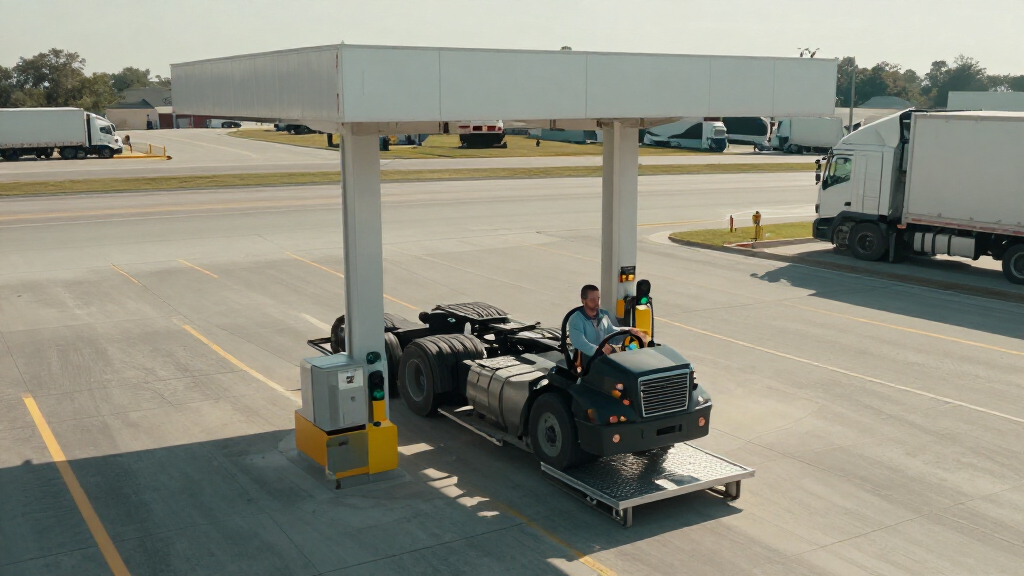
At a station, signs direct drivers to a scale, where a truck may be weighed while moving slowly or while fully stopped. Officials use the measurements to check the vehicle’s overall weight and the load carried on individual axles. A truck within applicable limits may be cleared to leave, but inspectors can still direct it aside because of screening results, visible defects or random selection.
On the Interstate System, standard federal limits are 80,000 pounds for gross vehicle weight, 20,000 pounds on a single axle and 34,000 pounds on a tandem axle. Federal bridge-weight rules and exceptions can affect what is allowed, while limits on other roads may differ. The Federal Highway Administration says state rules also determine which commercial vehicles must stop: some states require all commercial motor vehicles to enter, while others set a weight threshold.
A closer inspection can cover tires, brakes, lights and cargo, as well as a driver’s records and credentials. Officials may review registration, fuel-tax paperwork, permits and hours-of-service logs. The Commercial Vehicle Safety Alliance describes eight inspection levels, from Level I checks of both driver and vehicle to narrower or specialized checks, including Level VI for radioactive materials and Level VIII electronic inspections.
What Happens at a Weigh Station?Weight, safety and compliance checks
Weigh stations check truck weights and can screen vehicles, cargo and driver records. Stop rules vary by state, and drivers must follow posted signs and signals.
What gets checked
A scale check may be followed by a closer review, even when the truck is within weight limits.
Roadworthiness
Inspectors may check tires, brakes, lights and cargo for safety issues.
Records and credentials
Checks may include permits, registration, fuel-tax paperwork and hours-of-service logs.
Different levels
Checks range from reviewing both driver and vehicle to specialized or electronic inspections.
Who must stop?
State rules determine which commercial vehicles enter a station.
- Some states require all commercial motor vehicles to enter.
- Posted signs and signals can direct a truck to pull in.
- Eligible trucks may use electronic bypass programs based on safety records and other information.
- Bypass eligibility does not override an instruction to stop.
How a stop can unfold
The route, state rules and inspection findings shape what happens next.
Signs direct drivers to a scale, where the truck may be weighed slowly or while stopped.
Officials check overall and axle weights; screening, visible defects or random selection may prompt inspection.
A truck may be cleared, cited, told to adjust its load or kept off the road until a serious defect is fixed.
How Checks Affect Road Safety
Weight limits are intended to limit strain on roads and bridges. A truck that is too heavy overall—or carries too much weight on an axle—can violate rules even if its cargo appears properly loaded. Weigh stations give states a way to check compliance and identify vehicles that may pose safety concerns.
For drivers and trucking businesses, a stop can mean a routine scale check or a more detailed review of the vehicle and records. A violation may lead to a citation, a requirement to move or remove cargo, or an order keeping a truck off the road until a serious defect is repaired. The outcome depends on the violation and applicable state rules.
For other road users, the checks matter because defects such as faulty brakes can affect whether a truck is safe to continue traveling. But a station stop alone does not establish that a truck has a problem: some vehicles are cleared after weighing, and some are selected for inspection even when their weight is within limits.
Products Worth Considering

Le Creuset Enameled Cast Iron Rectangular Roaster, 5.25 qt., Cerise

Cuisinart Chef's Classic Stainless Steel Cookware Set, 17-Piece

Weber Lumin Portable Electric Grill, Black
As an affiliate, we earn on qualifying purchases.
Federal Limits, State Stop Rules
Federal weight standards apply to the Interstate System, but they are not the only rules that determine a truck’s permitted load. Bridge formulas and exceptions can affect legal weights, and requirements on roads outside the Interstate System may vary. Drivers therefore cannot assume that one weight limit applies to every route.
The Federal Highway Administration says states must certify that they enforce weight limits on certain highways to avoid jeopardizing federal highway funds. That federal oversight sits alongside state decisions about which vehicles must stop and how violations are handled. The information provided does not set out each state’s specific thresholds, penalties or station procedures.
Some commercial vehicles may use electronic bypass programs. These programs draw on safety records and other information to determine whether a driver can proceed without entering a station. A bypass does not override a stop sign or signal: drivers must still follow instructions requiring them to pull in.
“Some require all commercial motor vehicles to stop, while others require only those above a certain weight to stop.”
— Federal Highway Administration
State Penalties and Screening Details
The details of a particular stop depend on the state, the route and the circumstances. The available information does not specify state-by-state stop thresholds, citation amounts, how screening systems select vehicles, or how each electronic bypass program evaluates eligibility. It also does not say how often trucks are weighed while moving versus at a full stop.
Consequences are described generally rather than as a single national penalty schedule. An overweight truck may receive a citation or be required to adjust its load, while serious safety defects can result in an out-of-service order. The precise response to a given violation remains dependent on applicable rules and officials’ findings.
Follow Signs and State Rules
For an individual driver, the next step is to follow the signs and signals at the station, then comply with any inspection or load instructions. A vehicle ordered out of service cannot return to the road until the identified problem is fixed; a driver placed out of service must wait until the restriction ends.
Drivers and operators seeking exact requirements need to check the rules for the states and roads on their route, including any applicable permits or exceptions. Electronic bypass eligibility does not remove the obligation to stop when instructed. No specific policy change or future enforcement milestone is identified; the rules described here are general and vary by jurisdiction.
Source: rss
Key Questions
Do all trucks have to stop at weigh stations?
Not in every state. The Federal Highway Administration says some states require all commercial motor vehicles to stop, while others require only vehicles above a certain weight. Drivers must follow posted signs and signals.
What weights are checked on the Interstate System?
Standard federal limits are 80,000 pounds gross vehicle weight, 20,000 pounds on a single axle and 34,000 pounds on a tandem axle. Bridge-weight rules, exceptions and the route can affect what is legally allowed.
What do inspectors check besides weight?
Inspectors may review tires, brakes, lights and cargo, along with driver records and credentials. Checks can include registration, fuel-tax paperwork, permits and hours-of-service logs.
What happens if a truck is overweight?
Depending on the state and violation, the driver may receive a citation or have to move or remove cargo before leaving. A serious safety issue can result in the truck being placed out of service until the problem is repaired.
Can a truck bypass a weigh station?
Some trucks may qualify for an electronic bypass program based on safety records and other information. Drivers must still enter the station when signs or signals tell them to stop.
Source: familyhandyman.com