🔍 Read the full analysis: Riso, Patate E Cozze: Bari's Layered Rice, Potato, And Mussel Bake on Mad Tasting

Get kitchen staples and gadgets delivered free with Prime
- Fast, free delivery on millions of items
- Prime Video, Amazon Music and more included
- Member-only deals all year
TL;DR
The culinary guide describes riso, patate e cozze as a traditional Bari bake made by layering rice, potatoes and mussels with ingredients such as onion, tomato, herbs and olive oil. It says strained mussel cooking liquid and water cook the rice in the oven, while shell use and cheese vary by household. The guide provides cooking advice, not a new announcement or dated development.
Riso, patate e cozze, Bari’s layered rice, potato and mussel bake, is the subject of a culinary guide explaining how its ingredients cook together in one ovenproof dish. The guide describes a traditional preparation that uses strained mussel liquor and water to cook the rice, while noting that choices such as shell-on mussels and cheese are common variations rather than fixed requirements.
The guide calls the dish tiella barese, a name associated with Bari’s combination of rice, potatoes and mussels baked in a pan. It describes the ingredients as having distinct roles: potatoes make the bake substantial, rice absorbs the cooking liquid, and mussels contribute a briny flavor. Onion, tomato, garlic, parsley, black pepper and olive oil may season the layers.
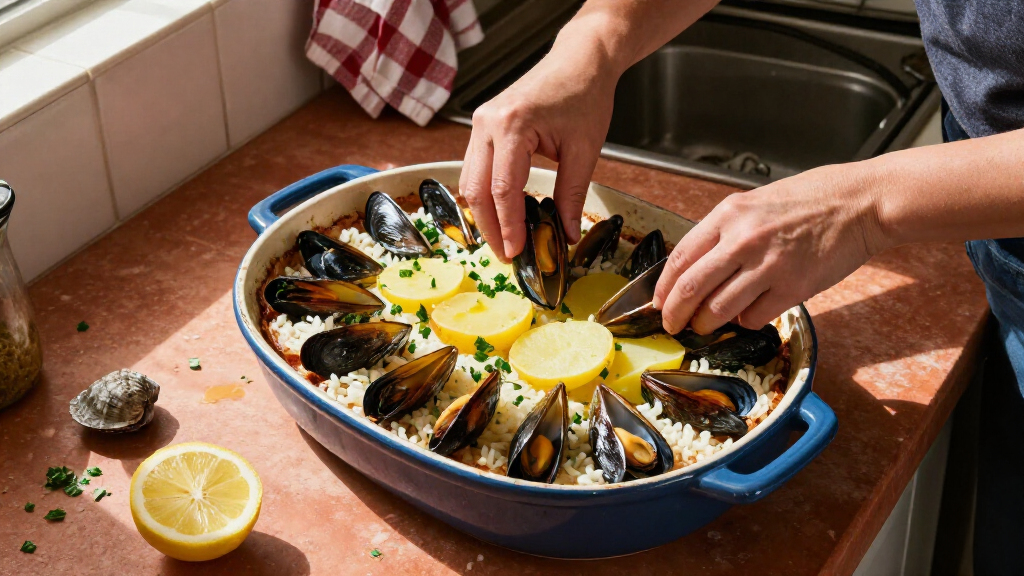
According to the guide, the recommended method begins with a thin layer of potato and onion in a broad, shallow ovenproof dish. Cooks add opened mussels and scatter rice into the spaces around them, then season and add liquid. Depending on the household’s approach, another thin layer of potato can cover the top. The dish is baked until the rice is tender through the center and the potatoes are cooked, with a browned surface possible. The guide says it is not stirred like risotto.
The guide advises straining mussel liquor before use to remove grit, then tasting it before adding salt because it can already be salty. It recommends supplementing a small amount of liquor with water rather than automatically using salty stock. It gives no single liquid-to-rice ratio: the amount needed depends on the rice, pan dimensions, layer depth and moisture released by the mussels. The guide also recommends letting the finished bake rest briefly before serving so its layers settle.
Bari’s layered bake Riso, patate e cozze
Rice, potatoes and mussels bake together in a shallow dish. The guide shares a flexible household method, not a single fixed recipe.
Three ingredients, distinct roles
The layers turn simple ingredients into a substantial one-pan meal.
Make it hearty
Thin slices form the base and cook through with the other layers.
Absorbs the liquid
Scatter it around the mussels so it cooks evenly in the oven.
Bring coastal flavor
Their cooking liquid adds briny flavor to the bake.
Layer, season, bake
A broad, shallow ovenproof dish helps the center cook through.
Layer thinly sliced potatoes and onion in the dish.
Place opened mussels, then scatter rice into the gaps.
Season, pour in strained mussel liquor with water, and bake until cooked.
Family choices vary
The guide describes a tradition with flexible details, not one rigid recipe.
- Mussels with shells or removed
- Pecorino or another local cheese
- A light or generous layer of tomato
- Liquid for the rice and pan
- Salt after tasting the mussel liquor
- Layer depth and baking as needed
A flexible liquid balance
Rice variety, pan size, layer depth and moisture from the mussels all affect how much liquid the bake needs.
A One-Pan Bari Seafood Meal
The cooking method described in the guide explains why the dish is more than a list of ingredients: rice, potatoes and mussels bake together, with liquid moving through the layers. That makes the quality and distribution of the cooking liquid central to the result. The guide cautions that a pan that is too deep or ingredients layered too thickly can leave the center undercooked even when the top appears browned.
For home cooks, the guide’s emphasis on a shallow dish, evenly sliced potatoes and checking the center offers practical advice without presenting one family recipe as a universal standard. It says the bake can serve as a substantial meal on its own and suggests a crisp salad as a fresh accompaniment. The guide distinguishes recognizable features of the Bari-style dish from optional choices rather than setting a single rigid test of authenticity.
Products Worth Considering

KitchenAid NSF Certified Commercial Series 8-Qt Bowl-Lift Stand Mixer, KSM8990

Ninja SP151 Flip Toaster Oven & Air Fryer, Stainless Steel

Cuisinart 8-in-1 Air Fryer Toaster Oven with Grill, 1800W, Stainless Steel
As an affiliate, we earn on qualifying purchases.
The Tiella Barese Tradition
The name riso, patate e cozze translates as “rice, potatoes and mussels.” The guide associates the bake with Bari and the Apulian coast, where mussels and their cooking liquid give the dish its coastal character. It also uses tiella barese for the Bari preparation, noting that “tiella” can refer to a baking vessel or a layered baked dish in parts of southern Italy.
The guide presents the recipe as a household tradition with variation, not as a newly announced culinary development. It says some cooks retain one half-shell on each mussel, while others remove shells for easier serving. Pecorino or another local cheese may be added, and the amount of tomato can range from a light scattering to a more generous layer. These choices can affect saltiness and moisture, so the guide advises tasting the liquor and adjusting the added liquid accordingly.
Liquid Needs and Family Variations
The guide does not establish one fixed recipe, cooking time or liquid ratio for every pan. Rice variety, dish size, layer thickness and mussel moisture all affect how quickly the bake cooks and how much liquid it needs. It notes that a wide, shallow pan may lose moisture differently from a deep casserole and advises checking the center rather than relying only on the browned top.
The material does not specify a complete food-safety temperature or provide detailed storage instructions. As a general seafood precaution, use fresh mussels from a reliable source, discard mussels with cracked shells or those that remain closed after cooking, and keep raw seafood refrigerated until preparation. The guide focuses on cooking technique; it does not document a restaurant launch, event or other time-sensitive development.
Check the Bake Before Serving
The guide advises checking that the rice is tender in the center and the potatoes are cooked through before serving. If the top seems dry while the middle rice remains firm, it says the pan may need more liquid or additional covered baking time. Once cooked, let the dish rest for several minutes so it holds together more cleanly when portioned.
Because the guide offers no standardized recipe or timing, cooks will need to follow quantities suited to their rice and pan and adjust based on what they observe during baking. Its method is to layer the ingredients in a shallow dish, strain and use the mussel liquor with water, and verify doneness at the center.
Key Questions
What is riso, patate e cozze?
The guide describes it as a Bari-style baked dish of layered rice, potatoes and mussels, commonly seasoned with olive oil, onion, tomato and herbs. It is also called tiella barese.
Does the dish have to include mussels in their shells?
No. According to the guide, some cooks keep one shell half attached for presentation, while shell-free mussels are also used to make the bake easier to eat.
What liquid should be used to cook the rice?
The guide recommends strained mussel cooking liquid with water as needed. Taste the liquor before adding salt, since it may already be salty; the amount of liquid depends on the rice and pan.
How can I tell when the bake is ready?
The guide says to check the middle: the rice should be tender through the center and the potatoes cooked. A browned top alone does not confirm that the center is done.
Source: Mad Tasting