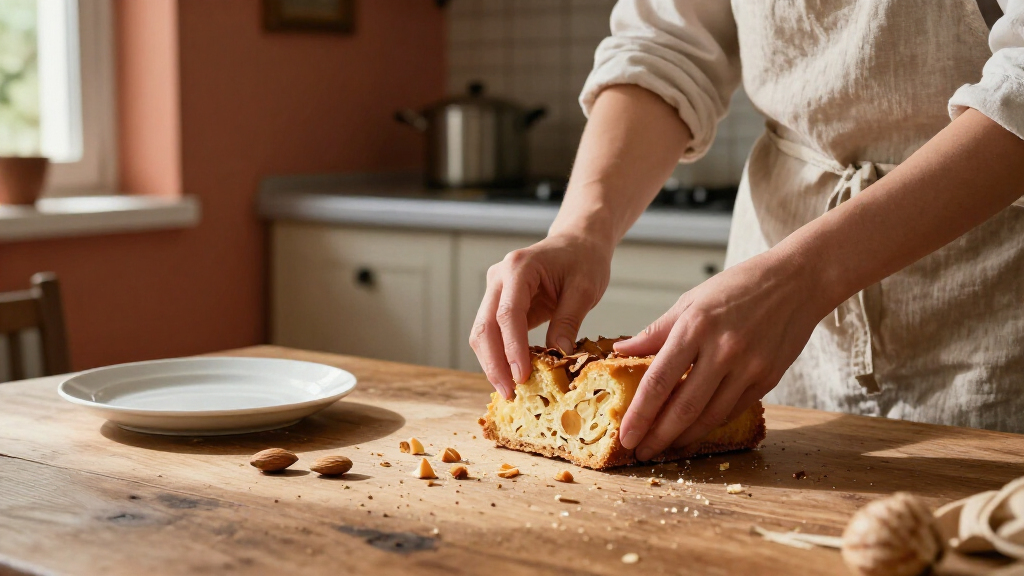

🔍 Read the full analysis: Torta Sbrisolona: Mantua's Crumbly Almond Cake You Break By Hand on Mad Tasting

Get kitchen staples and gadgets delivered free with Prime
- Fast, free delivery on millions of items
- Prime Video, Amazon Music and more included
- Member-only deals all year
TL;DR
Mad Tasting describes torta sbrisolona as a traditional almond cake from Mantua, made with a coarse mixture of flour, sugar, butter and almonds; many versions include cornmeal. Its crisp, sandy texture is meant to be broken into pieces by hand, though recipes vary and its precise origins are not settled.
Mad Tasting’s guide to torta sbrisolona describes the traditional almond cake of Mantua, in Lombardy, as a crisp, sandy sweet that is broken into irregular pieces by hand rather than cut into neat slices. The guide explains the cake’s characteristic coarse mixture, notes that recipes differ, and gives practical advice for baking and serving it.
According to the Mad Tasting guide, sbrisolona is made from a coarse mixture of flour, sugar, butter and almonds. The guide says many recipes combine wheat flour with cornmeal, which contributes an extra grainy bite. It describes the finished cake as dry and crisp rather than soft or layered, with almonds providing its defining flavor. Some versions add lemon zest or vanilla, and recipes may use chopped almonds throughout, whole almonds on top, or both.
The method described by the guide is to mix the ingredients only until they resemble coarse crumbs, scatter them into a pan and bake until golden. It advises against kneading the mixture into smooth pastry dough or pressing it into a uniform layer. After baking, the cake should cool fully so the butter-rich crumb can firm up. Once set, it can be broken into rough pieces by hand; the guide notes that cutting it with a knife may cause it to crumble more heavily.
The guide recommends serving small pieces with coffee or a dessert drink. It says the cake is also known locally as sbrisolada and connects its name to brisa, a Mantuan dialect word meaning “crumb.” It presents the scattered crumbs and uneven shapes as part of the intended eating experience, not as a baking flaw.
Torta Sbrisolona A cake made to break by hand
This traditional almond cake from Mantua is crisp and crumbly by design. Its rough pieces are part of the way it is served.
What makes it distinctive
A coarse mixture and crisp texture set it apart from cakes meant to be sliced.
Almonds and pantry staples
Flour, sugar, butter and almonds form the base; many versions also use cornmeal.
Crisp and sandy
The crumb is meant to snap and crumble, not bend into a soft slice.
A word for “crumb”
The guide connects sbrisolona with brisa, a Mantuan dialect word meaning “crumb.”
From coarse mixture to shared pieces
The guide emphasizes preserving the crumbly mixture through baking and cooling.
Combine ingredients only until they resemble crumbs; do not knead into smooth dough.
Scatter the mixture into a pan without pressing it into a uniform layer.
Let it cool fully so the crumb firms, then break it gently into small pieces by hand.
Recipes vary
There is no single standard formula in the guide.
- Wheat flour and cornmeal proportions
- Whole almonds, chopped almonds, or both
- Optional lemon zest or vanilla
- Exact origins and beginnings
- A single inventor or first recipe
- One definitive formula
Serving and handling
Small chunks are recommended with coffee or a dessert drink.
Why the Cake Is Broken by Hand
Mad Tasting ties the hand-breaking custom to the cake’s defining texture. Sbrisolona is not designed to produce a clean, even wedge: its coarse, brittle crumb makes irregular pieces the natural serving form. That distinction helps explain why a cake that may look like a large biscuit or rustic shortbread is still presented as a Mantuan specialty with its own way of being served.
For readers buying or baking it, the guide’s practical point is simple: a crackly surface and scattered crumbs are expected. It recommends waiting for the cake to cool completely before handling and breaking it gently into small portions. Served with coffee after a meal, it can be shared without requiring carefully plated slices.
The guide also cautions against treating one recipe as the sole standard. Differences in flour, cornmeal, almond preparation and flavorings can produce distinct results. For travelers sampling it in the region, Mad Tasting suggests paying attention to the crumb and almond flavor rather than looking for a single supposedly official formula.
Products Worth Considering

Breville Barista Express Espresso Machine with Built-In Grinder, Brushed Stainless Steel

Cuisinart Programmable Convection Bread Maker, 2 lb, CBK-210NAS

Le Creuset Signature Enameled Cast Iron Round Dutch Oven, 9 qt, Marseille
As an affiliate, we earn on qualifying purchases.
Mantua’s Longstanding Almond Specialty
Mad Tasting places sbrisolona in Mantua and its surrounding countryside, describing it as a durable sweet made from familiar pantry ingredients. The guide says early versions are often characterized as humble household or farm food, while later recipes used more butter, sugar and almonds. These are broad descriptions rather than a documented account of a single recipe’s development.
The guide says the cake has existed for centuries but notes that accounts of its beginnings differ. It does not identify one inventor or establish a definitive date of origin, and advises describing it as a longstanding Mantuan specialty rather than repeating a single origin story as settled fact. Mad Tasting also says bakeries and households in the region continue to make versions with different proportions and choices of nuts or flavorings.
Origins and Recipes Still Vary
The Mad Tasting guide provides no publication date, named culinary historians or primary historical documents to substantiate a precise timeline. It explicitly says accounts of the cake’s origins differ, so its exact beginnings remain unclear on the information provided. No single inventor, first recipe or date can be confirmed from this material.
The guide also offers no single standard formula. It says the proportions of wheat flour and cornmeal, the use of whole or chopped almonds and the choice of flavorings vary among household and bakery recipes. The source material ends partway through a discussion of those variations, and provides no complete ingredient quantities, baking temperature, baking time or storage duration. Those details should not be inferred from the general method described.
Cooling, Serving and Keeping the Cake
For anyone following the method, Mad Tasting advises using a trusted recipe for exact quantities and oven settings, keeping the mixture coarse, baking until golden and allowing the cake to cool fully before moving or breaking it. The guide’s key texture check is a small test piece: when cooled, it should snap and crumble rather than bend. It recommends serving small chunks with coffee or a dessert drink.
The guide says the cake’s dry texture can help it keep longer than a soft, cream-filled dessert when stored properly, but it does not specify a storage container, room-temperature period or shelf life. Readers should follow the storage instructions supplied with a bakery purchase or their chosen recipe. No further announcement or upcoming event is identified; the material is a culinary guide rather than a report of a newly announced development.
Key Questions
What is torta sbrisolona?
Mad Tasting describes it as a traditional crumbly almond cake from Mantua, in Lombardy. It is made with flour, sugar, butter and almonds; the guide says many recipes also include cornmeal.
Why is sbrisolona broken by hand?
Its crisp, sandy texture does not lend itself to neat slices. Mad Tasting presents breaking it into irregular pieces by hand as the customary way to serve it.
Does every sbrisolona recipe use cornmeal?
No. Mad Tasting says many traditional versions combine wheat flour with cornmeal, but recipes vary. The guide says cornmeal adds a grainier bite.
How can I tell when the cake is ready to handle?
Mad Tasting advises letting it cool completely after baking so the crumb can firm up. The guide suggests testing a small piece: it should snap and crumble rather than bend.
Is there a confirmed origin story for the cake?
Not in the source material. Mad Tasting says accounts of its beginnings differ and recommends describing it as a longstanding Mantuan specialty, rather than assigning it a definitive inventor or date.
Source: Mad Tasting