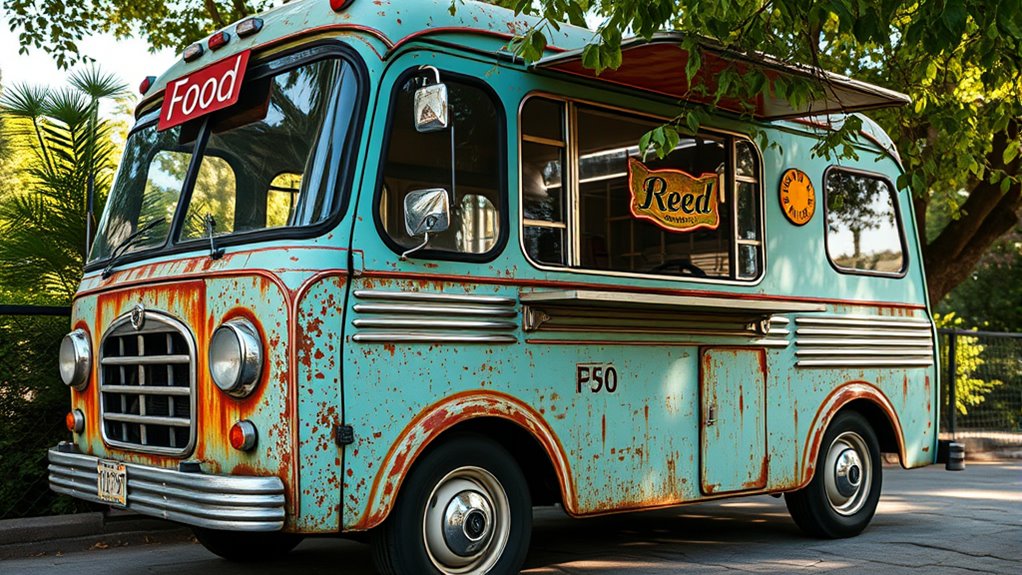

While modern food trucks often focus on sleek designs and new technology, preserving vintage models demands a different approach—one rooted in history and craftsmanship. Restoring these mobile icons involves careful assessment, authentic repairs, and maintaining original details. It’s an intricate process that can uncover stories of a bygone era, yet many overlook the delicate balance required. Understanding these techniques reveals how much effort it takes to keep these culinary relics alive.

Get kitchen staples and gadgets delivered free with Prime
- Fast, free delivery on millions of items
- Prime Video, Amazon Music and more included
- Member-only deals all year
Key Takeaways
- Conduct thorough assessments of the truck’s body, engine, and interior to determine restoration needs and preserve original features.
- Use authentic materials, period-specific paint, decals, and fixtures to maintain historical accuracy during restoration.
- Remove rust carefully with sandblasting or chemical treatments to prevent damage and ensure a stable foundation.
- Research the truck’s history, including original manufacturer and food offerings, to guide authentic restoration choices.
- Implement regular maintenance of mechanical and aesthetic components, respecting original craftsmanship and cultural significance.
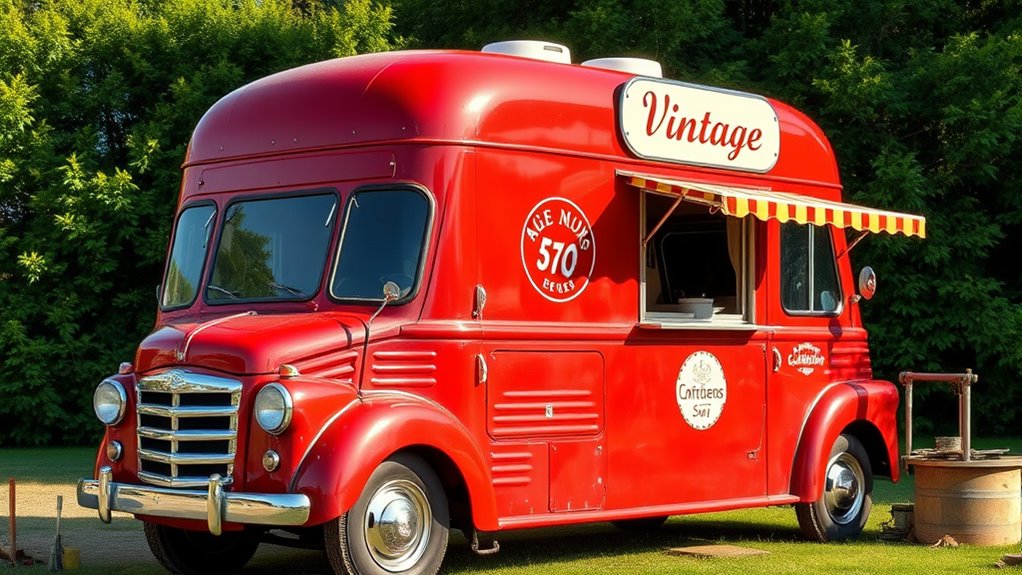
Vintage food trucks are more than just nostalgic symbols; they’re mobile pieces of culinary history that deserve preservation. These trucks tell stories of a bygone era, reflecting unique design styles, cultural influences, and the evolution of street food. Preserving these vehicles isn’t just about maintaining their appearance; it’s about safeguarding their historical significance for future generations to appreciate. When you approach a restoration, understanding the right techniques is vital to honor the truck’s original charm while making sure it remains functional and safe.
Restoration techniques are the backbone of preserving a vintage food truck’s authenticity. Start by evaluating the condition of the body, engine, and interior. Rust removal is often necessary, and techniques like sandblasting or chemical treatments can effectively eliminate corrosion without damaging the underlying metal. When repairing the body, welding and panel replacement must be done carefully, respecting the truck’s original lines and details. For the interior, sourcing period-appropriate fixtures and appliances can greatly enhance the truck’s historical value. Restoring the paintwork may involve stripping old layers and applying authentic colors and finishes that match the truck’s original look. Every step should be documented, so you maintain a record of what’s been done and preserve the truck’s historical integrity. Additionally, understanding the importance of authentic materials helps ensure the restoration stays true to the original craftsmanship.
Restoring a vintage food truck requires careful evaluation, rust removal, panel repairs, authentic interior fixtures, and thorough documentation.
Understanding the historical significance of your vintage food truck guides your restoration process. It helps you decide which elements to prioritize—whether that’s the original signage, vintage appliances, or specific design features that define the truck’s era. Researching the truck’s history, including its original manufacturer, previous owners, and the type of food it served, adds depth to your project. Incorporate period-appropriate decals, signage, and accessories to bring the truck back to its original glory. This not only boosts its aesthetic appeal but also ensures that the truck remains a tangible link to the past, resonating with enthusiasts and the community alike.
Preservation isn’t just about fixing what’s broken; it’s about respecting the vehicle’s original craftsmanship and cultural context. Using authentic materials and techniques helps maintain its value and historical accuracy. Regular maintenance, like repainting with period-specific colors and inspecting mechanical parts, ensures the truck stays in top condition. By combining meticulous restoration techniques with a deep understanding of its historical significance, you’ll create a restored vintage food truck that’s both beautiful and meaningful. In doing so, you’re not only conserving a piece of culinary history but also celebrating the craftsmanship and stories that make these trucks timeless icons.
Conclusion
By restoring vintage food trucks, you keep a piece of culinary history alive. Did you know that over 60% of restored trucks still serve as functional eateries today? Your efforts in using authentic materials and careful preservation guarantee these iconic vehicles remain symbols of nostalgia and craftsmanship. With dedication, you not only revive their charm but also preserve a rich cultural legacy, allowing future generations to enjoy and appreciate their timeless appeal.
NFL season / tailgating Picks
team gear
As an affiliate, we earn on qualifying purchases.