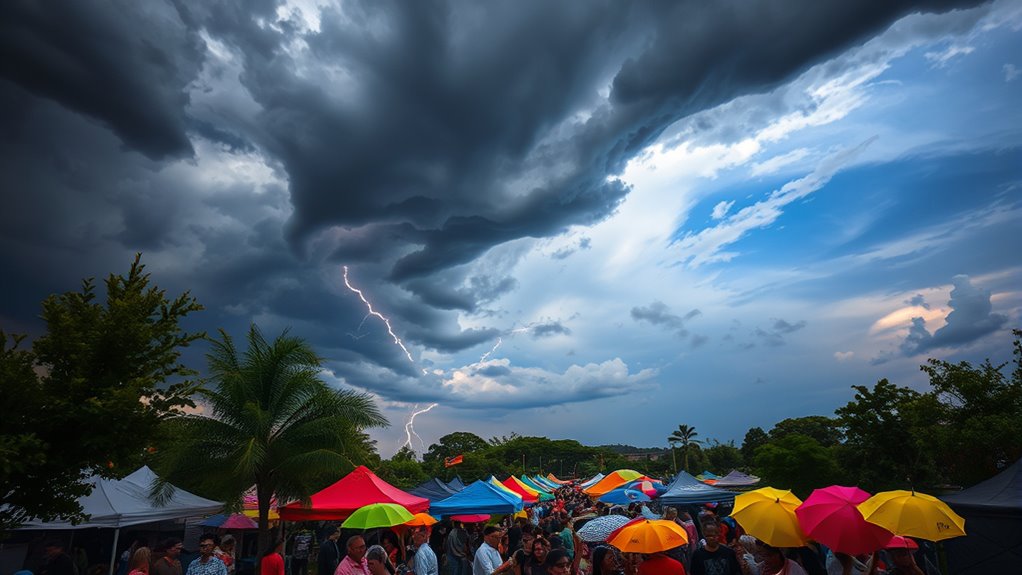

When preparing for outdoor events or operations, you need to consider weather carefully. Stay informed with reliable forecasts and evaluate how changing conditions could impact safety and activities. Develop clear emergency procedures, including evacuation plans and shelter locations, and ensure everyone understands them. Regularly update your plans based on new data and climate trends. If you keep exploring, you’ll discover essential strategies to manage severe weather risks effectively and protect your team.
Open a free Amazon Business account
Business pricing, bulk buying and tax-exempt orders.
As an affiliate, we earn on qualifying purchases.
Key Takeaways
- Continuously monitor reliable weather sources to stay informed about current conditions and forecasts.
- Develop comprehensive emergency procedures, including evacuation routes, shelter locations, and communication protocols.
- Assess potential weather impacts on infrastructure, environment, and operations, and adapt plans accordingly.
- Train staff and stakeholders regularly on weather warning recognition and emergency response actions.
- Incorporate climate change considerations into contingency planning to address increasingly severe and unpredictable weather events.

Weather can change unexpectedly, making it indispensable to plan ahead for all scenarios. Sudden shifts in temperature, storms, or heavy rainfall can profoundly impact your plans, especially if you’re outdoors or managing a large event. Recognizing how weather influences the climate impact of your activities helps you prepare better. For example, extreme weather events can strain local infrastructure, disrupt transportation, and threaten safety. To mitigate these risks, establishing clear emergency procedures is essential. These procedures should outline specific steps to take when weather conditions deteriorate rapidly, ensuring everyone’s safety and minimizing damage.
Plan ahead for weather changes to ensure safety and minimize damage during outdoor events or activities.
Your first step is to stay informed about weather forecasts and alerts. Use reliable sources like local weather stations or apps to get real-time updates. When you notice signs of changing weather, evaluate the potential impact on your environment or operation. For outdoor events, consider the possibility of thunderstorms, strong winds, or heatwaves, and how these could escalate. Understanding the climate impact of different weather patterns allows you to anticipate problems before they escalate. For instance, heavy rain could cause flooding, while high winds might damage structures or equipment. Knowing these possibilities enables you to activate your emergency procedures proactively, reducing chaos and confusion.
Developing thorough emergency procedures tailored to your specific environment is crucial. These should include evacuation plans, shelter locations, communication protocols, and safety measures. Practice these procedures regularly so everyone involved knows their role. For example, you might designate a safe zone or shelter area where people can gather if a storm hits unexpectedly. Make sure your team or community understands how to recognize weather warnings and when to implement emergency procedures. Quick response times can save lives and prevent injuries, so clarity and practice are key. Additionally, staying aware of the contrast ratio of your environment can help you optimize lighting and visibility during emergencies, especially in low-light or power outage situations.
Furthermore, consider how climate impact influences your contingency plans over time. As climate change leads to more unpredictable and severe weather events, your plans need to evolve. Regularly review and update your procedures based on new data and experiences. Invest in weather-resistant infrastructure where possible, and establish communication channels that remain functional during emergencies. By integrating climate impact awareness into your planning process, you’ll ensure your response remains effective regardless of how extreme the weather becomes.
weather alert radio with NOAA weather alerts
As an affiliate, we earn on qualifying purchases.
As an affiliate, we earn on qualifying purchases.
Frequently Asked Questions
How Are Weather Forecasts Integrated Into Emergency Response Systems?
You integrate weather forecasts into emergency response systems by using climate modeling and risk assessment tools. These tools help you predict severe weather events and evaluate potential impacts. When forecasts indicate danger, you activate contingency plans, coordinate with agencies, and inform the public promptly. This proactive approach guarantees you respond swiftly, minimizing damage and safeguarding lives while continuously updating strategies based on the latest weather data.
What Training Do Staff Receive for Weather-Related Emergencies?
When it comes to weather-related emergencies, you’re trained to prioritize staff safety and guarantee equipment preparedness. You learn how to respond swiftly to changing conditions through simulation drills and real-time updates. This training acts as your shield, helping you stay calm and effective during crises. By practicing these skills regularly, you’re better equipped to handle unpredictable weather, turning chaos into coordinated action and safeguarding everyone involved.
How Is Communication Maintained During Severe Weather Events?
During severe weather events, you maintain communication by following established protocols that prioritize clarity and timeliness. You use multiple channels, such as phone systems, emails, and messaging apps, to guarantee message delivery. Technology redundancy is essential, so you rely on backup systems like satellite phones or generators if primary communication tools fail. This approach keeps everyone informed, coordinated, and safe throughout the emergency.
Are There Special Provisions for Vulnerable Populations?
Yes, there are special provisions for vulnerable populations during severe weather events. You should engage in emergency outreach tailored to their needs, making sure they receive timely alerts and assistance. This may include personalized communication, transportation assistance, or coordinating with local agencies. By focusing on vulnerable populations, you help ensure everyone stays safe and informed, reducing risks and providing support where it’s most needed during emergencies.
How Often Are Contingency Plans Reviewed and Updated?
Think of your contingency plan as a sturdy lighthouse, guiding you through storms. You should review your contingency plan regularly, ideally every six months, to guarantee it stays reliable. Emergency plan updates are essential to adapt to new challenges. By conducting frequent contingency plan reviews, you keep your safety measures current, so you’re ready to navigate any crisis confidently, just like a lighthouse standing firm amid shifting tides.
As an affiliate, we earn on qualifying purchases.
Conclusion
By prioritizing weather considerations and having solid contingency plans, you guarantee safety and success no matter what Mother Nature throws your way. It’s tempting to think plans won’t change or that weather won’t impact you, but being prepared shows your resilience. Remember, flexibility and foresight protect you from unforeseen setbacks, turning challenges into opportunities. Embrace these strategies, and you’ll face any weather with confidence, knowing you’re ready for whatever comes next.
outdoor weatherproof communication device
As an affiliate, we earn on qualifying purchases.
As an affiliate, we earn on qualifying purchases.
weather-resistant infrastructure materials
As an affiliate, we earn on qualifying purchases.
As an affiliate, we earn on qualifying purchases.
NFL season / tailgating Picks
team gear
As an affiliate, we earn on qualifying purchases.