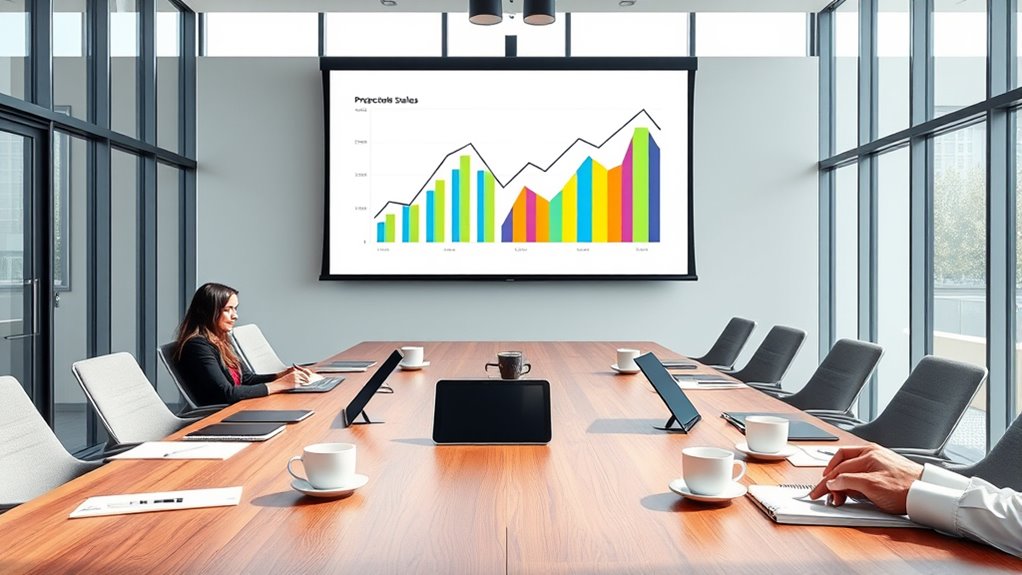

To project sales for event participation, analyze industry trends, monitor consumer behavior, and segment your target audience based on demographics and past data. Stay aware of external factors like economic shifts and seasonal changes that could impact attendance. Continuously update your projections as new information emerges to optimize your strategies. Keeping flexibility is key, so if you want to learn how to refine your estimates more effectively, keep exploring these proven techniques.
Key Takeaways
- Analyze industry trends and competitor performance to identify growth areas and adjust sales projections accordingly.
- Understand target audience motivations and behaviors through surveys and feedback to align forecasts with consumer interest.
- Use past event data and audience segmentation to recognize patterns and refine sales estimates for different customer groups.
- Consider external influences like economic conditions and seasonal factors that may impact attendance and sales.
- Continuously update forecasts with new data and insights to optimize strategies and improve accuracy over time.

Accurately projecting sales for event participation is essential for planning and maximizing your return on investment. When you understand how market trends and consumer behavior influence potential sales, you can develop more reliable forecasts and make smarter decisions about your resources. The first step is to analyze current market trends—look at industry reports, competitor performance, and recent shifts in the marketplace. If an industry is growing, consumer interest is increasing, or new technologies are emerging, these factors can boost your sales potential. Conversely, if the market faces downturns or saturation, your projections should adjust accordingly. Keeping a close eye on these trends helps you stay aligned with the broader industry landscape and anticipate changes before they impact your results.
Analyzing market trends is key to accurate event sales projections and strategic planning.
Equally important is understanding consumer behavior. Knowing what motivates your target audience, their purchasing habits, and their preferences allows you to refine your sales predictions. Are consumers increasingly seeking eco-friendly products? Do they prefer online or in-person experiences? Are they influenced by social media trends or peer recommendations? Gathering data through surveys, social listening, and customer feedback can provide valuable insights. This knowledge helps you estimate how many attendees might be interested in your offerings, how much they’re willing to spend, and what types of products or services they’ll prioritize. By aligning your sales forecasts with actual consumer behavior, you reduce the risk of overestimating or underestimating demand.
To make your projections more precise, consider segmenting your target audience based on demographics, geographic location, and psychographics. Different segments may respond differently to your event and offerings. For example, younger consumers might be more influenced by social media campaigns, while older consumers could prioritize quality and reputation. Analyzing past event data, if available, can also inform your predictions. Look at attendance figures, sales figures, and conversion rates from previous events to identify patterns and establish benchmarks. If this is your first event, research industry averages and similar events to set realistic expectations. Additionally, understanding how Hyundai Tuning upgrades and customizations impact vehicle performance can help tailor your marketing efforts to enthusiasts seeking specific enhancements.
Don’t forget to factor in external influences that could sway sales, such as economic conditions, seasonal fluctuations, or local events that could either boost or hinder attendance. Combining insights from market trends, consumer behavior, past data, and external factors will give you a thorough foundation for your sales projections. Keep in mind that forecasting isn’t a one-time task; it requires ongoing adjustment as new information emerges. By staying adaptable and continuously analyzing relevant data, you can optimize your event strategy, better allocate your resources, and ultimately increase your chances of success.
Frequently Asked Questions
How Can I Improve the Accuracy of My Sales Projections?
You can improve your sales projections by analyzing consumer behavior and tracking past event data. Use marketing strategies that target your audience more effectively, such as personalized campaigns and social media outreach. Regularly review your sales data and adjust your forecasts accordingly. Incorporate industry trends and feedback from previous events to refine your estimates. Staying adaptable and informed helps guarantee your projections become increasingly accurate over time.
What Variables Most Significantly Impact Event Sales Forecasts?
You should focus on market demand and competitor analysis, as they dramatically shape your event sales forecasts. Market demand reflects how desperately people want what you’re offering, while competitor analysis reveals what others are doing and where you can stand out. Ignoring these variables can lead to wildly inaccurate predictions, so stay vigilant. By tracking shifts in demand and studying your competitors closely, you’ll get a clearer, more reliable picture of your sales potential.
How Do Seasonal Trends Affect Event Participation Projections?
Seasonal fluctuations greatly influence your event participation projections, as they can cause significant variation in attendance. You should consider weather impacts, since adverse conditions like rain or snow can deter attendees, while pleasant weather boosts turnout. Recognizing these seasonal trends helps you adjust your marketing and logistics strategies accordingly, ensuring more accurate sales forecasts and better resource planning for each event season.
What Tools or Software Are Best for Projecting Event Sales?
You should use tools like Excel, Google Sheets, or specialized software like Eventbrite or Cvent to project event sales. These tools help analyze past event attendance data and refine marketing strategies. By leveraging their features, you can identify trends, forecast attendance, and adapt your marketing efforts accordingly. This proactive approach ensures you accurately project sales, optimize resources, and boost overall event success.
How Should I Adjust Projections for Unexpected Market Changes?
You should adjust your projections by closely monitoring market volatility and staying flexible with your forecasts. Conduct regular competitor analysis to spot any shifts that could impact demand. If you notice increased market volatility, consider creating multiple scenarios to prepare for different outcomes. Updating your data frequently helps you stay ahead, ensuring your sales projections remain accurate despite unexpected market changes.
Conclusion
Think of your sales projection as a ship setting sail. With clear charts—your data and strategies—you navigate through uncertain waters toward your destination. Trust your compass, adjust your sails as needed, and stay alert for changing winds. By staying adaptable and focused, you’ll steer your venture smoothly to success. Remember, every voyage requires preparation and flexibility—so keep your eyes on the horizon and enjoy the journey to your event’s triumph.