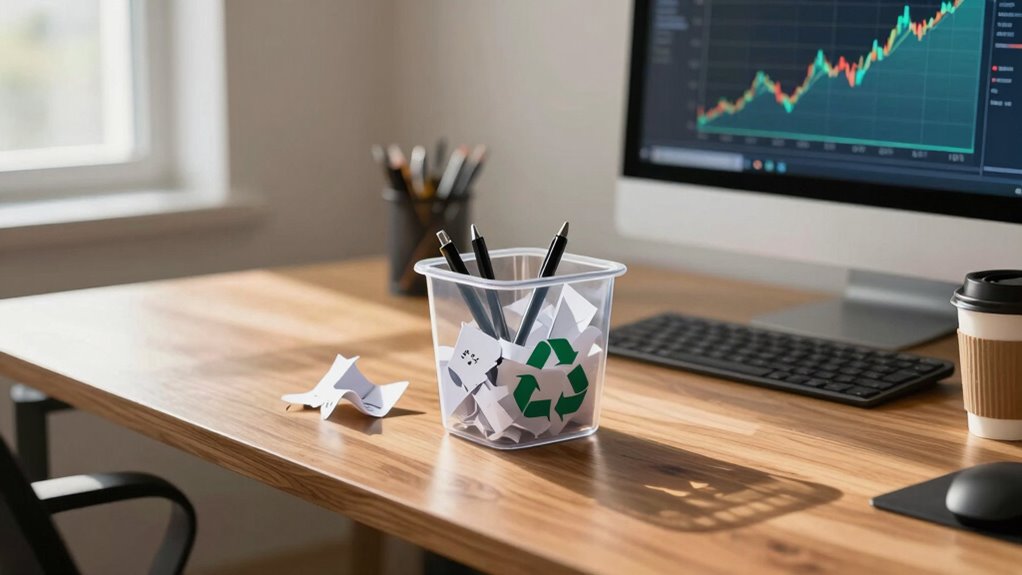

When you cut small amounts of waste, your savings add up quickly, making a noticeable impact on your monthly profit. Even tiny reductions in materials, energy, or time lower costs and improve resource efficiency, directly boosting your bottom line. These small changes often ripple through your operations, creating bigger financial gains over time. If you keep exploring, you’ll discover more ways these modest efforts can lead to significant long-term benefits for your business.

Get kitchen staples and gadgets delivered free with Prime
- Fast, free delivery on millions of items
- Prime Video, Amazon Music and more included
- Member-only deals all year
Key Takeaways
- Small waste reductions lower material, energy, and labor costs, directly impacting monthly expense totals.
- Improved resource efficiency results in immediate financial savings reflected in monthly profit statements.
- Waste reduction minimizes rework and inventory costs, boosting overall profitability each month.
- Enhanced workflows from waste reduction lead to faster operations and cost savings visible in monthly reports.
- Ongoing waste management efforts create consistent, measurable improvements in monthly profit margins.

Reducing waste might seem like a small step, but it can have a significant impact on your monthly profit. When you cut down on unnecessary materials, energy, or time, you free up resources that can be better allocated elsewhere. This improved resource allocation means you’re spending less on inputs that don’t add value, directly boosting your bottom line. Instead of pouring money into wasteful practices, you can reinvest those savings into areas like employee development or equipment upgrades, which further enhance productivity. Small adjustments in waste management ripple through your operations, leading to noticeable improvements in your financial results each month. Additionally, technology tools and efficiency strategies can help you identify and implement waste reduction measures more effectively.
Small waste reductions boost profits by reallocating resources and improving operational efficiency.
Your employees play an essential role in this process. When you actively involve them in waste reduction efforts, you foster a sense of engagement and ownership. Employees who understand how their actions impact the company’s profitability are more likely to contribute ideas for reducing waste and to follow best practices consistently. Encouraging their participation not only creates a culture of efficiency but also boosts morale. When team members see that their efforts make a real difference, they become more committed to continuous improvement, which accelerates your progress toward lower waste levels. This collective effort results in more streamlined workflows, fewer errors, and less material loss, all of which positively influence your monthly profit. Recognizing the importance of employee engagement can further motivate your team to sustain waste reduction practices.
Additionally, small waste reductions often lead to immediate financial benefits. For example, minimizing scrap or excess inventory reduces storage costs and decreases the need for costly rework. Eliminating unnecessary steps in your processes cuts down on labor hours and energy consumption. These savings add up quickly and are reflected directly in your financial statements at the end of each month. Because waste reduction isn’t a one-time fix but an ongoing process, you can continuously refine operations to achieve even greater efficiencies and profit margins over time. Implementing continuous improvement practices ensures that waste reduction remains a core part of your operational strategy. Incorporating technological tools can further streamline these efforts and provide real-time insights into waste patterns. Furthermore, leveraging data analytics allows for more precise identification of waste sources and targeted interventions.
It’s also worth noting that these small changes can enhance your company’s reputation and customer satisfaction. When you operate more sustainably, you often reduce environmental impact, which appeals to eco-conscious consumers. Improved resource management can lead to higher-quality products and faster delivery times, strengthening customer loyalty. All these benefits contribute to a healthier bottom line, making the effort to reduce waste more than worthwhile.
In the end, small waste reductions aren’t just about being environmentally responsible—they’re a strategic move that directly improves your monthly profit. By focusing on resource allocation and engaging your employees in waste reduction initiatives, you create a cycle of continuous financial and operational improvements. Over time, these efforts compound, turning small changes into significant profit gains that show up clearly on your monthly financial statements.
waste reduction tools for manufacturing
As an affiliate, we earn on qualifying purchases.
As an affiliate, we earn on qualifying purchases.
Frequently Asked Questions
How Quickly Can Small Waste Reductions Impact Monthly Profits?
Small waste reductions can impact your monthly profits almost immediately, often within weeks. By optimizing resource allocation and encouraging employee engagement, you see quick results. When your team actively participates in waste reduction efforts, they identify inefficiencies faster, leading to cost savings that reflect in your monthly profit. Regular monitoring and quick implementation amplify these benefits, making even tiny improvements profoundly boost your bottom line swiftly.
Do Small Waste Reductions Require Significant Upfront Investment?
You might think small waste reductions demand hefty upfront costs, but a thorough cost analysis often reveals minimal investment needs. In fact, many effective strategies involve reallocating existing resources or optimizing current processes rather than significant capital outlays. This approach allows you to implement waste-reduction measures swiftly, demonstrating immediate benefits in your monthly profit, all while maintaining a strategic investment mindset to maximize long-term gains.
Are Certain Types of Waste Reductions More Cost-Effective Than Others?
Some waste reductions are more cost-effective because they offer higher efficiency gains relative to their costs. You can identify these by conducting a thorough cost analysis and monitoring efficiency metrics. For example, optimizing equipment maintenance might yield quick savings, while process redesigns could require more investment. Focusing on waste reductions with the best cost-to-benefit ratio helps you maximize savings and improve overall profitability efficiently.
How Can Businesses Track Small Waste Reductions Accurately?
You can track small waste reductions accurately by prioritizing data accuracy and using effective measurement tools. Implement digital tracking systems or sensors to monitor waste levels consistently, ensuring your data is precise. Regularly review this data to identify patterns and improvements. Training staff on proper measurement techniques also helps maintain accuracy. By focusing on reliable data and tools, you’ll clearly see how small waste reductions positively impact your monthly profit.
What Are Common Obstacles to Implementing Waste Reduction Strategies?
You might face obstacles like limited employee engagement, which makes staff less likely to adopt waste-reducing habits. Additionally, technology integration can be challenging if current systems don’t support real-time data or easy tracking. Resistance to change and lack of training also hinder progress. Overcoming these barriers requires fostering a culture that values sustainability and investing in user-friendly technology that simplifies waste management efforts.
energy saving devices for small business
As an affiliate, we earn on qualifying purchases.
As an affiliate, we earn on qualifying purchases.
Conclusion
By trimming just 5% of waste each month, you could boost your profits considerably—sometimes by as much as 20%. It’s surprising how small changes add up quickly, making a noticeable difference in your bottom line. Don’t overlook tiny inefficiencies; they’re often the easiest wins. Staying vigilant and consistently reducing waste can turn modest efforts into substantial gains, ensuring your business stays competitive and profitable month after month.
As an affiliate, we earn on qualifying purchases.
employee engagement for operational efficiency
As an affiliate, we earn on qualifying purchases.
As an affiliate, we earn on qualifying purchases.
Halloween Picks
halloween
As an affiliate, we earn on qualifying purchases.