
🔍 Read the full analysis: Melanzane Alla Parmigiana: The September Eggplant Bake, Done The Southern Way on Mad Tasting

Get kitchen staples and gadgets delivered free with Prime
- Fast, free delivery on millions of items
- Prime Video, Amazon Music and more included
- Member-only deals all year
TL;DR
Melanzane alla parmigiana is a traditional Southern Italian dish featuring cooked eggplant, concentrated tomato sauce, basil, and cheese. September offers peak produce for the best flavor, with regional variations emphasizing slow cooking and layering techniques. This article explains how to make an authentic version and why seasonal ingredients matter.
September is the ideal month to prepare Melanzane alla Parmigiana using authentic Southern Italian techniques, thanks to the availability of fresh, ripe eggplants and tomatoes. This dish, rooted in Sicily, Campania, Puglia, and Calabria, emphasizes slow cooking, careful layering, and regional ingredients, making it a seasonal highlight for cooks seeking a rich, balanced bake.
Traditional Southern Italian melanzane alla parmigiana involves frying evenly sliced eggplant, reducing tomato sauce to concentrated richness, draining fresh mozzarella, and layering with basil and cheese before baking the dish. The dish is best made with firm, heavy eggplants that are harvested in September, when produce is at its peak flavor and sweetness. Chefs recommend salting eggplant slices for 30 to 45 minutes to draw out excess moisture, which prevents sogginess during frying and baking. Using ripe, fresh tomatoes or good-quality canned San Marzano enhances the sauce’s depth, while minimal cheese ensures savoriness without excess greasiness. The dish benefits from resting for 20-30 minutes after baking, allowing layers to settle and flavors to meld, resulting in a silky, cohesive slice.
Regional variations influence the choice of cheese and specific techniques. In Sicily, caciocavallo cheese may be used, while Naples favors fior di latte mozzarella. Frying methods vary from lightly coated slices to unbreaded, with the Southern tradition favoring the former to achieve tender, flavorful eggplant. The dish is not a fixed recipe but a regional, family-based tradition emphasizing restraint, balance, and seasonal ingredients.
Southern Italian seasonal kitchen
Melanzane alla Parmigiana: September’s layered masterpiece
Peak-season eggplant, concentrated tomato sauce, fragrant basil, and restrained cheese come together through patient frying, careful layering, and an essential post-bake rest.
01 / The September advantage
Flavor begins before the pan
September aligns ripe eggplants with late-season tomatoes across Southern Italy. Mature produce brings sweetness, structure, and concentration, allowing the finished bake to taste generous without becoming heavy.
Firm, heavy, glossy
Choose eggplants that feel dense for their size. Their flesh should hold its shape during frying, then soften into silky layers while baking.
Ripe and concentrated
Late-season fresh tomatoes bring natural sweetness. Good-quality canned San Marzano tomatoes provide a reliable alternative with depth and balanced acidity.
Freshness with restraint
Basil adds lift between the rich layers. Well-drained mozzarella and measured hard cheese contribute savoriness without excess moisture or grease.
The seasonal flavor profile
A qualitative view of why September produce performs so well in this dish. The goal is natural intensity rather than added richness.
02 / The Southern method
Six moves toward a cohesive slice
The technique manages moisture at every stage. Even slicing, salting, frying, reducing, draining, and resting all serve the same purpose: tender layers that remain distinct when cut.
Slice
Cut the eggplant evenly so every piece cooks at the same pace.
Salt
Wait 30–45 minutes to draw out moisture, then dry the slices thoroughly.
Fry
Cook until tender and flavorful, using a light coating or no breading.
Reduce
Simmer the tomato sauce until concentrated rather than watery.
Layer
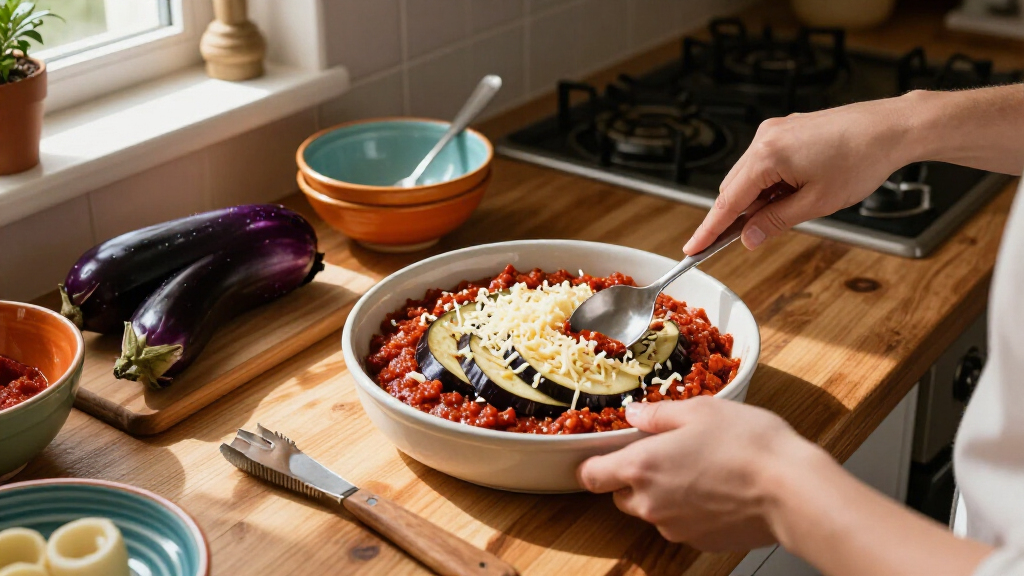
Alternate eggplant, sauce, basil, and modest amounts of cheese.
Rest
After baking, wait 20–30 minutes before cutting and serving.
Salt the eggplant, concentrate the sauce, and drain fresh mozzarella. Each action protects the final texture.
More cheese does not create more balance. Use enough for savoriness while keeping eggplant and tomato at the center.
Resting allows steam to settle, flavors to merge, and the layers to become cohesive without turning dense.
03 / Regional expressions
One tradition, many family tables
Melanzane alla Parmigiana is closely associated with Sicily, Campania, Puglia, and Calabria, yet no single origin story or fixed recipe commands universal agreement.
| Region | Cheese direction | Eggplant treatment | Shared Southern principle |
|---|---|---|---|
| Sicily | ✓Caciocavallo may add a firm, savory character. | ~Fried slices may be lightly coated or left unbreaded. | Deep flavor built from local produce and patient cooking. |
| Campania | ✓Fior di latte offers a fresh, delicate melt. | ~Frying style varies between households. | Concentrated tomato sauce and carefully drained cheese. |
| Puglia | ✓Local cheeses shape the household version. | ~Layering reflects family preference and available produce. | Seasonality, restraint, and a firm finished structure. |
| Calabria | ✓Regional pantry choices guide the cheese profile. | ~Tender fried eggplant remains the essential base. | Balanced richness rather than excessive heaviness. |
The regional distinctions are tendencies, not strict borders. Household tradition often matters as much as geography.
04 / From harvest to plate
The traceability of flavor
The finished dish can be read as a chain of connected decisions. Seasonal quality supports technique; technique creates balance; balance preserves the character of the region and household.
Ripe September produce
Even slices and salting
Frying and sauce reduction
Eggplant, tomato, basil, cheese
Settled, cohesive layers
The authenticity test
Does every layer still taste like itself?
A successful parmigiana does not bury its ingredients. Eggplant remains silky, tomato stays vivid, basil supplies freshness, and cheese binds the whole without dominating it.
05 / Quick answers
What home cooks need to know
The dish rewards attention more than complexity. Manage water, preserve the produce, and allow enough time for each stage to do its work.
Why make it in September?
Eggplants and tomatoes are typically at their ripest and sweetest, bringing stronger flavor and better texture to every layer.
Should the eggplant be salted?
Yes. Salting for 30–45 minutes draws out excess moisture and helps prevent a soggy result during frying and baking.
Which cheese belongs in the dish?
Well-drained fior di latte is a Southern favorite, while caciocavallo and other regional cheeses offer equally meaningful variations.
Why wait before serving?
A 20–30 minute rest allows the layers to settle and the flavors to meld, producing a more cohesive and satisfying slice.
Is there one definitive Southern recipe?
No. Cheese, frying, and layering vary across Sicily, Campania, Puglia, Calabria, and individual families. The enduring constants are seasonal ingredients, careful cooking, and balanced richness.
Why September Elevates Eggplant and Tomato Flavor
September’s produce offers peak flavor and texture for making melanzane alla parmigiana. The combination of mature eggplants and late-season tomatoes results in a richer, more balanced dish. This seasonal timing aligns with regional harvest cycles, making the dish a celebration of local agriculture. For home cooks and chefs, using fresh, ripe ingredients in September enhances the dish’s natural sweetness and depth, elevating it beyond everyday comfort food to a regional culinary showcase.
As an affiliate, we earn on qualifying purchases.
Regional Roots and Variations of the Classic Dish
Melanzane alla parmigiana has no single definitive origin but is closely associated with Southern Italy, especially Sicily, Campania, Puglia, and Calabria. Its name and method reflect regional pantry staples rather than a specific birthplace. The dish likely evolved from Arab-influenced agriculture and local traditions, emphasizing cooked eggplant, concentrated tomato sauce, and regional cheeses. Variations include different cheeses (fior di latte, caciocavallo), frying techniques (breaded or unbreaded), and layering styles. Historically, the dish has been a family staple, with each region and household adapting it to local ingredients and preferences.
As an affiliate, we earn on qualifying purchases.
Unresolved Questions About Regional Variations and Origins
While the dish’s regional roots are well documented, there is no definitive record pinpointing its exact origin or the primary region responsible for its name. Variations in cheese, frying methods, and layering suggest a broad, evolving tradition rather than a single, fixed recipe. Additionally, the influence of modern ingredients and techniques continues to shape how the dish is prepared today, making some aspects of authenticity and regional identity still open to interpretation.
As an affiliate, we earn on qualifying purchases.
Future of the Dish in Seasonal and Regional Contexts
As September’s harvest continues, cooks and chefs are likely to experiment with regional cheeses, heirloom eggplants, and updated techniques to refine their versions of melanzane alla parmigiana. Food writers and culinary historians may further explore its origins and regional variations, while home cooks are encouraged to use seasonal ingredients for the best flavor. The dish’s adaptability suggests it will remain a regional favorite, with ongoing evolution reflecting local tastes and available produce.
As an affiliate, we earn on qualifying purchases.
Key Questions
What makes September the best month for making melanzane alla parmigiana?
September offers peak flavor and texture for eggplants and tomatoes, which are at their ripest and sweetest, enhancing the dish’s natural richness and balance.
Should I salt eggplant slices before frying?
Yes, salting for 30-45 minutes helps draw out excess moisture, preventing sogginess and ensuring a tender, flavorful result.
Can I use fresh mozzarella or should I opt for other cheeses?
Fresh mozzarella, especially fior di latte, is traditional in Southern Italy, but regional cheeses like caciocavallo also work well. The choice depends on availability and regional preference.
How long should I rest the baked parmigiana before serving?
Rest the dish for 20-30 minutes after baking to allow the layers to settle and flavors to meld, resulting in a more cohesive slice.
Are there regional differences in how the dish is prepared?
Yes, variations include the choice of cheese, frying technique, and layering style, reflecting local ingredients and family traditions across Southern Italy.
Source: Mad Tasting
Fall Picks
fall essentials
As an affiliate, we earn on qualifying purchases.