
🔍 Read the full analysis: Risotto Al Nero Di Seppia: Venice's Dramatic Black Risotto At Home on Mad Tasting
TL;DR
Venice’s famous Risotto al Nero di Seppia, a black rice dish with cuttlefish ink, can be prepared at home with careful ingredient selection and controlled cooking. This article details the process, ingredients, and significance of this dish, including how to make Risotto al Nero di Seppia at home.
Venetian culinary experts have outlined a detailed method for preparing Risotto al Nero di Seppia at home, emphasizing the importance of ingredient quality and precise technique. This traditional Venetian dish, known for its striking black color and subtle flavors, is now accessible to home cooks seeking an authentic experience.
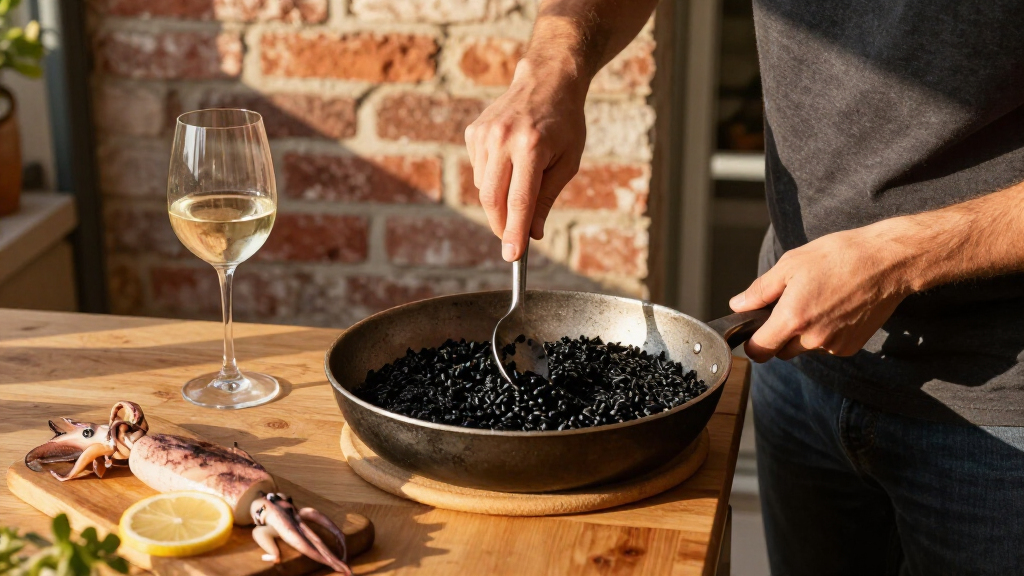
The dish involves cooking 320 grams of Carnaroli or Vialone Nano rice with tender, cleaned cuttlefish, using approximately 8–16 grams of food-grade squid ink, and a mild seafood stock. For a detailed guide, see the original analysis. The process takes about 45 minutes, involving gentle braising of the seafood, gradual addition of hot stock, and careful control of texture to achieve the characteristic all’onda or wave-like consistency. The ink imparts a bold black color and marine flavor, but the overall taste remains savory, lightly briny, and subtly sweet, avoiding an overly fishy profile.
Experts recommend using high-quality ingredients: Carnaroli rice for its firmness, fresh or frozen cuttlefish, and mild stock that allows the ink’s flavor to shine. The preparation involves softening shallots, tenderizing the seafood with wine and stock, then gradually toasting and stirring the rice until it reaches the desired creamy, flowing texture. The final step includes seasoning with lemon zest and parsley for brightness, and serving in a glossy black pool that visually contrasts with green and gold garnishes.
This method emphasizes control over cooking stages, including timing the seafood’s braising, monitoring stock addition, and tasting frequently to prevent overcooking or bitterness. The dish is traditionally served in Venetian bacari, but the guide shows how home cooks can replicate the delicate balance of flavors and textures.
Venetian Cultural and Culinary Significance of Risotto al Nero di Seppia
This dish is a culinary symbol of Venice, reflecting its lagoon environment and resourcefulness in utilizing every part of the catch. The use of cuttlefish ink, a byproduct of seafood, embodies sustainable practices historically rooted in Venetian fishing traditions. Its striking appearance and subtle flavor profile make it a favorite in Venetian homes and restaurants alike, representing a blend of practicality and elegance.
For home cooks, mastering Risotto al Nero di Seppia offers a connection to Venetian heritage, as well as an opportunity to explore nuanced seafood flavors without relying on overly complex equipment or ingredients. Its popularity extends beyond Venice, influencing Adriatic coastal cuisines in Croatia and Slovenia, where similar black rice dishes appear.
Understanding the dish’s cultural roots enhances appreciation and encourages preservation of traditional cooking methods, making it more than just a recipe but a piece of Venetian identity.
As an affiliate, we earn on qualifying purchases.
Historical Roots and Modern Revival of Venetian Ink Risotto
Risotto al Nero di Seppia has long been a staple of Venetian cuisine, originating from the practical cooking practices of fishermen who used every part of their catch, especially the ink sac of cuttlefish. Historically, the dish grew from necessity, transforming into a delicacy that celebrates local ingredients and the lagoon’s marine environment.
In recent years, the dish has experienced a resurgence, driven by chefs and food enthusiasts eager to explore authentic Venetian flavors. Modern recipes emphasize balance—using mild stock, controlled ink quantities, and precise cooking techniques—to recreate the dish’s traditional subtlety. The availability of high-quality seafood and packaged ink has made it more accessible for home cooks, fostering a renewed appreciation for Venice’s culinary heritage.
Despite its long history, the dish’s core principles remain unchanged: respect for ingredients, gentle cooking, and an eye for presentation. This continuity underscores its cultural importance and ongoing relevance in contemporary Venetian cuisine.
As an affiliate, we earn on qualifying purchases.
Current Challenges and Unknowns in Home Preparation
While the guide provides a detailed method, some uncertainties remain. The precise impact of different seafood stocks, regional variations in ink quality, and individual preferences for texture can influence results. Additionally, the availability of high-quality cuttlefish and ink packets may vary by location, potentially affecting authenticity. It is also unclear how variations in cooking equipment or ambient kitchen conditions might alter the final outcome.
Further testing and feedback from home cooks are needed to refine the process and address these variables.
As an affiliate, we earn on qualifying purchases.
Next Steps for Home Cooks and Venetian Cuisine Enthusiasts
For those interested in recreating Risotto al Nero di Seppia, the next step involves sourcing quality ingredients and practicing the outlined steps to perfect texture and flavor. Chefs and home cooks are encouraged to experiment with different seafood stocks and ink quantities to suit personal taste.
Additionally, culinary workshops or online tutorials may emerge, offering more detailed guidance and community feedback. As interest grows, more authentic ingredient sources and specialized products could become available for home use, further democratizing Venice’s iconic dish.
Ultimately, the continued sharing of techniques and stories will help preserve and celebrate this distinctive Venetian culinary tradition.
As an affiliate, we earn on qualifying purchases.
Key Questions
Can I make Risotto al Nero di Seppia without seafood stock?
While seafood stock enhances the dish’s marine flavor, you can substitute with a mild vegetable or chicken stock if necessary. However, the authentic taste relies on the seafood-based stock for the best results.
How much ink should I add for a balanced flavor and color?
Experts recommend starting with 8 grams of ink, which provides a rich black color and subtle flavor. You can add more carefully, but it’s difficult to reduce once incorporated, so begin conservatively.
Is it necessary to use Carnaroli rice?
Carnaroli rice is preferred for its firmness and starch release, which helps achieve the characteristic creamy texture. Arborio or Vialone Nano can be used as alternatives if Carnaroli is unavailable.
Can I prepare this dish ahead of time?
Risotto is best served immediately for optimal texture and flavor. Reheating can cause it to become starchy or soggy, but if necessary, gently warm and stir in a little hot stock to restore creaminess.
Are there vegetarian or vegan versions of Risotto al Nero di Seppia?
Traditional Risotto al Nero di Seppia relies on seafood and ink, but plant-based substitutes like mushroom broth and black food coloring can mimic the appearance. However, these versions will lack the authentic seafood flavor.
Source: Mad Tasting