
TL;DR

Get kitchen staples and gadgets delivered free with Prime
- Fast, free delivery on millions of items
- Prime Video, Amazon Music and more included
- Member-only deals all year
A Good Housekeeping report lists chia pudding, cottage cheese, Greek yogurt, whole grains, protein shakes, bananas, eggs, berries and oats as nutritious breakfast options. The recommendations describe nutrients and serving ideas, but do not establish that one breakfast is best for everyone or that these foods produce specific health outcomes.
Good Housekeeping has published a roundup of eight breakfast foods recommended for their nutritional qualities, including protein-rich eggs and yogurt, fiber-containing oats and berries, and whole grains. The report offers meal ideas and some nutrient figures, but it does not identify a single best breakfast or provide evidence that the listed foods guarantee particular health outcomes.
The recommendations span foods that can be combined or eaten on their own: chia pudding, cottage cheese, Greek yogurt, whole grains, protein shakes, bananas, eggs, berries and oats. The article points to protein and fiber as useful features of several choices, while also noting nutrients such as calcium, vitamin B12, potassium and vitamin C.
Some figures in the report are tied to specific portions. It says half a cup of low-fat cottage cheese contains 14 grams of protein, while a cup of Greek yogurt contains 24 grams. Two large eggs provide about 16 grams of protein in total, using the report’s estimate of about eight grams per egg. A cup of strawberries, it says, has three grams of fiber and provides daily vitamin C needs.
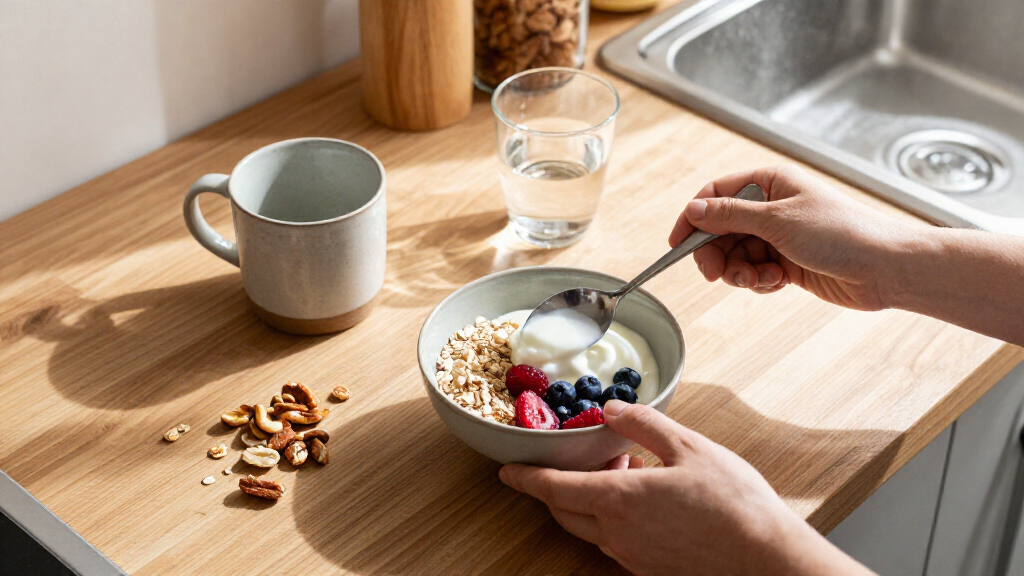
The article suggests practical combinations: plain Greek yogurt with fruit and nuts, whole-grain toast with eggs, or oats topped with banana and walnuts. For chia pudding, it gives a recipe using one-quarter cup of chia seeds and one cup of milk, refrigerated overnight. These are serving suggestions, not a prescribed meal plan.
Building a More Filling Breakfast
The roundup may help readers compare familiar breakfast staples by the nutrients and preparation options described. Pairing foods can make a meal more varied: whole grains and fruit add fiber, while eggs, dairy foods or a suitable protein shake can contribute protein. The article’s examples also show that breakfast does not have to take one form; it can be prepared ahead, assembled from pantry staples or blended.
Those details are practical rather than proof of a medical effect. The source describes potential benefits associated with particular nutrients, but it does not report a new clinical study, compare outcomes among breakfasts or account for individual health needs, allergies and dietary restrictions. Readers should treat the list as a set of options, not a universal prescription.
chia seeds for overnight chia pudding
As an affiliate, we earn on qualifying purchases.
As an affiliate, we earn on qualifying purchases.
What the Food Guide Recommends
The source is a Good Housekeeping nutrition article that presents foods and preparation ideas, rather than a formal dietary guideline. Its recommendations include choosing bread labeled 100% whole grain or whole wheat and selecting plain yogurt when limiting added sugar. For protein powders, Amy Fischer, identified in the article as a registered dietitian, advises looking for a complete protein and third-party verification.
The supplied material gives no publication date, study design or detailed citations for the broader health statements. It also begins a section about oats but cuts off before providing its full description. No specific oat nutrition figures or further advice can be confirmed from the material provided.
“Protein shakes are a great way to get in veggies with breakfast.”
— Amy Fischer, M.S., R.D., C.D.N., as quoted by Good Housekeeping
old fashioned rolled oats whole grain breakfast
As an affiliate, we earn on qualifying purchases.
As an affiliate, we earn on qualifying purchases.
Limits of the Breakfast Advice
The source does not provide enough detail to independently evaluate several broad health claims, including statements about inflammation, mood, cholesterol and circulation. It does not specify the studies behind those claims, the populations studied or the size of any reported effects. The nutrient figures are presented as general estimates and may vary by product, serving size and preparation.
It is also unclear from the supplied text how the article defines “healthy” across different needs, or whether the foods were compared using a consistent standard. The oats section is incomplete, and the source material does not include a publication date. The recommendations should not be read as individualized medical or dietary advice.
plain Greek yogurt high protein breakfast
As an affiliate, we earn on qualifying purchases.
As an affiliate, we earn on qualifying purchases.
How Readers Can Use the List
Readers can use the report’s suggestions to assemble breakfasts around foods they enjoy, checking labels and serving sizes where relevant. The article specifically recommends plain yogurt to limit added sugar and third-party-tested, complete-protein powders when choosing a shake ingredient. People with medical dietary needs or food allergies may need advice tailored to them.
No follow-up study, formal guideline or next reporting milestone is identified in the supplied source. The immediate next step for readers seeking more detail is to consult the full Good Housekeeping article and its linked recipe or product guidance; the claims and figures here remain limited to the material provided.
high protein breakfast shake powder
As an affiliate, we earn on qualifying purchases.
As an affiliate, we earn on qualifying purchases.
Key Questions
Which breakfast foods does the report recommend?
It lists chia pudding, cottage cheese, Greek yogurt, whole grains, protein shakes, bananas, eggs, berries and oats. The supplied source text cuts off during its oats section.
Does the article name one best breakfast?
No. It offers several options and combinations, but does not rank them or identify one choice as best for everyone.
How much protein does the report attribute to cottage cheese and Greek yogurt?
It gives 14 grams in half a cup of low-fat cottage cheese and 24 grams in a cup of Greek yogurt. Actual amounts can vary by product.
What does the source say about choosing protein powder?
Amy Fischer recommends a powder that is a complete protein and third-party verified. She also advises avoiding added sweeteners, fillers and stabilizers.
Are the health benefits described guaranteed?
No. The roundup discusses nutrients and potential benefits, but the supplied material does not establish guaranteed outcomes or provide enough study detail to assess every broader health claim.
Source: rss
NFL season / tailgating Picks
team gear
As an affiliate, we earn on qualifying purchases.