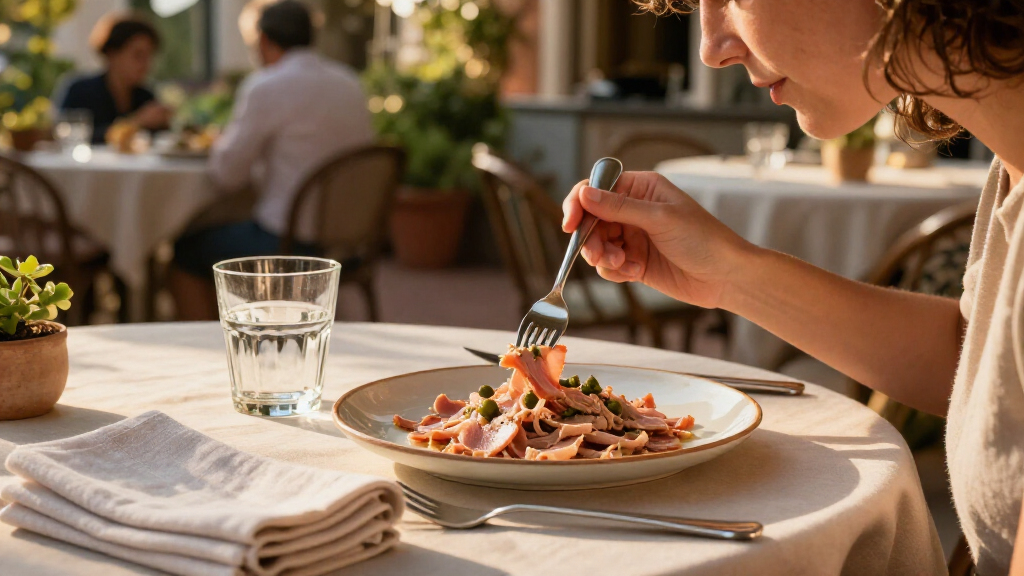

🔍 Read the full analysis: Vitello Tonnato: The Cold Veal Classic That Confuses Everyone At First on Mad Tasting

Get kitchen staples and gadgets delivered free with Prime
- Fast, free delivery on millions of items
- Prime Video, Amazon Music and more included
- Member-only deals all year
TL;DR
Vitello tonnato is a chilled Italian antipasto associated with Piedmont, made from thinly sliced cooked veal covered with a creamy tuna sauce. Its combination can seem unexpected, but the mild meat and savory, tangy sauce are designed to balance each other. The dish is prepared ahead and served cold, with safe cooking and refrigeration needed.
Vitello tonnato, a chilled antipasto associated with Italy’s Piedmont region, pairs thinly sliced cooked veal with a creamy sauce made from tuna, anchovies and capers. A Mad Tasting guide describes how the dish is prepared and why the combination can work, addressing a familiar point of confusion for diners encountering cold meat with fish-based sauce for the first time.
The dish’s name links its central ingredients: vitello means veal and tonnato refers to tuna. Cooks typically poach a lean cut gently, cool it in its cooking liquid, then slice it thin. The sauce is made by blending tuna with anchovies, capers, lemon and olive oil; some versions use egg yolk or mayonnaise for a richer, creamier texture. The veal and sauce are assembled ahead of serving and kept chilled.
The components are intended to balance one another. The veal’s mild flavor and fine texture provide a restrained base, while tuna contributes savory depth and anchovies intensify it. Capers and lemon bring salt and acidity that can offset the oil and richness. The guide recommends starting with modest amounts of the more assertive ingredients and adjusting to taste so the sauce does not overwhelm the meat.
For its home method, the source suggests gently simmering a roughly 2-pound veal roast with aromatics, then cooling it fully in the liquid before slicing. It gives a cooking estimate of about one to one and a half hours but says to check doneness rather than rely on the clock alone. After sauce is spread over the slices, the platter is covered and refrigerated for at least two hours, or ideally overnight. The source does not specify a safe internal cooking temperature; cooks should use current food-safety guidance and a thermometer rather than treat the time estimate as proof of doneness.
Vitello Tonnato: The Cold Veal Classic That Confuses Everyone At First
Thin slices of gently cooked veal meet a creamy tuna sauce. The pairing may sound surprising, but mild meat, savory depth, bright acidity and careful chilling are what make this Piedmont-associated classic work.
“The sauce tastes rounded rather than simply fishy.”Mad Tasting guide
A classic built on contrast
“Vitello” means veal; “tonnato” refers to tuna. The name points straight to the defining combination: cold, thinly sliced meat under a sauce that is blended smooth and seasoned to balance its richness.
Gently poached veal
A lean cut is simmered with aromatics, cooled in its cooking liquid, then sliced thin for a tender, restrained foundation.
Tuna, capers & lemon
Tuna, anchovies, capers, lemon and olive oil are blended together. Egg yolk or mayonnaise may add extra creaminess.
Assembled ahead
Spread a modest layer of sauce over the veal, cover and refrigerate. Keep the platter chilled until serving.
Balance is the whole idea
The tuna is blended into a sauce, so its savory flavor is spread over delicate veal instead of arriving as a separate piece of fish. Anchovies deepen that savoriness, while capers and lemon add salt and acidity.
Start with modest amounts of the more assertive ingredients, taste as you blend, and keep the veal visible beneath a light coating. The sauce should complement the meat instead of overwhelming it.
From quiet simmer to chilled platter
The guide’s home method estimates about one to one and a half hours for a roughly two-pound roast. Check doneness with a thermometer and current food-safety guidance; time alone does not establish safety.
Poach gently
Simmer the veal with aromatics. Keep the liquid at a quiet simmer, not a rolling boil.
Cool, then slice
Cool the cooked veal in its liquid, then cut it into thin slices once fully cool.
Blend the sauce
Blend tuna, anchovies, capers, lemon and olive oil; taste and adjust gradually.
Cover & chill
Assemble, cover and refrigerate for at least two hours, or ideally overnight.
The supplied guide gives no safe internal temperature or exact leftover limit. Use current local food-safety advice and a thermometer. Keep meat and sauce refrigerated, return the platter to the refrigerator between servings, and follow reliable guidance for leftovers.
What the guide says—and leaves open
Flexible by design
The guide associates the dish with Piedmont and describes a traditional style, but it does not establish one definitive recipe, precise origin date or fixed sauce proportions.
- Core sauce: tuna, anchovies, capers, lemon and olive oil
- Optional additions: egg yolk or mayonnaise for a richer texture
- Adjust seasoning gradually; avoid a heavy layer of sauce
Serve with clear labels
The sauce contains fish from tuna and usually anchovies. Some versions contain egg through yolk or mayonnaise. Check ingredients and product labels, and disclose them to guests with allergies.
Let the chilled platter stand only briefly before serving. Garnish with capers, lemon or parsley if desired, and keep it refrigerated between servings.
Questions diners often ask
What is Vitello Tonnato?
A chilled Italian antipasto of thinly sliced cooked veal covered with a creamy tuna-based sauce, often seasoned with anchovies, capers and lemon.
Can I make it ahead?
Yes. The guide recommends chilling the assembled dish for at least two hours, with an overnight rest as an option. Keep it refrigerated.
Why serve tuna with veal?
Mild veal gives the sauce a delicate base; tuna and anchovies add savory depth, while lemon and capers bring acidity and salt.
Does the guide give a safe cooking temperature?
No. It offers an approximate cooking time but no internal-temperature target. Use a thermometer and current food-safety guidance.
Why the Veal and Tuna Pairing Works
The dish matters less as a new development than as an example of how texture, temperature and seasoning can change the way familiar ingredients are perceived. Tuna is blended into a sauce rather than served as a separate piece of fish, and its savory flavor is spread across delicate veal. That helps explain why the pairing can feel more cohesive on the plate than it sounds in a short description.
For home cooks and hosts, the preparation also offers a practical advantage: much of the work happens before guests arrive. The veal can be cooked and cooled, the sauce blended, and the platter assembled in advance. The tradeoff is that the dish requires refrigerator space and attention to storage. Because both cooked meat and a sauce containing fish are perishable, the platter should remain refrigerated until serving and should not sit at room temperature for an extended period.
It is also a reminder that “creamy” does not necessarily mean dairy-based: the sauce’s texture comes from blended ingredients and, in some versions, egg yolk or mayonnaise. Those additions can affect both richness and food-safety handling. The dish contains fish, and versions made with egg or mayonnaise may contain egg; diners should check ingredients and ask about preparation where allergies are a concern.
As an affiliate, we earn on qualifying purchases.
Piedmont’s Chilled Antipasto
The supplied guide identifies vitello tonnato as a classic antipasto associated with Piedmont. It describes the traditional approach as gently poached veal served cold beneath tuna sauce. The combination is the defining feature, not a garnish added to an otherwise conventional cold-meat dish.
The source presents the recipe as a straightforward home preparation, while noting that cooks vary the sauce. Tuna, anchovies, capers, lemon and olive oil form its core in the guide’s version; egg yolk or mayonnaise are optional ways to make it richer. These differences mean there is no single texture or exact seasoning level established by the source. Its practical advice is to taste as the sauce is blended and keep the veal visible rather than covering it with an overly heavy layer.
“The dish’s name joins “vitello” (veal) and “tonnato” (tuna-style), so the pairing is the point, not a garnish or an accidental combination.”
— Mad Tasting guide
As an affiliate, we earn on qualifying purchases.
Recipe Variations and Safety Details
The source does not establish a single definitive recipe, a precise historical timeline or a specific origin date. It associates the dish with Piedmont and outlines a traditional style, but sauce ingredients and proportions can vary. It also provides no measured internal temperature for the veal, no exact refrigeration limit for leftovers and no detailed guidance on how long the assembled dish may safely remain out while serving. The stated cooking duration is an estimate, not a food-safety endpoint.
Claims that the dish is especially suited to particular occasions, such as summer gatherings or brunch, are serving suggestions rather than documented facts about its history or popularity. The source likewise offers a flavor explanation, not a reported survey of how diners respond. Readers should treat the description of the pairing as culinary interpretation and consult current food-safety advice for cooking and storage.
As an affiliate, we earn on qualifying purchases.
Preparing and Serving It Safely
The source describes no scheduled announcement or further reporting; its next step for readers is practical preparation. Cook the veal gently and verify it is safely done, cool it promptly, and keep both meat and sauce refrigerated during preparation and storage. Assemble the platter ahead if useful, but return it to the refrigerator between servings rather than leaving it out for an extended period.
Before serving, let the chilled platter stand only briefly so the flavors are not muted by extreme cold, then garnish with capers, lemon or parsley if desired. Check the sauce’s seasoning and label or disclose fish and any egg ingredients for guests. For leftovers, use reliable local food-safety guidance on refrigeration and discard timing; the supplied guide does not give a specific limit.
refrigeration food storage containers
As an affiliate, we earn on qualifying purchases.
As an affiliate, we earn on qualifying purchases.
Key Questions
What is vitello tonnato?
It is a chilled Italian antipasto of thinly sliced cooked veal covered with a creamy tuna-based sauce, often seasoned with anchovies, capers and lemon.
Why is tuna sauce served with veal?
The veal is mild and lean, while the blended tuna and anchovies provide savory depth. Lemon and capers add acidity and salt to balance the sauce’s richness.
Can vitello tonnato be made ahead?
Yes. The guide recommends chilling the assembled dish for at least two hours, with overnight resting as an option. Keep it refrigerated, and do not treat advance preparation as a reason to leave it at room temperature.
What allergens may it contain?
The sauce contains fish from tuna and usually anchovies. Some recipes add egg yolk or mayonnaise, which may contain egg; check the recipe and product labels before serving people with allergies.
Does the source give a safe cooking temperature for the veal?
No. It offers an approximate cooking time but no internal-temperature target. Use a food thermometer and current food-safety guidance to determine safe doneness.
Source: Mad Tasting
Fall Picks
fall essentials
As an affiliate, we earn on qualifying purchases.