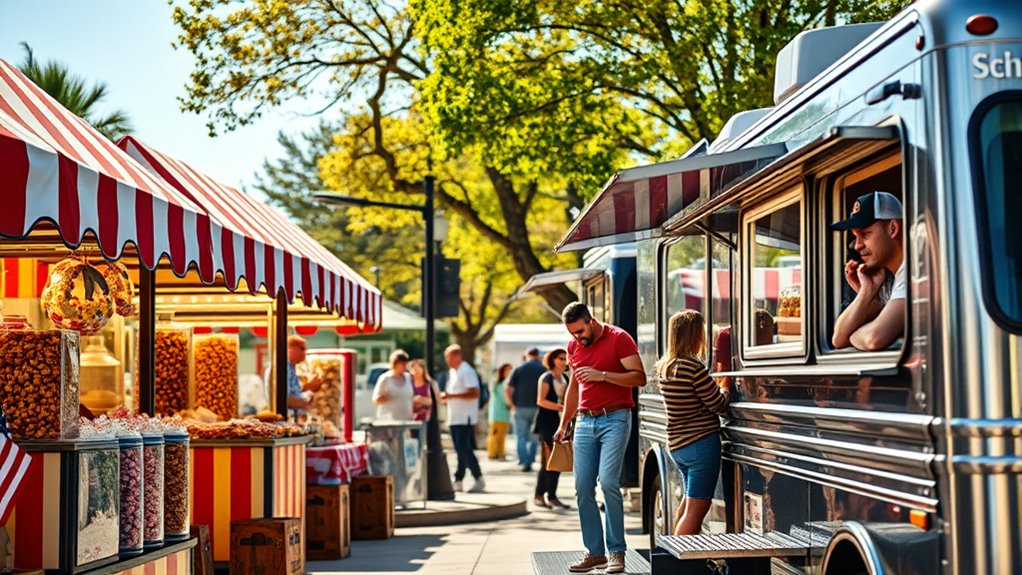

When deciding between snack stands and food trucks, you need to think about your goals, budget, and target customers. Snack stands offer simplicity and quick turnover in busy areas, but food trucks can reach more diverse locations and offer a wider menu. Both options have their advantages and challenges, making it important to understand what aligns best with your plans for growth and profitability. The decision might be more complex than it first appears.

Get kitchen staples and gadgets delivered free with Prime
- Fast, free delivery on millions of items
- Prime Video, Amazon Music and more included
- Member-only deals all year
Key Takeaways
- Snack stands require lower initial investment and are ideal for testing markets with steady foot traffic.
- Food trucks involve higher upfront costs but offer greater flexibility and revenue potential across multiple locations.
- Snack stands have simpler operations with limited menu options, while food trucks handle larger crowds and diverse offerings.
- Food trucks can generate higher earnings through event participation and route marketing, despite higher operational costs.
- The choice depends on budget, scalability goals, and desired customer reach—snack stands for stability, food trucks for growth.
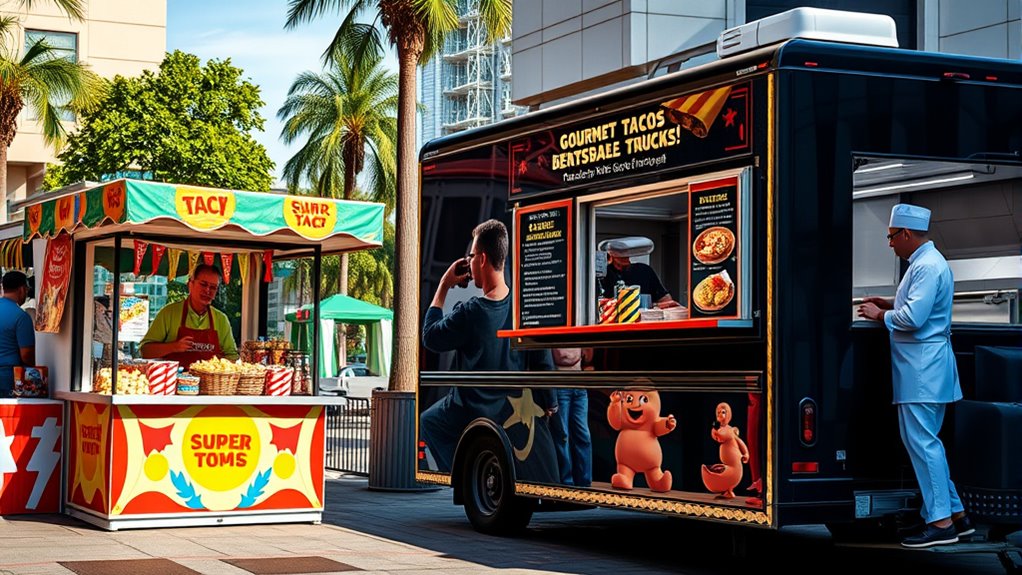
When choosing between snack stands and food trucks, it’s important to contemplate how each option fits your needs and preferences. Both are forms of mobile vending, but they operate quite differently and come with distinct revenue models. Snack stands are typically small, stationary fixtures set up in busy areas, like fairs, markets, or sidewalk spots. They often require a lower initial investment, making them an attractive option if you want to start small or test the waters. Your revenue model here largely depends on volume and quick turnover—selling snacks, drinks, or small treats at a steady pace. Since stands are stationary, your income depends on foot traffic and the location’s popularity. They usually have lower operating costs, but your earning potential might be limited by space and customer capacity. Additionally, snack stands may face restrictions based on health and safety regulations, which can impact your operation and revenue potential.
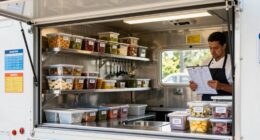
On the other hand, food trucks offer a more adaptable mobile vending experience. You can travel to different locations, events, or festivals, opening up a broader customer base. Their revenue models are often more dynamic, combining sales from diverse locations and times. With a food truck, you can adjust your menu based on demand, which allows for higher profit margins on specialty or unique items. While the initial investment is higher due to the vehicle, equipment, and licensing, the potential for increased revenue is significant. Food trucks also usually operate with a more exhaustive marketing strategy—promoting their routes, events, and menu specials—which helps attract repeat customers and expand your reach.
Additionally, the operational aspects influence your revenue potential. Snack stands often require less staff and are easier to manage day-to-day, but the limited space can restrict menu options and sales volume. Food trucks, meanwhile, need more personnel and maintenance, but they can serve larger crowds and offer a wider variety of foods, which can boost sales substantially. Your choice should align with your capacity to handle logistics, your financial goals, and how much flexibility you want in where and when you sell. If you prefer a low-cost, stable setup, a snack stand might be better. If you aim for greater reach, higher earnings, and don’t mind the complexity, a food truck offers a more scalable business model.
Ultimately, your decision hinges on your budget, goals, and the kind of customer experience you want to create. Both options leverage mobile vending but cater to different operational styles and revenue possibilities.
Considering the popularity of ice cream and other treats, adding a frozen dessert option could significantly enhance your sales strategy.
Conclusion
Ultimately, choosing between a snack stand and a food truck is like picking the right key for your business melody. If you want quick wins and steady foot traffic, a snack stand might be your best bet. But if you’re ready to chase bigger dreams and diversify, a food truck can take you farther down the road. Trust your goals, align with your resources, and let your passion be the guiding star on this exciting journey.
NFL season / tailgating Picks
team gear
As an affiliate, we earn on qualifying purchases.