
Before expanding your catering, you should forecast menu pricing strategies that adapt for different group sizes and event types while covering costs and ensuring profitability. Assess staffing needs, including additional or specialized team members, to guarantee service quality. Evaluate equipment capacity to handle larger orders and plan transportation and storage logistics for smooth operations. Understanding your target clients and market trends will help you set realistic goals and stay competitive. Exploring these aspects further can set you on the right path to success.

Get kitchen staples and gadgets delivered free — and shop member deals
- Fast, free delivery on millions of items
- Access to Prime Big Deal Days deals on October 6–7
- Prime Video, Amazon Music and more included
Key Takeaways
- Accurate menu pricing strategies that account for larger group sizes and event-specific costs to ensure profitability and client affordability.
- Staff capacity and training needs to maintain service quality during increased event volume and complexity.
- Equipment and operational scalability to handle larger or more complex catering orders efficiently and safely.
- Transportation, storage, and logistics planning to manage inventory, deliveries, and setup for multiple or large-scale events.
- Market research insights to identify target clients, demand trends, and competitive positioning for successful expansion.

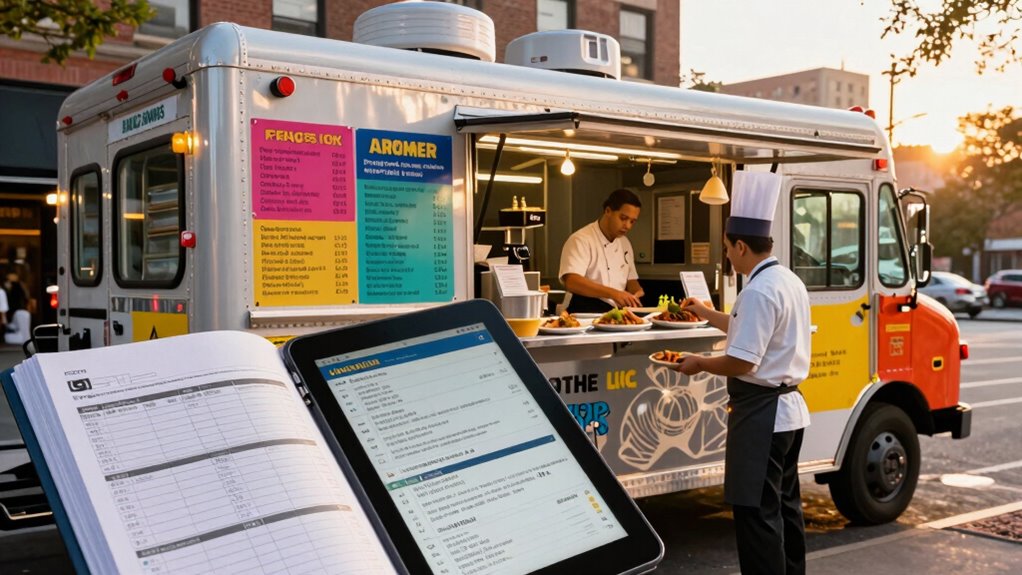
The food truck industry is poised for significant growth in the coming years, driven by shifting consumer preferences and increasing demand for convenient, diverse dining options. If you’re considering expanding into catering, it’s crucial to forecast properly so your venture can succeed. One of the first things to evaluate is how you’ll approach menu pricing. When you move into catering, your menu needs to be adaptable, offering options that cater to different group sizes and event types. Pricing should reflect the costs involved, including ingredients, labor, and transportation, while remaining competitive. Remember, catering often involves bulk orders and special requests, so you must develop a clear pricing strategy that balances profitability with affordability for clients. Proper menu pricing also helps set customer expectations and ensures you’re covering expenses without undervaluing your services.
Expanding into catering requires adaptable menus, strategic pricing, and careful planning to balance profitability and client affordability.
Equally important is staff training. As you expand, you’ll likely need additional team members or specialized staff who understand not just your menu but also the nuances of catering events. Staff training isn’t just about preparing food; it’s about delivering a seamless experience, managing larger groups, and handling on-site logistics. Well-trained staff can adapt to varied event environments, ensuring food quality and service standards stay high. Investing in thorough training helps prevent mistakes, reduces waste, and boosts customer satisfaction. It also equips your team with the skills to troubleshoot issues quickly, which is crucial at catering events where delays or errors can harm your reputation. Additionally, considering food safety standards is essential to maintain quality and compliance across larger-scale service. Furthermore, assessing your equipment needs is vital to ensure your setup can handle increased demands efficiently and safely. Conducting a detailed cost analysis beforehand can help you identify potential financial challenges and opportunities for growth. It’s also beneficial to stay informed about industry trends so your offerings remain relevant and competitive.
Forecasting beyond menu pricing and staff training, you should also assess your equipment needs, transportation logistics, and storage capacity. Catering often requires different setups, such as portable cooking stations or additional refrigeration. Think about the scalability of your operations—can your current truck and kitchen handle larger or more complex orders? Planning for these logistical aspects can save you time and money down the line. Additionally, understanding your market research and target clients will help you tailor your offerings and set realistic sales goals.
Frequently Asked Questions
How Do I Estimate Initial Catering Setup Costs?
To estimate initial catering setup costs, start by evaluating your menu customization needs—more complex menus may require specialized equipment. Next, calculate staffing requirements for events, considering extra hands for setup, service, and cleanup. Factor in costs for additional supplies, transportation, and licensing. By breaking down these elements, you’ll develop a clear budget, ensuring you’re prepared financially before expanding into catering.
What Licenses Are Required for Catering Expansion?
You’ll need to obtain specific licenses for your catering expansion, and missing them can halt your plans unexpectedly. Start by researching local food safety regulations and licensing requirements, as these vary widely. You’ll likely need a food service license, health permits, and possibly a catering license. Don’t skip these steps—obtaining the right permits ensures your operation is legal, safe, and ready to impress new clients without risking costly setbacks.
How Can I Find Reliable Catering Event Clients?
To find reliable catering event clients, focus on effective event marketing by promoting your services through social media, local networking events, and partnerships with event planners. Build strong customer retention by providing exceptional service and asking satisfied clients for referrals. Attend community events to showcase your food, and consider offering special deals for repeat customers. Consistently engaging with your target audience helps attract dependable clients who value quality and consistency.
What Are Typical Profit Margins for Catering Services?
Typical profit margins for catering services usually range from 10% to 30%, depending on factors like menu customization and staffing requirements. You can boost margins by carefully pricing your offerings and controlling labor costs. To maximize profits, focus on efficient staffing and flexible menu options that cater to clients’ needs. Regularly review your expenses and adjust pricing accordingly to make sure your catering venture remains profitable and sustainable.
How Do I Manage Inventory for Catering Orders?
To manage inventory for catering orders, you should prioritize accurate inventory tracking to prevent shortages or excess. Regularly update your stock levels and forecast demand based on upcoming events. Maintain strong supplier relationships to guarantee timely restocking and better pricing. This proactive approach helps you stay organized, control costs, and meet catering client expectations efficiently, ultimately supporting your expansion efforts and customer satisfaction.
Conclusion
Think of expanding your food truck into catering as planting a seed in a busy garden. With careful planning and forecasting, you nurture it patiently, watching it grow strong and fruitful. By anticipating your needs and challenges, you guarantee your garden flourishes, drawing in more customers than ever before. When you tend to your expansion with foresight, you’ll harvest success that’s as rewarding as a bountiful, thriving orchard. Stay vigilant, and your catering venture will blossom brilliantly.
Fall Picks
fall essentials
As an affiliate, we earn on qualifying purchases.