
TL;DR

Get kitchen staples and gadgets delivered free — and shop member deals
- Fast, free delivery on millions of items
- Access to Prime Big Deal Days deals on October 6–7
- Prime Video, Amazon Music and more included
Falling wine sales have left many California grape growers without buyers, and some are weighing whether to harvest at a loss, leave grapes unpicked or remove vineyards. Industry representatives say roughly a quarter of the state’s vineyard land has been removed or is no longer actively producing wine grapes. The extent of future removals and the market’s path to recovery remain uncertain.
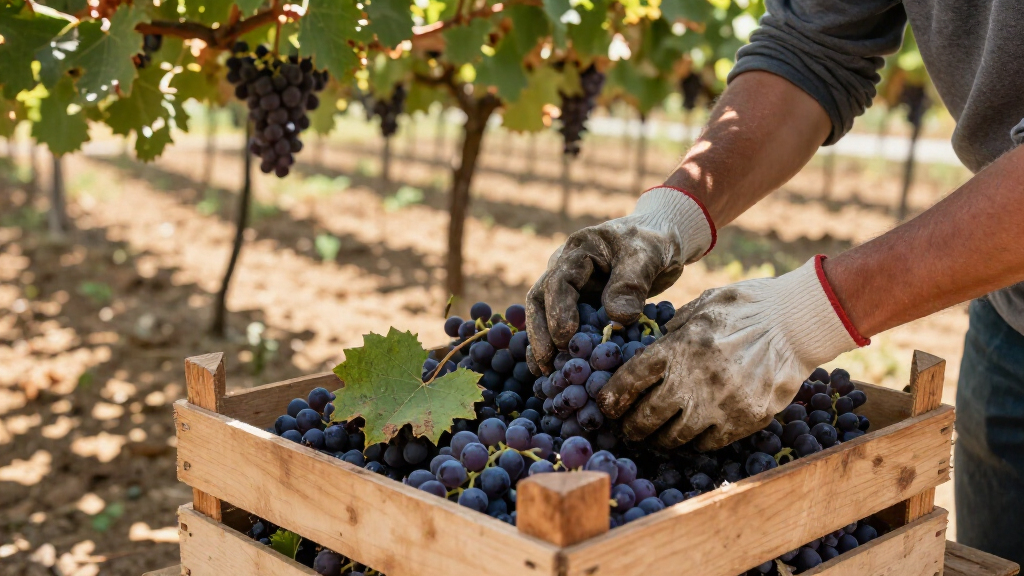
Many California grape growers are entering the 2026 harvest without buyers for their wine grapes as falling wine sales push prices down and leave some crops uneconomic to pick. The squeeze is prompting growers to consider leaving grapes on the vine or removing vineyards, with consequences for farm workers and businesses in wine-producing communities.
Bill Berryhill, a third-generation grower near Lodi, said he has no buyers for grapes from 200 of his 500 acres at Berryhill Family Vineyards. He plans to remove 50 acres after harvest. Berryhill said the operation has lost money for three years and that another season will bring losses, though he does not yet know how large they will be.
Jeff Bitter, president of Allied Grape Growers, which represents about 500 farmers statewide, said roughly 25% of California’s vineyard land has been removed or is no longer actively growing wine grapes. He said about half of the state’s wine grape crop entered this harvest season without buyer contracts. In a typical year, he said, 70% to 80% of the crop has contracts.
Some growers may sell uncontracted grapes at a loss to producers of concentrated syrup, according to the report. Others face a choice between harvesting at a loss, leaving ripe fruit unpicked or converting land to crops such as almonds, walnuts, pistachios or olives. Bitter said growers have already taken tens of thousands of acres out of production, but he believes supply still exceeds demand.
The Cost of Unsold Grapes
The buyer shortage turns falling wine sales into an immediate problem at harvest: growers must decide whether the price they can get will cover the cost of picking and transporting the crop. When grapes are left on vines or discarded, farm work and revenue tied to the harvest can also disappear.
Kyle Collins, an operations manager with Allied Grape Growers, said the decline affects local businesses as well as growers. He pointed to farmworkers who miss out when grapes do not generate income. His comments describe a potential local economic effect; the source does not quantify the number of jobs or businesses affected.
The land-use decisions may reshape parts of California’s agricultural economy. Replacing vineyards with other crops could help some farmers pursue stronger markets, but the report does not establish how quickly those changes can happen or whether alternative crops will prove more profitable for each grower.
From Pandemic Peak to Glut
California produces more than 80% of U.S. wine, supported by varied growing regions and a Mediterranean climate. The industry expanded for decades as demand grew for wines including cabernet, zinfandel and chardonnay. Napa and Sonoma are known for premium wines, while the Central Valley supplies grapes for less expensive labels.
Wine sales rose during the pandemic, reaching a peak in 2021 as people spent more time at home. The figures cited in the report show a subsequent drop: U.S. wine case sales fell 23%, from 427 million in 2020 to 329 million in 2025, while total wine spending declined 22%, from $94 billion to $74 billion. Those measures compare 2020 with 2025, according to First Citizens Bank’s annual State of the Wine Industry Report.
Demand has also weakened beyond the United States. The International Organization of Vine and Wine reported that global wine consumption in 2025 was 2.7% lower than in 2024 and 14% lower than in 2018. Bitter said that soft global demand and higher U.S. production costs make exports a difficult outlet for California’s excess grapes.
““You raise a beautiful crop, and it’s really a nice vintage this year, and you drop it on the ground. It’s sad.””
— Bill Berryhill, owner of Berryhill Family Vineyards
How Far Vineyard Cuts Go
The report does not specify how many of the state’s uncontracted grapes will ultimately be harvested, sold at a loss or left unpicked. It also does not give an estimate for how many additional acres could be removed after the 2026 harvest.
The scale and duration of the downturn remain uncertain. The cited figures document recent declines, and industry representatives expect wine sales to fall further this year, but the source does not provide a forecast for when demand might stabilize or which grape varieties and regions will recover first.
Growers Decide After Harvest
Growers must make decisions through the current harvest about whether to pay to pick crops without buyers and what to do with land afterward. Berryhill said he plans to remove 50 acres of vineyard once harvest season ends. Other growers may consider different crops, but the report does not identify specific planting timelines or confirmed conversion plans.
Industry attention will turn to subsequent sales and harvest data for signs of whether demand continues to weaken and whether vineyard removals bring supply closer to market needs. For now, growers and workers face immediate consequences from grapes that have no buyer.
Key Questions
Why are California grape growers struggling to sell their crops?
Wine sales have declined in the United States and globally, leaving more grapes available than buyers want, according to the report and industry representatives.
How many California wine grapes entered harvest without contracts?
Jeff Bitter of Allied Grape Growers said about half of the state’s wine grape crop entered the 2026 harvest season without buyer contracts. He said a typical year sees 70% to 80% of the crop contracted.
What can growers do with grapes that have no buyer?
Growers may harvest at a loss, leave grapes unpicked or sell them at a loss to producers making concentrated syrup, according to the report. Some are also considering removing vineyards and planting other crops.
How much have U.S. wine sales fallen?
First Citizens Bank’s report says U.S. wine case sales fell 23%, from 427 million in 2020 to 329 million in 2025. Total wine spending fell 22%, from $94 billion to $74 billion over the same years.
Source: fediverse
NFL season / tailgating Picks
team gear
As an affiliate, we earn on qualifying purchases.