To safely store chemicals and cleaning supplies, make certain all containers are clearly labeled with hazards and safety instructions. Store flammables in cool, ventilated areas away from heat, and keep corrosives in corrosion-resistant containers, separated from incompatible chemicals. Maintain organized storage areas with proper signage and conduct regular inspections for leaks or damaged labels. Following these guidelines helps prevent accidents and keeps everyone safe—continuing will reveal essential tips to enhance your storage practices further.
Key Takeaways
- Clearly label all containers with chemical names, hazards, and safety instructions to prevent misuse and facilitate quick identification.
- Store flammable and corrosive substances in designated, ventilated areas away from heat sources and incompatible chemicals.
- Conduct regular inspections for leaks, corrosion, and damaged labels, and ensure proper maintenance and disposal of chemicals.
- Secure storage areas with appropriate signage and restrict access to authorized personnel to prevent accidents and unauthorized use.
- Follow local, state, and federal regulations for chemical storage to ensure compliance and maintain a safe environment.
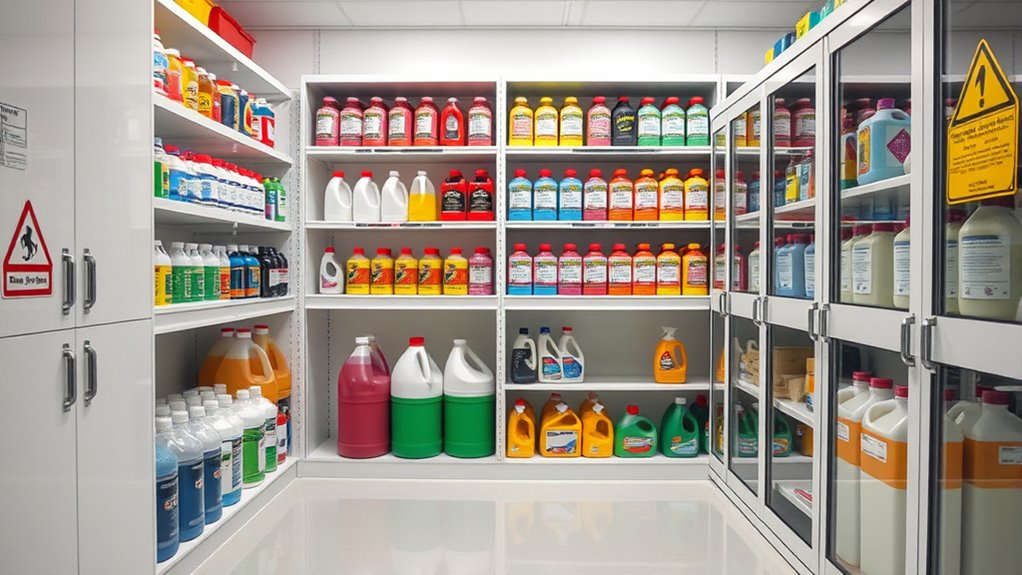
Storing chemicals and cleaning supplies safely is essential to prevent accidents and protect your health. When you handle hazardous materials, proper storage practices are your first line of defense against spills, leaks, and dangerous reactions. One of the most important steps is ensuring all containers are clearly labeled with accurate chemical labeling. Proper labeling helps you and others quickly identify contents, understand hazards, and follow safety precautions. Labels should include the chemical name, hazard warnings, and safety instructions, so there’s no guesswork if an emergency occurs. This simple step can prevent misuse and reduce the risk of accidental exposure or mixing incompatible substances.
Proper labeling of chemical containers is essential for safety and quick hazard identification.
In addition to labeling, understanding and following storage regulations is crucial. These regulations are put in place by safety authorities to minimize risks associated with storing chemicals and cleaning supplies. They specify how and where to store different types of chemicals, considering factors like flammability, toxicity, and reactivity. For example, flammable liquids should be stored in cool, well-ventilated areas away from heat sources and open flames. Corrosive substances need to be kept in corrosion-resistant containers and separate from incompatible chemicals to prevent dangerous reactions. Ensuring your storage area is secure and properly organized helps prevent accidental spills or unintentional access, especially in spaces shared with others or children.
You should also pay attention to local, state, and federal storage regulations, which can vary depending on your location and the types of chemicals you store. These rules often specify container requirements, ventilation standards, and signage that must be posted to alert anyone entering the area. Following these guidelines not only keeps you compliant but also creates a safer environment for everyone. Regular inspections are also vital; check containers for leaks, corrosion, or damaged labels, and replace or dispose of chemicals according to proper procedures. Keeping an organized storage area minimizes clutter and makes it easier to locate supplies quickly in an emergency.
Additionally, considering the horsepower of your storage equipment or devices can help ensure safety and efficiency when handling certain chemicals or supplies. Ultimately, safe storage of chemicals and cleaning supplies involves a combination of proper labeling, adherence to storage regulations, and ongoing maintenance. By taking these precautions seriously, you reduce the risk of accidents, protect your health, and ensure a safer environment at home or in your workplace. Remember, being proactive and informed about how to store chemicals properly is key to preventing harm and maintaining safety for yourself and those around you.
Frequently Asked Questions
How Often Should Chemical Storage Areas Be Inspected for Safety?
You should conduct storage area inspections weekly to guarantee safety compliance monitoring. Regular checks help you spot potential hazards, leaks, or improper storage practices early, reducing risks. Consistent inspections also ensure that chemicals are stored correctly, labels are intact, and safety equipment is available. By maintaining a routine, you keep the storage environment safe, compliant with regulations, and prevent accidents before they happen.
What Are the Best Practices for Labeling Chemical Containers?
You should use proper labeling to guarantee clear identification of each chemical container. Make sure labels include the chemical name, hazard warnings, and date received or opened. Use legible, durable labels that won’t fade or peel over time. Consistent labeling practices help prevent accidents, facilitate quick identification, and ensure safe handling. Always update labels if contents change or expiration dates are reached, maintaining a high standard of safety and clarity.
How Can Accidental Chemical Mixing Be Prevented During Storage?
Prevent accidental chemical mixing by practicing proper storage organization and strict segregation. You should separate incompatible chemicals, clearly label containers, and store them in designated areas based on their properties. Use color-coded bins or labels to differentiate substances quickly. Regularly inspect storage spaces for leaks or spills, and educate everyone on chemical segregation principles. These steps keep chemicals separate, safe, and prevent hazardous reactions during storage.
Are There Specific Storage Requirements for Household Cleaning Supplies?
Yes, there are specific storage requirements for household cleaning supplies to guarantee chemical safety. You should store them in a cool, dry, and well-ventilated area, away from children and pets. Keep each type of cleaner separate and in clearly labeled containers to prevent accidental mixing. Use sturdy, leak-proof shelves or cabinets to maintain storage organization, and avoid storing near food or beverages to reduce risks.
What Steps Should Be Taken in Case of a Chemical Spill?
If you experience a chemical spill, act quickly with spill cleanup procedures. First, guarantee your safety by wearing gloves and eye protection. Ventilate the area if possible. Contain the spill using absorbent materials, then carefully clean it up and dispose of waste according to local regulations. Follow chemical spill response guidelines, and if the spill is large or hazardous, contact emergency services immediately. Always prioritize safety during spill cleanup.
Conclusion
By storing chemicals and cleaning supplies safely, you protect your home and loved ones from potential hazards. For example, imagine a child accidentally ingesting a cleaning product stored under the sink; this could result in serious health issues. Always keep chemicals in clearly labeled, locked cabinets away from children and pets. Taking these simple steps guarantees a safer environment and peace of mind, preventing accidents before they happen.