
To establish an effective handwashing station, choose a location near high-traffic areas with a dependable water source like a tap or spigot. Provide liquid soap, clean towels, or air dryers, and guarantee the station is easy to access and maintain. Use clear signs to show proper handwashing techniques and promote routine use. Maintaining cleanliness and involving the community helps sustain good hygiene habits; explore these tips further to create a lasting impact.
Key Takeaways
- Choose accessible, high-traffic locations with reliable water supply and ensure water safety through purification methods.
- Provide liquid soap, clean towels, and regular supplies; maintain cleanliness to promote consistent handwashing.
- Install clear, culturally appropriate signage demonstrating proper handwashing steps and critical times.
- Incorporate infrastructure elements like lighting, easy access, and routine cleaning to ensure usability and sustainability.
- Engage the community through education and ownership initiatives to foster hygiene habits and ensure station maintenance.
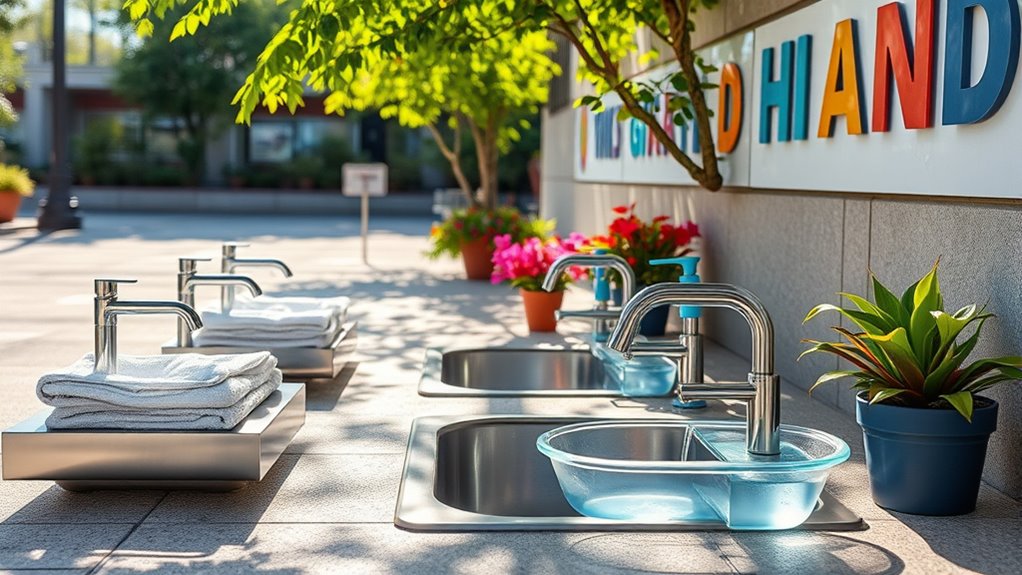
Proper handwashing is one of the simplest yet most effective ways to prevent the spread of germs and maintain health. When setting up handwashing stations, you’re creating a essential barrier against illnesses, especially in environments where water sanitation might be a concern. Making certain of access to clean, safe water is the foundation of effective hand hygiene. You need to choose a location that’s easily accessible to everyone, ideally near high-traffic areas like entrances, kitchens, or restrooms. The water source should be reliable and capable of providing a steady flow, whether it’s a tap, a basin with a tap, or a water container with a spigot. You also want to make sure the water is safe; if not, consider incorporating water purification options like boiling, filtration, or chemical disinfectants to prevent contamination.
Installing proper handwashing facilities involves more than just the water source. You must also provide soap—preferably liquid soap, which is more hygienic than bar soap—and clean towels or hand-drying alternatives like paper towels or air dryers. Regular maintenance is essential; keep the station clean and stocked with supplies to encourage consistent use. Educating users about water sanitation practices is just as important as installing the station itself. Hygiene education should cover proper handwashing techniques—scrubbing all parts of the hands for at least 20 seconds—and emphasize the importance of washing hands at critical times, such as after using the restroom or before eating. When people understand the reasons behind good hygiene, they’re more likely to adopt habits that reduce disease transmission. Additionally, understanding candles can be useful in areas where electricity is unreliable, to provide alternative lighting during maintenance or emergencies.
You should also think about culturally appropriate signage to remind users of proper handwashing steps and the importance of water sanitation. Visual cues can be especially effective in areas with low literacy levels. Additionally, consider establishing routines for regular cleaning of the station to prevent the buildup of germs and dirt, which can discourage use and compromise hygiene standards. Training staff or community members on proper maintenance and hygiene education ensures the station remains functional and encourages community ownership.
Ultimately, setting up a handwashing station isn’t just about installing physical infrastructure. It’s about fostering a culture of hygiene through education, making certain of water sanitation, and making handwashing an easy, accessible habit for everyone. When you prioritize these elements, you’re not only preventing disease but also promoting healthier, more resilient communities.
Frequently Asked Questions
What Are the Most Cost-Effective Materials for Building Stations?
You should use affordable materials like plastic drums or repurposed containers for handwashing stations. These are durable options that withstand frequent use and exposure to water. Consider using simple taps or spigots for easy access, and add a drainage system to prevent water accumulation. Using locally available, cost-effective materials helps you build reliable stations without overspending, ensuring consistent hand hygiene in your community or workplace.
How Often Should Handwashing Stations Be Cleaned and Maintained?
Oh, the grand ritual of handwashing! You should clean and maintain your stations at least twice daily or more frequently if usage skyrockets. Keeping to a strict maintenance schedule guarantees soap and water are always available, preventing the spread of germs. Regular checks for leaks, cleanliness, and soap levels are essential, so don’t let those stations become neglected relics—because a well-maintained handwashing station is your best defense.
Can Portable Handwashing Stations Be Used Indoors Safely?
Yes, portable handwashing stations can be used indoors safely if you consider indoor air quality and space restrictions. Guarantee proper ventilation around the station to prevent humidity buildup and mold growth. Place it in a well-ventilated area with enough space for users to wash hands comfortably. Regular maintenance and cleaning are essential to keep the station sanitary and prevent any impact on indoor air quality.
What Are the Best Practices for Encouraging Proper Hand Hygiene?
To encourage proper hand hygiene, embrace gentle persuasion through behavior incentives and educational campaigns. You can motivate others by offering small rewards for regular handwashing and sharing informative materials that highlight its importance. Keep messaging clear and positive, making hand hygiene an easy and appealing habit. By fostering awareness and rewarding good practices, you’ll create a culture where everyone naturally prioritizes cleanliness, benefiting overall health and safety.
Are There Specific Regulations for Handwashing Stations in Public Spaces?
You should know that specific regulations for handwashing stations in public spaces focus on regulatory compliance and sanitation standards. Local health authorities often require accessible, properly equipped stations with running water, soap, and waste disposal. Make certain your stations meet these standards to avoid penalties and ensure public safety. Regular maintenance and clear signage also help promote proper hand hygiene and demonstrate your commitment to sanitation standards.
Conclusion
Now that you’ve set up your handwashing station, remember it’s your modern-day equivalent of a royal washroom—crucial for health and hygiene. Keep it stocked, clean, and accessible, so everyone can stay germ-free. Don’t forget, even in this digital age, good hygiene is timeless—like the trusty quill and ink. With your efforts, you’re helping create a safer, healthier space—so go ahead, be the hero of your community’s health story!