
Personal protective equipment (PPE) is essential for keeping your staff safe from workplace hazards and ensuring compliance with safety rules. Proper selection, regular inspection, and maintenance of PPE are key to effective protection, while training staff on correct donning, doffing, and care enhances safety. Record-keeping helps track equipment status and supports safety culture. If you’re interested in understanding the best practices for PPE use and management, there’s much more to explore.
Key Takeaways
- Proper PPE training ensures staff select, use, and maintain equipment effectively to minimize workplace hazards.
- Regular inspection and maintenance of PPE prolongs its protective effectiveness and prevents equipment failure.
- Clear storage and cleaning protocols keep PPE hygienic and ready for safe reuse or replacement.
- Detailed recordkeeping of PPE inspections and replacements supports compliance and safety management.
- Ongoing education fosters a safety culture, encouraging correct PPE use and reducing accidental exposures.
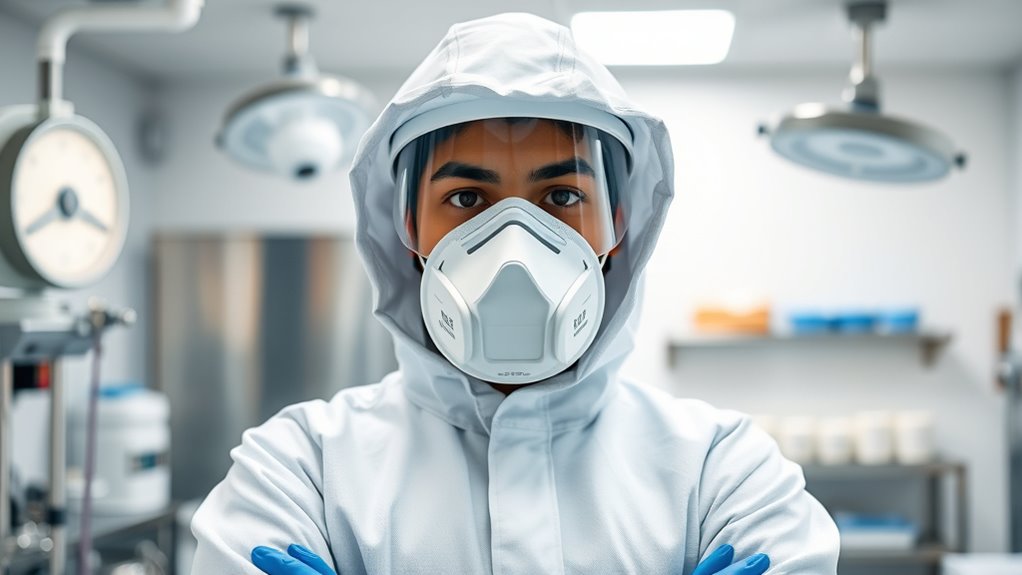
Personal Protective Equipment (PPE) is fundamental for safeguarding staff from hazards in the workplace. When you’re responsible for ensuring safety, it’s imperative to understand that PPE doesn’t just protect; it’s an indispensable part of your safety management system. Proper PPE training is the foundation of effective protection. You need to know how to select the right equipment for each task, how to wear it correctly, and how to handle it safely after use. Training ensures that staff are confident in their PPE use, reducing the risk of accidental exposure. It’s not enough to just hand out PPE; you must provide detailed instruction that covers donning, doffing, inspection, and storage. Regular training sessions reinforce good habits and keep everyone updated on new equipment or safety protocols. This ongoing education helps prevent complacency or misuse that could compromise safety.
Equally important is equipment maintenance. PPE that’s well-maintained offers better protection and lasts longer, making it a cost-effective investment. You should establish clear procedures for inspecting PPE before and after use. Look for signs of wear and tear, such as cracks, tears, or deterioration, which could compromise the equipment’s integrity. Damaged PPE must be replaced immediately to guarantee safety isn’t compromised. Proper cleaning and storage are also part of maintenance. Depending on the type of PPE, you might need to follow specific cleaning protocols to prevent contamination or degradation. For example, reusable gloves, masks, or face shields should be sanitized regularly and stored in clean, dry conditions. Educate staff on how to properly care for their PPE to maintain hygiene standards and prolong its usability. Additionally, understanding the importance of wearing PPE correctly can significantly impact its effectiveness.
You should also keep detailed records of PPE inspections, maintenance, and replacements. This documentation helps track equipment lifecycle and guarantees compliance with safety regulations. When staff see that PPE is well-maintained and that they’ve received proper training, their confidence in using it increases. This confidence leads to consistent and correct usage, which is essential for effective protection. Remember, PPE is only as good as the condition it’s in and the knowledge you pass on. Investing time in PPE training and equipment maintenance isn’t just about meeting safety standards; it’s about creating a safer environment where staff feel protected and valued. By prioritizing these aspects, you promote a culture of safety that benefits everyone in the workplace.
Frequently Asked Questions
How Do I Properly Dispose of Contaminated PPE?
You should carefully discard contaminated PPE in designated waste disposal containers, ensuring they are leak-proof and properly labeled for contamination control. Always wear gloves when handling used PPE to prevent cross-contamination. Seal the waste securely before disposal, and follow your facility’s protocols for hazardous waste. Proper disposal minimizes the risk of spreading contamination and maintains a safe environment for everyone. Always adhere to local regulations and guidelines for waste disposal.
Can PPE Be Reused or Sterilized for Multiple Uses?
Yes, PPE can sometimes be reused if proper PPE maintenance and sterilization protocols are followed. You should always check manufacturer guidelines to determine if the equipment is sterilizable and safe for multiple uses. Use appropriate sterilization methods, such as autoclaving or chemical disinfectants, and guarantee thorough cleaning. Regular inspection for damage is vital; discard PPE immediately if integrity is compromised to maintain safety and effectiveness.
What Training Is Required for Staff on PPE Use?
You need to provide staff education on PPE use to guarantee PPE compliance. This training should cover proper donning and doffing techniques, when to use specific PPE, and how to inspect it for damage. Regular refreshers are essential to maintain safety standards. By prioritizing staff education, you help prevent contamination and ensure everyone understands the importance of correctly using PPE for effective protection.
How Often Should PPE Be Inspected for Damage?
You should inspect your PPE regularly, ideally before each use, to guarantee safety. Follow an inspection frequency that suits your environment, but at minimum, perform a damage assessment weekly. During each inspection, look for tears, cracks, or other damage that could compromise protection. Replace any PPE showing signs of damage immediately. Regular inspections help maintain safety standards and prevent accidents caused by compromised equipment.
Are There Specific PPE Standards for Different Industries?
Yes, there are industry-specific regulations and PPE compliance standards you must adhere to. Different industries, like construction, healthcare, or manufacturing, have unique requirements to ensure safety. You need to select PPE that meets these standards, such as OSHA or ANSI regulations, to protect workers effectively. Staying informed about these specific standards helps you maintain compliance, reduce risks, and create a safer work environment.
Conclusion
Just as shields protect warriors in battle, your use of personal protective equipment guards you through every shift. By staying vigilant and wearing your gear, you become the guardian of your own safety, turning potential hazards into manageable challenges. Remember, you’re the hero in this story—armed and ready to face each day with confidence. With the right equipment, you’re not just working; you’re standing strong, like a fortress protecting what matters most.